Infection, hand washing are concerns in central PA hospitals, new safety report says
A national watchdog group recently scored some central Pennsylvania hospitals below average for several safety metrics, including hand washing, infection and having specially trained doctors care for patients in the intensive care unit.
The Leapfrog Group is a nonprofit organization that provides ratings and safety data for hospitals, and it recently released grades for nearly 3,000 hospitals across the country.
Out of five hospitals in central Pennsylvania and nearby, one saw improved performance while another received a lower grade compared to the spring.
Mount Nittany Medical Center and UPMC Altoona scored below average for some infection control measures, but the national trend shows facilities reducing the number of health care-acquired infections, The Leapfrog Group reports. These ratings are the first to reflect “post-pandemic” hospital performance, Leapfrog says.
“Now that we have pre- and post-pandemic data for patient safety measures, we are encouraged by the improvement in infections and applaud hospitals for reversing the disturbing infection spike we saw during the pandemic,” Leah Binder, president and CEO of The Leapfrog Group, said in a Nov. 6 press release. “However, there’s still more work to be done. It’s deeply concerning that patient reports about their health care experience continues to decline.”
Pennsylvania was ranked fourth in the country for the highest percentage of hospitals receiving “A” grades, Leapfrog reports. More than 44% of hospitals in the commonwealth received the highest mark.
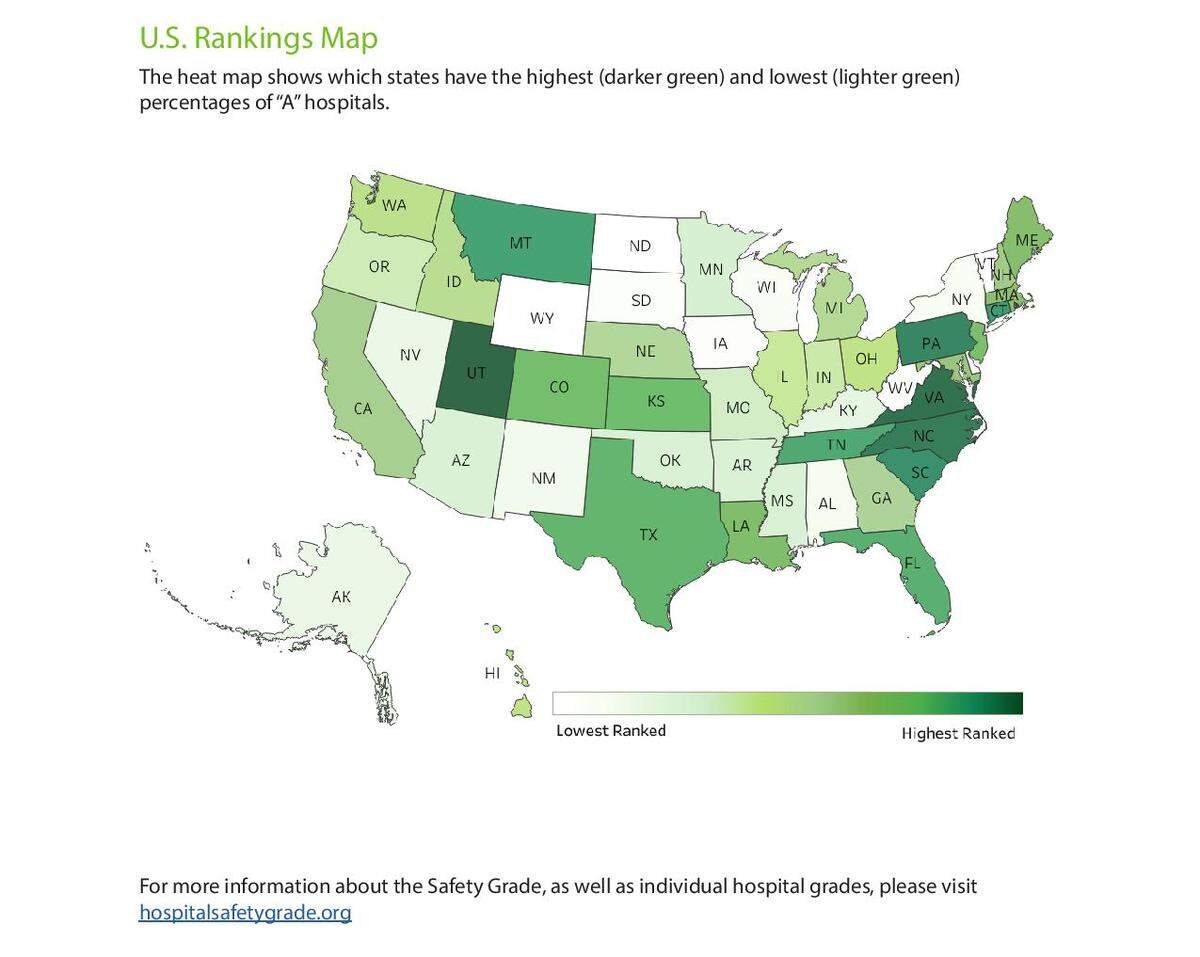
Two local hospitals maintained “A” grades for at least the third consecutive grading cycle, according to Leapfrog.
Here’s how Central Pennsylvania hospitals performed in Leapfrog’s grading, plus how to interpret ratings and which areas should be most heavily considered.
Mount Nittany Medical Center
Spring 2023 grade: B
Fall 2022 grade: B
Here are the areas in which Mount Nittany Medical Center scored below average this fall:
Surgical site infection after colon surgery
Sepsis infection after surgery
Doctors order medications through a computer (Mount Nittany Medical Center received a 40 out of 100 for this metric; the average score was 90.58.)
Safe medication administration
Hand washing (Mount Nittany Medical Center received a 40 out of 100 for hand washing. The average score was 77.32.)
Staff work together to prevent errors
Effective leadership to prevent errors
“The Leapfrog Hospital Safety Grade is one of several quality and outcomes reporting methodologies,” Dr. Upendra Thaker, chief medical officer of Mount Nittany Medical Center and Medical Staff Services, said in an emailed statement. “Mount Nittany Medical Center has a track record of strong results with patient safety, patient experience, and patient outcomes as reflected in our five consecutive five-star rankings from Medicare, the 2023 Excellence in Patient Safety award from the Hospital and Healthsystem Association of Pennsylvania, and quality recognition from both Newsweek and US News and World Report. We’re proud of our team and the excellent work they do for our community and region every day.”
Geisinger Lewistown Hospital
Spring 2023 grade: A
Fall 2022 grade: A
There were no areas in which Geisinger Lewistown Hospital scored significantly below average this fall, Leapfrog reports.
The watchdog group categorizes some metrics as average when a hospital performs slightly below average, including a score of 70 out of 100 for hand washing at Geisinger Lewistown Hospital when the average was 77.32 and similar discrepancies.
Data about Geisinger Lewistown Hospital’s performance was unavailable for surgical site infection after colon surgery and death from serious treatable complications. Data being unavailable for these metrics does not denote a lack of safety or a poor score.
“This elite recognition highlights the commitment our staff has for providing the safest and highest quality care for our patients,” Stacey Osborne, vice president and chief nursing officer for Geisinger Lewistown Hospital, said in an emailed statement. “Our dedicated teams work hard to ensure the needs of our patients are the top priority. We continue to make improvements and invest in ways to meet the needs of our patients and community.”
Conemaugh Nason Medical Center
Spring 2023 grade: B
Fall 2022 grade: B
Here are the areas in which Conemaugh Nason Medical Center scored below average this fall:
Specially trained doctors care for ICU patients (Conemaugh Nason Medical Center received a 5 out of 100 for this metric, the lowest score given to any hospital. The average was 62.31.)
Data about Conemaugh Nason Medical Center’s performance was unavailable for MRSA infection, infection in the blood, infection in the urinary tract, surgical site infection after colon surgery and death from serious treatable complications.
Officials with Conemaugh Nason Medical Center were not immediately available for comment.
UPMC Altoona
Spring 2023 grade: A
Fall 2022 grade: A
Here are the areas in which UPMC Altoona scored below average this fall:
MRSA infection
Infection in the blood
Surgical wounds split open
Death from serious treatable complications
Nursing and bedside care for patients (UPMC Altoona received a 40 out of 100 for this metric. The average was 71 and the lowest score given was 15.)
Communication with doctors
Communication with nurses
Responsiveness of hospital staff
“I am extremely proud that UPMC Altoona has achieved the highest rating for patient safety,” Dr. David Burwell, chief quality officer for UPMC in West Central Pa. and Maryland, said in an emailed statement. “We have consistently earned the Leapfrog Patient Safety Grade ‘A’ grade since the fall of 2018. Our journey of being amongst the highest rated hospitals in the United States in patient safety is an effort that encompasses actions and improvements amongst all of our staff. We are delighted in the distinguishment the ‘A’ grade provides to our community that we are amongst the best when delivering the crucial portion of a hospital stay, which is patient safety.”
Penn Highlands Huntingdon
Spring 2023 grade: C
Fall 2022 grade: C
Here are the areas in which Penn Highlands Huntingdon scored below average this fall:
Doctors order medications through a computer
Safe medication administration
Hand washing (Penn Highlands Huntingdon received a 49 out of 100 for hand washing.)
Communication about medicines
Specially trained doctors care for ICU patients (Penn Highlands Huntingdon received a 5 out of 100 for this metric, the lowest score given to any hospital.)
Data about Penn Highlands Huntingdon’s performance was unavailable for MRSA infection, infection in the blood, infection in the urinary tract, surgical site infection after colon surgery, surgical wounds split open and death from serious treatable complications.
Penn Highlands Huntingdon officials declined to respond to Leapfrog’s survey, the organization reports. The hospital also declined to report metrics for the categories “staff work together to prevent errors,” “effective leadership to prevent errors” and “nursing and bedside care for patients,” according to Leapfrog.
Penn Highlands Huntingdon officials were not immediately available for comment.
How are hospital grades calculated?
Safety grades are calculated using up to 22 national safety measures from the Leapfrog survey, Centers for Medicare and Medicaid Services and other data sources. The full methodology is available online and is peer-reviewed and published by the Journal of Patient Safety.
Grades are composed 50% by process and structural measures and 50% by outcome measures. The scoring scales differ by the chosen measure.
Across the U.S., nearly 30% of hospitals received an “A,” 24% received a “B,” 39% received a “C,” 7% received a “D” and less than 1% received an “F” in the fall 2023 ratings.
How should you use these scores?
Leapfrog emphasizes you should not refuse emergency care based on hospital ratings. The group intends the scores to be used when planning things like childbirth, surgery referrals or chronic illness treatment.
The areas you should pay most attention to when choosing a hospital include handwashing, infection in the blood and patient falls, Leapfrog’s website says.
You should also consider how far off your hospital was from the average for any given standard. When evaluating a hospital, you can see the highest and lowest scores given, which helps in weighing a value. The “below average” category can include hospitals that scored 0.01 points under goal, along with facilities with the lowest possible score.
For hospitals that responded to Leapfrog’s survey, there’s often information available about which areas the hospital has improved in and which areas are not going in the right direction.
A hospital being ungraded does not denote a lack of safety. Ratings are often unavailable for facilities that decline to self-report, as well as smaller providers, children’s hospitals, surgical centers and critical access hospitals.
Where can you find more hospital ratings?
Leapfrog allows you to search for hospitals by name, location or state. There’s an online search tool where you can find information about more hospitals.
This story may be updated.