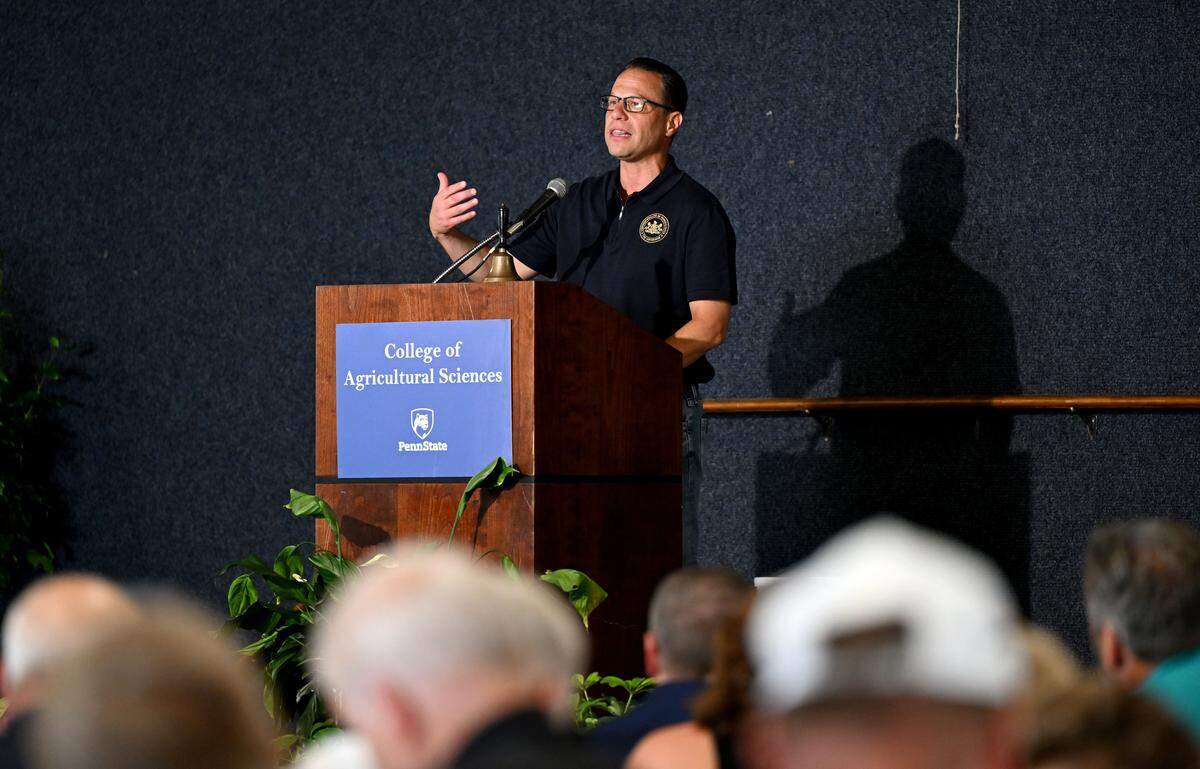
Gov. Josh Shapiro expresses optimism in Centre County that a state budget deal is close
AI-generated summary reviewed by our newsroom.
- Gov. Shapiro sees Senate GOP proposal as progress toward a budget agreement.
- Delayed budget limits state discretionary spending, affecting schools and counties.
- Key disagreements include Medicaid costs and regulation of gaming machines.
Gov. Josh Shapiro expressed optimism Wednesday at Penn State’s Ag Progress Days that a budget deal with Pennsylvania’s politically divided legislature — one that is more than six weeks late — is within reach.
The Democrat said he thought a budget proposal presented Tuesday by Senate Republicans “brought us closer” to a deal on a spending plan. The package included funding for mass transit, which has been a priority for Shapiro and other Democrats.
“I thought we took a step forward,” Shapiro said during Wednesday’s planned media availability. “We have a clear direction of where we all need to go, and we’ve been working hard to get it done.”
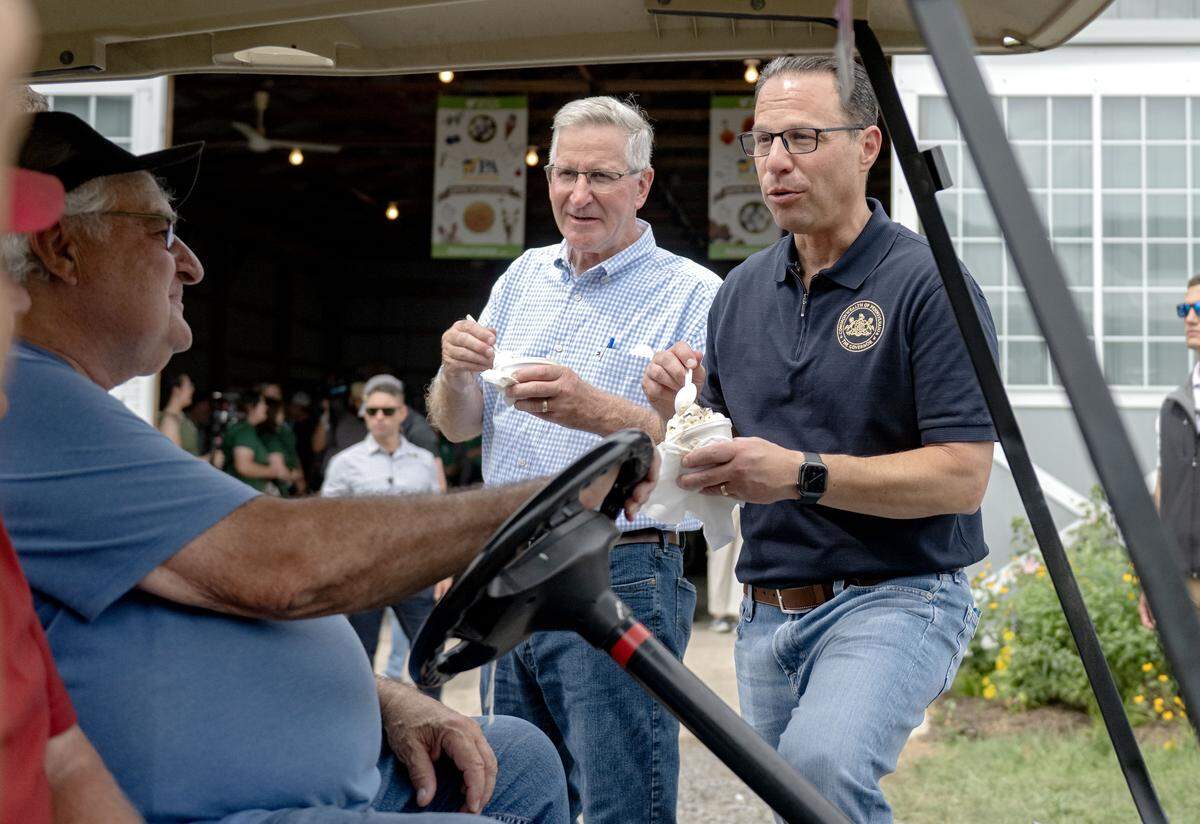
Shapiro declined to speak publicly about specific negotiations, but said he met Tuesday night and Wednesday morning with Democratic and Republican leaders.
Without a passed spending plan, the state lost some of its spending authority, especially on discretionary payments such as those to counties, public schools and grant applicants. Centre County Commissioner Mark Higgins said at the end of July that the county was “OK” and still able to pay its bills on time.
He said the county did not expect any trouble in the “near future.”
A massive increase in Medicaid costs and a Republican push to regulate and tax slot machine-like “skill” games are some of the other biggest issues. Shapiro has also advocated for boosting funding for public schools.
He proposed a $51.1 billion plan for the 2025-26 fiscal year that began July 1. Republicans said it would increase the state’s spending by $3.6 billion, or 7.5%, and deplete its reserves. The latest impasse marks the third consecutive late budget under Shapiro.
And some, including state House Republican Leader Jesse Topper, didn’t share the same level of confidence as the governor.
“Discussions about how to conclude the current state budget impasse are completely devoid of reality and commonsense,” Topper said in a statement.