
Flash floods and hail give this county the worst weather in Pennsylvania, report says
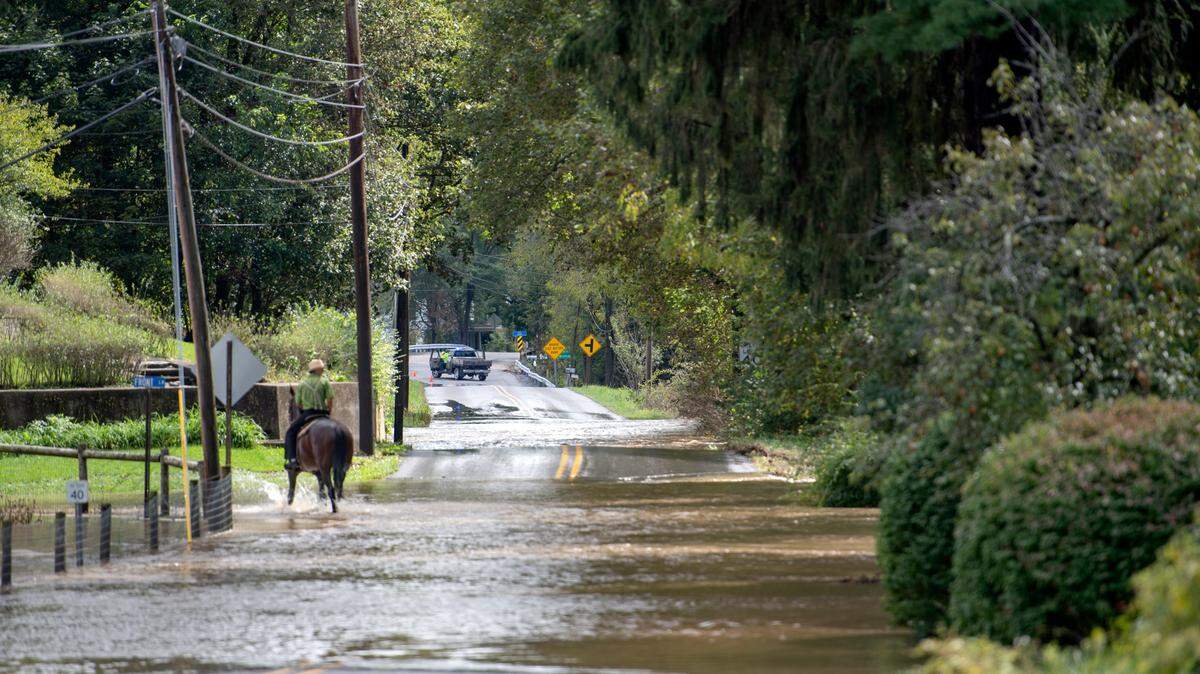
Allegheny County might have the worst weather in all of Pennsylvania, according to a new report from digital data journalism outlet Stacker.com.
In its analysis, Stacker proposes a high number of severe weather events in the commonwealth’s second-most populous county make it the worst in Pennsylvania.
“In Allegheny County, which is the Pittsburgh metropolitan area, flash floods tend to be caused most often by heavy thunderstorms, according to the National Weather Service,” Stacker wrote in its report. “Factors that contribute to the extent of the torrential flooding are land use, vegetation, water in the soil, and, in developed areas, impermeable surfaces like paved streets and clogged sewer drains.”
Allegheny County observed about 515 severe weather events between 2010 and 2020, averaging out to roughly 46.8 such events each year, Stacker says. According to the analysis, which is fueled in part by severe weather data from the National Oceanic and Atmospheric Administration, the most commonly observed events were thunderstorms with strong winds (35.8 events per year), followed by flash floods (24 per year) and hail (about 14.5 per year).
Allegheny County’s total number of severe weather events sits toward the middle of the pack compared to the rest of the country’s most-afflicted counties, Stacker’s report says. No county experienced more severe weather events than El Paso County in Colorado, which observed more than 900 reported severe weather events between 2010 and 2020. High elevation there helps fuel frequent hail storms in the spring and summer, the report claims.
You can read Stacker’s full analysis for each state by visiting stacker.com/weather/county-most-severe-weather-every-state.
Allegheny County’s severe weather
Between June 2022 and June 2023, Allegheny County observed at least 75 severe weather events, according to NOAA’s Storm Events Database, which is maintained through the National Centers for Environmental Information. More recent data is not yet available, the agencies say.
Most events reported within the yearlong span cover severe thunderstorms, strong winds, flash floods and hail. Less common instances include winter storms and excessive heat.
So far in 2023, the Pittsburgh area is on pace for a below-average year of precipitation, according to the National Weather Service. The region has observed about 25 inches of precipitation since January as of Sept. 24, falling short of an average year’s 30.47 inches of precipitation through mid-September.
The Pittsburgh area set a record in 2004 when nearly 48 inches of precipitation fell through the end of September, according to NWS archive data.
Heavy rainfall contributed to dangerous flash floods in Allegheny County as recently as early September, CBS Pittsburgh reports.
Back in June, the Pennsylvania Department of Environmental Protection placed all of the commonwealth’s counties under a drought watch as summer began. The move was largely precautionary, though a few counties are facing drought conditions heading into the fall, according to the U.S. Drought Monitor.
A few counties in northwestern Pennsylvania are experiencing “abnormally dry” conditions as of Sept. 24, while large chunks of Adams and York counties in southern Pennsylvania face “moderate drought,” the U.S. Drought Monitor reports. Allegheny County is not affected by any serious drought conditions as the fall season begins, the agency says.
Note: This graphic will automatically update as new data becomes available.
Moderate drought conditions can lead to declines in honey production, increases in irrigation use, small hay and grain yields, higher stress on trees and landscaping, inflated risk of wildfires and lower water levels in reservoirs and lakes, among other effects. Voluntary water conservation is requested in areas where moderate drought conditions persist, the U.S. Drought Monitor reports.
Conserving water during a drought can start with a few changes around the house, the Red Cross reports. If you live in an area where drought persists, consider watering your lawn before 10 a.m., using dishwashers and laundry machines with only full loads and leaving grass cut higher than usual to enhance root development.
%202.JPG)