
Could central Pennsylvania finally see another snowy winter? Check the seasonal outlook
With Thanksgiving rapidly approaching and temperatures on the decline, winter will arrive in central Pennsylvania before you know it.
This year, forecasters expect a more typical winter for Centre County and the surrounding area, though snowfall and temperatures may still wind up milder than normal. A number of factors could influence winter weather in central Pennsylvania, including a weak La Niña pattern expected to emerge in the coming weeks.
Here’s what you need to know about Centre County’s winter weather outlook, historical averages and more.
What could the 2024-25 winter season bring to central Pennsylvania?
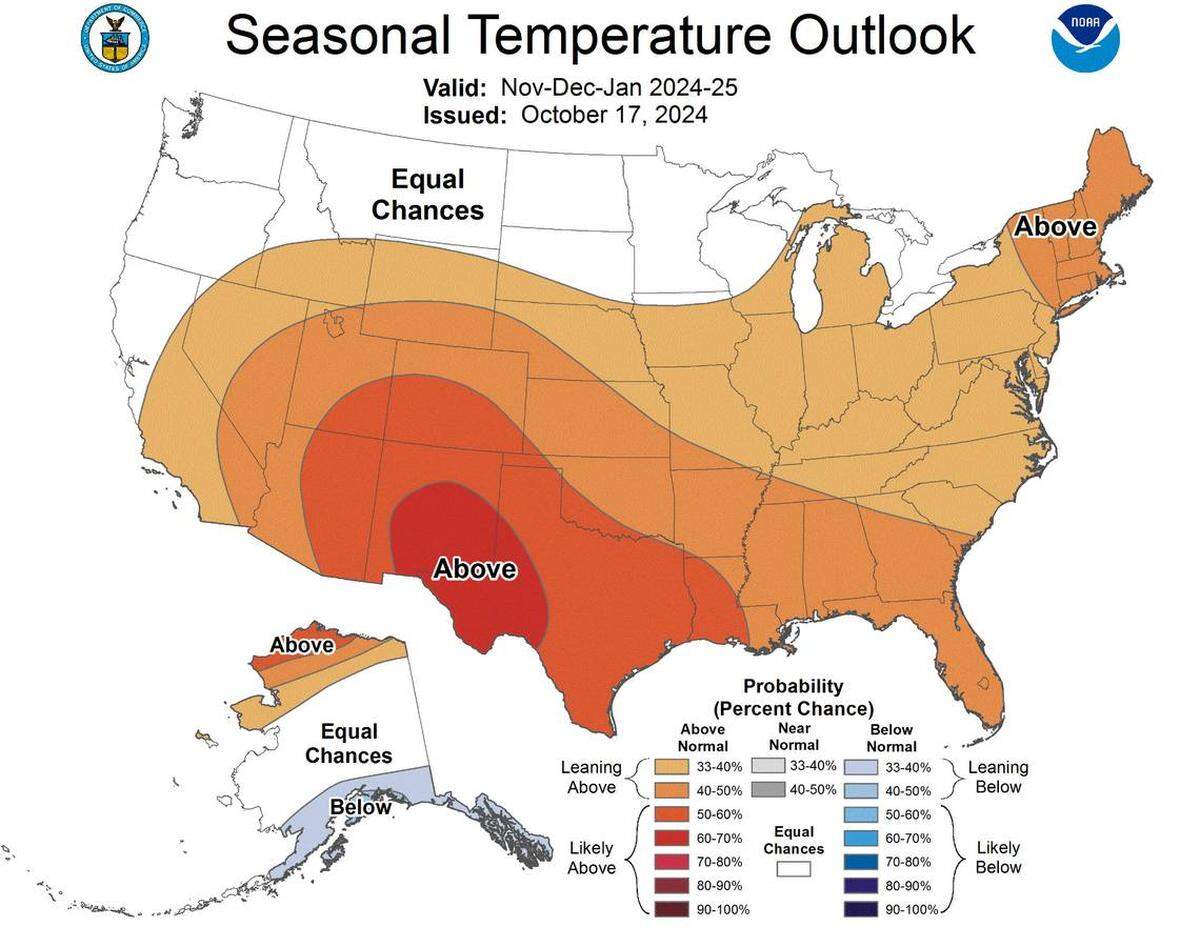
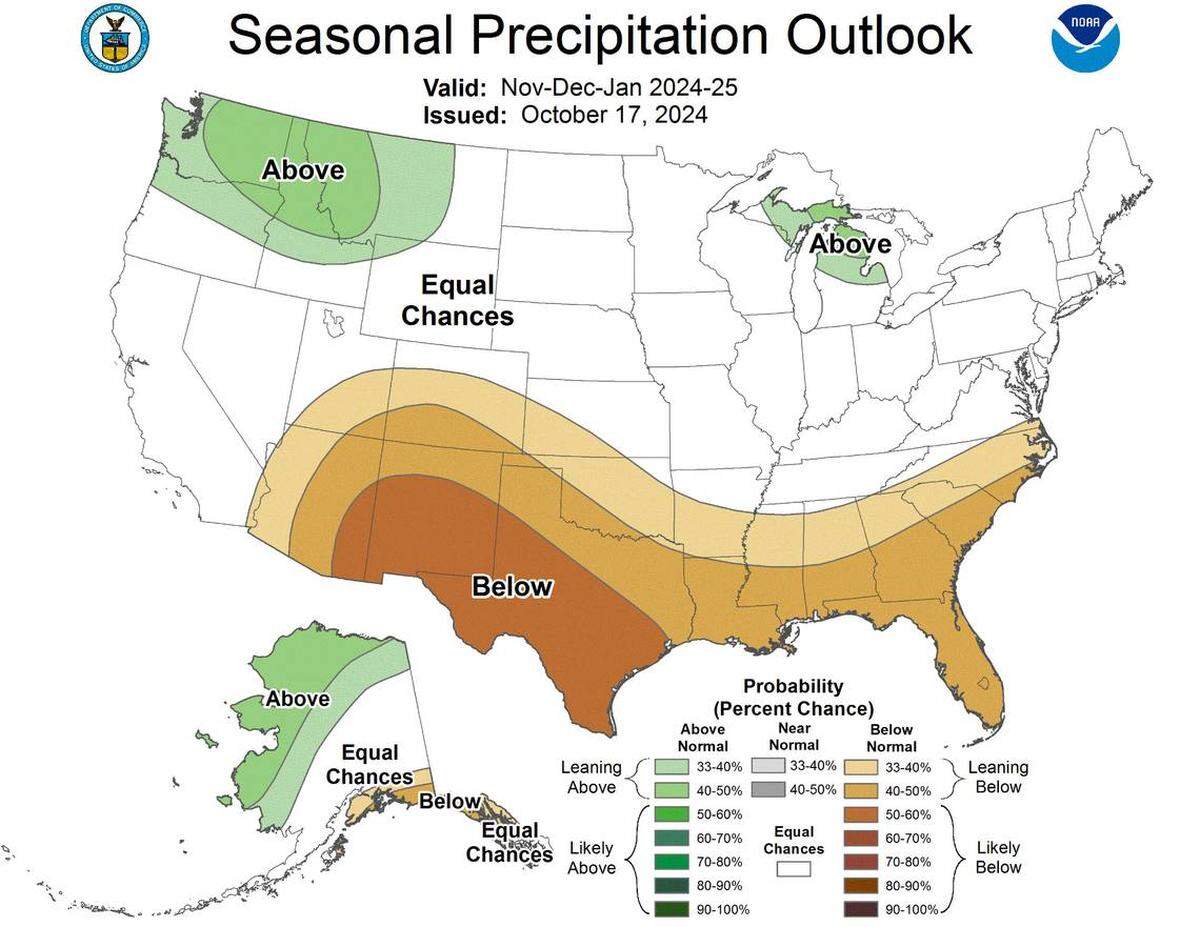
According to the latest three-month outlook from the National Oceanic and Atmospheric Administration’s Climate Prediction Center published Oct. 17, Pennsylvania is expected to learn toward observing above-normal temperatures in November, December and January. Meanwhile, the agency expects the commonwealth will receive equal chances of above- and below-normal precipitation over that three-month span.
Tom Kines, a senior meteorologist at AccuWeather in State College, said the coming months could still present more snow and colder temperatures than the notably mild 2023-24 winter season.
“We joke around here that we don’t have winter anymore,” Kines said. “What we’re expecting this winter is probably worse than last year — colder and snowier — but when it’s all said and done, probably ending up with snow amounts below what we’d typically get. Again, that ‘typically’ is in quotation marks because lately, snow has been almost nonexistent.”
State College received just 22 inches of snow last winter, according to National Weather Service archive data. That mark is nearly half of the snowfall expected in a typical season (43.8) and not too far from the lowest on record (13.2 inches in the 2019-20 winter season).
The bulk of State College’s 2023-24 snowfall came in just a few winter storms. The area received about 8 inches of snow between Jan. 6 and 10, another 5 inches between Jan. 14 and 20 and about 8 more inches between Feb. 12 and 20.
Kines said he expects weather patterns near the end of the winter season will ultimately decide how close State College and the surrounding area can get to reaching normal snowfall totals.
“If we’re going to have a winter where snowfall ends up close to normal, it’s probably going to be due to storms at the tail end of the season,” Kines said. “There is some concern that before we get out of the month of February, the weather pattern turns the way a colder and stormier and pattern would, which includes some snow. If that happens, snowfall will probably end up above 40 inches on the season.”
So far, temperatures in the State College area this fall have remained very mild, including near-record warmth in late October and early November. State College set a new record high when temperatures reached 81 degrees Fahrenheit Nov. 1, according to NWS archive data stretching back to 1893.
Kines said above-normal temperatures should continue through the winter, but the season won’t be without its cold spells.
“That doesn’t mean there won’t be any cold weather, but when everything gets added up at the end of the winter, we feel pretty confident it’ll end up as a milder winter than it should be,” Kines said.
Could La Niña play a role?
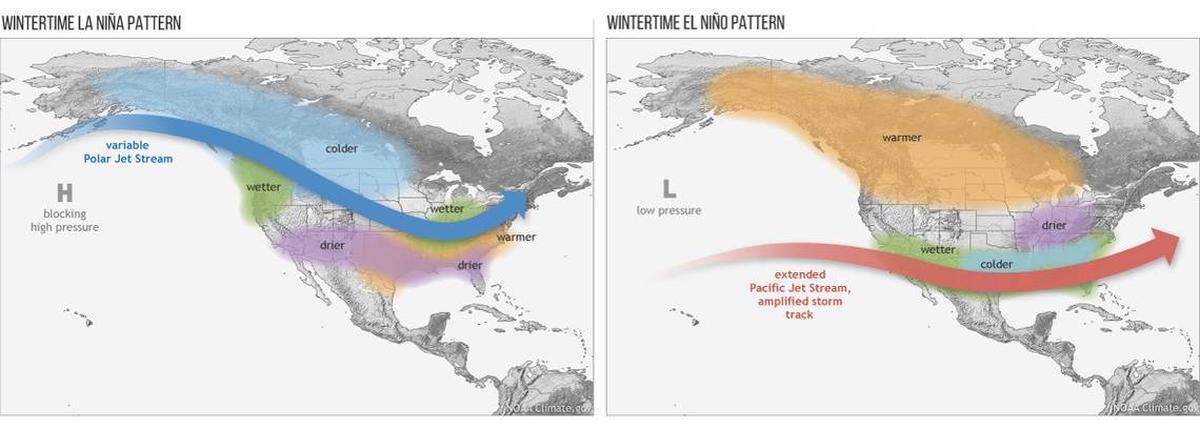
According to the Climate Prediction Center, a weak and brief La Niña event is favored to emerge this fall and carry through early 2025. The climate phenomenon, Spanish for “the girl,” comes about when cooler-than-normal sea surface temperatures in the Pacific Ocean ultimately disrupt global weather patterns.
A wintertime La Niña pattern usually brings warmer, wetter weather to the Northeast and Mid-Atlantic, according to NOAA. Conversely, the system’s tendency to alter trade winds can bring colder air to northern states and Canada, while keeping southern states warm and dry.
While a La Niña event could produce a milder winter for central Pennsylvania, Kines notes it’s far from certain.
“We’ve looked back at past years when we’ve had a La Niña, and this isn’t going to be a really strong one,” Kines said. “Some of those winters, we’ve had a snowier and colder end to the season. That’s a reason we’re really looking at February and early March [to potentially produce snow].”
Will Pennsylvania’s drought last?
Through Nov. 12, nearly all of Pennsylvania is experiencing at least abnormally dry conditions, according to the U.S. Drought Monitor. Those conditions are the worst in eastern and southwestern Pennsylvania, which are observing severe drought through mid-November. Large swaths of Fayette, Greene and Washington counties are under severe drought conditions, the agency reports.
On the year, State College’s precipitation is above normal. The area has received about 39.2 inches of precipitation, outperforming the 36.8 it would usually receive year-to-date through mid-November.
However, most precipitation has just about dried up since autumn began. State College has received just 3.54 inches of precipitation since Sept. 22, including almost no rain from Oct. 15 through Nov. 10. Showers in the area over the past week helped provide about 0.75 inches of rain.
Although central Pennsylvania could use some rain and snow, Kines says precipitation could be hard to come by this winter.
“It’s probably not going to improve a whole lot. We’re expecting precipitation to be below what it should be,” Kines said. “Obviously, when you get into these winter months, there’s not much vegetation out there, but you do have to be concerned a bit about the water table in the ground. I don’t think we’ll have what we’ve just gone through, but I don’t think we’re going to have an abundance of precipitation.”
When does State College usually see its first snowfall?
NWS data stretching back to 1893 suggests the average first measurable snow of the season in State College (usually exceeding 0.1 inches) falls around Nov. 17. Over that span, the area has received an average of 43.8 inches of snow each year.
State College first saw measurable snowfall for the 2023-24 winter season Nov. 1 (0.1 inch) and again Dec. 7 (0.2 inches).
%202.JPG)