Noticeable haze returns to Centre County due to Canada wildfires. What to know
AI-generated summary reviewed by our newsroom.
- Canadian wildfires in Manitoba and Saskatchewan send haze into Centre County.
- Smoke remains high in the atmosphere, posing minimal health risks for now.
- Persistent summer haze expected; air quality may fluctuate due to variables.
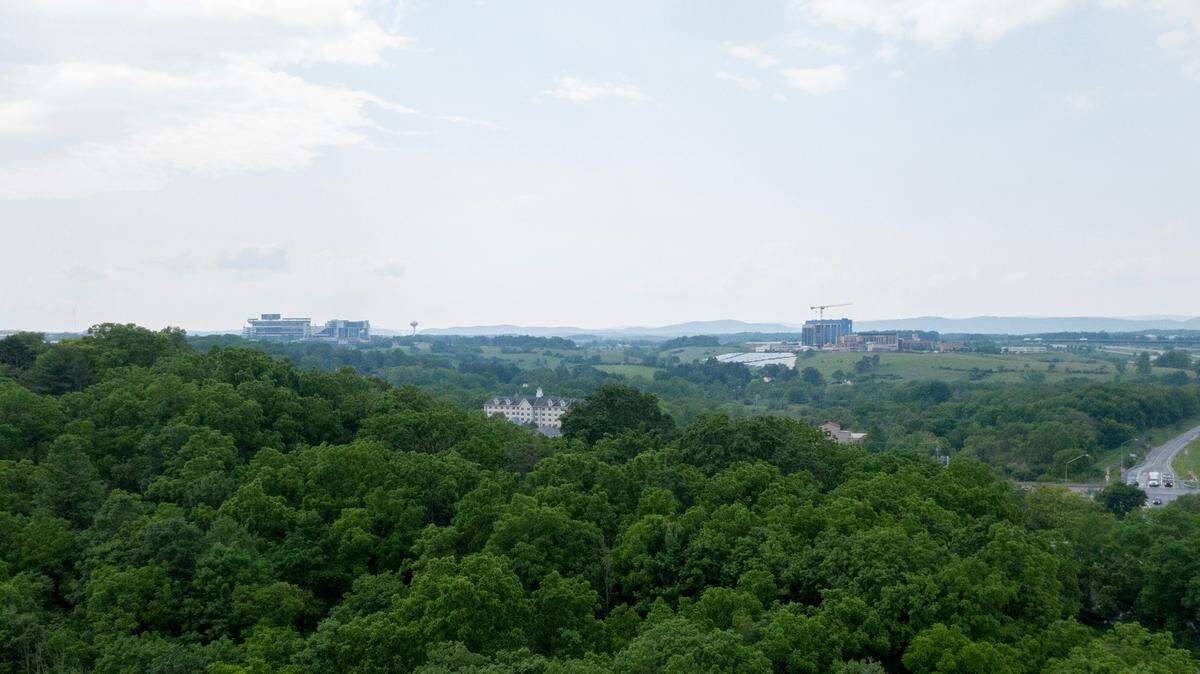
A noticeable haze has again returned to Centre County and central Pennsylvania due to wildfires in Canada — and one expert says area residents will likely be forced to deal with the haze for several days, with the potential for recurring episodes throughout the summer.
According to AccuWeather senior meteorologist Tom Kines, the haze should vary in its noticeability throughout the week and possibly the weekend. But Kines said the haze shouldn’t pose serious health issues in the short term or cause most people to wear masks, unlike the Canadian wildfires from 2023.
“Fortunately, for the most part, the smoke is pretty high up in the atmosphere and is not causing any health issues,” Kines told the CDT. “It’s not out of the question that at some point, if the smoke is low enough and getting close enough down to ground level, that it does become an issue for some, especially those with heart disease or the elderly.
“And, if that happens, those people need to take it easy and not exert themselves. But, for the most part, it shouldn’t be a health hazard.”
In 2023 residents in and around State College could smell smoke after stepping outside on certain days in June, but that’s not currently at issue because of where the wildfires originated. Two years ago, the wildfires were exceptionally widespread with major fires in nearby Quebec and Ontario. Today, the wildfires are mainly focused in the more distant Manitoba and Saskatchewan — meaning, because they’re farther away, the smoke is typically better able to dissipate before it reaches the Keystone State.
Obviously, weather patterns and the location of the wildfires could change, which is why it was difficult for Kines to forecast past this weekend when it comes to the haze’s severity. But the University of British Columbia expects the wildfire season to potentially last into the fall, at least partly due to persistent drought and above-average temperatures.
In other words, don’t expect the haze to go away for good anytime soon. But, if the wildfires stick to Manitoba and Saskatchewan, Pennsylvania shouldn’t experience an overly smoky stretch to the summer like in 2023.
“The farther away the smoke gets from the source region, it spreads out more in the atmosphere and becomes less thick,” Kines explained. “Again, it’s not out of the question over the next few weeks that it may be low enough in the atmosphere that there are some air quality issues, but I don’t envision that happening anytime soon.”
Based on data from AirNow, which measures air quality as part of a partnership involving the Environmental Protection Agency, State College’s air quality Wednesday afternoon remained “moderate,” as did most of Pennsylvania’s. Moderate air quality is defined as being acceptable; however, there is a “a risk for some people, particularly those who are unusually sensitive to air pollution.”
The color-coded scale of air quality includes good (green), moderate (yellow), unhealthy for sensitive groups (orange), unhealthy (red), very unhealthy (purple) and hazardous (maroon). In June 2023, some parts of Pennsylvania reached “unhealthy,” or red, due to the Canadian wildfires.
Because the haze, or particulate matter, is higher up in the atmosphere, that also means more vivid and colorful sunsets and sunrises. Kines said that also made for a moon that looked deep red Tuesday night.
But, he said, that also means blue skies won’t be as plentiful in Centre County early this summer.
“Typically when you get into these summer months like we are now, when we get a wind direction out of the northwest, usually that’s accompanied by a deep blue sky that looks really nice — because, usually, that air is coming from central Canada, where there’s not much air pollution,” Kines said. “I think in the early part of the summer, that’s not going to be the case. It’s going to be pretty difficult to get 1-2 days in a row with that pristine blue sky.
“I think there’s going to be a lot of days where we have to put up with the haze.”