
SPPA killed by Trump policies. Centre County’s solar future is still bright | Opinion
Seven years ago, 15 of our local governments embarked on an ambitious project to reduce electricity costs, support Pennsylvania jobs and tackle climate change. Centre County solar working group’s power purchase agreement (SPPA) was a first-of-its-kind project. It is about to be stopped by the Trump administration’s assault on clean energy. For now.
In 2017, I worked on Penn State’s solar power purchase agreement. A remarkable team finalized a 70-megawatt project with Lightsource bp in Franklin County. The process showed me that projects exceeding 10 MW (50+ acres) in Pennsylvania could achieve lower costs than traditional fossil fuel generated sources and support PA jobs.
At the time, I was also on the Ferguson Township Board of Supervisors. Working with finance directors, planners other appointed and elected officials, I formed a working group to aggregate our power with the State College Area School District as the fiduciary. The district, Centre County, the Council of Governments and several municipalities and authorities assembled enough demand to create an attractive project for a developer. After bids were reviewed, we selected Prospect 14 from Ardmore, Pennsylvania.
All costs included, the price over a 15-year term was projected to save well over a million dollars. Annually, the SPPA would avoid thousands of tons of carbon dioxide, reducing contributions to the climate crisis. It would be developed in Pennsylvania by a Pennsylvania company with Pennsylvania contractors for Pennsylvania customers. Polling by the Centre Region Planning Agency and the Yale Center on Climate Change Communication, repeated clean energy candidate victories, and informed public comment proved the PPA was popular. In 2025, all signatures were in place. But there were headwinds.
Upon taking office, President Trump signed Executive Orders attacking renewable energy certificates, set highly restrictive Treasury rules on technology from “foreign entities of concern,” and hit imports with tariffs. Under questionable legal theories, the administration stopped clean energy and electric vehicle appropriations.
Most importantly, H.R. 1 devastated underlying financial certainty in the solar and wind markets that had existed for decades. While investment and production tax credits had oscillated and faced possible sunsets over the last 30 years, no administration — including the first Trump administration — ever threatened to just destroy them. Twenty-one Republican Representatives wrote a letter in 2025 saying that sunsetting these tax credits would hurt consumers and harm American energy dominance. It followed a similar letter from 18 Republican Representatives in summer 2024. They all voted for H.R. 1 anyway. President Trump signed it into law on July 4, 2025.
The consequences are predictable. In 2025, E2 found “companies cancelled, closed, or downsized” over $34 billion in clean energy projects with a net loss of more than 15,000 clean energy jobs. Our SPPA and more to come will only add to this number.
Meanwhile, electricity prices will continue rising by at least 5% per year until 2030 because of data centers and other factors. It has gone so badly Pennsylvania Republican Rep. Brian Fitzpatrick says he will reintroduce the renewable energy tax credits in future legislation. The only energy capable of being deployed fast enough to meet this demand is solar.
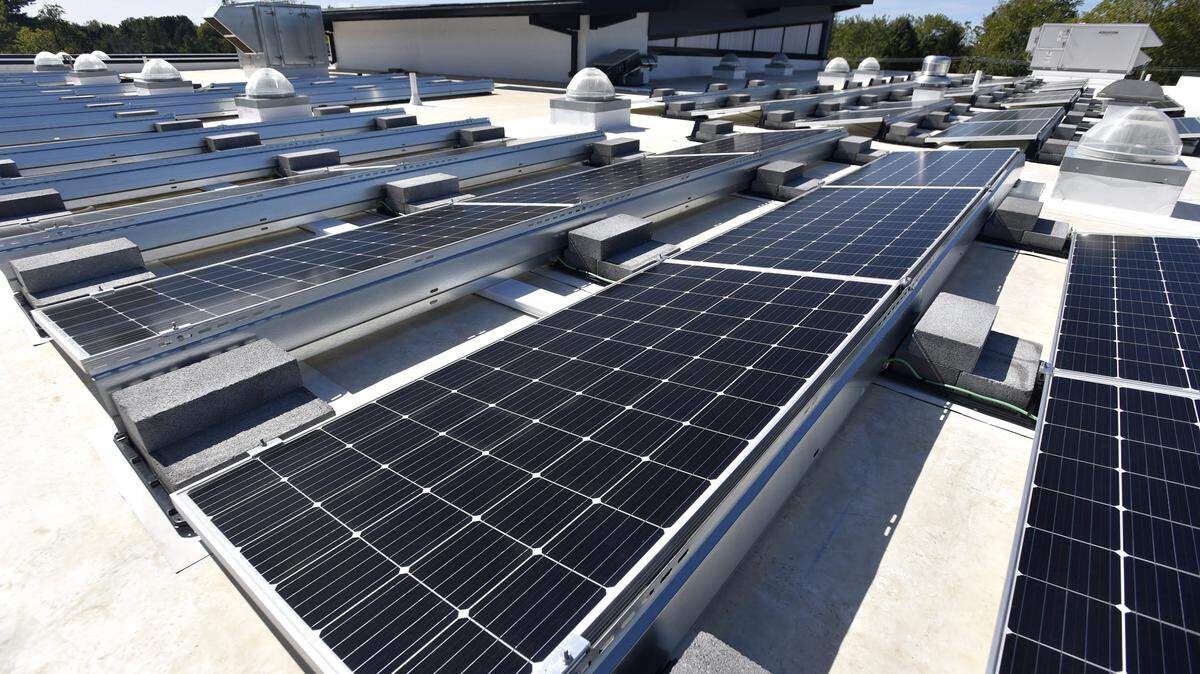
Here is the good news. Since 2021, PPA partners Centre County, Ferguson Township, State College Borough Water Authority, and the State College Area School District have completed five onsite solar projects with more on the way. The Park Forest Middle School will have solar backed by a Solar For Schools grant. State College Manager Tom Fountaine informed the SPPA working group on Friday that the Borough will be building rooftop solar arrays in the next five years.
This SPPA may be done but the story isn’t. The public desire to tackle climate change is rising. Grid resilience will demand creative solutions. Budget stress will require a response. This region wants more solar energy. Fortunately, the knowledge, skill and willpower is thriving in our local governments. It is only a matter of time before we try again ... and succeed ... more.
Peter Buck is the former chair of the Centre County Solar Working Group and served on the State College Area School District Board of Directors and Ferguson Township Board of Supervisors. His opinions are his own and do not reflect any organization with which he is affiliated.