
Letters: Environment, future depend on retaining justices; Loss of WPSU threatens democracy
Environment, future depend on retaining justices
Born in Pennsylvania and here forever, I take pride in our state constitution’s promise of clean air, pure water, and preservation of the environment for future generations. That promise is only as strong as the judges who uphold it.
The Pennsylvania Supreme Court has continually done exactly that. Our current Supreme Court judges are independent and rule by law and not by ideology.
In the landmark Robinson Township case, the court protected communities from harmful drilling laws. In 2021, the court reaffirmed that funds from oil and gas drilling must be used to preserve our environment.
Soon, the court will decide whether Pennsylvania can participate in the Regional Greenhouse Gas Initiative, which would reduce carbon pollution and strengthen our clean energy economy.
We need justices who respect the Constitution and the rights of everyday people.
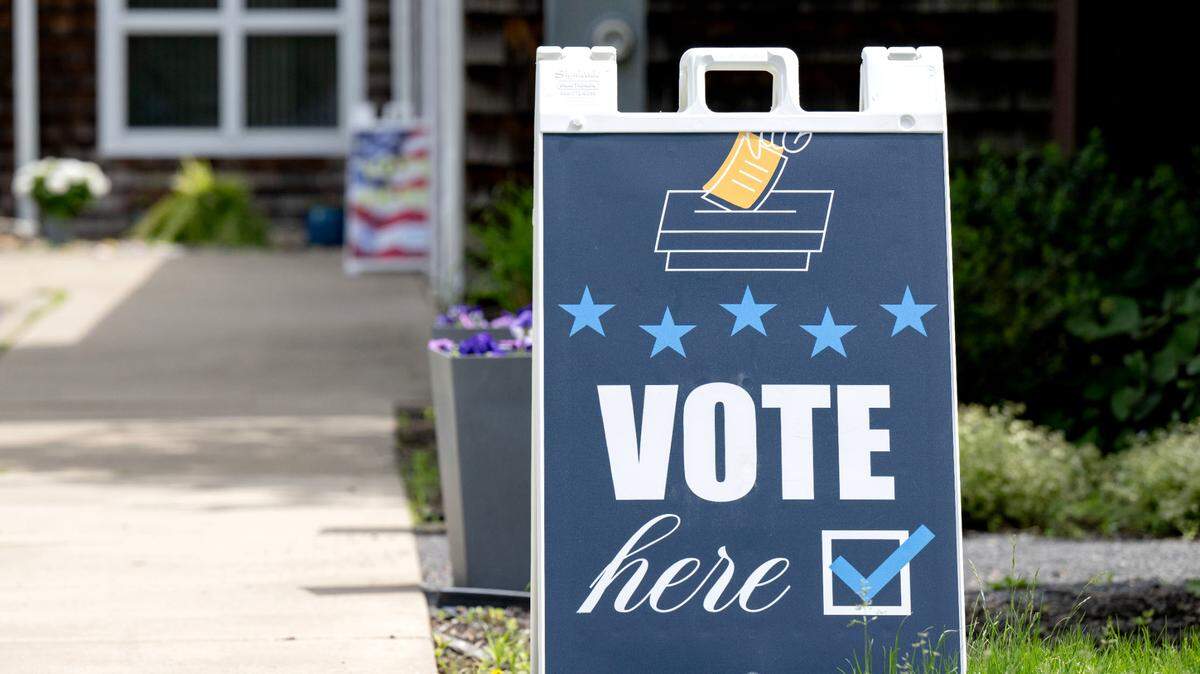
This November, I urge voters to retain Justices Donohue, Dougherty and Wecht. Our environment, our health, and our future depend on it.
Nancy F Parks, Aaronsburg
Loss of WPSU threatens democracy
Freedom of speech is supposed to be untouchable — the one value Americans can agree on. But today, it is being dismantled right in front of us.
Penn State is preparing to close WPSU, our community’s PBS and NPR affiliate. WPSU reaches more than 515,000 households on TV and 450,000 radio listeners, but the university slashed its budget by nearly $800,000, while federal cuts pulled away another $1.1 billion nationwide. That’s why WPSU is closing. Not because the mission isn’t valuable, but because the funding was pulled away.
And here’s what happens when small, public-minded stations die: corporations swoop in. Nexstar Media is trying to buy Tegna in a $6.2 billion deal that would give it control of 265 TV stations and nearly 80% of U.S. households, far beyond FCC limits. That isn’t a marketplace of ideas. That’s consolidation — and it edges us closer to a country where billionaires and politicians decide what you get to know.
That’s why common knowledge matters. A democracy depends on shared facts, even when we disagree about what they mean. Listening doesn’t require adopting someone else’s views; it means trying to understand, and in that process, building a foundation of truth that belongs to everyone. Without that, democracy erodes — because an uninformed, divided public is exactly what weakens it.
So ask yourself: what kind of future do you want? Is “winning” an argument worth losing your freedom of speech? Or will we protect knowledge, listen beyond echo chambers, and keep democracy alive?
Kelly Driftmier, State College
Be engaged in sign regulation discussion
In June, College Township was asked by Penn State Athletics to consider revising the ordinances — the local laws — that regulate signs on large event venues such as Beaver Stadium and the Bryce Jordan Center. While no specific proposal has been made public, the request could allow for major changes in both the size and types of signage permitted at these venues.
The CT Planning Commission and CT Council are now in the process of deciding whether, and how, to change these local laws. The outcome could affect signage not only at Penn State, but possibly throughout the township, including the area near the mall.
Whether you support or oppose the issue, don’t sit this one out. Whether you speak at a public meeting, join by Zoom, or write to decision-makers, it’s important that the public’s voice be heard.
Too often residents learn about proposals only after decisions are made, when it’s too late to have an impact. It’s crucial to comment while decisions are under review.
You don’t need to be a CT resident to speak. Regarding the casino development and changes to ordinances, it was those who participated — in person, on Zoom, or through letters — who shaped the outcome. Silence leaves decisions to others.
The CT Planning Commission meets the first and third Tuesday evenings, and the CT Council on the first and third Thursday evenings.
Agendas/minutes are posted at www.collegetownship.org/AgendaCenter.
Zoom links are at www.collegetownship.org/229/Participating-in-Upcoming-Meetings.
Send written comments to council@collegetownship.org.
Don’t leave the future to others. Make your voice part of the process.
Martha Young, State College
Quakers urge courageous action in Gaza
As Quakers, we recognize the divine in every human being and right of all to live safely and without fear. We are compelled to speak truth with integrity, including where it is uncomfortable, and do so with love. This requires us to speak against the catastrophic violence in Gaza.
Friends have a long history of working for peaceful coexistence and justice for all people in the Middle East. However, through our decades of humanitarian work with Palestinian and Israeli communities we have witnessed the relentless erosion of justice.
After deep communal and prayerful discernment, informed by Quaker direct witness in Palestine/Israel and our readings of the positions of international human rights organizations, international and Israeli genocide scholars, and experts on the UN Genocide Convention (1948), under which all states have the legal duty to prevent genocide, we believe with moral clarity, and in line with Article II of the UN Genocide Convention, that the current actions in Gaza perpetrated by the Israeli government, constitute genocide.
We call for:
1. An immediate, permanent ceasefire and full humanitarian access.
2. The application of robust, targeted, and timebound sanctions, including a comprehensive arms embargo, aimed at ending Israel’s genocide in Gaza, oppression and apartheid.
3. Accountability under international law.
4. Protection of free speech and the right to protest.
5. Establishing a just and permanent peace.
In Palestine and Israel, peace built on equality is the only path forward.
Jackie Bonomo, Lemont. The author is the co-clerk of State College Friends Meeting.