
Filippelli: Happy Valley reality check: What are the solutions?
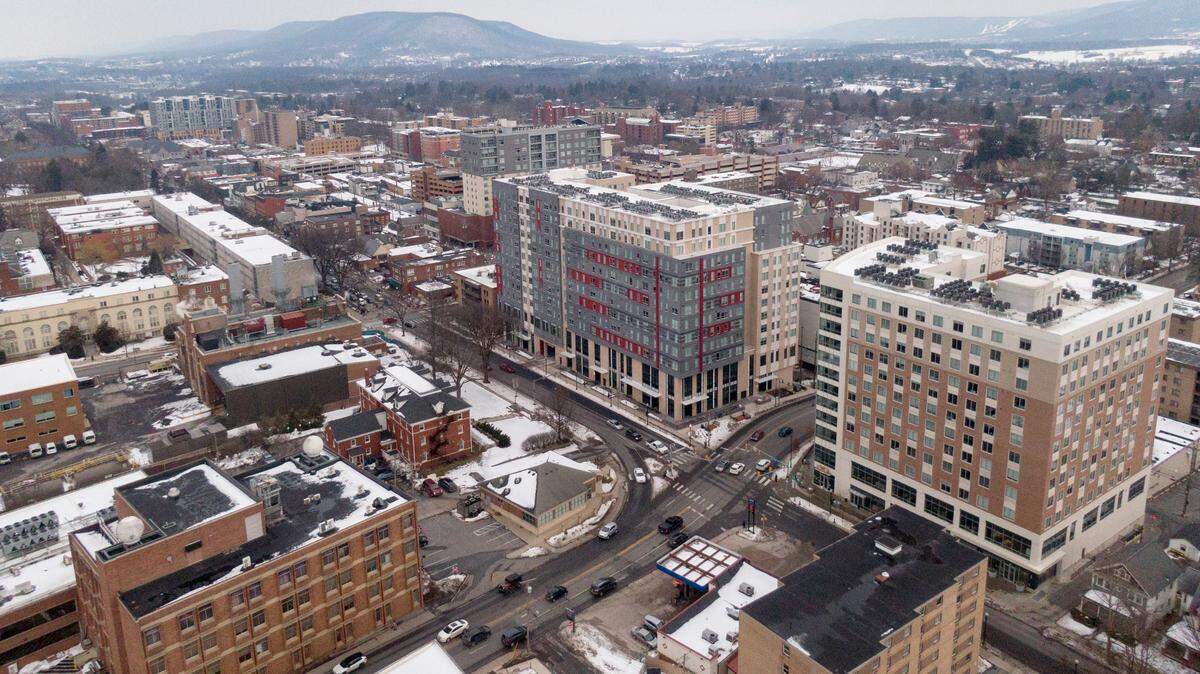
State College is a vibrant, award-winning community and a great place to live, play and work. An efficient, corruption-free government, bolstered by community volunteers, provides excellent public services. We are a leader in terms of walkability, bike infrastructure, safety and regional cooperation. In these and many more ways, we are the envy of other Pennsylvania towns and small cities. Credit goes to the leadership the borough has enjoyed over the years. But there are challenges on the horizon.
For those interested in future prospects, the first thing to keep in mind is that the area of the borough is approximately 4 square miles. The second is that within these 4 square miles sits one of the largest universities in the United States, making State College the fourth most densely populated municipality in Pennsylvania. Of the borough’s roughly 40,000 residents, over two-thirds are Penn State students, almost all of whom live in rental properties. That leaves around 12,000 non-student residents, including children and retirees. Another way to look at it is that there are approximately 3,000 family households in the borough. That number has been in steady decline for a number of years as families continue to move out of the borough. They have largely been replaced by Penn State students.
Why does this matter? The borough levies four major taxes: property, earned income, public-services and real-estate transfer taxes. Keep in mind that students require all of the public services required by non-student citizens. But the vast majority of students pay only the property tax through their rents. Few of them pay earned-income taxes, and few pay the $52 public-services tax, which requires a $12,000 annual income threshold. As a result, the vast majority of the revenue to fund the general budget of the borough, not including water, sewer and refuse collection, comes from property and earned-income taxes. With the steady decline in the number of families, the earned-income tax is flat and declining in constant dollars. That leaves the property tax. But consider that nearly 50% of the assessed value of borough property is tax-exempt, including most of the university.
What about the big commercial property owners? Don’t they make up the difference? No, they do not, even though large commercial and residential properties make up the top tier of property taxpayers. But high-density residential properties yield the highest ratio of service demand over property-tax revenue. Few citizens know that residential rental-property owners (a relatively small number of individuals and corporations that own large numbers of properties, including large student complexes and converted houses) pay no earned-income taxes to the borough on the income gained from rentals. That is the law in Pennsylvania — one of the many Pennsylvania statutes that handicap municipalities in the state. It is true that commercial property owners pay local school property taxes. Given that few of their tenants send children to the schools, their payments constitute a substantial bonus for the school district. But none of this money comes to the borough.
Given this reality, it is not surprising that borough budgets increasingly have been unbalanced, resulting in periodic increases in what are already the highest property taxes in the Centre Region. In the past several years, a reckoning has been averted by two temporary factors: a one-time windfall in real-estate transfer taxes as a result of the large student apartment complexes being built downtown, and federal monies coming from the pandemic relief legislation. These have provided breathing space, but they are unlikely to be repeated.
What are the options? Consolidation of regional municipalities should be considered. Changes in state law, such as a drinks tax, which allow municipalities more revenue options, are necessary. Finally, Penn State has to play a much larger role in helping the borough, including, but not limited to, increasing its annual contribution to the borough in lieu of property taxes.