
Opinion: State College must choose housing abundance, public transit, pedestrianization
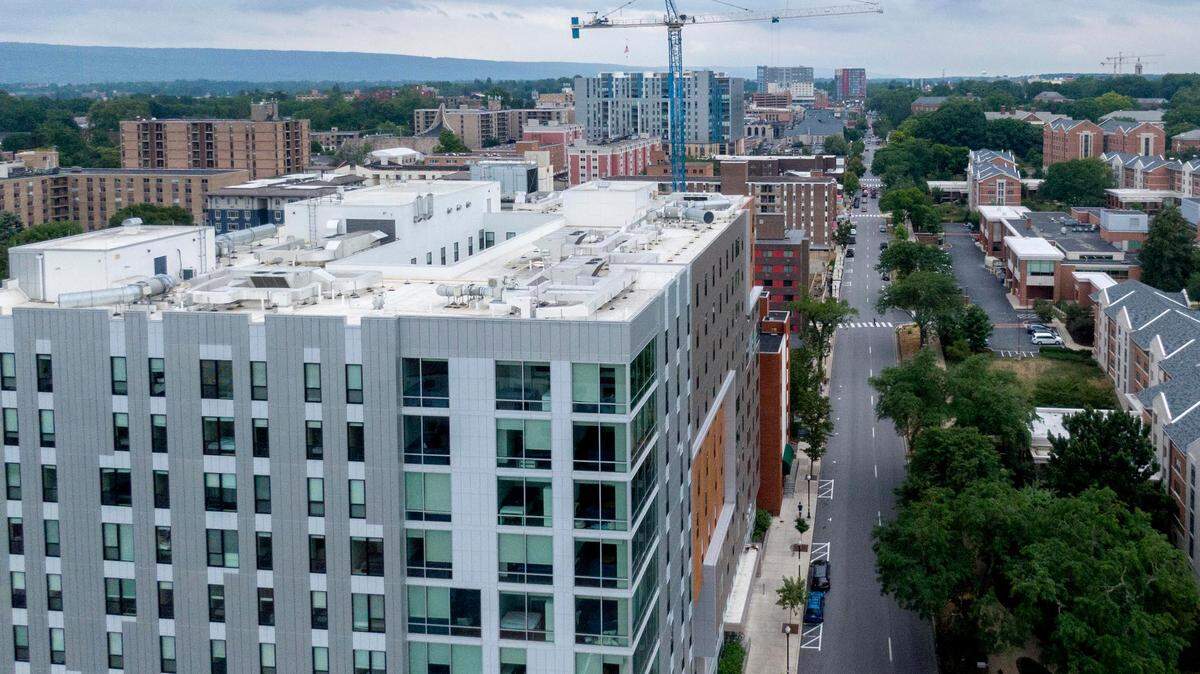
As Happy Valley faces climate change, an increasing population, and rising housing prices, our local elected officials have taken up the mantle of all of the wrong policies: opposing the construction of new student housing; mandating and subsidizing the use of cars and encouraging new suburban development on the fringes of town.
The recent pause on student housing construction downtown is emblematic of how State College claims to have a progressive vision, but in reality upholds a reactionary status quo. There is a wide body of evidence that suggests that construction of new housing reduces overall rent in the market. Yet Borough Council offers a constellation of reasons and excuses for why they oppose student infill housing: that new housing doesn’t conform to their aesthetic tastes or sense of nostalgia, that these new units are unaffordable and that construction is the cause instead of the effect of rising rents, and that it is somehow problematic that a majority of people living adjacent to campus are students.
As council bickers over whether more students should live in a municipality named State College, the population of the Centre Region — the collection of municipalities that surround Penn State — has been increasing. Student renters are feeling the pinch from landlords emboldened by a tight housing market: look no further than the years of litigation from then-Attorney General Josh Shapiro’s office, or the hundreds of students who have sought the assistance of Student Legal Services. When housing production is not commensurate with population growth, the results are increased prices, decreased bargaining power for tenants, and the displacement of long-time residents by students who have more purchasing power.
Meanwhile, outlying municipalities continue to build more of the suburban sprawl that accelerates climate change and mandates car dependency for decades to come. North Atherton Street is a “Stroad” — a dangerous street/road hybrid. CATA continues to have reduced frequencies and increased route consolidation, such as the labyrinthine NV route that turns a ten minute ride into a crowded 30-plus minute ordeal. Instead of dedicated bus and bike lanes on Atherton, College or Beaver, we lend precious space to people who are wealthy enough to own cars. This is no way to govern a region.
Part of the issue is the fragmentation of the Centre Region, as each municipality tries to do its own thing without following a regional vision or plan. Another problem is that though we are the basis of the local economy, students are not a constituency to whom the local body of elected officials answer in any meaningful way — most either do not vote, or are registered to vote at home, like me. But we should not let apathy and complacency prevent us from advocating for reform. We can still enact change so long as we have the political will.
To that end, I urge State College and the Centre Region to embrace an agenda of housing abundance, public transportation and pedestrianization. We must build more infill housing in all neighborhoods, and we must stop blocking high-density student housing adjacent to campus. We must eliminate mandatory parking minimums that give excessive space to cars in one of the most transit-accessible downtown districts in the entire country. We must paint bus lanes, create grade-separated bike lanes on our wide arterial roads, and push CATA to increase service frequencies and reliability. We must treat pedestrians, cyclists, and transit riders as first-class citizens, instead of locking us into the use of gas-powered vehicles. Most importantly of all, we must plan and prepare for how our region will be in the future, instead of romanticizing how it was in the past.