
Opinion: Hands-on learning makes trying new things less intimidating
As children think about their future, they may picture themselves as movie stars, astronauts, or dozens of other career options. The more they get to see and experience firsthand, the easier it is for them to imagine themselves in different jobs. Hands-on learning experiences provide kids with a powerful opportunity to try things they’ve never even considered, and can also introduce them to new career possibilities.
For example, my work at The Rivet offers me a front-row seat to the world of informal education and makerspaces, where kids and adults can learn how to use cutting-edge technology to make their wildest ideas come to life. As a tools-and-technology based extension of Discovery Space, we’re uniquely positioned to teach skills that aren’t typically taught or available in traditional educational settings. By giving kids experience with technology like 3D printers, circuitry and laser cutters, we not only help them unleash their imaginations and hone their DIY skills, but we also get them thinking about related career paths like electronics, engineering, manufacturing and more.
Events like the annual Remake Learning Days offer an even bigger example of how hands-on learning can introduce kids to new career paths. This year, Remake Learning Days will host nearly 900 all-ages events across Pennsylvania. From STEM fairs and nature walks to farm visits and art explorations, Remake Learning Days provides plenty of opportunities to explore subjects and activities that kids might not be able to experience otherwise, which creates a fun and conversation-starting learning atmosphere for the whole family.
Active participation in learning activities can profoundly shape future career exploration. When children engage in diverse fields such as ceramics, carpentry, or computer repair, it opens up the possibility of discovering latent talents or passions. Moreover, the transferability of skills learned in one area to others empowers students to leverage their existing knowledge, enhancing their confidence and expertise. As proficiency grows, individuals may be motivated to explore new avenues, which is a crucial aspect of holistic career development.
This year, The Rivet will host Light-Up Lab on May 18 as part of Remake Learning Days.
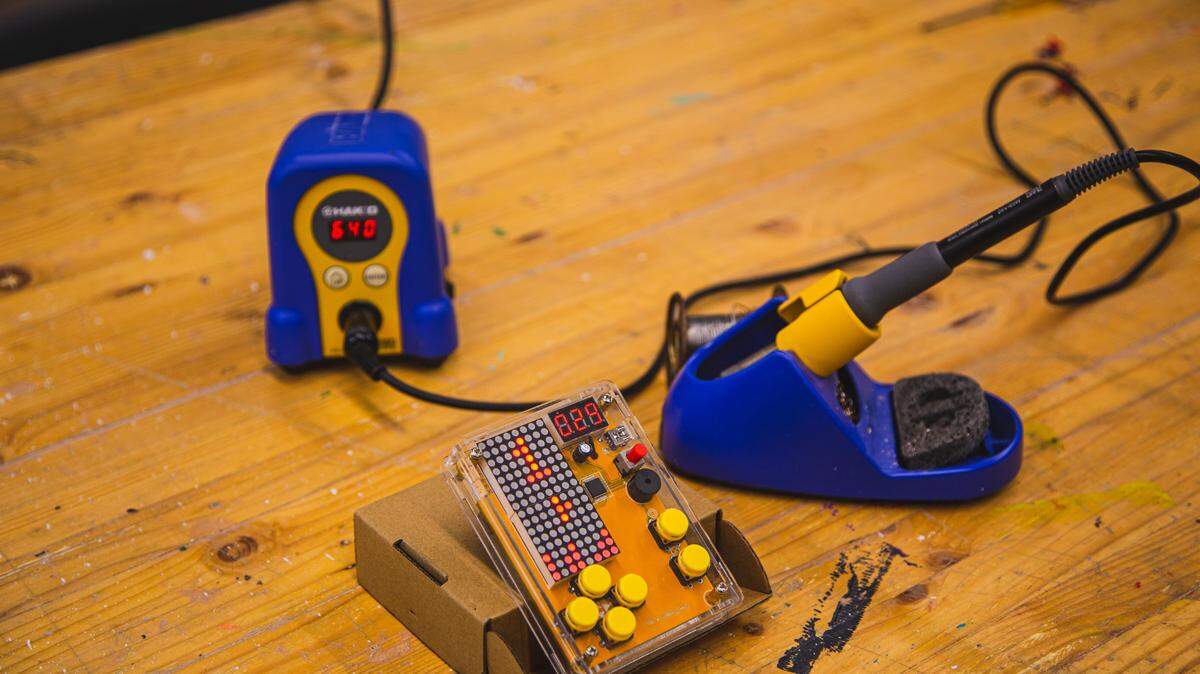
The event gives children ages 8-14 and their parents a chance to explore electronics, lights and lasers. First they’ll make a light-up name tag, which doubles as an introduction to wiring, circuitry and LEDs. Then they’ll practice their soldering skills on a kit to make their own working handheld video game, which they can actually take home and play later. Finally, they’ll make their own small acrylic lamp featuring a laser-etched design of their choosing. In each of these projects, students will get the opportunity to use tools they may not otherwise have access to, or technologies they may have seen demonstrated before but which they’ll now get a chance to operate themselves.
This kind of hands-on learning also provides plenty of opportunities to learn from mistakes, which is ideal for getting over the fear of trying new things. When everyone is learning — and occasionally failing — together, it removes the stigma of perfectionism and encourages more willingness to experiment. For example, when people take their first pottery class at The Rivet, they’re often surprised to see that we recycle everything we made at the end of the first class. Why? Because it teaches an important lesson: as you learn, you’re going to make mistakes and things are going to break, and that’s OK. (We enjoy making hard lessons fun!)
As popular events like Remake Learning Days continue to prove, kids of all ages are excited to explore new ideas in an interactive way that rewards their curiosity and enriches their understanding of science, art, and themselves. That’s why it’s so important to introduce them to as many different kinds of career opportunities as possible. By giving children the opportunity to be electricians, engineers and scientists for even a few minutes, we just might spark a lifelong passion that introduces them to a lifelong curiosity and love for STEM.