
Climate watch: State College church going solar, and other climate-related updates in PA
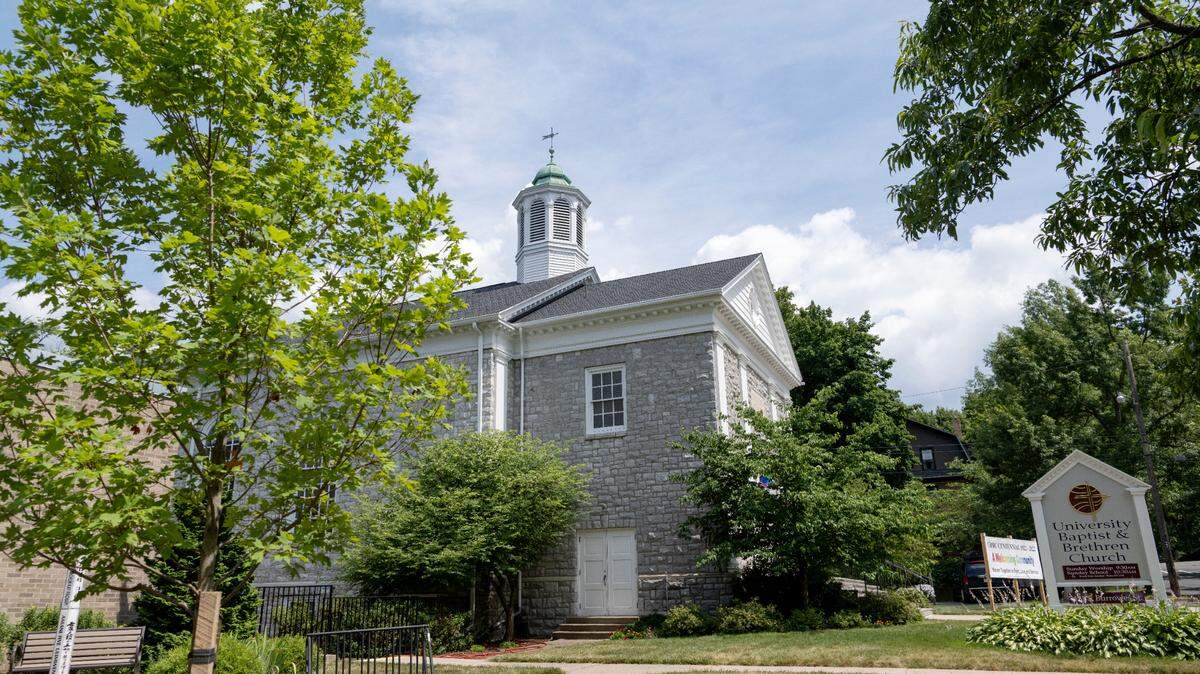
A State College church is moving to solar power. University Baptist and Brethren Church — known in the community as UBBC — this year will put 43 solar panels on the roof of its building at 411 S. Burrowes St. The project is aided by a $20,000 grant from the West Penn Energy Fund. The system, installed by Envinity, will offset more than 100% of the building’s annual 26,000 kWh energy consumption. It is expected to be operational toward the end of 2026.
Here’s more energy and climate-related news from around the commonwealth.
Electricity rates skyrocket
West Penn Power’s electricity rates increased by 15.5% between December 2024 and December 2025. That’s according to an analysis by the Pennsylvania Utility Law Project (PULP).
39 data centers planned in PA
The nonprofit Fractracker.org has identified 39 planned data centers across Pennsylvania. This development appears to have Republican and Democratic political support. Critics, however, say the power-and water-hungry data centers — essential to the development of cryptocurrency and artificial intelligence — will produce few long-term jobs in communities and increase environmental degradation. There are also concerns that homeowners — not the tech giants — will foot the bill through utility rate hikes and public subsidies.
Proposed bill to shield electricity ratepayers
Spurred by grassroots protests in communities against data centers, consumer advocates are urging state lawmakers to tax the data centers to lower residents’ energy bills. House Democrats have proposed legislation to protect Pennsylvanians from costs “directly attributable” to data centers, according to WITF. That measure has been referred to the House Energy Committee.
Less for abandoned mines; more for forestry
On Jan. 23, President Trump signed into law a bill, HR 6938, that would redirect $500 million of the money allocated in 2021 for abandoned mine cleanup projects. Pennsylvania is the state that stands to lose the most under this legislation: a loss of $169 million, according to the publication Farm and Dairy. “The redirected funds will instead go to support wildfire management and National Forest Service operations,” Farm and Dairy reports. Congressman Glenn Thompson voted for the measure.
Creating better concrete
Using 3D printing, researchers at the University of Pennsylvania are developing “alternative concrete mixtures” that are lighter, use less material and require less steel reinforcement, according to WHYY. This is important because concrete production is a major contributor to climate change. It accounts for about 8% of global carbon emissions.
Carbon capture and storage
Penn State and the University of Southern California have formed a partnership to study practical ways to store carbon dioxide underground. Carbon capture and storage is potentially one way to reduce CO2 emissions into the atmosphere and combat climate change. The effort brings together researchers from Penn State’s College of Earth and Mineral Sciences and USC’s School of Engineering. It also includes Penn State researchers at the College of Engineering and Dickinson Law.
Developing climate-resistant plants
Research by plant scientists at Penn State is showing how better matches of genome combinations may help develop hybrid trees that are more adaptable to the conditions of a warming planet. Their work was published in Proceedings of the Royal Society B. “ ... the work could help inform plant breeding to help produce plants that are more resilient to the changing climate,” according to a Penn State press release.
R.W. Jones is a member of the State College Chapter of Citizens’ Climate Lobby. Reach the chapter at PaStateCollege@citizensclimatelobby.org.