
Why America needs a Drone Force | Opinion
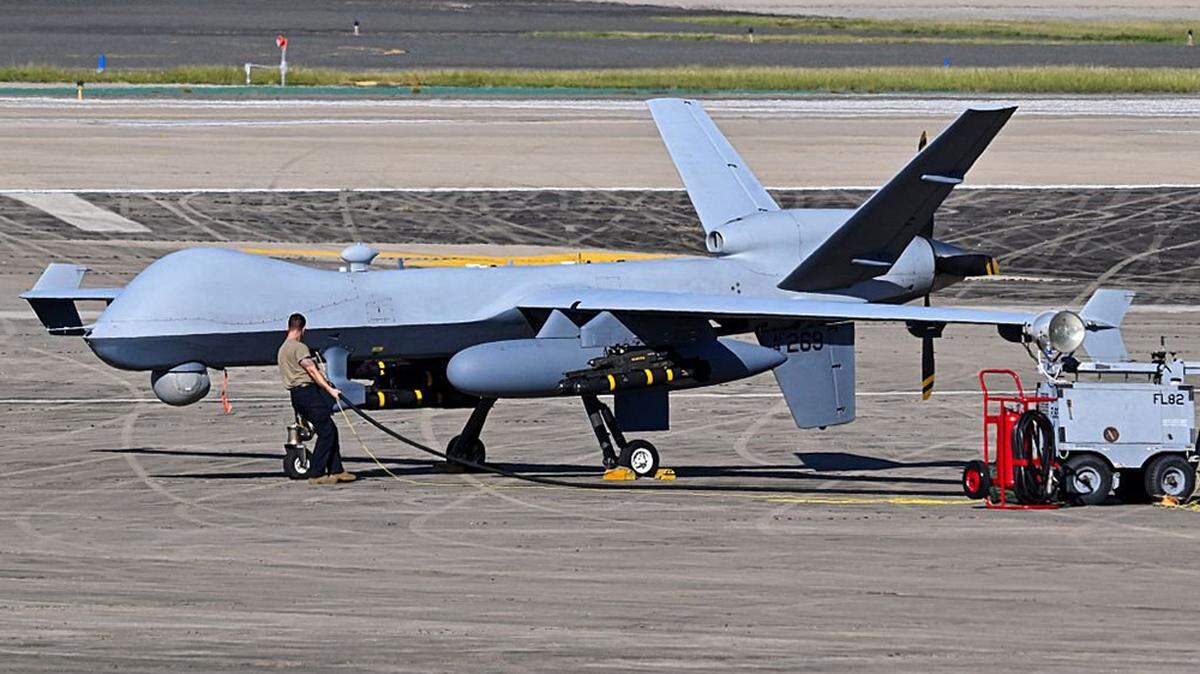
When the United States created the Space Force in 2019, it acknowledged a simple truth: new domains of warfare require new institutions. Today, another transformation is underway — one more consequential than space. The war in Ukraine has demonstrated that drones are no longer toys. They are a backbone of modern combat. To remain militarily credible, the United States should establish a new branch of the armed forces — a Drone Force.
Drones have fundamentally changed how wars are fought. Ukrainian officials have repeatedly stated that a vast majority of enemy losses — often cited as well over half and, in some periods, upward of 70 or 80% — are caused by drones rather than traditional artillery, armor or aircraft. Tens of thousands of confirmed drone strikes occur each month. These are not science fiction numbers. Cheap, expendable unmanned systems are now destroying tanks, air-defense systems, logistics hubs, and even aircraft on the ground at a pace that would have been unimaginable a decade ago.
Part of what makes drones so disruptive is cost. A modern fighter jet can cost over $100 million. A main battle tank costs millions more. Yet many of the drones destroying these assets cost only hundreds of dollars. Ukraine has repeatedly demonstrated that a small first-person-view drone can obliterate a tank, cripple a ship, or knock out a radar system. This flips traditional military economics on its head and positions Ukraine to have a preeminent military force in the world today — perhaps now superior to the U.S. military. The side that can innovate faster, produce cheaper systems at scale, and adapt tactics in weeks rather than years gains a decisive advantage.
Just as important, drones are not limited to the sky. When many people hear “drone,” they imagine a toy-like thing. Drones now operate in every domain. Ground drones carry supplies, evacuate wounded soldiers, and deliver explosives. Sea-based drones — both surface and underwater — have damaged warships, disrupted naval logistics, and challenged conventional fleets. Autonomous underwater vehicles now threaten expensive platforms. The battlespace is saturated with unmanned systems moving above, across, and beneath it.
The next evolution is even more unsettling — and more important to prepare for. Drones do not need to be large at all. They can be insect-sized, capable of surveillance, electronic disruption, or targeted attack. Looking further ahead, they may not even resemble machines in the conventional sense. Advances in nanotechnology raise the possibility that future “drones” could be nanites — microscopic or near-microscopic systems operating in swarms. Whether deployed for reconnaissance, cyber-physical attack, or counter-drone defense, such technologies would represent a profound shift in warfare. Pretending this future does not exist will not stop U.S. adversaries from pursuing it.
Despite this reality, the U.S. military still treats drones as accessories to legacy forces. They are scattered across the Army, Navy, Air Force and Marine Corps — each with different priorities. This fragmentation slows innovation. Ukraine’s experience shows that drone warfare demands constant iteration — new designs, new tactics, new countermeasures — often developed and fielded in weeks or days. That kind of speed is difficult inside institutions built around decades-long acquisition cycles.
A dedicated Drone Force would solve this problem. Its mission would be singular: dominance in unmanned and autonomous warfare. It would develop doctrine specifically for drone operations, train specialists whose careers are centered on unmanned systems, and oversee procurement designed for rapid mass production rather than boutique platforms. It would integrate air, land, sea, space, microscopic, and subsurface drones into a unified operational concept rather than forcing them into bureaucratic silos.
A Drone Force would not replace existing branches. Just as the Space Force supports and enhances joint operations, a Drone Force would act as a force multiplier — providing capabilities that protect U.S. service members, extend reach and impose overwhelming costs on adversaries. It would also ensure the United States is prepared not just for today’s drones, but for tomorrow’s swarms, autonomous systems, and even nanite-scale technologies.
The lesson from Ukraine is unmistakable: the future of war belongs to those who master unmanned systems. America can either adapt its institutions to this reality — or watch others do it first.
William J. Rothwell is a State College resident and president of Rothwell & Associates, Inc., an HR consulting company, and a distinguished professor emeritus and academy professor at Penn State. His opinions are his own and do not reflect opinions of the university.