Practices? Eligibility? Penn State’s baseball, lacrosse coaches discuss impact of the coronavirus
While fields, courts and stadiums remain empty across the nation due to the spread of COVID-19, the disease caused by the coronavirus, college coaches — such as those at Penn State — are trying their best to guide their players during these unprecedented times.
Penn State men’s lacrosse coach Jeff Tambroni and Nittany Lions baseball coach Rob Cooper joined the media via conference call Tuesday afternoon to discuss the challenges, hopes and realities of working through a global pandemic. Especially after the Big Ten canceled their respective seasons.
Here’s what they said:
Practices
Although there will be no games or competitions this spring, that doesn’t necessarily mean there won’t be practices.
As it stands, as of Tuesday afternoon, Penn State students will technically be allowed to return to campus in time for class April 6. And, according to the university, organized team activities like practices will also then resume April 6. That date is subject, and virtually expected, to change. But, even if normalcy returns sooner than expected, neither coach said it was a guarantee that practice would resume — even if practice was cleared by the university, conference or NCAA.
“Let’s just say, hypothetically, our guys did come back and the world was, so to speak, restored to a more normal day-to-day behavior and we could spend more time around and with each other,” Tambroni said. “That would be a conversation we’d have at that point.”
After a monthlong absence from school, players might need to re-adjust academically. They might be out of shape. They might be mentally drained. And Tambroni said that throwing them immediately into practice likely wouldn’t be beneficial. Eventual practices? Absolutely. “I do think it would be a healthy addition to every guy’s day,” he added. But there are a lot of other factors at play besides simply being allowed to resume.
Cooper tended to agree.
“I’ve got to evaluate where these guys are at because you don’t want to throw them right back to practice like they were practicing yesterday,” the baseball coach said. “You don’t want to assume they are where they’re going to need to be physically.”
Tambroni said, if the opportunity presents itself, he’ll “probably” have his players vote on what they want to do. He won’t force them to practice if their minds are elsewhere.
“I would not do it based on a dictatorship model of, ‘This is what we’re going to do,’” Tambroni said.
Eligibility/Seniors
The NCAA announced Friday it intended to offer eligibility relief to student-athletes in spring sports — meaning Penn State’s baseball and lacrosse seniors should get an extra year — but the details are still far from finalized.
In a statement Friday, the NCAA said it would take “days and weeks” to come up with a plan to make sure everything’s done in accordance with the organization’s rules and so the appropriate governance bodies are involved.
Despite being light on details, though, Cooper and Tambroni are cautiously optimistic.
“I talked to our seniors about it, and it’s something they took solace in,” Tambroni said. “It’s one thing that put a smile back on their face during this challenging time.”
Added Cooper, whose team consists of just three seniors: “At this time, I don’t know what they’re going to to do. ... I want all three of them to come back.”
Penn State baseball has a young, rebuilding roster that’s focused on growth. Men’s lacrosse was expected to compete for the national championship with its 44-player roster consisting of 13 seniors, six of whom were returning All-Americans.
For Tambroni, whose team was ranked No. 7 nationally, the eligibility question is an important one. Will he be capped at how many seniors he can bring back? If they do come back, what happens to future recruiting classes? How much will teams be allowed to go over the scholarship count next season?
At this point, Tambroni has advised his lacrosse seniors to take a step back, speak with their families and reflect on what’s in their best interest. Some could very well choose to play professionally; others might want to return.
“And once you come to grips with what would be in the best interest of you and your family, and then the NCAA lays out the logistics and details, let’s starting having conversations to see if it makes sense to have one, two or all of these guys come back to Penn State and enjoy another year of camaraderie together,” Tambroni said.
“We’re just kind of waiting.”
Staying in shape/keeping in touch
Both coaches have had to adjust, re-adjust and plan to re-re-adjust.
Initially, for example, Cooper and Tambroni’s respective strength coaches planned to have most players attend nearby gyms. Now, with nonessential businesses in Pennsylvania set to close for the next two weeks, and other states taking similar approaches, gyms are no longer an option.
For Cooper’s baseball team, that means putting together a workout routine with limited materials. Maybe it’s working out with resistance bands, jogging in the park or “maybe pushing a car.”
“It’s definitely a challenge,” Cooper added. “But it’s something that could be done.”
Tambroni has so far made the workouts voluntary because his student-athletes are also having to adjust to classes being held online, along with the changes the rest of the country has experienced — crowded grocery stores, coronavirus panic, etc. So, although the men’s lacrosse strength coach has also created a workout plan, the lacrosse team is attempting to provide its players more exercise options.
“For us, it’s recommendations of options instead of, ‘This is a requirement to be a part of Penn State,’” Tambroni said. “We’ve been very careful to make sure we’ve offered these guys more offers of assistance.”
Tambroni said he wants to give his student-athletes some space so they can adjust to everything, but he wants his team to know that both he and the support staff are always available. Cooper has a team conference call scheduled for Wednesday, along with a group message board, and checked in with his team Monday to make sure they were in contact with their academic advisor.
“It’s a lot of work putting a plan in place for the next two weeks and then continuing to build off it depending on how things go, as far as how this virus plays out,” Cooper said.
Finding out about canceled seasons
About 20 minutes before Penn State’s baseball game Thursday, Cooper discovered that the season was about to be canceled. He decided not to tell his players — until afterward.
“I wanted them to enjoy the game,” he said.
Penn State lost 5-1 to Miami (Ohio), and he gathered up his team to inform them after the loss. His message?
“I know it hurts, but I think one thing our players and I and our coaching staff agree with: What’s going on in the world now is a lot bigger than all of us,” Cooper said. “And people wouldn’t be taking these drastic measures if they didn’t think it was going to help on a larger scale.
“As hard as it was to say goodbye to that group of players, and to have so many questions I couldn’t answer, it doesn’t make it any easier. But our guys understood why.”
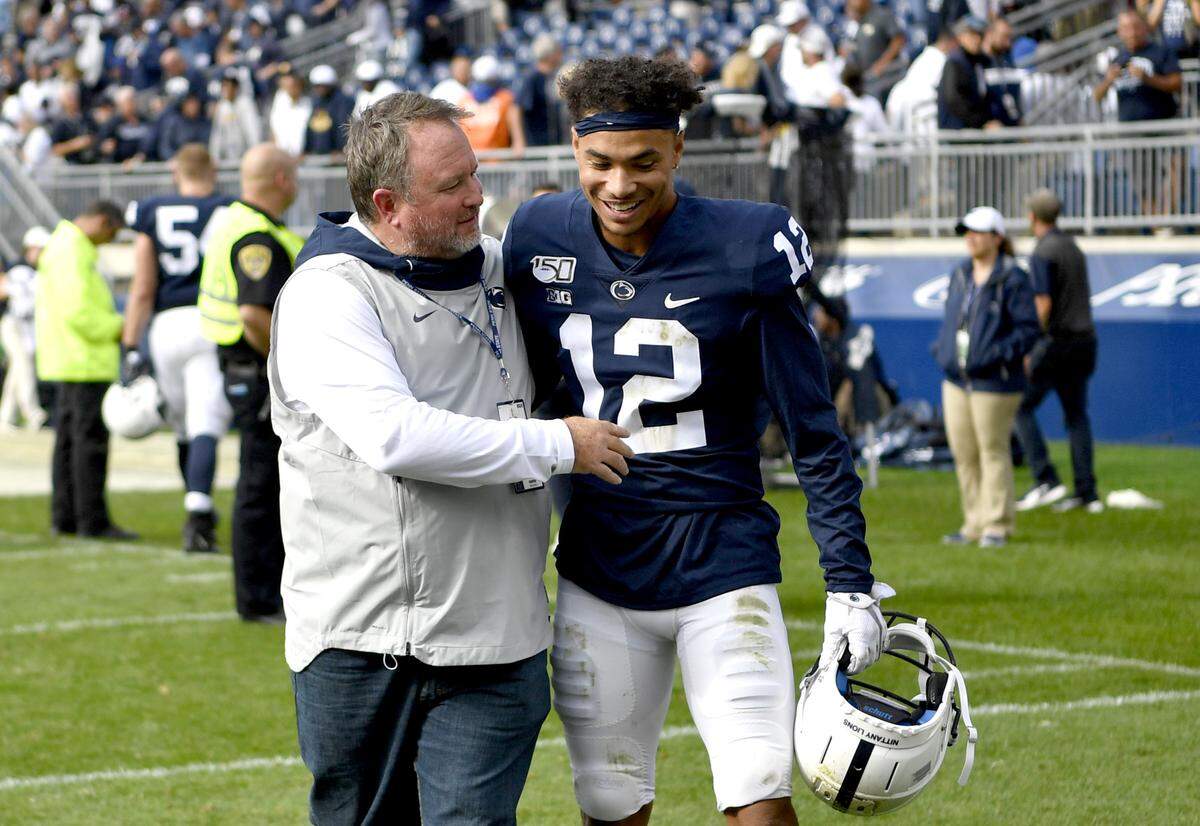
Cooper said the news was especially a “gut punch” to his seniors, who didn’t know at the time they would qualify for an extra season of eligibility. Tambroni felt the same way, as he and his players discovered the news on social media during a bus ride back to Happy Valley.
Tambroni addressed his team inside the bus once the NCAA released a statement. His team then pulled over to a rest stop, he met with his seniors during “a pretty emotional and awkward time,” and he tried his best to guide them during a day full of unknowns.
Like Cooper’s seniors, they felt a lot better after the NCAA’s eligibility announcement less than a full day later.
“I was really impressed with how swift the NCAA was in their statements about granting a waiver for eligibility,” Tambroni said, “and I think it was a breath of fresh air for our guys.”
The news of the canceled NCAA seasons came a day after the NBA had suspended its season, so players were disappointed and surprised — but not completely taken off-guard.
“It’s been a challenging couple of weeks having to try to deal with things that none of us really have a solution or an answer to,” Tambroni said. “In the competitive world, we’re used to having game plans and this has been a challenging time for all of us.
“At the same time, we are extremely cognizant of the big picture and the perspective that’s more global.”
This story was originally published March 17, 2020 at 5:24 PM.