How much did the pandemic cost Penn State’s athletic department? Here are updated projections
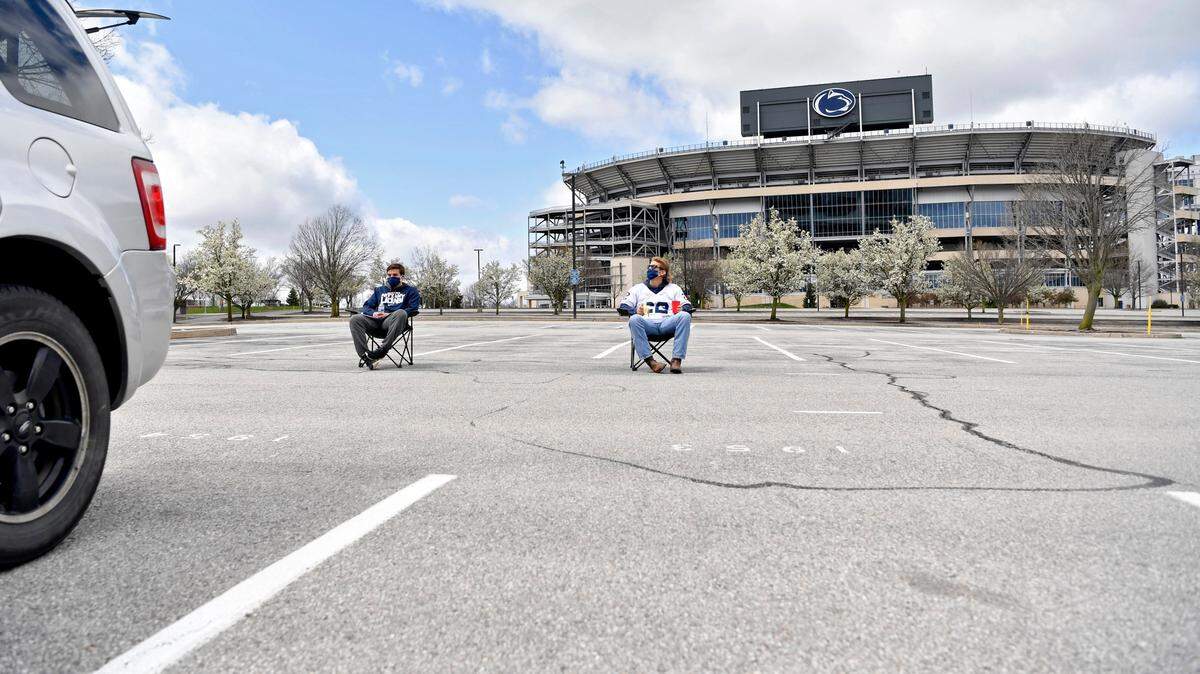
Penn State is on pace to see athletic department revenue decline by about $60 million this fiscal year while operating at about a $35 million loss, a significant impact that was characterized as close to a best-case scenario during the pandemic, according to Athletic Director Sandy Barbour.
Barbour, who gave the budget report during Tuesday’s faculty senate meeting, provided projections that aligned with several past estimates. The losses were widely expected. But she also outlined in greater detail where the department lost the most revenue and had the highest expenses during the pandemic.
Ticket sales, for example, had the biggest impact on lost revenue — about $45 million in all — although that total also included part of the previous fiscal year. (The university’s fiscal year runs from July 1 through June.) Other forms of lost revenue included Big Ten media rights ($9.4M), sponsorships ($4.5M), other game day revenue ($5.4M) and the Nittany Lion Club ($6M).
Such losses have been relatively routine for some of the nation’s top athletic departments. Penn State was forced to borrow $25 million to cover its losses — it also tapped the department’s reserves, which totaled about $10 million — but that compared favorably to some other Big Ten schools. Iowa’s athletic department, for example, announced earlier this month it needed to borrow $50 million.
In August, Barbour told the board of trustees that a $50 million deficit would be a worst-case, or possibly moderate-case, scenario for Penn State. The best-case scenario? A need for $20 million to $25 million in debt service, which is where intercollegiate athletics currently stands because football and other sports played in the fall.
With revenue decreasing during the pandemic, expenses obviously needed to decrease, too. Barbour intimated that wasn’t necessarily easy, considering all the additional COVID-related costs such such as testing ($6.32M), additional scholarships ($750K) and PPE/sanitation ($752K). But she also detailed the department’s $37.5 million in reductions:
- Operating budgets (administrative; individual sport units): $30.5 million
- Personnel (Salary cuts; furloughs; reduction in part-time hours; position holds): $3.7 million
- Debt (refinanced): $2 million
- Other expenses (summer school): $1.3 million
For a complete look at the athletic department’s projected finances, and to see Barbour’s powerpoint presentation, visit Penn State’s faculty senate website at senate.psu.edu.