Is NIL good for college athletics? Penn State experts debate, disagree
AI-generated summary reviewed by our newsroom.
- Penn State debate featured two emeritus Kinesiology professors arguing NIL's merits.
- 2021 Supreme Court ruling found the NCAA not exempt from antitrust law.
- Both experts agreed Trump’s executive order will not affect college sports.
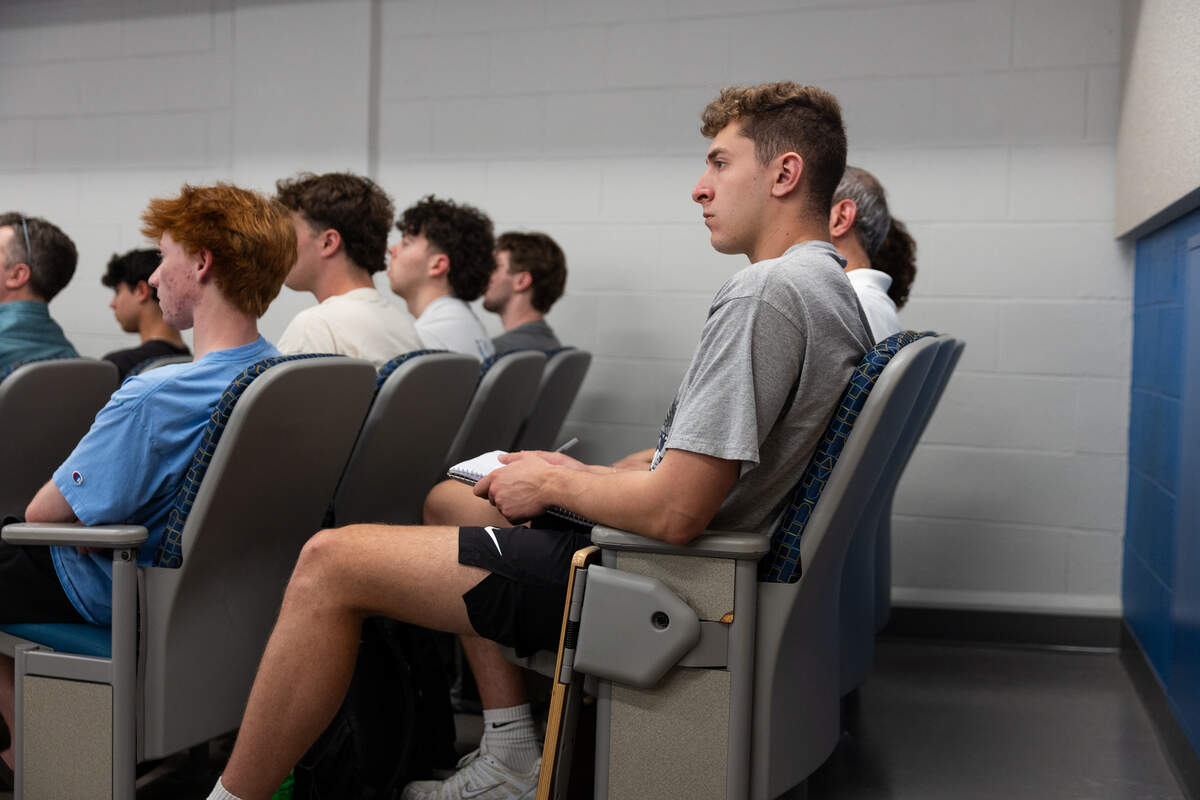
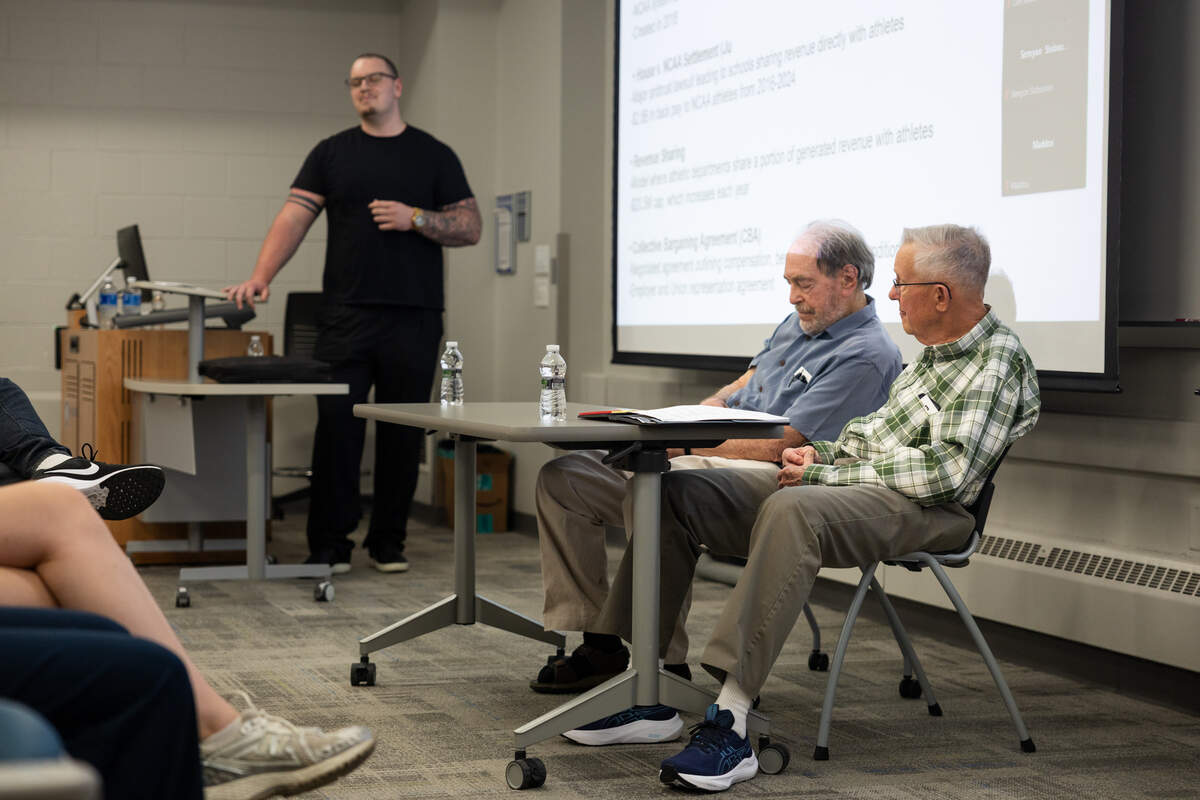
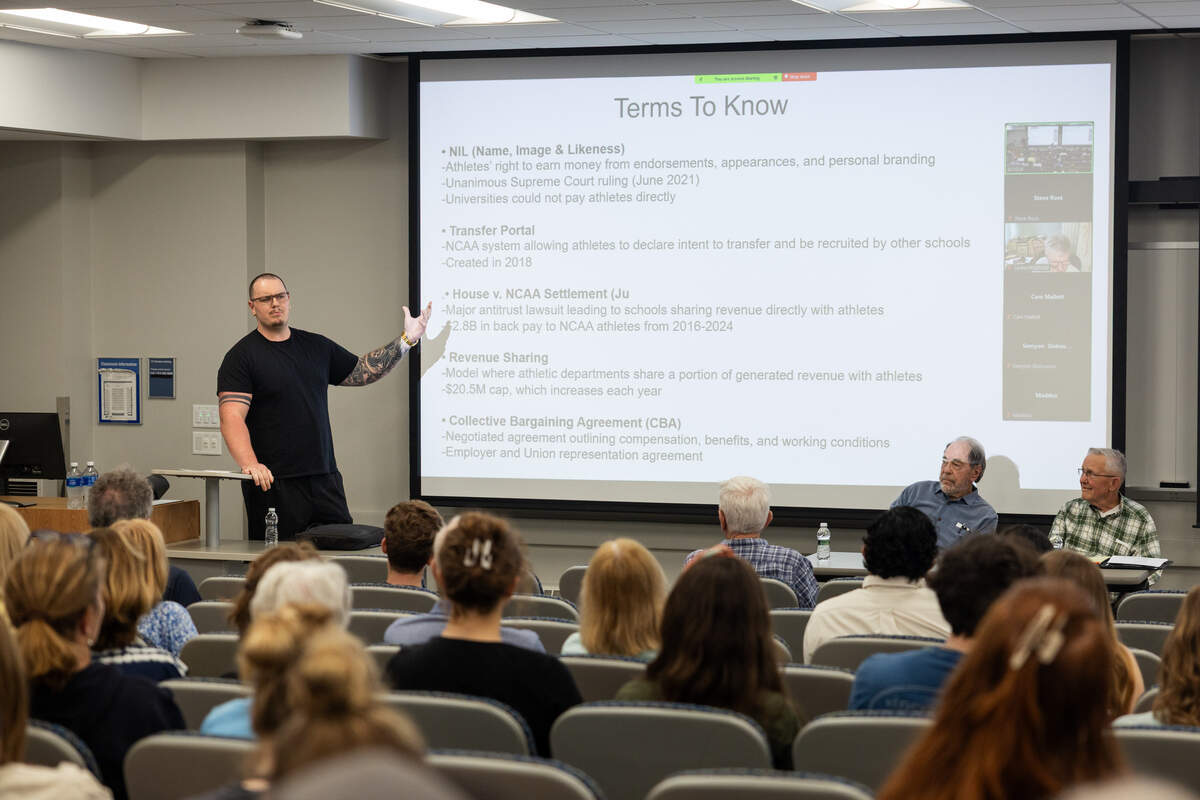
Former Penn State football player Landon Tengwall towered over the podium of Room 112 in the Chambers Building, his voice — trained for broadcasting from his YouTube show — reverberating through the lecture hall as he summarized the complex history of amateurism in college athletics before serving as the moderator.
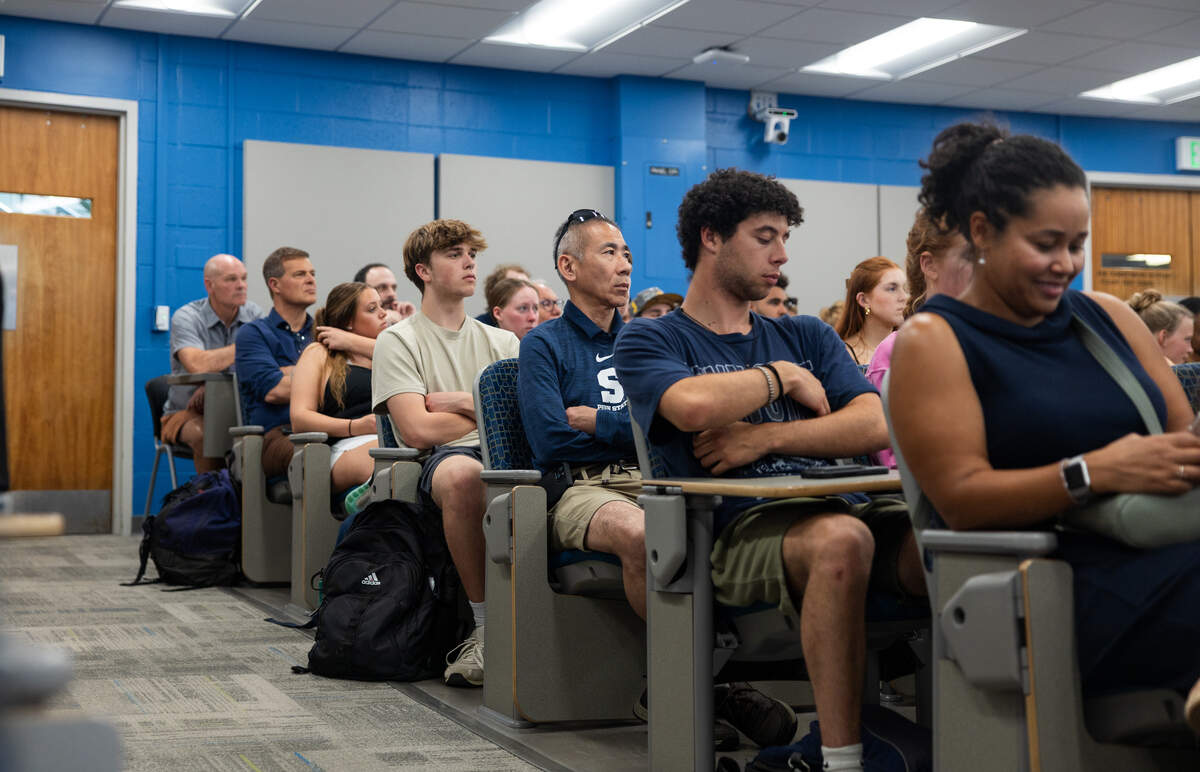
He addressed a near-full room of students, faculty and community members interested in the topic, as well as those required to attend for class, with facts and historical points to preface Thursday’s debate between two Penn State experts of college sports, Dr. Ronald Smith and Dr. Scott Kretchmar.
They’re both emeritus professors in Penn State’s kinesiology department and were brought on to deliberate whether name, image and likeness (NIL) is good for collegiate athletics.
On one side “The Historian” in Smith, an author of nine books on intercollegiate athletics, believes athletes deserve the freedom to transfer just like other students and should get paid their fair value.
On the other hand, “The Philosopher” in Kretchmar, Penn State’s NCAA Faculty Athletics Representative from 2000 to 2010, argued against the “chaos” of the transfer portal and made his case on NIL’s impact on the education of student-athletes.
“History is important,” Smith said. “Athletes, since the NCAA was formed in 1905, have lost many of their rights. The NCAA helped remove rights that athletes had retained from the very first intercollegiate contest in 1852.”
Since the creation of the NCAA, college athletes have been viewed as students or amateurs, not employees, meaning they could not make or take money directly from their institution. But the first step in the other direction came in 1956, when the NCAA allowed student-athletes to receive athletic scholarships regardless of their academic or financial standing, essentially classifying them as a separate genre of student.
Smaller steps were taken in the several decades that followed, but the biggest leap occurred in 2021, when the U.S. Supreme Court ruled that the NCAA is not exempt from antitrust regulations, and student-athletes would now benefit from their name, image, and likeness, striking down the idea of amateurism in college sports. This opened the floodgates for athletes to earn millions of dollars from their brands and for schools to recruit using NIL deals as an incentive.
Smith went on a 10-minute lecture on the history of student-athletes losing their rights, spanning from 1852 all the way up to 2021, which included Supreme Court Justice Brett Kavanaugh’s concurring opinion that the NCAA is not above the law and athletes are workers who should be paid for their fair market value, as athletes are in professional sports.
Smith was part of the 2021 Supremer Court case, delivering an award-winning amicus brief.
“Athletes should be allowed to achieve academic and financial freedom, as are all other students,” Smith said. “If freeing athletes to pursue their goals temporarily disturbs athletic equilibrium in institutions of higher learning, it’s a small price to pay for justice to those who produce a product that America supports.”
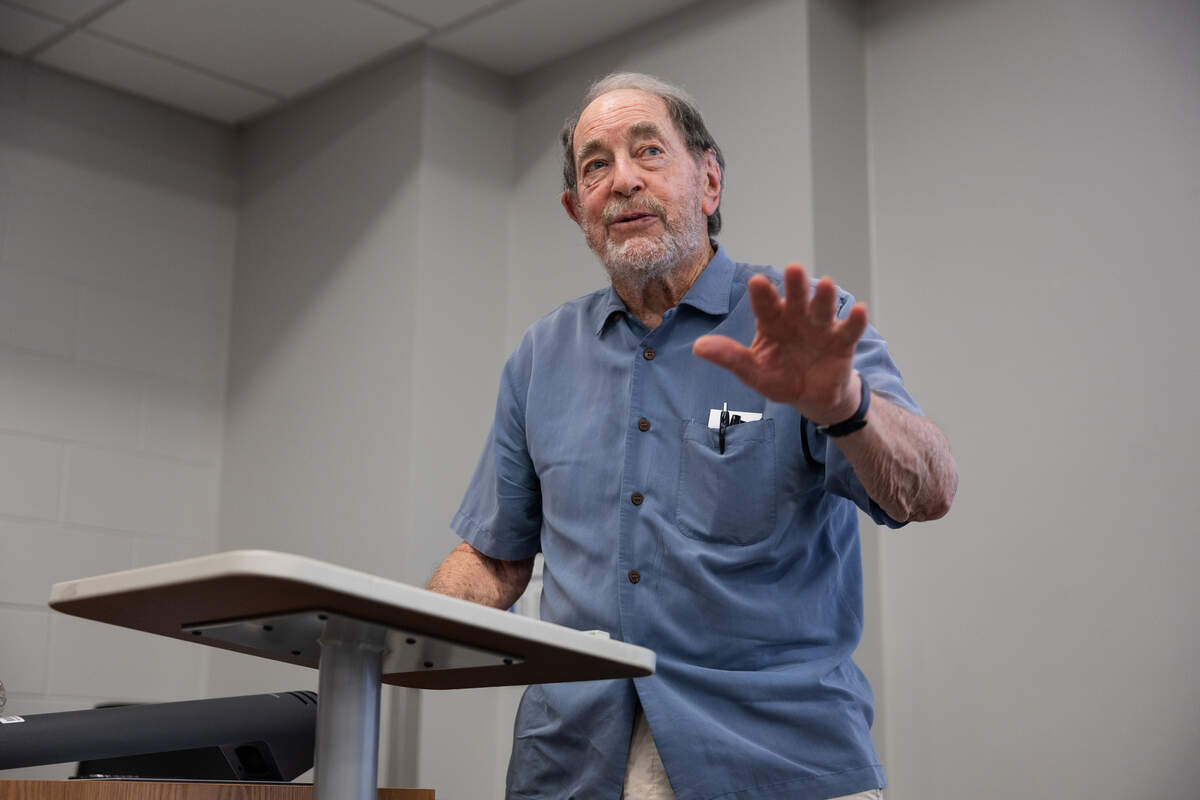
However, Kretchmar suggested it’s not just the athletic equilibrium that this “freedom disturbs,” it’s academic integrity as well. The former NCAA representative made his way to the podium, following Smith’s presentation, and quickly fired a shot at his adversary.
“I’ve got my timepiece here,” Kretchmar said referring to his watch, “so I don’t go over the time,” as he suggested Smith did. Though, ironically enough, he took longer.
He began his presentation with an anecdote of his time teaching at Penn State. At the start of the year, Kretchmar wished good luck to his student-athletes in their athletic endeavors, but stressed to them that the most important thing they’ll do at Penn State is get a good education and earn a college degree.
“If I gave the same talk today, I would say ‘Over the next four years, the most important goals should be to develop your brand, make as much NIL money as you can and, very importantly, stay open to the possibility that other schools will offer you more money than Penn State,’” Kretchmar said. “Fortunately, I retired before I’d have to say those words.”
The bottom line that Kretchmar pointed out over the course of several slides is “student-athletes will have fewer experiences of normal student life.” His main argument was that the previous arrangement, in which students received scholarships for athletic success but were never legally paid directly, was fair enough.
Kretchmar agreed with his counterpart that athletes deserve to be paid more and deserve financial freedom, “but not this way.”
After his parting words, Taegwall allowed each expert to give a minute-long counterargument, which Dr. Smith, who had been taking notes the entire time, jumped at.
“The problem in Scott’s argument is he says nothing about collective bargaining,” a process where laborers, in this case athletes, come to terms with their employer, the NCAA, over workplace issues, such as money, “and that’s the only way you’re going to solve this,” Smith said.
And considering the athletes are the ones with their hands on the steering wheel, both experts agreed a collective bargaining agreement (CBA) is the most likely compromise to bring order to the chaos of NIL and the transfer portal, while maintaining financial and academic freedom for the players.
“I’m not against compensating athletes,” Kretchmar said regarding a CBA. “And I’m not against athletic freedom, being able to move from one school to another, but I think it needs to be moderated. There needs to be [limits], otherwise it’s the Wild West.”
One thing both experts agreed on is President Donald Trump’s recent executive order that would limit NCAA athletes to five years of eligibility, with one transfer, will not affect the college sports landscape at all.
The event, sponsored by the Department of Kinesiology and organized by Dr. Jaime Schultz and Mike Poorman, wrapped up with a Q&A session.
“I think this is just the beginning of these problems,” Tengwall said at the conclusion of the debate. “A lot of people think the overall solution is coming soon, and I think we’re only at the start. This is going to continue to get messier, and college athletes are going to continue to get more confusing.”