Here’s why most — but not all — Penn State trustees favor spending $48M on the Lasch Football Building
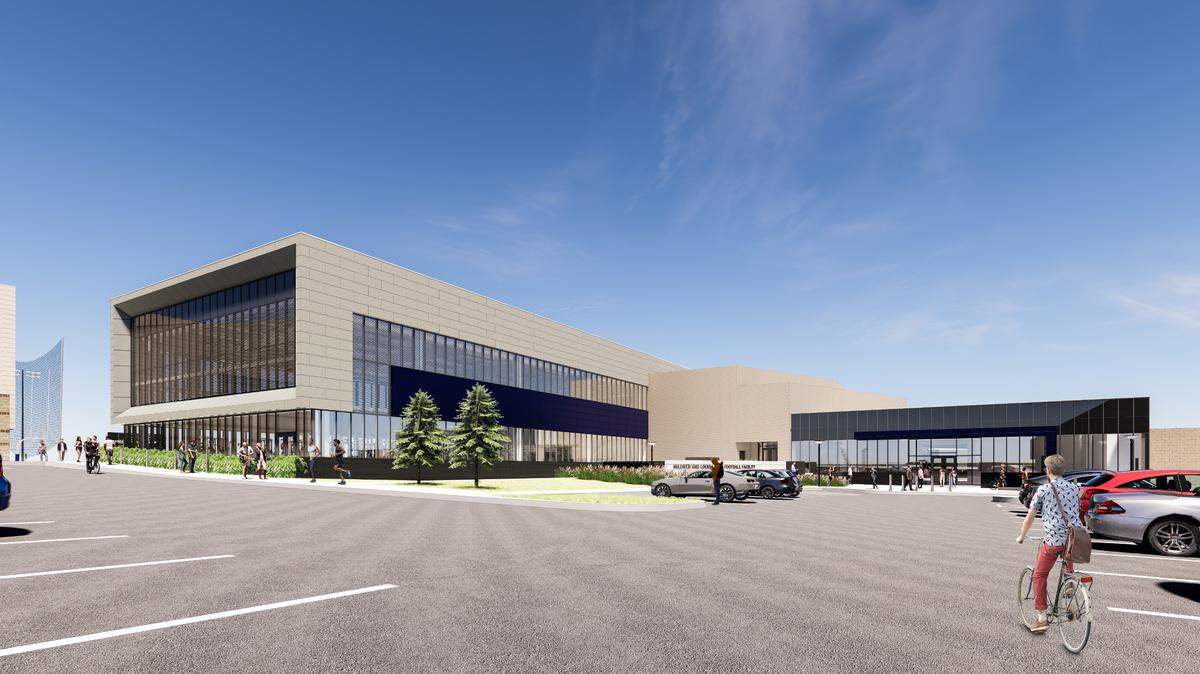
After months of delays, Penn State is inching closer toward committing $48.3 million to further renovate the Lasch Football Building — although not every member of a board of trustees committee approves of the proposal.
At issue is whether now, amid another uncertain fall, remains the best time to commit more money to the football program — especially considering private donations were supposed to pay “primarily” for the project and, instead, are on pace to account for less than half of the total cost. (Borrowing will account for the remaining amount.) Still, others argued, neither the university nor the football program can figuratively afford to postpone facility upgrades in what’s fast become a college football arms race.
Former All-American linebacker Brandon Short, now a trustee, said Thursday part of the reason he came to Happy Valley in 1996 were the top-notch facilities. Had it not been for that, Short said, “I would not have come to Penn State.”
“We need to invest in this project and do much more to remain competitive,” Short added. “Our competitors are taking these positions, and we need to compete to match or beat them. And it’s not just to recruit athletes but it’s to raise the entire university — the students, the faculty, Thon, the research department and our local communities — so I fully support this.”
A final vote will take place during Friday afternoon’s public Board of Trustees meeting, although the board’s committee on Finance, Business and Capital Planning already voted 10-1 Thursday to recommend moving the project forward. Trustee Anthony Lubrano was the lone voice of dissent.
Lubrano didn’t express opposition to the project itself. He didn’t raise objections with building an expanded weight room, improving the lobby entrance or developing a “5th Quarter Program” to help student-athletes transition from high school to college, and college to the professional ranks. He simply wondered aloud about both the timing and the source of the funding, where fundraising appeared to come up short.
“We have a president who has just announced that he thinks we’ll be back to normal by Christmas this year. So what does that mean to our athletics in the fall?” Lubrano asked. “Are we going to be able to play in front of 100,000 people? There are just a lot of questions.”
Several trustees acknowledged Lubrano’s concerns but said that such renovations cannot wait. The project was initially supposed to be approved in September — with a start date in December — but was postponed due to COVID-19. If it’s delayed any longer, officials explained, the project cost would rise between 3.5% to 5% — as much as $2.5 million — while recruiting is negatively impacted.
Although the renovations are football-based, other trustees argued, the impact of stalling on future upgrades wouldn’t be limited to just football either.
“You know, it’s not something that I personally, fully understand. But many of our donors, their connection to Penn State is through football first,” said trustee Robert Fenza, a retired CEO of Liberty Property Trust. “And it’s this — the camaraderie and the connection, and the love of athletics — that helps a lot of these donors support us year after year after year.
“So I underscore what Brandon said from a different perspective. It is an integral part of who we are, and it is an integral part of the connection that we provide to our alumni, which ultimately allows us to ask for support in many, many areas of the university.”
The Lasch Football Building was constructed in 1999, with no major renovations occurring until 2015. Since then, $27 million has been invested in upgrades — such as a new locker room and players lounge — with final plans for the $48.3 million upgrade awaiting formal approval Friday. Another future phase of Lasch renovations is expected to cost an additional $16.2 million.
Among the targeted areas in the latest package include strength training and conditioning, mechanical and electrical systems, and sports medicine. The nearly $50 million plan will include a portable X-ray machine, a new hydrotherapy pool to aid in treatment and rehabilitation, offices for the trainer and assistant trainer, and work stations for graduate assistants and student trainers.
In March 2019, Penn State’s board of trustees approved the upgrades be designed by HOK of Philadelphia, a firm specializing in architecture, engineering and planning. Those improvements have now been designed, as part of the Facilities Master Plan, and simply require approval.
Lubrano alluded to the fact Penn State already ranked No. 7 nationally in average annual FBS expenses from 2014-2018, according to the website Athletic Director U, and didn’t have a lot to show for it. (Clemson ranked No. 6, spending $300,000 more per year than PSU at $40.95 million.) But Short felt Penn State’s investment in football didn’t go far enough.
When asked by another trustee what he meant by that, Short recommended Penn State consider increasing football salaries to maintain/produce an elite support staff.
“At the University of Alabama, they hire former pro coaches to come in as advisors to the program ...,” Short added. “They have the top nutritionists, the top sports scientists, they have all the support resources.”
Friday’s BOT meeting is scheduled to start at 1 p.m. It will be adjourned by 3 p.m.