Here’s what Penn State’s defense learned from its upset scare against Bowling Green
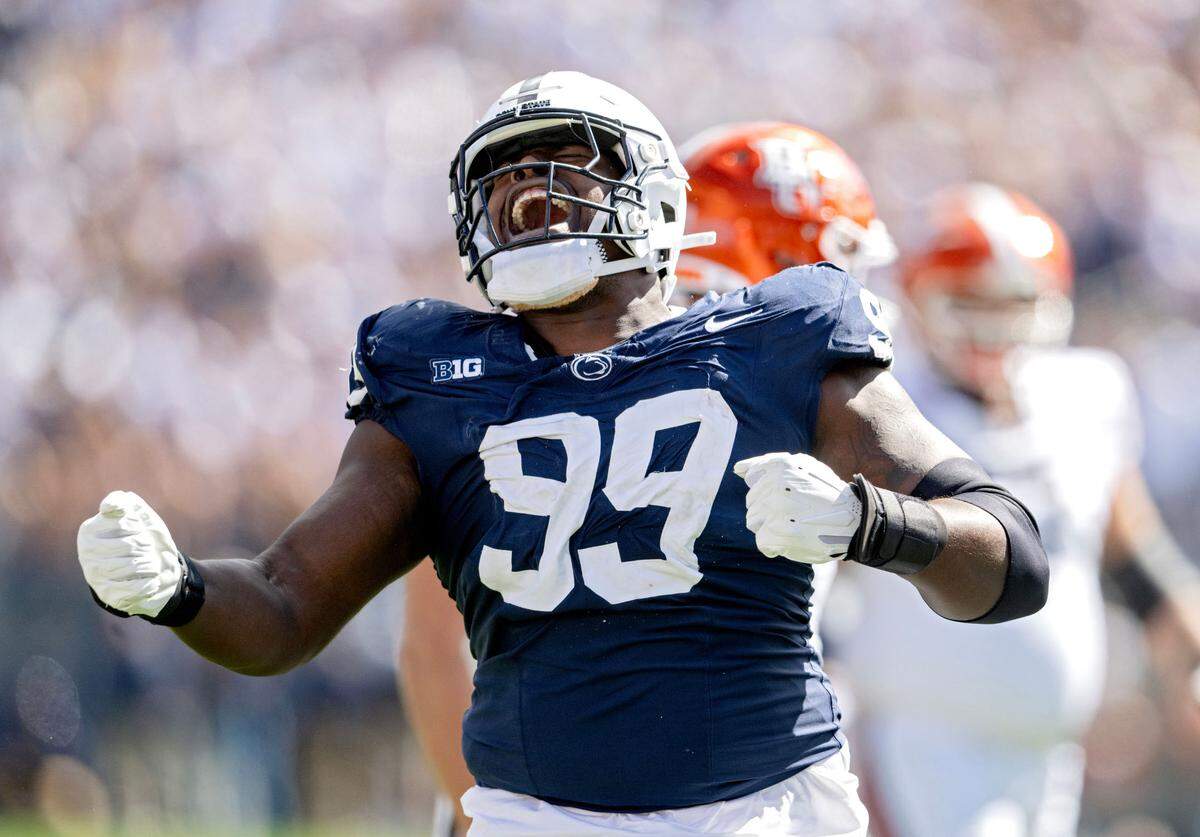
A smattering of boos sprinkled down from pockets of the crowd inside Beaver Stadium as Penn State trotted off the field at halftime of Saturday’s game against Bowling Green.
The Nittany Lions had just surrendered 24 points to a bad offense and went into the locker room with a four-point deficit that very few — especially those in attendance — anticipated.
While the voices of the fans may not have had an impact on the second-half turnaround that led to a 34-27 win, they were still sending a message — the first half was not good enough. The Falcons broke numerous tackles, flustering the Nittany Lions in their own home stadium. Some of that may have stemmed from the players trying to do too much to make an impression on that home crowd.
“I think it was just a slow start,” defensive tackle Dvon J-Thomas said. “First time in Beaver Stadium of course (comes with) jitters. We were really excited. Everybody was really excited. ... We’re in Beaver Stadium. Everyone wants to perform well.”
Eventually, the Nittany Lions’ defense played like itself and earned the win, but needed to learn a lesson in the process: Penn State is an elite team, but it’s just as susceptible as any other to faltering — even against the dregs of its schedule.
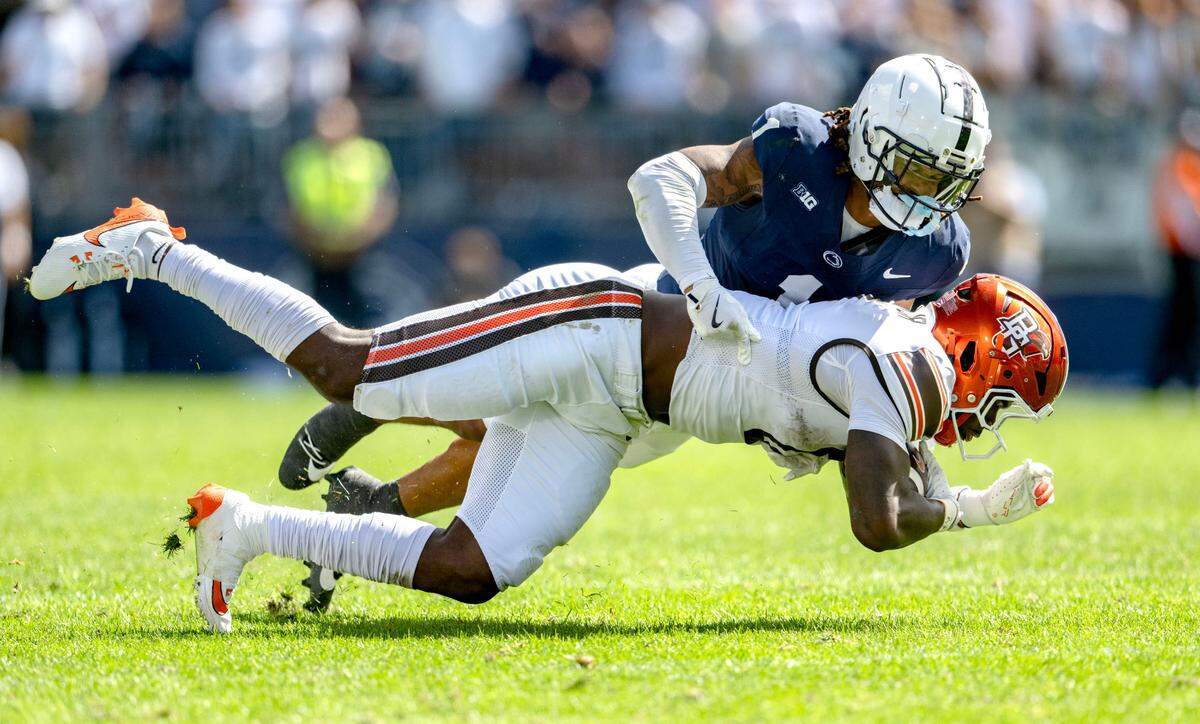
Safety Jaylen Reed said as much when he was asked what he took away from the game.
“Learning that we have to continue to start fast in every game,” he said. “Don’t take anyone for granted. Don’t start off loose early. We gotta start fast, execute early and execute the game plan.”
It’s one thing to say that, it’s another to do it. While head coach James Franklin said he would have to watch film of the game before he could accurately diagnose what went wrong in the first half, he did make note of one potential issue.
As J-Thomas said, the first home game of the season can lead to some nerves. But it can also lead to players trying to make the big play rather than the smart one.
“I think early on, we’re trying to make plays rather than play the defense,” Franklin said. “Getting out of our gaps, trying to make plays, doing the things that we haven’t done during the week. We’ve got to get those things cleaned up, for sure.”
That was apparent as the Nittany Lions struggled mightily with tackling. Their defenders bounced off Bowling Green’s skill position players like they were trying to bring down Adrian Peterson.
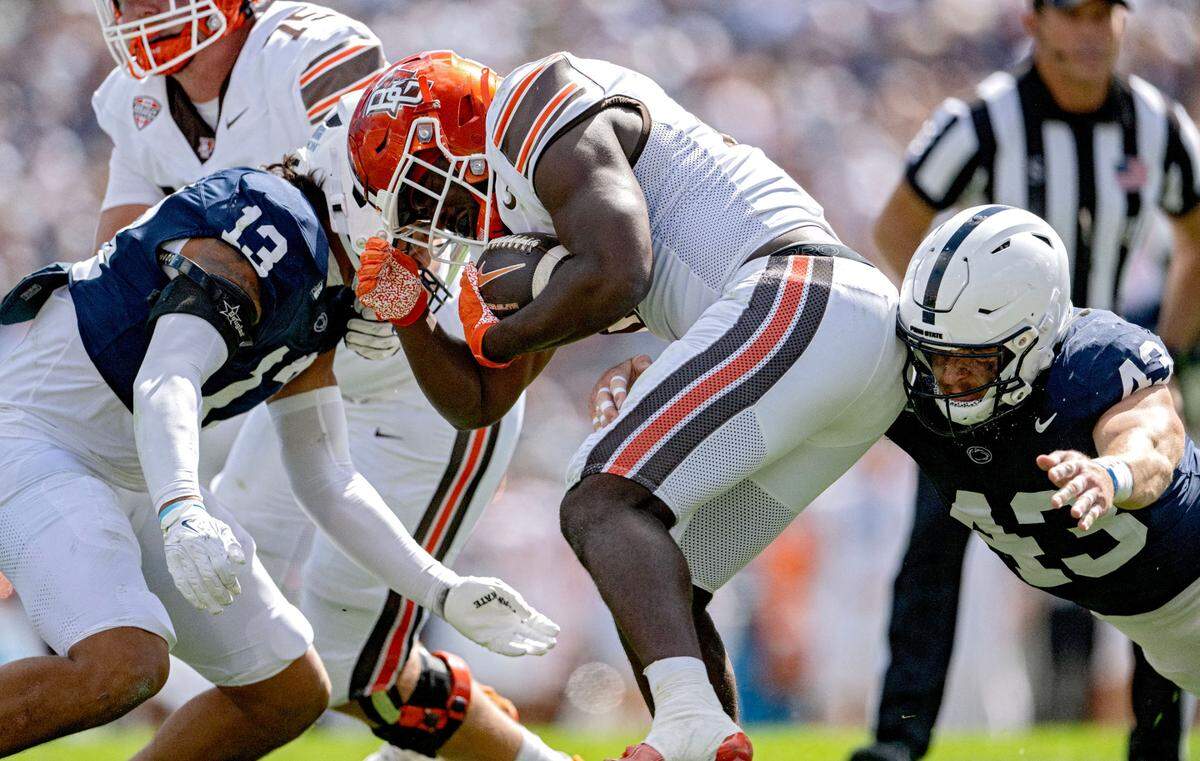
And it wasn’t limited to any specific player either. The entire unit struggled to tackle early in the game, giving up 286 total yards the Falcons in the game’s first 30 minutes.
J-Thomas echoed what Franklin said, but understood how something like that can happen.
“I mean, everybody wants to have a big game,” he said with a laugh. “You want to come downhill, you want to knock somebody’s lights loose. And to be honest with you, with the mentality that we have in terms of how we come downhill, how hard we hit, what we do on a day-to-day basis — (trying to make big plays) doesn’t surprise me. ... Everybody just wants to have a big play.”
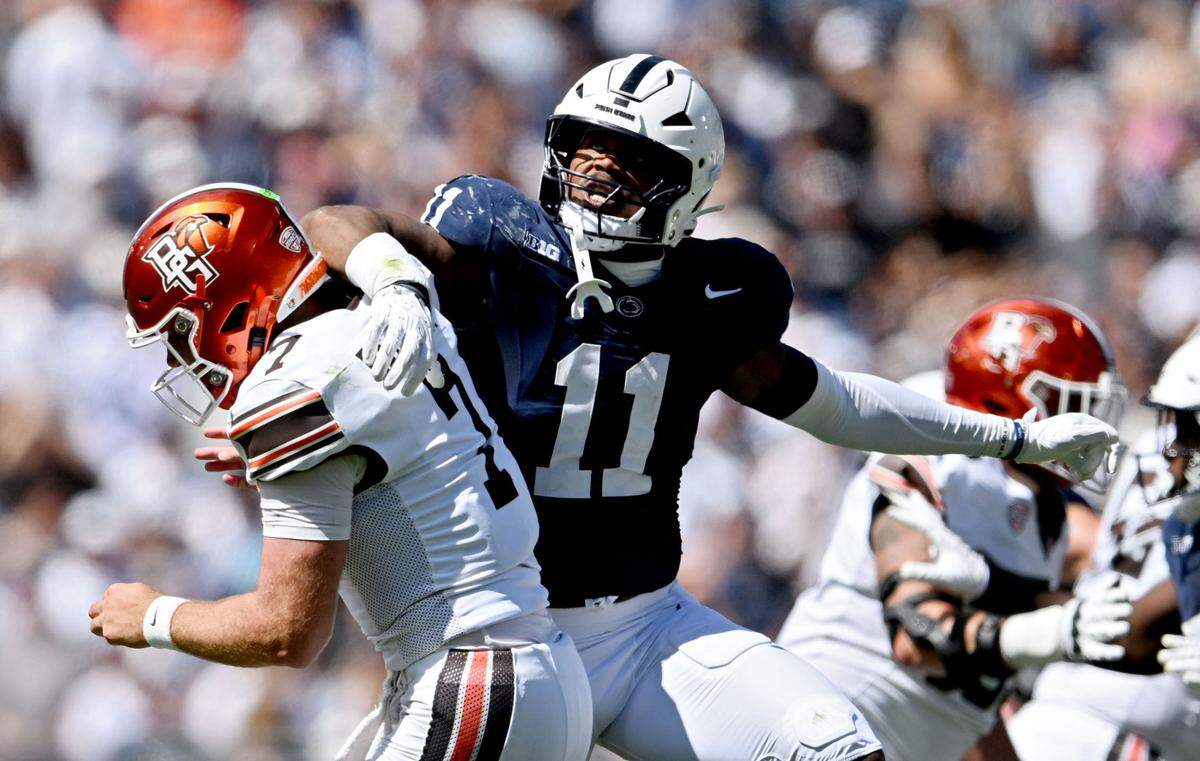
At halftime, the defensive tackle and others spoke up — linebacker Tony Rojas said J-Thomas, LB Tyler Elsdon, DE Abdul Carter and S K.J. Winston all gave their input — and it was enough to get the message across: The first half was not the standard when it comes to playing team defense. The unit didn’t allow a point in the second half until it gave up a field goal with less than a minute in the game.
On Saturday, one half of good football was enough, but that might not be the case moving forward. The Nittany Lions are in a crucial season. Franklin has yet to lead the program to the College Football Playoff, and the team is a favorite to make it now that it has expanded to 12 teams.
But that doesn’t guarantee Penn State anything. It is in the midst of a stretch that has fans and pundits alike circling a game five weeks away — on the road against USC — as the next real test.
It will be easy to overlook Kent State in two weeks or Illinois in three or UCLA in four. They are all inferior programs right now, and wins will not help the program as much as losses will damage it.
So Saturday will have to be a wake-up call. No team on the schedule is so bad that the Nittany Lions can coast to a win.
And if they treat another subpar opponent like it is, Penn State will place itself just outside of the College Football playoff conversation — much like it has for most of the last decade.