Why does everyone play so hard for Jim Knowles? Those closest to Penn State’s new DC understand
In the middle of David Cutcliffe’s 14 seasons as the head coach at Duke — from 2010-2017 to be exact — he knew he had a defensive coordinator who could captivate an audience. That’s not to say others couldn’t do the same, but there was something about Jim Knowles, who ran the Blue Devils’ defense for those eight seasons.
And so when it came time for staff meetings, Cutcliffe knew where to turn.
“I would often have him do the, ‘Thought of the Day,’” Cutcliffe told the Centre Daily Times. “And you didn’t know whether it was going to be complete fiction, or if it was going to be something that was a memory of his or of others or ours, but people got to looking forward to when I would ask him for his answers. It was like dialing into a podcast and not knowing what you’re getting.”
Those meetings may seem inconsequential, but they are indicative of the many attributes that make up the unique character of Knowles, who was hired as Penn State’s defensive coordinator in January.
Knowles has an innate ability to connect with others — whether it be fellow coaches, friends or players — and that has allowed him to rise among the elite coaches in college football.
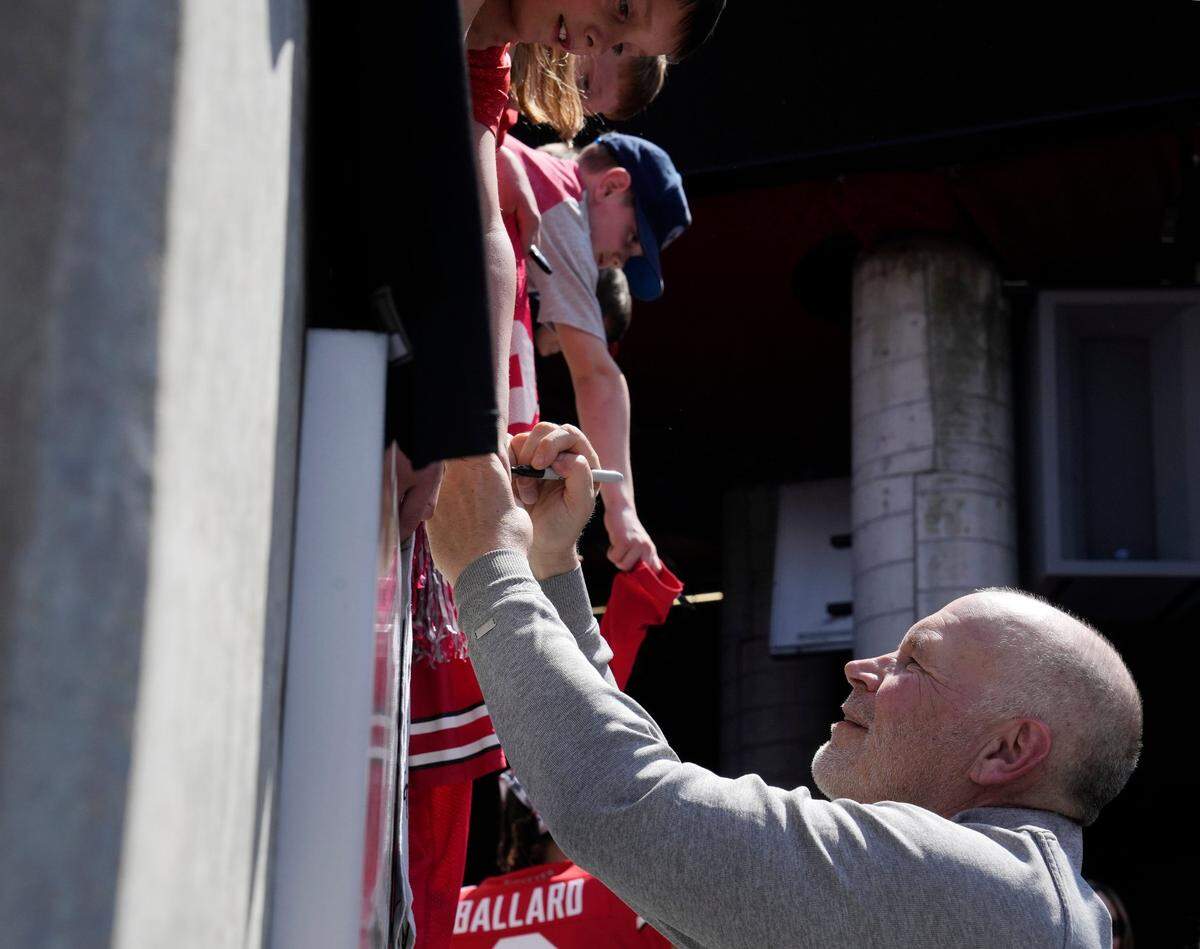
That’s nothing new with Knowles, though. He’s been building connections like that for his entire life, and maybe none are stronger than the ones he formed as a high schooler at St. Joseph’s Preparatory School in Philadelphia, where he grew up. That’s when he met two of his best friends, Rich Gannon and Clayton Carlin — both of whom glowed about their friend.
“He was the same then as he is now,” Carlin told the CDT. “Tough, relentless work ethic, smart, and a loyal friend. ... As great as a coach as he is, he’s a hundred times better man, and a hundred times better friend.”
“From the first week at The Prep, everyone knew this guy was different,” said Gannon, a quarterback who played 17 seasons in the NFL. “He was just wired differently. Ultra competitive, natural leader, very intense, was passionate about football. ... A very high-IQ individual, he excelled at The Prep academically, socially, athletically. He didn’t have an enemy. Everybody just loved him.”
It should be no surprise, given what they said, that Knowles makes sure to see his friends at least once every summer, and has done it since they left school by organizing a golf trip with their old coach.
Knowles sets everything up as far as scheduling, and then the three make the trip from wherever they are. For Jack Branka, the trio’s head football coach when they were in high school, it’s just like the 80s when his three players were helping him turn around the team he coached, with each one taking the kind of jabs at each other that you hear from best friends.
“We have fun back and forth,” Branka said. “It’s really fun stuff to see. We’ve been doing it a long time. I hope we can keep it up.”
But it’s not just his former teammates who matter that much to the new Penn State defensive coordinator. He’s taken that ability to connect and carried it with him as a coach.
And while Gannon went on to have a prolific playing career, winning the 2002 NFL MVP and making the Super Bowl that same season with the Oakland Raiders, Carlin chose the same path as Knowles and got into coaching. And starting in 2004 he got another six years of front-row experience to how Knowles, who was the head coach at Cornell, can change a program.
“Just to watch him, he’s a connector, the way he rallied the alumni and the community and the campus and the students,” said Carlin, who was the program’s defensive coordinator. “It was good to see him grow over those six years, and I think he got better and better.”
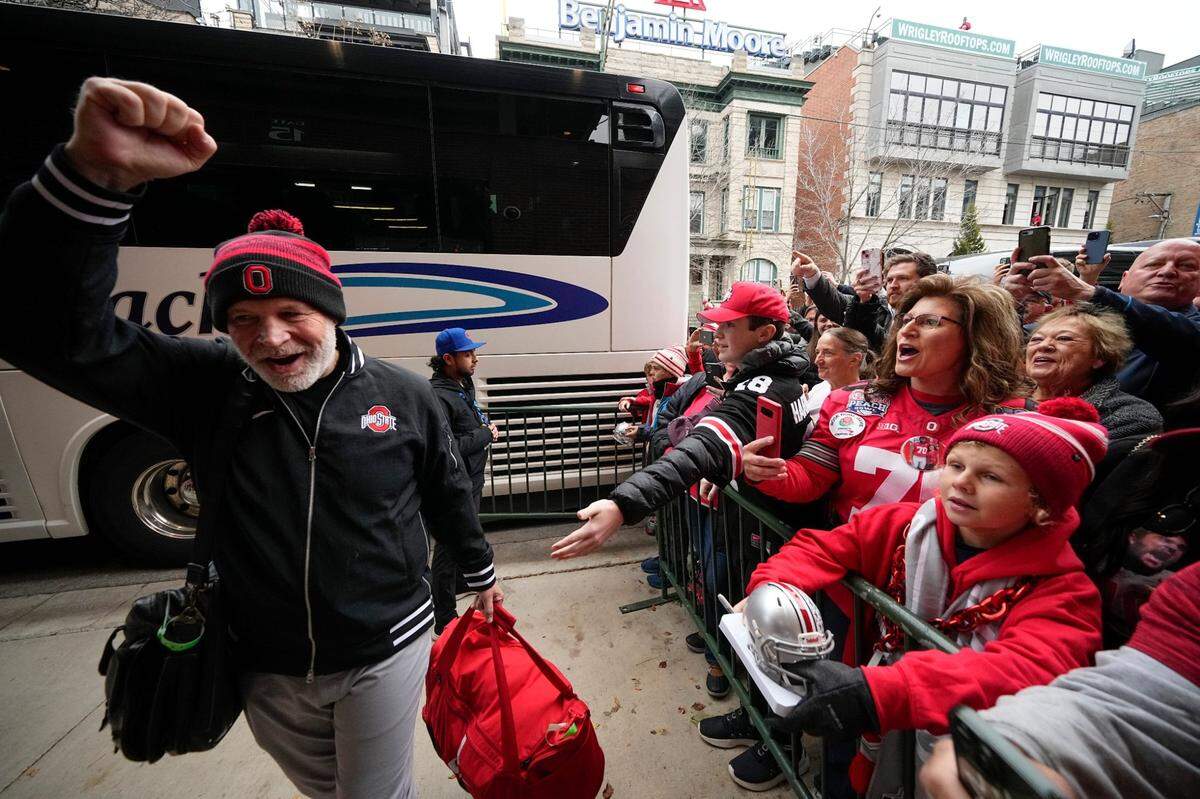
That traces back to when Knowles was in high school. A hierarchy can quickly establish in any football program, with the attention and needs of the stars getting met before anyone even notices the backups and depth players on a roster.
But that was never how Knowles saw it. He placed value in what being a part of a team meant and was quick to make sure the entire roster felt important. That’s how he and Carlin helped change the culture at St. Joseph’s Prep when they were captains as seniors — an honor voted on by their teammates.
“He cared about the least-talented, least-athletic, least-impactful player on our team, as much as he cared about me or one of the star players,” Gannon said. “He would go out of his way to check in on guys like that. And you could just tell, at that age, that’s just different.”
Knowles carried that to coaching, and eventually Duke, where he spun his thoughts in those staff meetings and carried his joy and energy to his meetings with his players.
Those meetings can be stressful or tense in the high stakes world of college football, but that usually wasn’t the case with Knowles when he coached under Cutcliffe. Instead, they turned into something players started to look forward to, according to the former Blue Devil head coach, and that allowed Knowles to maximize his defenses.
“When players start looking forward to being in meetings, on the practice field — I think we all know that we’re all at our best when we’re happy and we’re where we want to be,” Cutcliffe said. “And that is a magical thing. That’s what people look for in life, more than anything else, in my opinion, is (being) happy, and we’re all more productive when we’re happy. And Jim Knowles makes people happy.”
His emotional intelligence is matched by his intellect, according to Carlin, Cutcliffe and Gannon, who all praised how smart the defensive coordinator is. Gannon said he’s head and shoulders above the rest of the defensive coordinators in college football. Carlin called him super intelligent. Cutcliffe referred to him as a mad scientist.
However you would like to say it, Knowles has earned a reputation for having a brilliant defensive mind. He’s proven it by how good his defenses have been and now by becoming the highest-paid DC in the country at Penn State after James Franklin chased him for a second time — after originally doing so when Knowles was at Oklahoma State after the 2021 season.
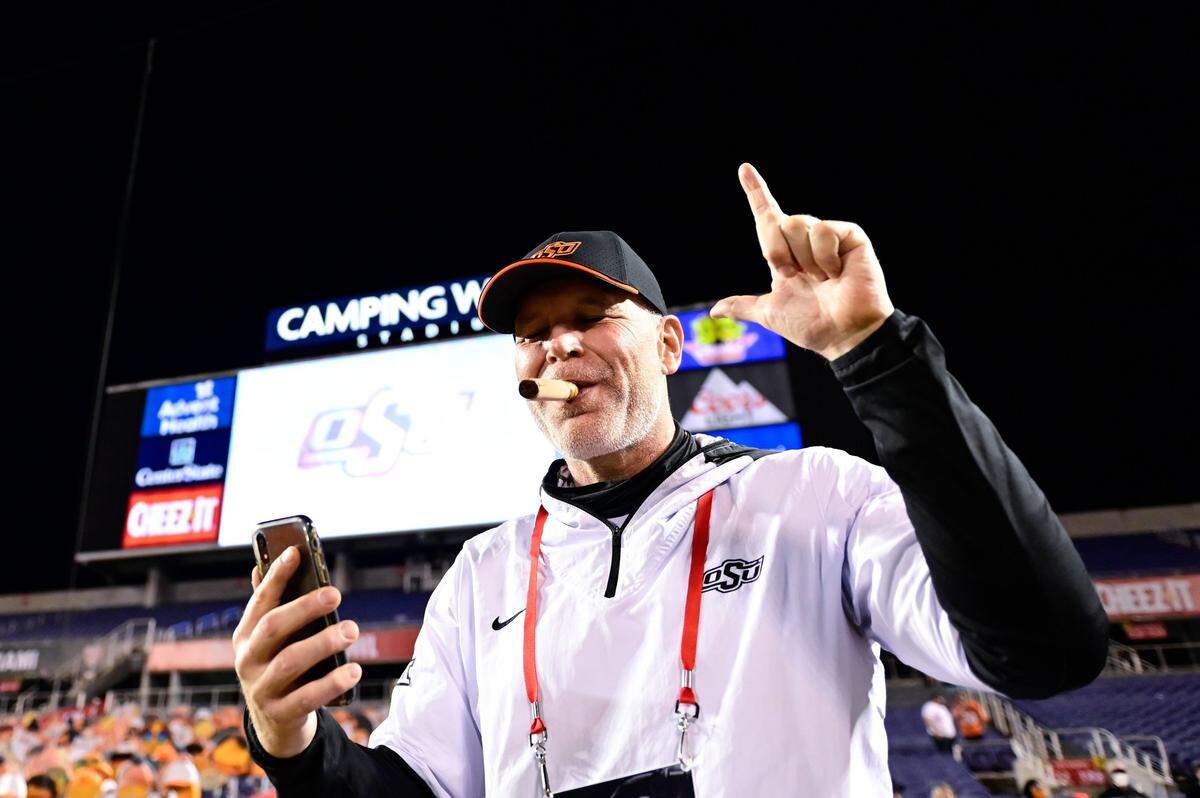
But there is more to him than that. Knowles is, as Carlin put it, a connector. He brings people together by caring about those around him. It’s how, according to both Cutcliffe and Gannon, he gets players to play so hard for him. Because they believe in more than just the scheme — they believe in their coach and who he is as a person.
And there is something powerful in that. It is what drew the players to Branka, who helped launch all three men into their own careers in football. That’s not something their high school coach takes for granted.
“I went to a clinic one time, and the main speaker was Morgan Wootten,” Branka said. “He was a head basketball coach at DeMatha High School. Very successful, very successful. His topic was, ‘What it means to be a coach.’ And he said every coach wants to win; we don’t always win. Everyone hates to lose; we don’t always lose. He said what it means to be a coach is, 10 years after you retire, you’re walking down the street, and one of your former players comes up and gives you a hug and says, ‘Hi, Coach, how you doing?’ That’s what coaching is all about. That’s what it means to me when I get to see these guys every year.”
Branka will get to keep seeing them every summer, and his former players will get their jabs in like they did back in high school.
But some day down the road, it may be Knowles whose players come see him for a few rounds of golf.
This story was originally published February 3, 2025 at 12:49 PM.