Understanding James Franklin: How a turbulent upbringing shaped the Penn State coach
AI-generated summary reviewed by our newsroom.
- James Franklin reflected on childhood marked by abuse and family instability.
- Franklin’s turbulent upbringing shaped his identity, values and leadership style.
- Personal history informs Franklin’s approach as Penn State coach and as a father.
James Franklin sat at the table in his second-floor office, taking a moment to think. He had already spent the better part of the last hour talking about his childhood and his parents.
Franklin looked out the window that sits above Penn State football’s practice fields, and then began to speak about a subject he’s rarely discussed publicly.
“When my parents separated, that was mainly because I had grown up and gotten big enough that the dynamic changed between me and my dad,” Franklin said. “Up ‘til that point, it was different. Everybody was kind of scared of him in the house, so I think that’s why it really changed, because we had a conflict. … I even forget what it was over, but something was going on, and I got in between it. And I didn’t really think, I just reacted.”
For years, Franklin and his family had endured his father’s physical abuse and alcoholism. There was also a vicious cycle of his parents separating and getting back together. But with Franklin now big enough to stand up for his family, the conflict marked an end to that cycle.
That cycle shaped Franklin. It taught him what he stood for and who he was — and most importantly, who he wouldn’t be.
Franklin’s childhood was, as he said, not “normal.” (Not that any childhood is all that normal, he noted.)
But it opened the door for him to develop into the man he is now, into the coach he is now — and into the father he never had.
Getting through childhood and the draw of football
The cycle between his parents had run its course a few times. Franklin recalled separations when he was in second, sixth and ninth grades that all led to them eventually getting back together, before that final one in 11th grade.
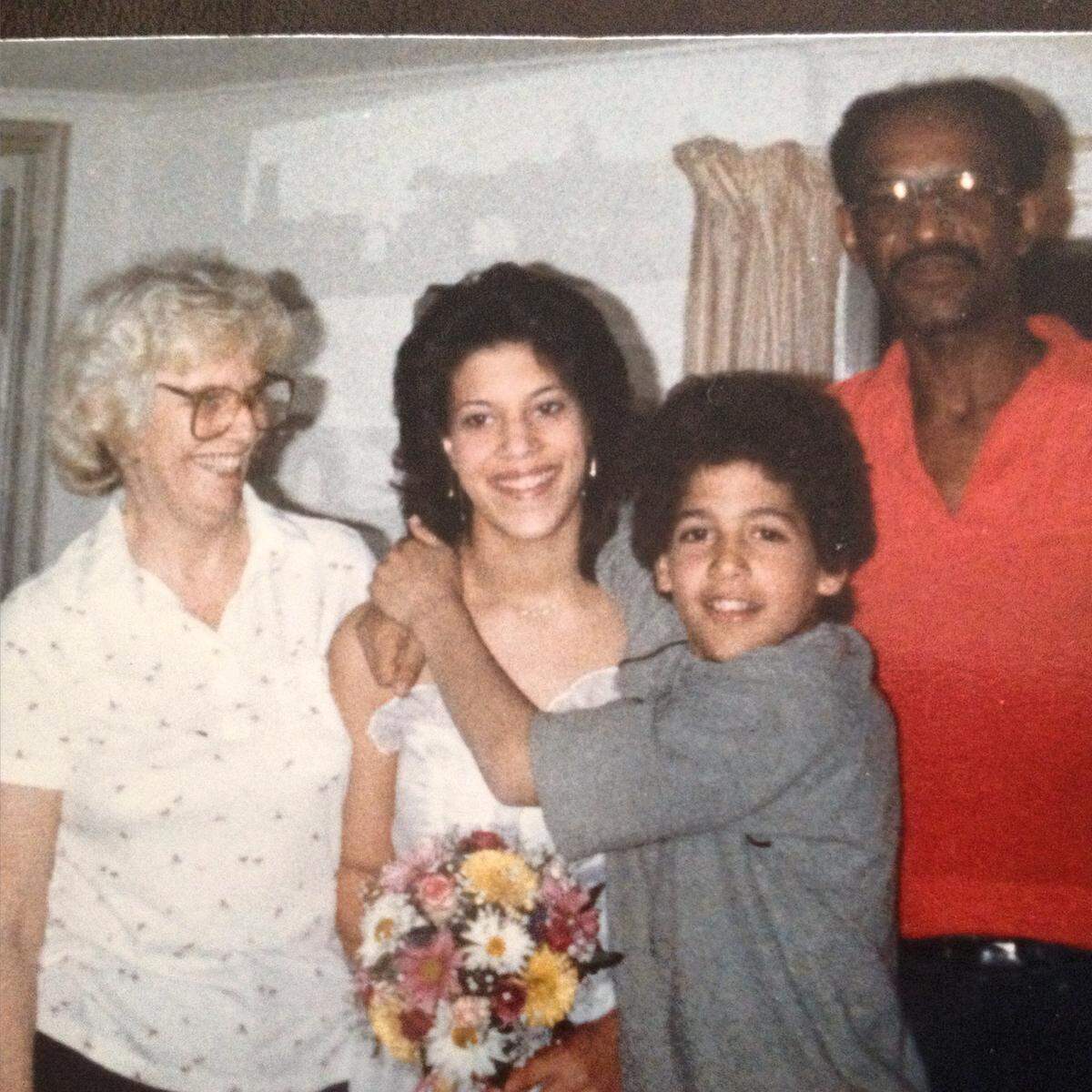
Standing up to his father wasn’t just about him. It was about his mom, Jocelyn, and his older sister, Debbie.
“Very, very close with my mom,” he said. “She was one of those moms that went to all my games and all those types of things and was very supportive.”
Franklin worked several jobs to help support his mom, starting at 13 years old. He did landscaping. He was a paper boy. He delivered pizzas. He washed dishes — all in the name of helping his family.
Despite their best efforts, financial hardships couldn’t be avoided.
Their family house in Langhorne, Pennsylvania, was set to go up for sheriff’s sale after they were unable to pay their taxes. That’s when Gary Bowman, the then-superintendent of Neshaminy School District, stepped in and made the payment to save the family’s house. Bowman’s son was one of Franklin’s childhood friends, and he was able to keep the Franklins in their home.
But financial relief always seemed short-lived. Years later, when he was at East Stroudsburg, studying and playing football, he’d go home for summer break and work eight hours at a mortgage company and then deliver pizzas at night — which was great when he was able to do it. But fall would come, and his free time would go away just like his income. One summer, he’d gotten a job at the water and sewage authority making $13.35 an hour — “crazy money” back then, as Franklin remembers.
“Sewer line breaks, you jack open the street, jump down in the raw sewage and clean that all up,” he recalled.
The money was enough that he was ready to quit school and stay home. But his mom wouldn’t let him.
So Franklin stayed, and excelled. He was the school’s starting quarterback in 1993 and 1994 and was named a regional candidate for the Harlon Hill Award, which goes to the best player in Division II.
And off the field he found success, too.
Franklin was a natural leader, with teammates and friends gravitating toward him. For Franklin’s former college roommate Mike Santella, that started with shared interest in early hip-hop, and grew into the close friendship they still have. Santella, who is the current East Stroudsburg offensive line coach, did not play football in college. But he still loved the sport and coached at a high school while James played in college. That would lead to plenty of long conversations after both were done with their day.
“We would come home at night and talk for hours just on plays,” Santella said. “Plays that East Stroudsburg was running that week and he was the quarterback. Some things that we were doing at the high school I was working at. We would just talk for hours about coaching.”
It was at East Stroudsburg where Franklin’s leadership, and his innate ability to captivate people, further developed and turned into a desire to coach. He’d have his offensive linemen over for dinner — always making sure the place was in pristine condition, Santella recalled with a laugh — making sure they knew how important they were to him.
Some of his leadership ability came from Franklin’s ability to connect, but some is his understanding of psychology — a study he majored in while in school.
“I saw so much potential, as a professional counselor or psychologist,” said Anthony Drago, his former college advisor and East Stroudsburg psychology department chair. “And so I kept encouraging him to go to graduate school and then maybe eventually get his psychologist license, or maybe even come back and teach with us later on.”
But, ultimately, that wasn’t what he wanted. Sure, he had a knack for it, but Franklin couldn’t help but feel the draw of staying involved with football.
Finding closure with his father
After leaving school Franklin bounced around for a few years with various coaching jobs (including a stint as player-coach in Denmark). But, away from a burgeoning career, he made a decision — it was time to find closure with his father.
There had been times where he was mad and bitter, but he still yearned for a relationship.
So they reconnected sometime after he was done with college, though he does not recall exactly how it started. He might have reached out to his father, or his father might have reached out to him, or his father’s new wife might have reached out. (Franklin was the best man in that wedding, as he recalls.) But a reconciliation happened.
“I knew he was dying,” Franklin said. “I had a conversation with him, almost closure to get things off my chest with him. And one of the best things I did is I convinced him to come to my mom’s house and apologize to my mom and my sister.”
So there they sat, as a family.
“He apologized to my mom and my sister for some of the foul s--- that he had done,” Franklin said. “And that I could tell was a huge weight off of him — and my mom and my sister. The whole family was like, he can go in peace. And they can have some closure.”
And then, it was over.
“I don’t know if it’s much longer [after] that, but I was there at his house with his new wife. She wasn’t in the room, but I was in the room with him. I had just given him a shower — which is like for a child to give his father a shower, and he’s not strong enough to wash himself — and I’m washing him and then got him into bed. And then he had his last breath.”
Franklin went to the funeral in 1997 — he can’t recall if his mom or sister did — but then that was it. They allowed that moment to be the end, without much discussion.
“I don’t know if it was true forgiveness, even by me,” Franklin said. “I use the word forgiveness, but it’s probably more closure than true forgiveness. It didn’t make up for a lot of things.”
Even Santella, who at that point had become very close with Franklin, doesn’t recall it being brought up all that much.
But that moment had changed Franklin. He hadn’t thought about it, he said, until he was asked about it now. But there were differences. He’d become more forgiving. And he realized the value in fixing relationships. And that even burned bridges can be rebuilt.
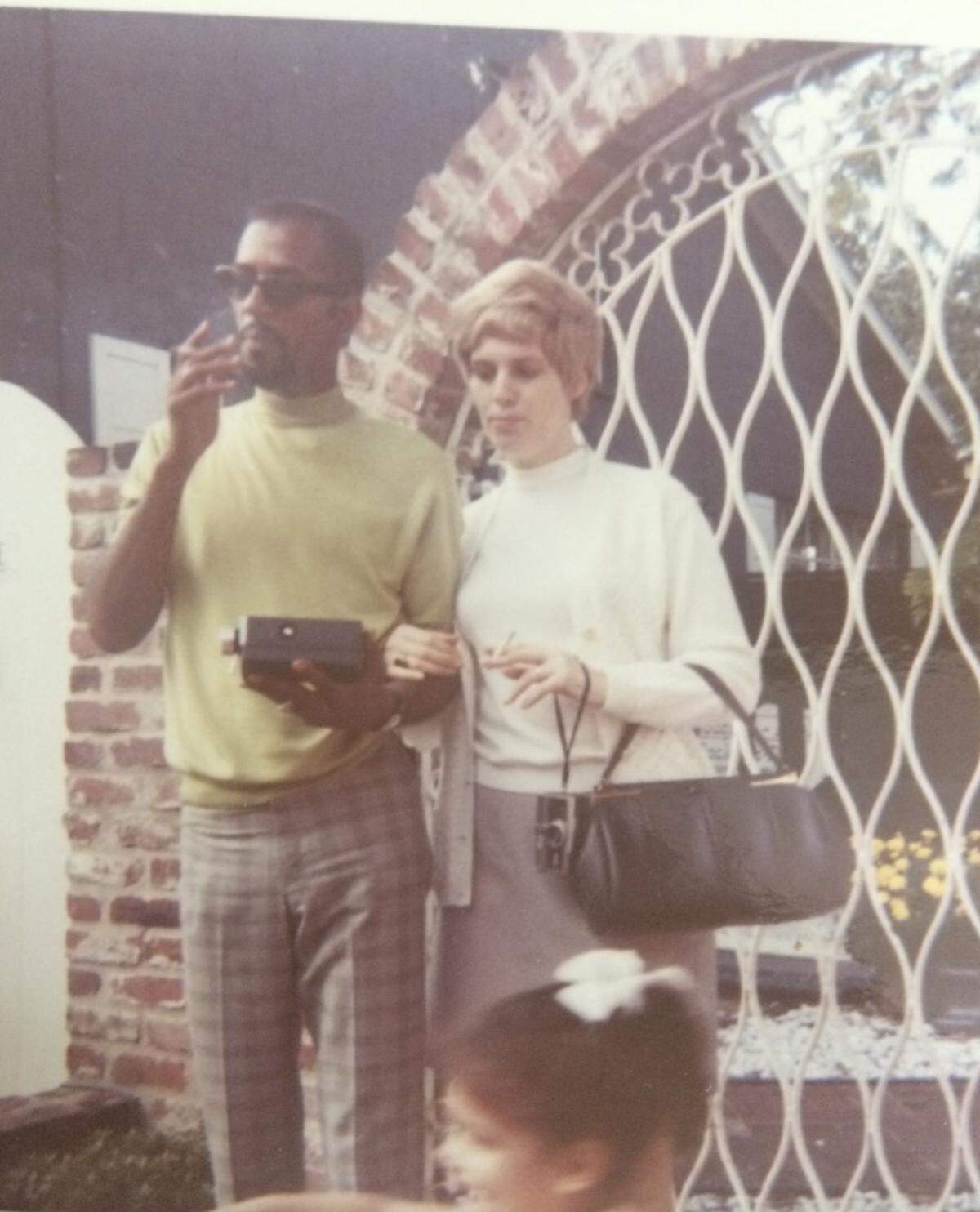
Franklin’s father died of cancer, likely from smoking cigarettes — and smoking was a common theme of his youth. Times were different, both of his parents were heavy smokers. Two packs a day, Pall Mall unfiltered. Eventually it led to cancer for his mom, too. And her death in 2007, unlike that of his father, damaged him. Not just because it was his mom, but because of where he was in life.
Franklin by then had risen the coaching ranks to become the offensive coordinator at Kansas State. His mom, more than a thousand miles away, was always his biggest fan. But he was unable to be with her when she died.
“That was probably the biggest thing that I struggled with,” Franklin said. “I’ve been gone since I was 18 years old, not being able to be there to support her when she was sick. I struggled with that, not being able to support my sister as she was going through that with my mom. And then even the funeral, it’s in and out.”
Santella saw it, too.
“He was a mama’s boy,” Santella said. “His mother was always around. … He did not handle [her death] great because he was not around. I don’t know if he didn’t feel like he had closure.”
At 35 years old, both of Franklin’s parents were gone, and his circle was shrinking.
Breaking the cycle and building a Penn State family
It helped, though, that he’d been with his now-wife Fumi for some time. They got engaged in 2005. And eventually they started a family of their own, with daughters Addy and Shola. And that, really, is when Franklin could shine.
Because for all of the success as a coach, there was always an innate fear following him. And he couldn’t shake it.
For years he’d run from the possibility of becoming what his father was. He knew the addictive personality was in there, so he didn’t drink much. He knew what it was like to face financial struggles, so he did everything in his power to make sure his children didn’t. He never had the father he wanted. But he knew he could become one.
So he did.
It’s not always easy, because free time is more of a thought than an actuality in the life of a coach, but he said he always does what he can.
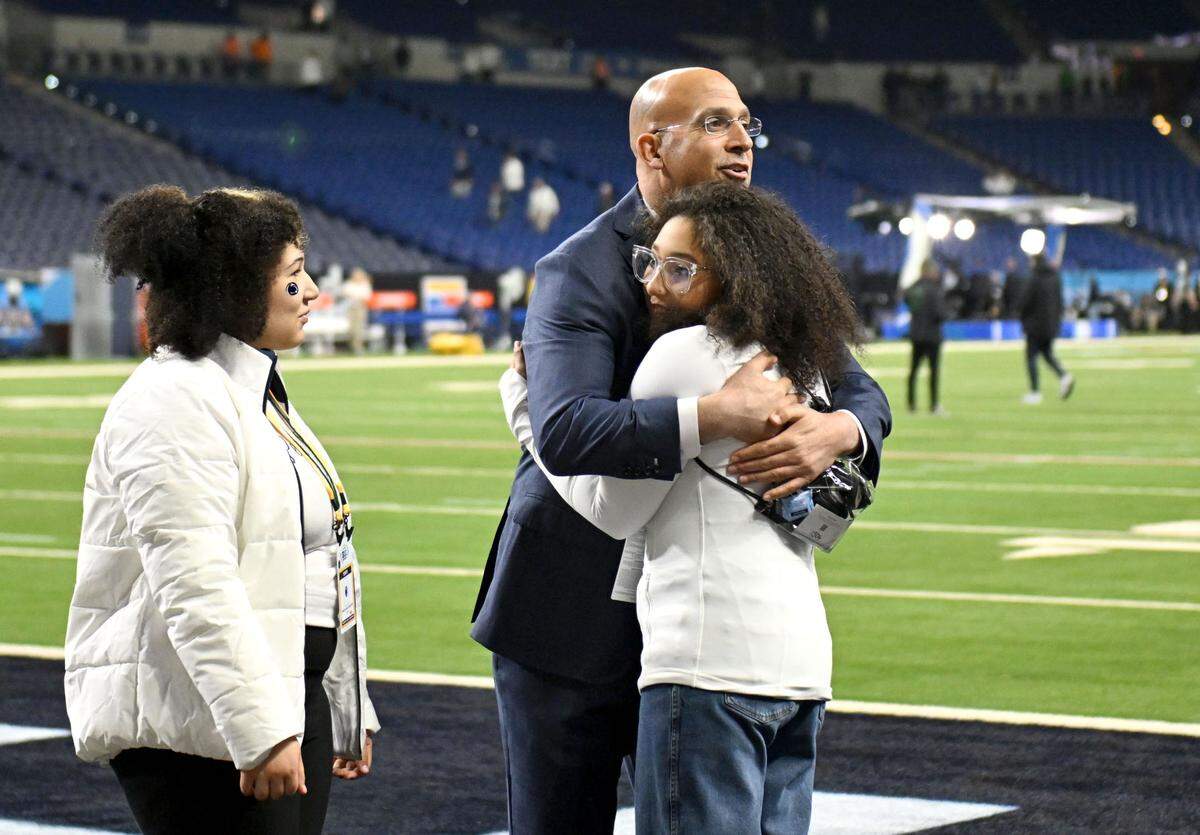
That’s part of why building a culture based on family at Penn State — and previously at Vanderbilt — was so important to him. Most teams talk about being a family, but Franklin wanted to allow his staff’s families to be a more intimate part of it all. His wife wasn’t allowed in his office when he was on the Green Bay Packers’ coaching staff, something that always stuck with him. At Penn State, coaches’ families aren’t just allowed to be in the building. They’re encouraged to be there.
And those who have spent years with Franklin, like former strength and conditioning coach Dwight Galt III, saw him develop that at Kansas State.
“He brought [his daughters] around,” Galt said. “And he didn’t do it to preach family, per se. He did it because he loves being a dad. It’s very important to him. He loves them to death, and he never got to see them. So he said ‘Fumi, can you please bring them by practice? Even if I get to see them for 10 minutes after practice, before we go back to the meetings, it’s worth it to me.’”
Because if one thing is clear, it’s that those who mean the most to James Franklin, mean everything to him.
That’s true of Keith “Mighty” Gardner, one of Franklin’s best friends whom he’s known since he was a child. Gardner recalled standing in the locker room at Vanderbilt with Franklin prior to a game. Gardner was so overcome with emotion with how far Franklin had come that he had to stay in the locker room. But Franklin, who throws verbal jabs with Gardner like close friends do, was not going to make light of the moment.
“It’s almost time for us to walk out, and it’s just me and him,” Gardner recalled. “And I’m sitting there and I’m crying. I couldn’t run. I had to get my s--- together before I could run out. And it was just so deep. And I’m sitting there, and I’m tearing up, and he tapped me. And he goes, ‘Emotional, right? It gets me too.’
“I could tell what my presence meant for him. And for me, I’ve been along this ride this whole time. First time being with him as a head coach, it was overwhelming.”
And it’s true of Santella, who went with Franklin to a Yankees game when the Penn State head coach was set to throw out the first pitch. When staff members gave them a tour of Yankee Stadium and all of the history, Franklin made sure to prioritize his friend — who had loved the team for his entire life.

“They take us into the Yankee museum, where there’s Babe Ruth’s bat, Lou Gehrig’s big glove, the whole thing,” Santella said. “And they’re all talking to James, and he goes, ‘OK, before we go any further, I don’t know anything about the Yankees, but this guy right here is my best friend. So talk to him. He’s gonna know all the names and everything.’ So I got to put the gloves on and hold the bat. I got to put Lou Gehrig’s glove on. I got to do all that.”
But most of all it’s true of his wife and daughters, who have become the center of his universe, stepping into a spot once held by his mom.
Franklin has become the dad he never had and a husband his mom would be proud of. He’s avoided the vices that consumed his father. That’s allowed him to find immense personal and professional success.
He is on the cusp of leading his team to heights it hasn’t reached in decades with a national championship in his sights. If he wins it, he would be the first Black coach to win a national title in college football. And his mind will surely drift to his mom — who was always there for him, beaming with pride with over-the-top enthusiasm.
“My mom would’ve been over-the-top obnoxious,” he said, the joy radiating from his voice. “Even when I was at Maryland she was so proud of what I was doing, that she was hard to deal with. Sometimes I think, oh my gosh, could you imagine? She would’ve just been so proud. And to be at Pennsylvania and to be at Penn State? I couldn’t imagine her back home with friends and restaurants that she’d go to. That would’ve been a lot.”
Then Franklin’s voice trailed off. He couldn’t help but smile.
This story was originally published July 28, 2025 at 6:20 AM.