How Penn State DE Dani Dennis-Sutton became a difference maker
AI-generated summary reviewed by our newsroom.
- Dennis-Sutton developed early physically, excelling in football from age 5.
- Work ethic and coaching led to stardom at Penn State and strong playoff impact.
- Leadership, intensity and consistency drive his continued rise as a top DE.
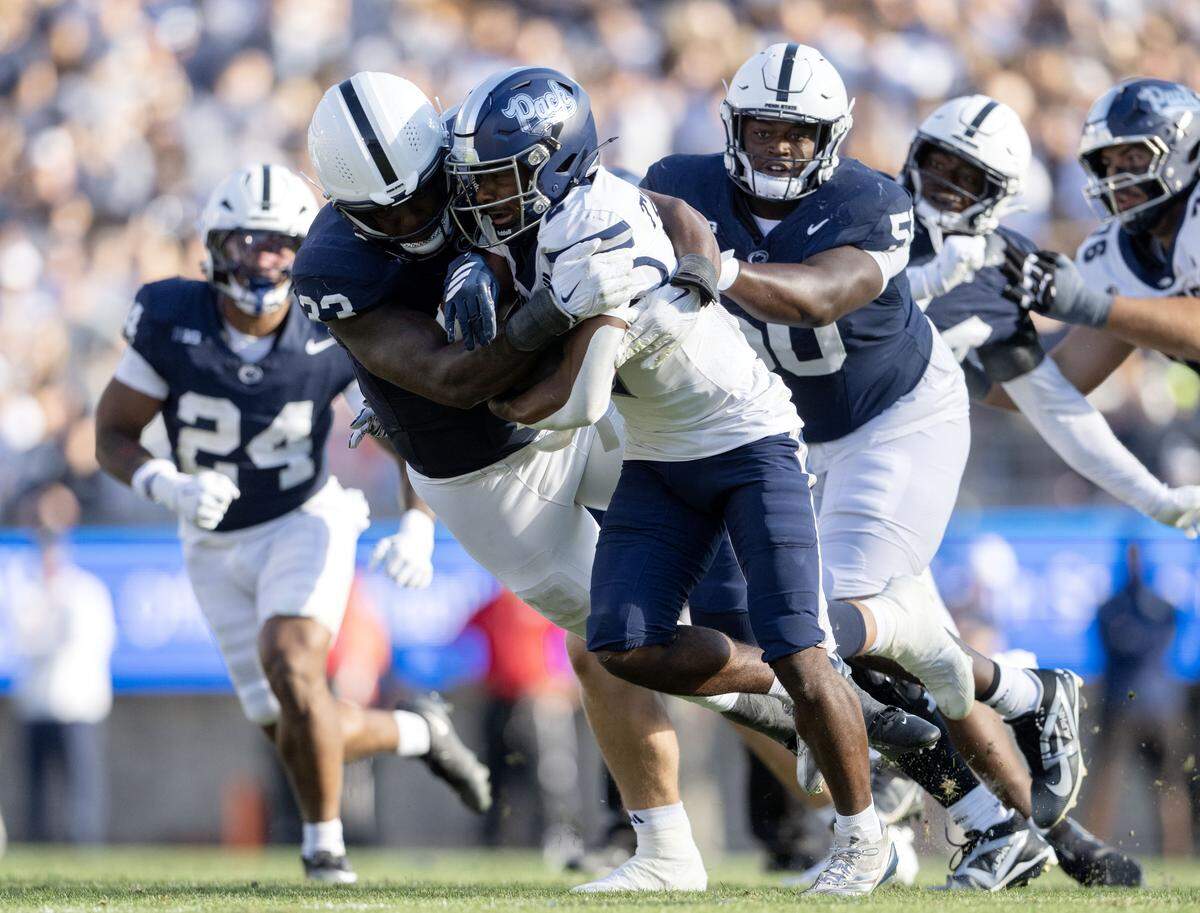
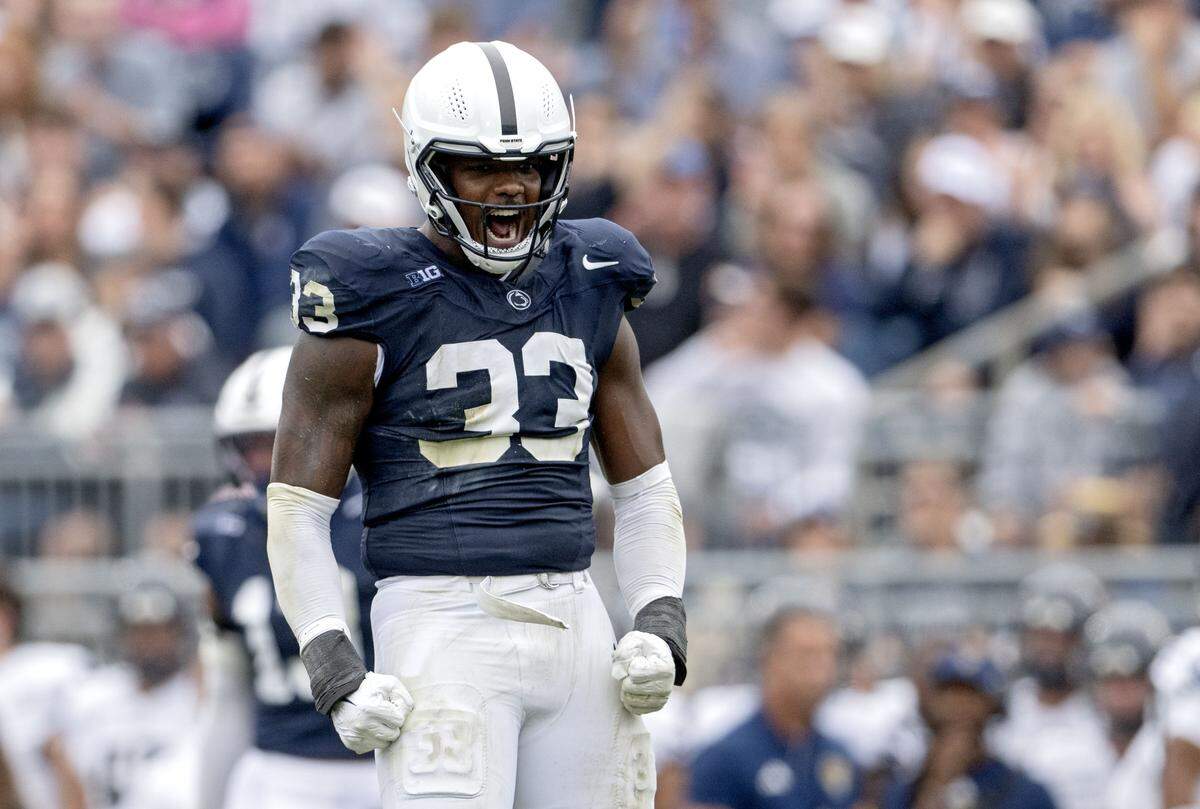
Seconds after Dani Dennis-Sutton pulled Nevada quarterback Chubba Purdy down by his jersey, he couldn’t contain himself. He turned toward the Penn State sideline and smacked himself on the helmet with both hands, leaned back and unleashed a roar. Even in moments like that, with Penn State leading Nevada by 33 deep into the third quarter, Dennis-Sutton is relentless.
His passion and intensity knows no bounds and has helped turn him into one of the best defensive ends in the country.
Dennis-Sutton’s football life began younger than most — largely because he was bigger than most at an early age.
“We started him off at, I believe, 5 years old. He wasn’t even old enough to play, but I agreed to coach because they needed coaches and he was so big for his age — I think you had to be like 7 before you started playing — and they let him come in at 5,” Dana Sutton, Dani’s dad, told the Centre Daily Times. “He started playing both football and basketball at 5 years old.”
It didn’t take long for Sutton to realize how good his son could be. Towering over kids his age, he wasn’t just bigger than everyone else as a young child — he was bigger, faster and stronger as he and his peers continued to grow.
So much so that he was worried about hurting the other kids he played football with, frequently pushing them down with two hands rather than making the tackle.
It was around then that Sutton started working with his son in order to help him reach his dreams.
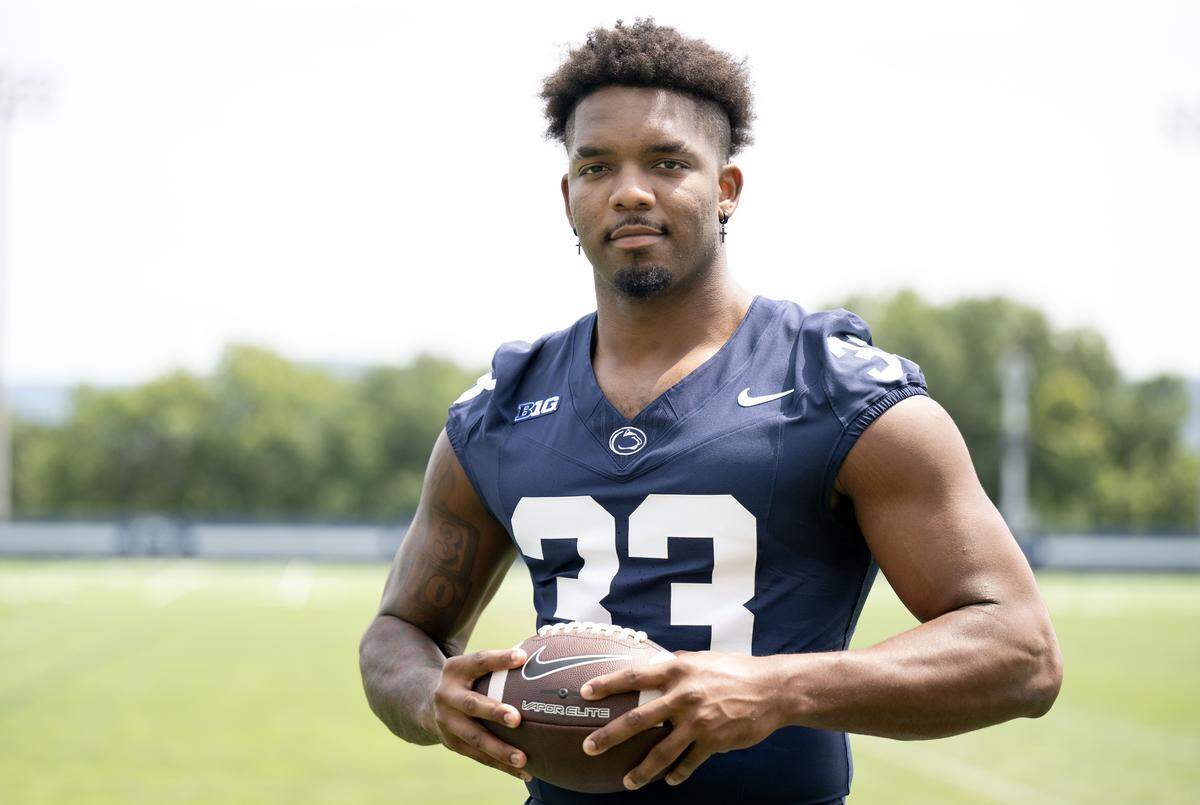
Growing into an elite player
Dennis-Sutton wanted to play in the NFL, but at that age he still didn’t always understand why it was necessary to do some of the things he and Sutton did together. There were plenty of long workouts and early morning runs that even the neighbors didn’t understand.
But Sutton knew how special his son could be, and he wanted to help him do what he needed to achieve his goals.
“At the beginning it was kind of rough, he hated me,” Sutton said with a laugh. “He didn’t like it, he didn’t understand it.”
Even if Dennis-Sutton didn’t understand the work, he embraced it. That’s part of what led him to the McDonogh School in Maryland when he was a high school freshman. Where he’s from in Delaware, there weren’t many — or really any — athletes like him. He was dominant in everything he did, which at the time was primarily focused on football and basketball.
And football powerhouse schools like McDonogh — and head coach Hakeem Sule — took notice and wanted him. Largely because, as Sutton noticed from a young age, there was something different about Dennis-Sutton.
“He was probably all of 6-4, 250 as a seventh or eighth grader,” Sule said in early August. “He was built more like a power forward in basketball, like a Ben Wallace type. We didn’t know if he was going to transition into being an offensive lineman one day. To his credit he transformed his body into what you see now.”
So he went to McDonogh, and Sutton helped him move in every summer and they would have the same talk. One about making sure time wasn’t wasted and that Dennis-Sutton took advantage of the opportunity in front of him.
With all of that work, it should be no surprise that he flourished. Sule saw it immediately.
“He had the aggression and you knew he was a tough kid, so that’s half of the battle,” Sule said. “You have a kid that’s raw, with all this potential in the world. You never know if a kid’s going to lock in at that age and be committed to the process.
“And you knew from day one that he was a guy that was different.”
His recruitment blew up from there, with offers from all over the country. And with the work ethic instilled in him by his dad, Dennis-Sutton kept getting better on the field. He would become a five-star recruit and one of the most coveted defensive ends in all of college football, eventually committing to Penn State before his senior year of high school.
And it was then that Sutton realized just how different his son was — and how all of the hard work would pay off.
“First game his freshman year at Penn State, I didn’t really know if my son was going to see the field,” Sutton said. “And when he was called out beginning of the game, freshman year — true freshman — and he went out and held his own on the field. That was a pivotal moment for me. I knew at that point, seeing what he was doing as a freshman, I knew it was going to be very different from him if he kept up the pace.”
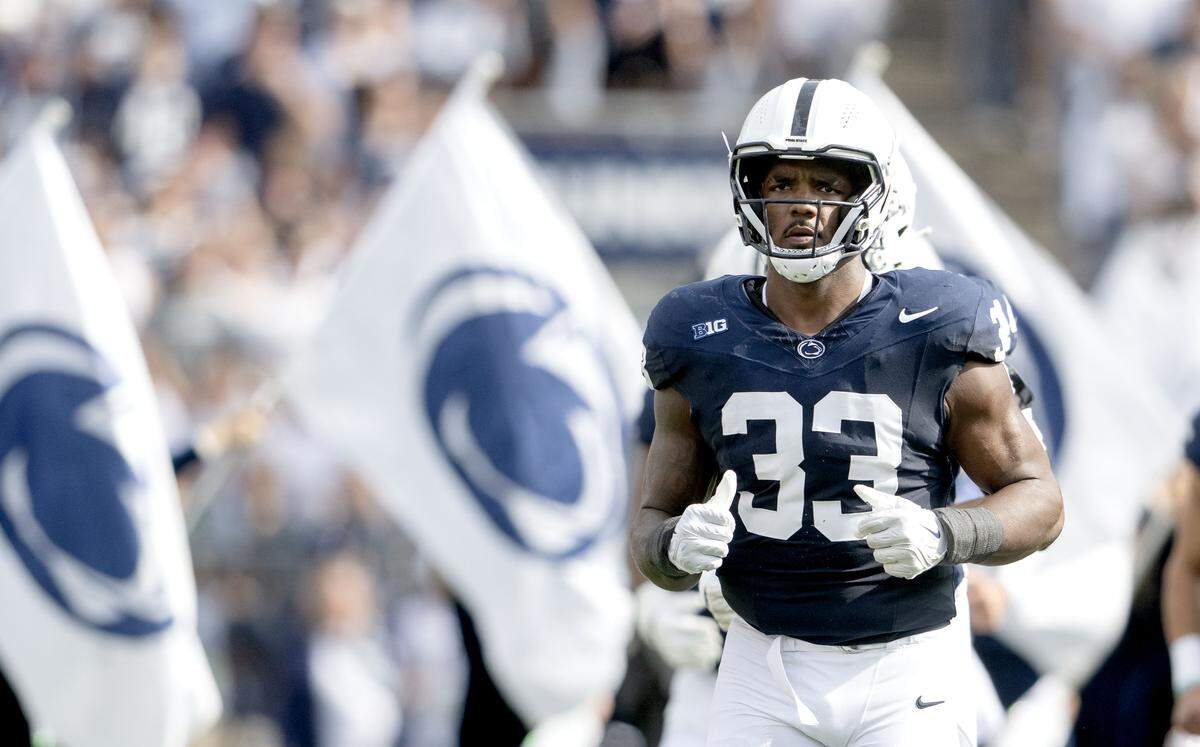
Reaching his full potential
Despite that early playing time, Dennis-Sutton was not a dominant force just yet. He would spend the next few years growing and developing, while players like Chop Robinson, Adisa Isaac and Abdul Carter ascended into stardom for the Nittany Lions.
But late last season, he had his moment. Dennis-Sutton was arguably the best player on the defense for Penn State’s postseason run to the College Football Playoff semifinal, racking up 4.5 sacks, a forced fumble and an interception in the team’s three playoff games.
Ask him, though, and he’ll say nothing had changed.
“Not really,” Dennis-Sutton said this summer at Penn State’s local media day. “People who don’t really know football just sort of look at production and stats and stuff. That’s not all it is. You got to win every single rep, whether you get the sack or not. Obviously, the more plays you play, the more production you’re gonna get. So I played a lot more towards the end of the season. The plays just happened to come to me. I was doing the right things in the right position at the right time, and that’s when the production came but nothing really changed for me.”
Still, it was clear that run could be the beginning of an ascension for the Penn State defensive end. But even when he decided to come back, he did not receive some of the national recognition that other defensive ends did.
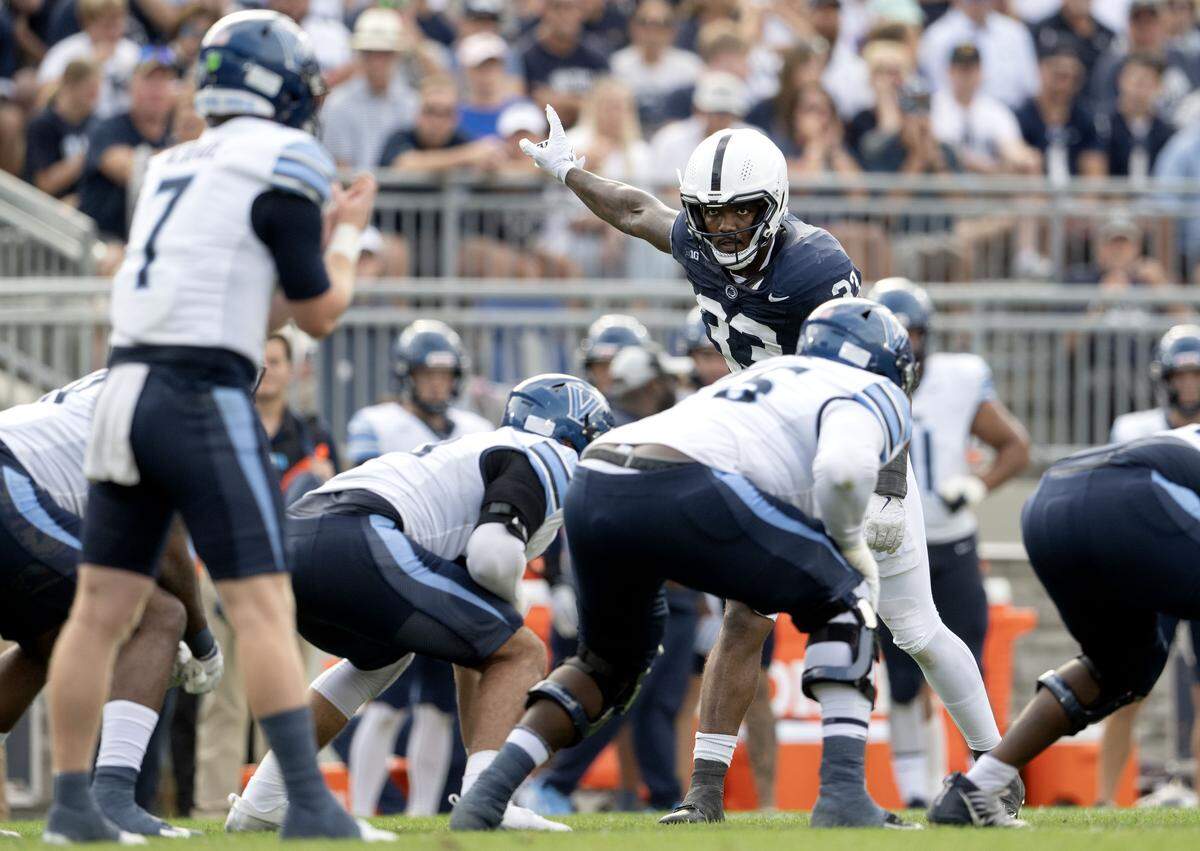
And he knew — mostly because defensive line coach Deion Barnes was sending that stuff to him as bulletin board material. That can provide plenty of motivation for some, but that’s not where Dennis-Sutton says he draws his intensity from.
It’s much more simple than that.
“It’s just fun to me,” he said with a smile. “And it sort of clicked for me last season. I’ve heard it, I think when Marshawn Lynch was like, when you hit somebody over and over, eventually they gonna stop wanting that, or not like getting hit. And it clicked for me last year. I was like, ‘Oh, OK.’ You really go out there and you be the hammer instead of the nail.”
That intensity gives him a presence, one teammates have taken notice of.
“Dani, you just love to play with a guy like that,” cornerback A.J. Harris said in August. “Somebody that brings the energy every day. Like, you know what you’re getting from Dani. You’re getting an amped up, ready to go, ‘let’s go,’ type of guy. It’s just somebody you love to play with, and you know he’s going to lead his room in the right direction, because he ultimately wants what’s best for this defense. He’s one of those guys.”
That’s part what makes him so easy to get behind for the Nittany Lions. Dennis-Sutton wants a national title. He wants to play in the NFL. And he wants it all as much as someone can.
And he’s willing to put it all on the line week in and week out for his teammates in their pursuit of greatness. It makes sense that other elite players like Harris want to be on his side. He’s a difference maker through his play and his passion.
One who is so confident he can tweet “I will be the best defensive end in CFB” shortly after enrolling at Penn State. And one so good that three years later it just might be true.
This story was originally published September 15, 2025 at 1:55 PM.