The Good, The Bad & The Ugly: Reviewing Penn State football’s 27-24 loss to Indiana
AI-generated summary reviewed by our newsroom.
- Penn State defense pressured IU all game but surrendered late winning TD.
- Offense stalled early; first-half failures and weak receiving doomed comeback.
- Nick Singleton and King Mack provided sparks; Mendoza proved elite under pressure.
Penn State lost a heartbreaker Saturday afternoon in Beaver Stadium, falling to No. 2 Indiana, 27-24 after giving up the lead late in the game.
Let’s take a look at the good, the bad and the ugly from the Nittany Lions’ sixth straight loss.
Good
Defensive coordinator Jim Knowles: This was Penn State’s best defensive game since Oregon, with Knowles making life difficult for Indiana offensive coordinator Mike Shanahan for most of the game. He was able to consistently draw up pressure on the Hoosiers and put Indiana quarterback Fernando Mendoza in a difficult position all game. And yes, that includes the final drive. It may sound odd, but Penn State’s defense played relatively well on the drive where it gave up the game-winning touchdown. The Nittany Lions consistently got pressure on Mendoza, sacking him on the first play of the drive and even getting multiple clean hits on him — including on the touchdown throw. Sometimes you just get beat, and that’s very much what happened to the defense, even though they were playing at a high level.
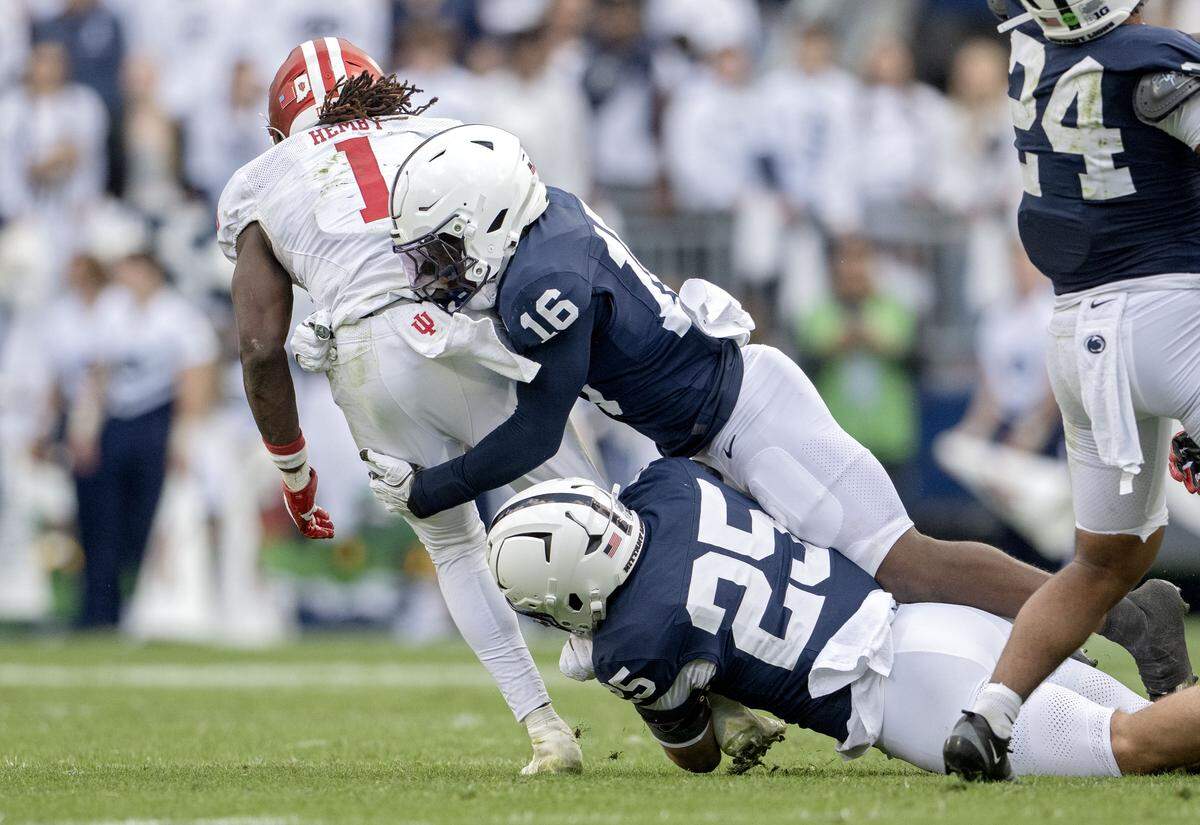
Safety King Mack: Few players on Penn State’s defense played as well as Mack did for the Nittany Lions. He was all over the field, hauling in a crucial interception that led to the Nittany Lions taking the lead and making the hit on Mendoza that nearly knocked him off his spot enough to cause an incompletion on the game-winning touchdown. The Penn State safety has proven to be the second-best safety on the team and should see the majority of the reps next to Zakee Wheatley at the position the rest of the year. He’s undersized at (a generous) 5-foot-10, but he more than makes up for his lack of size with his athleticism and instincts. He’s able to make up ground quickly, and sees the game well enough in front of him to be in position to make plays. Mack should be a high priority for Penn State when it comes to roster retention once the season ends.
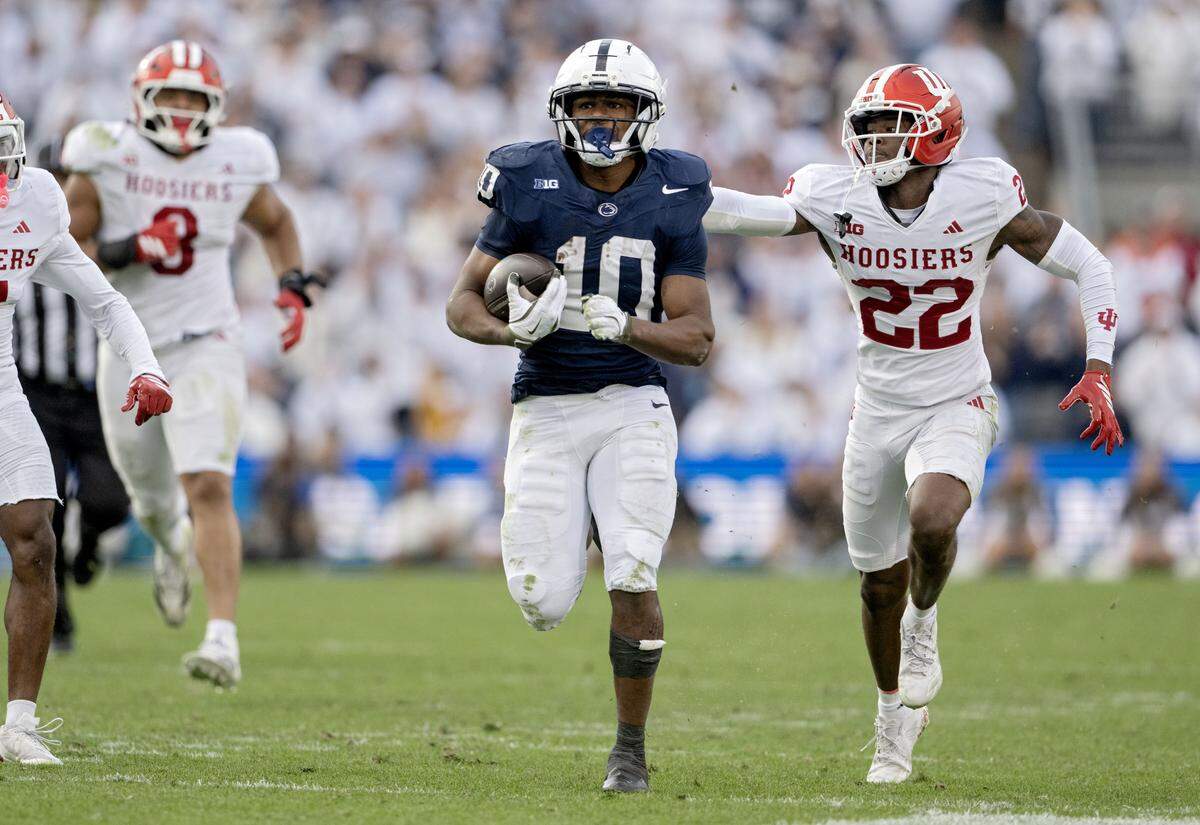
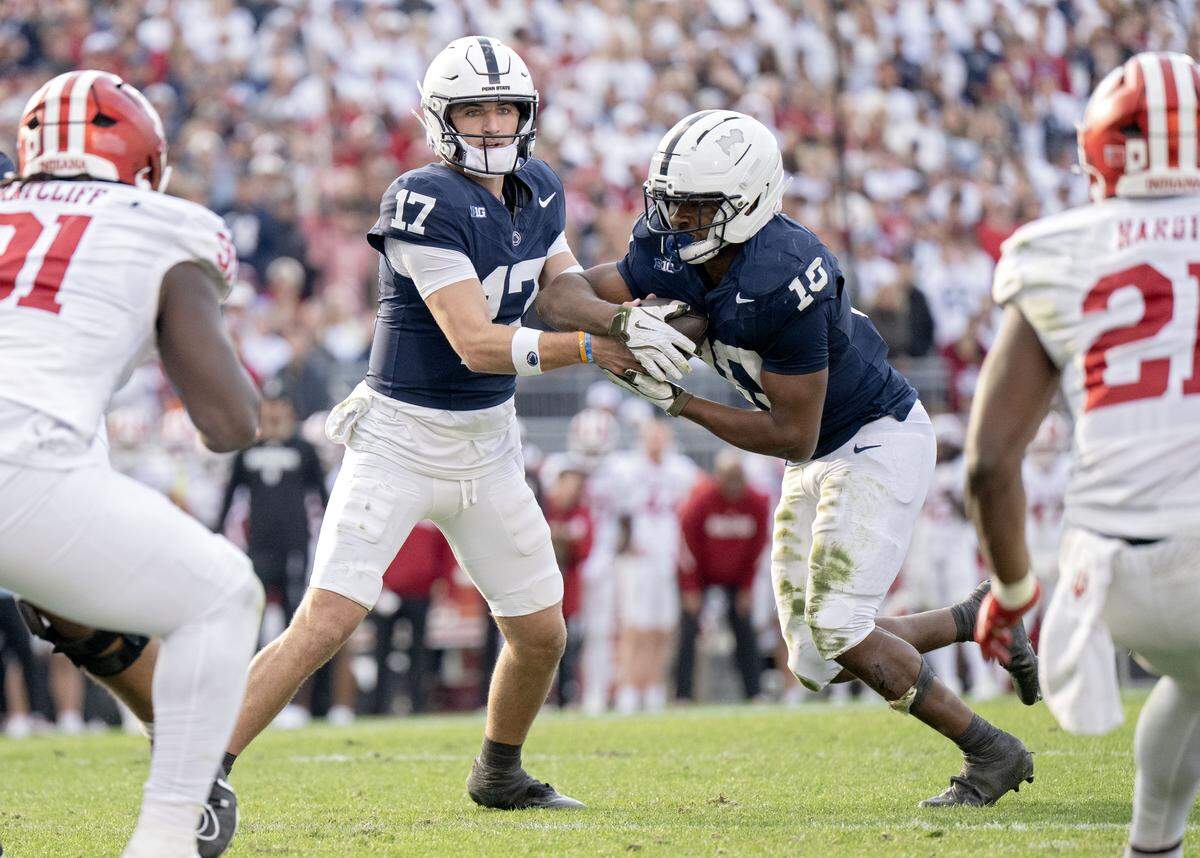
Running back Nick Singleton: Few Nittany Lions have disappointed as much as Singleton, which has to make Saturday that much sweeter for him. He’s been missing the big-play element to his game and he hit on a few of those against the Hoosiers. Singleton finished with 10 carries for 71 yards and two touchdowns, along with three catches for 22 yards and a receiving touchdown — accounting for all three trips to the end zone for Penn State. Singleton didn’t actually look that much different, but he was much better at making the last defender miss to get into the open field and create big plays. Singleton was supposed to be one of the best running backs in the country this season, and there’s a chance this game is the start to a strong finish to his PSU career.
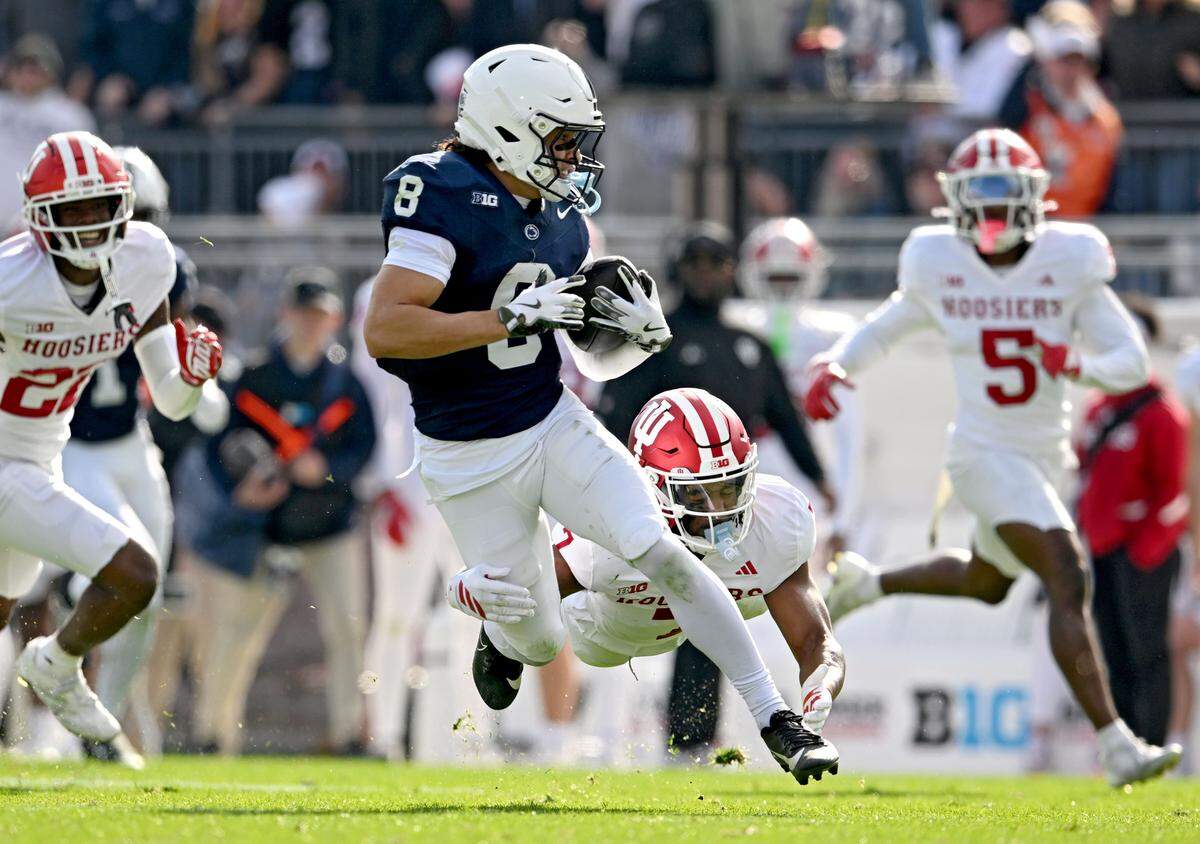
Wide receiver Trebor Peña: Penn State’s receivers have been subpar most of the year, but on Saturday, Peña showed up and gave quarterback Ethan Grunkemeyer the help he needed to move the ball down the field. Peña is an undersized slot receiver, but when used properly he can be an effective weapon for an offense that has very few receivers who can create separation and give Grunkemeyer an open target. He did that against IU, consistently finding open space in the defense, and even creating an explosive play by making Hoosiers miss in the open field on a 43-yard gain. Peña hasn’t been as productive as he was before transferring in from Syracuse, but Saturday is a good sign that his lack of production might not entirely be his fault.
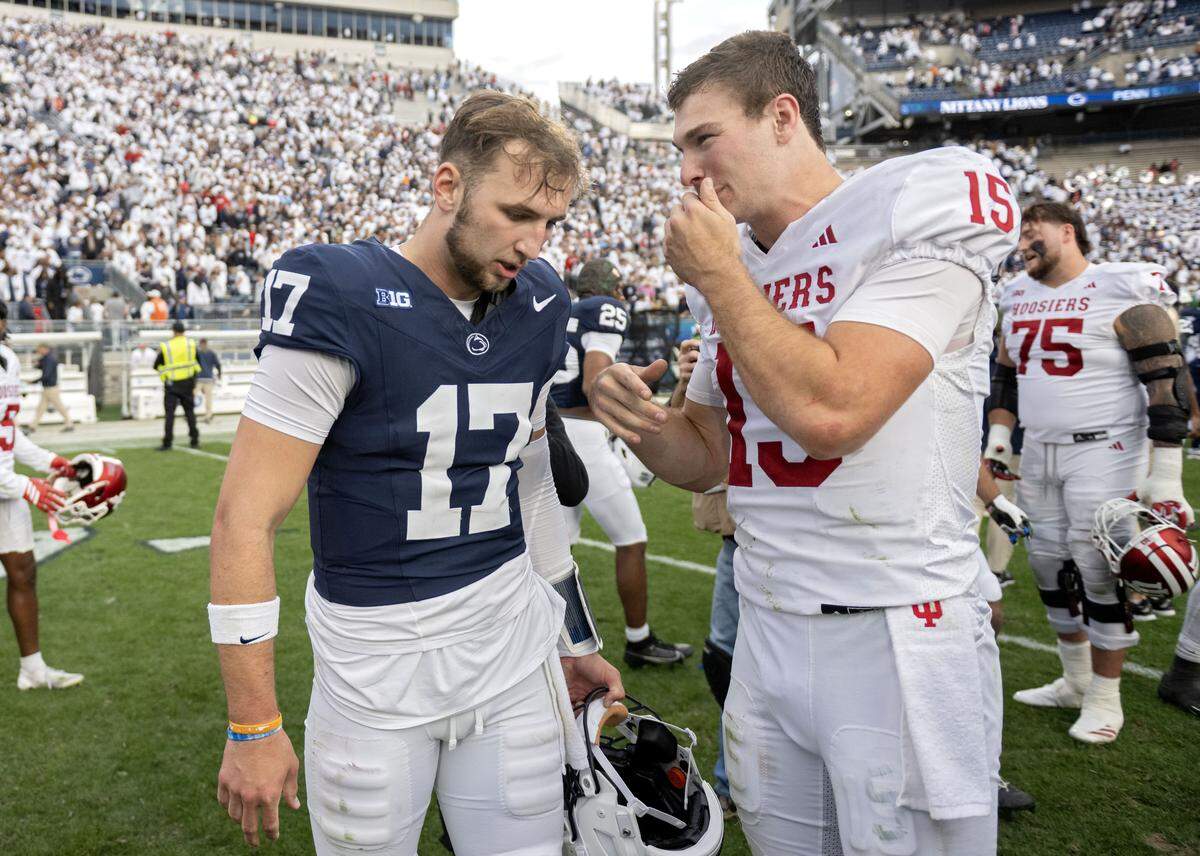
IU QB Fernando Mendoza: It’s far too early to declare a Heisman Trophy winner, but Mendoza will be in the conversation if he keeps playing like this. The IU quarterback didn’t often have open receivers against Penn State because of what Knowles was doing defensively, but that didn’t matter. He threw his weapons open and put passes where only his teammates could get them time and time again. And he did all of that while getting battered and bruised by the PSU pass rush for most of the game. That was especially true on the last drive, when he was sacked on the first play, but then made big-time throw after big-time throw, including the game-winning touchdown that he threw while airborne and put in a spot where only Omar Cooper Jr. could get it. Mendoza has been excellent this season and he was elite on Saturday.
Bad
Penn State’s first half offense: This isn’t even surprising at this point. Penn State’s offense is consistently bad in the first half and has been all season. And then the same group has to try and make up for it in the second half, nearly does, but falls just short because the mountain is too high to climb. It’s hard to pinpoint why this keeps happening, but the best guess is the lack of explosive play creation in the first half. The main culprit for that is the lack of vertical shot plays where Grunkemeyer can try and stretch out the defense — something Terry Smith addressed bluntly following Saturday’s loss when asked what changed for the offense in the second half.
“We made calls to throw the ball down the field,” he said.
Not exactly a vote of confidence in how the first half was called by offensive coordinator Andy Kotelnicki.
Ugly
PSU starting receivers other than Peña: Just because one receiver played well, that doesn’t mean they all did. The Nittany Lions once again got very little help from two starters at receiver and that stalled out the offense several times. Penn State’s two other starters — Devonte Ross and Kyron Hudson — combined for one catch for nine yards. That’s not going to cut it in any game, but especially not when they were both brought in to help the offense in big games like this one. It’s not like it matters all that much at this point because both players will be out of eligibility at the end of the season, but their performance is a good example of why this offense has come up short so often in 2025.