How State College icon Ron Pavlechko — coach, teacher, AD — left a lasting impact on the community
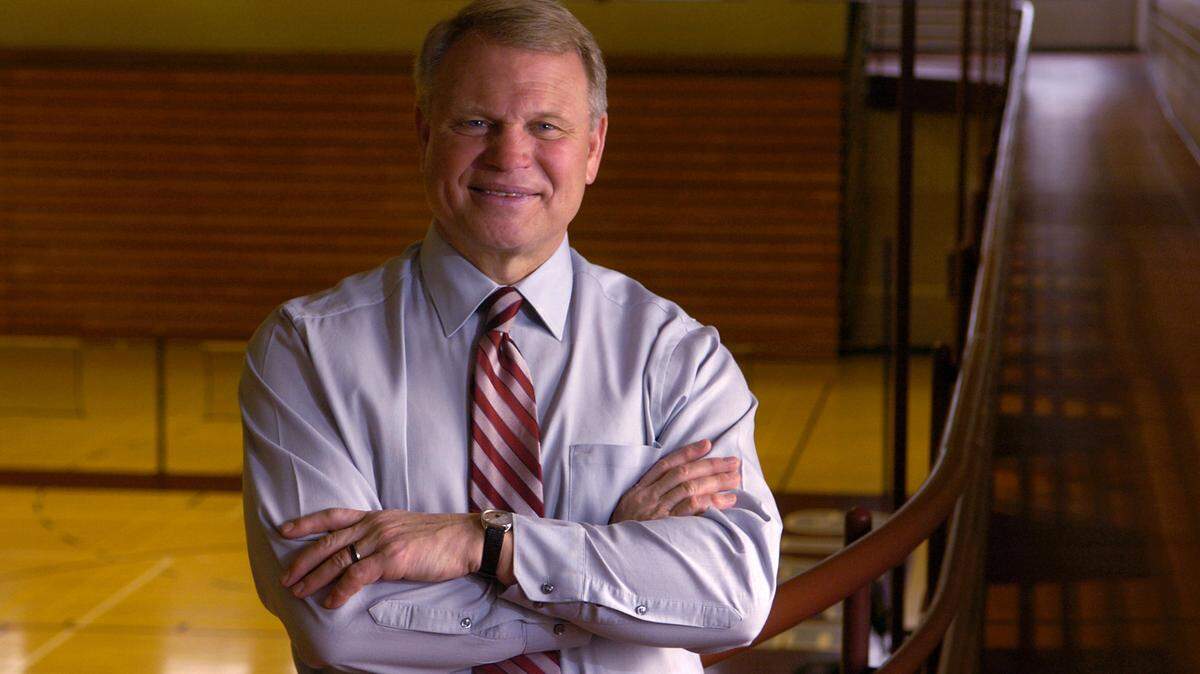
State College’s Ron Pavlechko was one of the community’s icons before his death Friday at the age of 71. He taught English at State High for nearly four decades, coached the football team in some capacity for nearly 25 years and served as the athletic director for another 15.
But it wasn’t his longevity that his family, former players and former students most remember. That’s not why the cellphones of Pavlechko’s two sons have been flooded this week with messages and memories of their father, a Penn State letterman and Joe Paterno disciple who sought to teach life lessons both on the field and in the classroom.
Instead, they all remember the way he listened — the way he’d gently say your name 15 times in 30 minutes — and the way he could make someone feel like they were the most important person in the world. They remember the way he made it a point every day to talk to each of his 85 players about something other than football and how a classroom was about more than learning what was inside books.
“It’s above and beyond athletics and above and beyond coaching,” said Aaron Pavlechko, his son and State College’s junior high wrestling coach. “It’s his kindness and compassion — that’s his legacy. It’s being a good human being.”
When the parents of former Penn State linebacker Darryl Washington divorced, when Washington was a confused teenager in the mid-1980s, Pavlechko treated him like a son. When a newcomer from inner-city Baltimore arrived and struggled in school, Pavlechko tutored him outside of class. And when State College assistant football coach Mark Baney was a 24-year-old “kid” in the 1990s, Pavlechko was there to pick him up and guide him into coaching.
Dozens, if not hundreds, of State High graduates likely share similar stories. But Pavlechko was never one to boast about helping others. To the baby boomer who grew up in the blue-collar town of Youngstown, Ohio, and who was the first in his family to graduate from college, friends and family say he believed in everyone and took nothing for granted. To Pavlechko, he was just doing what anyone else in his position would do.
“He was all about caring for our kids,” said State High Athletic Director Chris Weakland, who worked with Pavlechko for more than 20 years. “I’m sure there were countless others he impacted, but Ron was such a humble man that he would never make that known to a lot of people.”
On the gridiron, the man with the big smile racked up at least four district championships and an undefeated season. He also played football for Penn State and became a member of one of Paterno’s first recruiting classes in 1967, adopting the coach’s “Grand Experiment” mantra and adapting it to State College.
Washington was one of those players Pavlechko impacted, and the former State High quarterback/defensive back still isn’t sure where he’d be without the man who “sort of became that second father for me.”
Before Washington began receiving recruiting mail from every major university on the East Coast, he questioned his own athleticism. But Pavlechko saw potential. The two would meet in a cramped, windowless office at 7 a.m. every weekday and break down film. They’d talk about family. About life. And, yes, about football.
“He saw me as more than a football player. He almost saw me as his son, and he really emphasized making sure I developed really good character and I did all the little things right,” Washington said. “He used to always talk about how if you do the little things right, the big things will come.”
Washington paused.
“He taught me how to be a good person.”
Pavlechko instilled those life lessons into many of State College’s students for decades. His sons, Aaron and Tim, were no different. Both played football for their iconic father, and both often passed him in the hallways when they were students.
When Tim was younger, he’d make sure the football players had Orange drink during two-a-days. And Aaron would most look forward to the car rides to and from practice, when he was privy to conversations the players wouldn’t hear.
But Aaron and Tim wouldn’t often hear complaints. They rarely saw their father’s face turn red with anger. And they often admired the way he approached people — calm, smiling, listening more than talking. “People left conversations with my father feeling better,” said Tim, now the deputy athletic director at Bucknell.
Most everyone in State College has their own Pavlechko story. Weakland let out a slight laugh while recalling one of his more memorable run-ins with the late coach/educator. About a year after Weakland first joined the district, in 1990, Pavlechko turned to the new coach and gave him some unsolicited advice: Talk to every player every day about something unrelated to football.
Weakland assumed he was exaggerating until he spotted Pavlechko, before practice, walking up and down the field and smiling with his players. Sure enough, by the end of practice, Pavlechko had spoken with every one.
“I thought that was kind of crazy at first, but then I watched him — and he did it,” Weakland said. “He just inspired you to bring the best out of you.”
As the athletic director, Weakland now asks all of his coaches to continue that practice. It’s something Pavlechko started but, in a nod to the impact Pavlechko has made in this community, it’s something that’s never stopped.
That’s the real legacy of Pavlechko. It’s not the wins on the field or even his gentle demeanor while teaching. It’s the way he simply impacted people by being himself.
“The common theme, honestly, is that he was more than a football coach,” Tim Pavlechko said. “He was a developer of men.
“And we’re all better because of it.”