How the State College Spikes and the MLB Draft League hope to diversify Major League Baseball
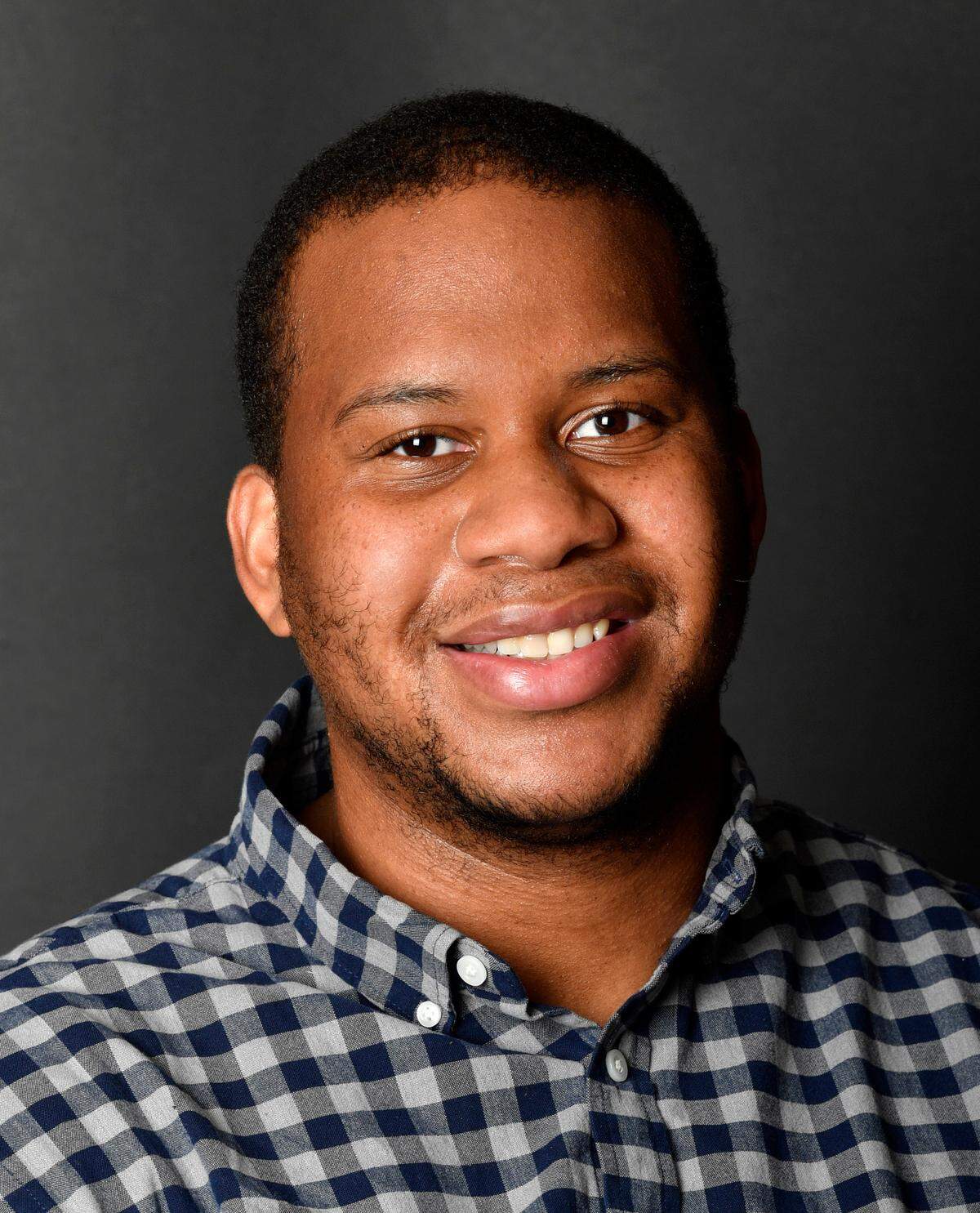
Daryl Loyd began playing baseball with the Jackie Robinson West Little League in the Washington Heights neighborhood on the Southside of Chicago.
The now-18-year old State College Spikes first baseman is part of a wave of Black MLB Draft League players who are carving out a name for themselves. This comes as the sport has seen dwindling participation numbers over the past 40-plus years, reaching a valley of 7.6 percent on the 2021 Opening Day rosters, according to Major League Baseball.
“It’s really refreshing to see because a lot of people say that there’s not enough people of color or Black people playing the sport,” Loyd said. “I’d like to see a lot of us still going after it and having great days at the park. It’s really refreshing to see that I’m not the only one.”
State College — while its roster has fluctuated throughout the season — has maintained a team that is represented by a number of Black players and Black coaches, including manager Delwyn Young. Young’s father, Delwyn Young Sr., was drafted in 1981 by the Cincinnati Reds and played in five different organizations’ farm systems from 1981-94. Young grew up in Los Angeles and eventually played for his hometown Dodgers from 2006-08, before playing for the Pittsburgh Pirates in 2009 and 2010.
Playing for the Dodgers and being the son of a Black professional baseball player provided him with the chance to know the history and legacy that Robinson passed down.
“I would say that Jackie Robinson, himself, is smiling right now and that comes from me being a Dodger and knowing the tradition that he started,” Young said on the Spikes’ Opening Night in June. “This is part of the league — we’re trying to bring as many Black and brown players into baseball as we can. To have an opportunity for one kid, let alone however many that we may have over the summer, is great.
“It’s just continuing the tradition that Jackie paved for us and it’s unfortunate over the past few years that there has been a drop-off in Black players and brown players who are making it to the Big Leagues and getting drafted in general. That was another reason why I was excited to take this opportunity as a manager was to help — not just one player, but all players. Especially getting Black and brown players back involved in the game at a high level.”
Spikes center fielder Cameron Lee is also a son of a former MLB player. Derek Lee [not the one that played for the Chicago Cubs] played one year in the Majors with the Minnesota Twins. Cameron Lee, who is heading back to State College of Florida this season to continue his collegiate baseball career, has baseball coursing through his veins. It’s something that he wants to continue to put his full effort into and he looks up to people like his dad and current Black Major League players to give him inspiration.
“It’s awesome. My brother is playing pro ball and it’s been in the family,” Cameron Lee said. “My cousins are playing baseball — everyone is just playing baseball. I grew up around the sport and it was great. I was just recently watching a documentary about basketball and it was about Larry Bird and Magic Johnson. Right before they got to the league, critics were complaining about how there were too many Black guys on the court and they asked a bunch of fans and what they would want to make them go to a basketball game more and they said, ‘There are too many Black guys on the court.’ They don’t want to see that.
“This team [Spikes] especially, I feel like we’ve got a lot of Black guys on the team. In the Big Leagues right now, Latin American guys, especially Dominicans are ruling it right now. They definitely have their own culture from African-Americans. I know Tim Anderson is a big guy that I’m looking up to right now, just watching him play and watching his game. He knows he represents Black culture. I think he does a great job of that. I think we definitely have to see more Black guys in the game.”
Third baseman Marques Paige follows the mold of the son of a former professional baseball player as well. His father, Mark, was drafted by the San Francisco Giants in 1976, playing for the Great Falls Giants of the Pioneer League. Despite growing up in Vegas and his father playing in the Giants’ organization, the younger Paige was a New York Yankees fan.
Hall of Fame shortstop Derek Jeter drew him to the sport even more. Seeing a Black player of Jeter and other former players’ statures gave him hope of how far he could one day go.
“I was always looking around at the other Black baseball players or kind of just seeing how African-Americans fit into baseball racially,” Paige said. “I feel like it’s all about perseverance — [Jeter] handled everything with a grain of salt, always was a sponge, learned everything every day. For the most part, he paved the way for guys like me who looked up to him... I used to tell everyone I was related to Satchel Paige. I said it because I have a poster and a [Kansas City] Monarchs jersey. The Negro Leagues are pretty big to me. Those guys are the reason why I’m playing baseball right now. I give them all of their props.”
African-Americans are represented at the top of the league’s highest offices, as well. The president of the MLB Draft League is Kerrick Jackson, who played Bethune-Cookman, a historically Black institution in 1996, and transferred to Nebraska for his 1997 senior season. He later went on to become the manager for Southern University, another historically Black university, from 2018-20, before embarking on a journey as the first president of the MLB Draft League, which is just wrapping up its inaugural season.
A couple of the major barriers to getting into the game, Jackson pointed out, are the expenses of equipment and field management. Baseball gloves can cost upward of $100, with bats falling in the same category. Resources are low for field maintenance — especially when it comes to creating playable surfaces with either grass or turf. Batting helmets, uniforms and cleats also cost a great deal, which comes before a player could even use high-level technology, personal coaching and even paying for travel leagues to improve their games.
“It’s being able to take the experiences that I’ve had, the relationships that I’ve developed and allow people to hopefully walk some of that same path with the footsteps that I’ve taken,” Jackson said. “You just have to be intentional about it. I think it’s one thing for people to say, ‘Oh this needs change. We need to create more opportunities,’ but then, it’s another thing to go out there and actually be intentional about providing those opportunities.
“That’s something that I feel like I’m doing is being intentional and making sure that we give minority coaches and players an opportunity. It’s not just because they’re minority coaches, but because they’re good coaches that should be here and they just need opportunities.”
Some Spikes players this season have played at historically Black universities, including pitcher Jason Alvarez and catcher Michael Dorcean. Alvarez is a rising senior at Grambling State, while Dorcean is heading into his redshirt sophomore year at Coppin State. The two love their HBCU’s — wearing their school-issued gear under their Spikes uniforms. It’s a sense of pride to be at a predominantly Black school and playing baseball, understanding the trail blazed by Negro League players of yesteryear for them.
Following the protests and demonstrations in wake of the killing of George Floyd last summer, a renewed interest in attending historically Black colleges and universities occurred with a number of top prospects in basketball — with five-star class of 2020 center Makur Maker selecting Howard, five-star Mikey Williams considering the likes of Alabama State, Hampton, North Carolina Central, Tennessee State and Texas Southern — as well as former NFL stars Deion Sanders and Eddie George coaching HBCUs Jackson State and Tennessee State, respectively. Alvarez believes that the top Black baseball talent could soon follow them to HBCUs.
“With the movement and what’s been going on in the past couple of years, people are really starting to get their eyes opened,” Alvarez said. “It’s not just with politics and what’s going on in the world, but also with sports. It happens everywhere. I think with whoever is in charge of the HBCU schools and conferences or even Major League Baseball, I think they should definitely get involved in providing those guys the resources to cultivate that talent that is there. If you don’t get the resources, it’s going to make it even tougher on the guys from schools like that. We already have a tough time in the world as it is.”
The duo play positions that Black American players are very rarely represented in. Playing catcher comes at a cost — with equipment costing upward of $170, which doesn’t include a catcher’s mitt or baseball spikes, which could easily run past $200. Despite having a hill to climb as a minority catcher, the New York native Dorcean believes that players from HBCU’s ‘can compete against anybody’ at any position, despite not having the same funding that larger programs receive.
Providing representation at the position at the next level is something Dorcean want to accomplish, especially being Haitian-American.
“I love that position. I wouldn’t want to play any other position,” Dorcean said. “Being an underdog and seeing someone you don’t usually see playing the position, especially with the changing around of big name catchers in the league — Salvador Perez and J.T. Realmuto — that’s about it. You don’t usually see a lot of catchers of African descent and I want to get out there. I don’t look it, but I am Haitian. I also want to be someone kids could look up to catching behind the plate, see me and say, ‘Oh, I want to do that when I grow up’ or ‘I want to do that when I play baseball.’”
Outfielder Hylan Hall is heading to Washington State after finishing up his summer play with the Spikes. Coming from Orlando, Florida, baseball was always a sport that he grew up watching and playing. Idolizing former Black Major Leaguers brothers Rickie Weeks and Jemile Weeks, who grew up in the Orlando suburb of Altamonte Springs, Hall aspired to reach the same levels that they did. He believes that if given the same chances and assets as other players, Black players could come back to baseball.
And that’s his hope for what the MLB Draft League can accomplish.
“It’s a lot of talent everywhere,” Hall said. “I can speak for myself, but I played with a bunch of African-American players that were really great at [baseball], but didn’t have the resources or the opportunities that a lot of other people had. The fact that collectively there’s a lot of people like Kerrick and our coaches helping is great. It’s definitely a big step moving forward. When my kids and my kids’ kids play, it’ll be a lot different. So, that’s great.”
This story was originally published August 9, 2021 at 5:29 PM.