Former Orioles manager Dave Trembley talks new role with the State College Spikes
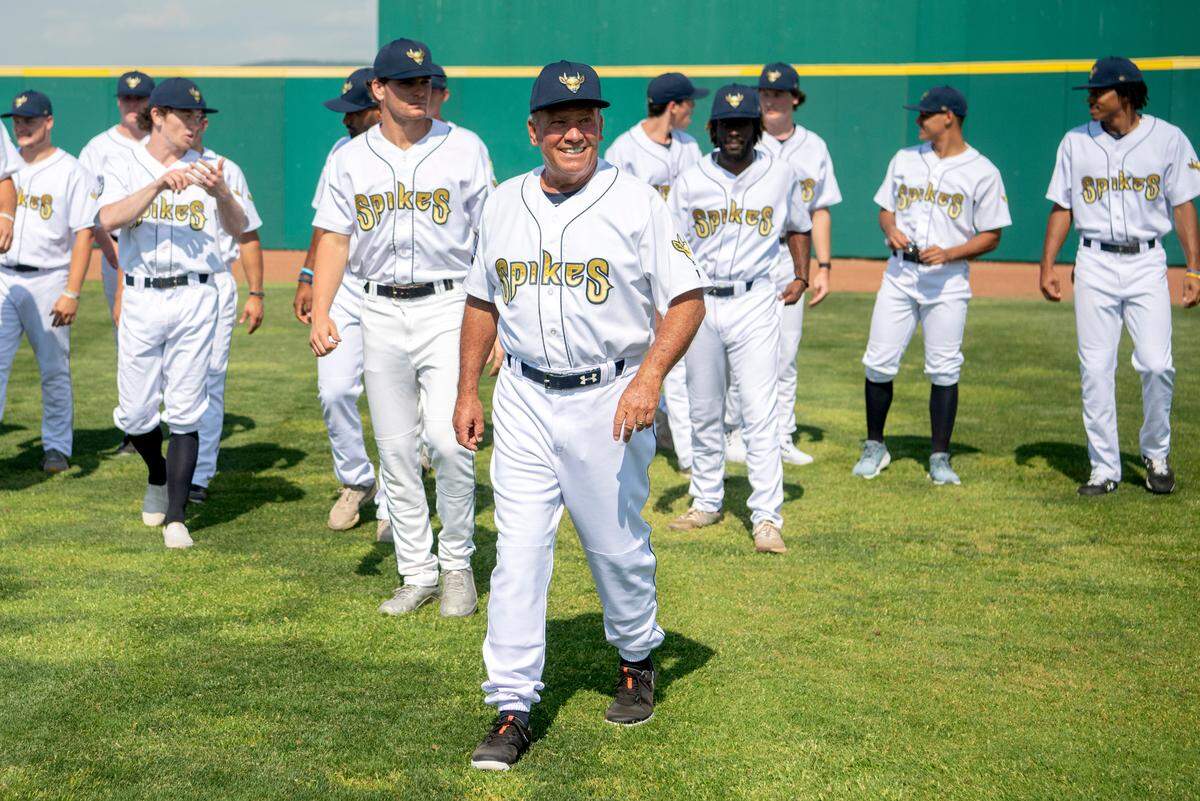
It’s a sunny Wednesday at Medlar Field at Lubrano Park and the State College Spikes have completed their final day of practice before Opening Day.
In the depths of the air-conditioned clubhouse, inside the manager’s office is a familiar face to fans of the Baltimore Orioles. Former Orioles manager Dave Trembley, who manned the position from 2007-2010, sits in his new office.
Since 2010, he’s made two separate stops with the Atlanta Braves and one with the Houston Astros in between. His desk is neatly organized with lineup cards from the Orioles — a number of hats from his former teams sit atop his cabinet and he’s wearing black socks adorned with a Braves logo.
The former Major League manager spoke with the Centre Daily Times about managing, his time as a teacher in inner city Los Angeles and his previous experience in Happy Valley. Answers have been edited for length and clarity.
CDT: How does it feel to be back out here managing and attempting to lead this young team to develop themselves and learn the game a little bit more in-depth?
DT: I think Major League Baseball should be commended for doing something like this and to get the opportunity to come to a facility like we have here in State College is even better for the players. It’s because the environment provided here is conducive to these guys’ development.
We have a great field, we have great indoor facilities, hitting cages, mounds — which would help with the development. I think the process here for us is to teach old-school baseball. It’s to teach baseball fundamentals and to maybe get away from a little bit of where these guys come from.
Most of these guys come from the showcase, travel ball era. College baseball is kind of scripted for them, as you see with the wristbands. The approach that they take here is to teach baseball fundamentals and to put them in situations hopefully that they’ll be in as they move up the ladder. I think this is a really great opportunity for them.
When you have guys like Jim Gott, who’s spent so many years in the big leagues as a coach, and you’ve got (David) Valdez and a young guy like Will Johnson, who’s starting his career, the approach that we’re taking is to teach baseball and teach baseball fundamentals and get everybody oriented to the team approach of play.
CDT: How excited are you to be back out here managing?
DT: Well, you know, we had an opportunity to do something really similar to this last year from Major League Baseball in the Appalachian League. I was in Bristol, Virginia, and it was a 10-team league, but it was for college freshmen and sophomores. We played for 10 weeks and had 60 games. They got every Monday off and I really enjoyed the reception that we got from the players.
I just feel like a lot of them were never taught the nuances of the game. It was very much an individual approach that they’ve come up from tryout baseball, travel baseball, Team USA, Perfect Game — all of that — and they really didn’t have a real good grasp of the inner workings of the game and the nuances of the game.
So, to get an opportunity to do this this year where you have guys that are on the doorstep of being drafted, that are a little bit older, we’ve always considered ourselves to be fundamentally sound and that’s the approach that we like to take. I like to teach baseball fundamentals and the approach. So far, the guys have been really receptive to it.
That’s what gets me excited that you get the opportunity to do something for some kids that have some goals and dreams and try to help a little bit.
CDT: Have you discussed with them your time of being a manager at the big league level, specifically with the Orioles? What was that experience like with a team that was attempting to rebuild itself? How do you feel like that translates to young players building themselves up?
DT: I told them and I relayed that. When I managed the Orioles, we had first-year players in (Matt) Wieters, (Adam) Jones and a lot of guys that were rookies at the Major League level and you had to teach baseball fundamentals and you had to have an awful lot of patience and you had to put them out there in situations where they’d hopefully succeed. And it’s about repetition. It’s about getting a routine. It’s about establishing confidence and trusting yourself and also trusting the people that are working with you.
So, that’s the same approach that I’ve taken for the 4-5 days that I’ve been here with these guys. These guys have been very eager to learn. They’ve asked me a lot of questions about how it was when I managed in Baltimore and I try to tell them and say, “The difference between those guys (in Baltimore) and the guys here are those guys are in the big leagues. They know how to play.”
The guys here are not ready to play in the big leagues yet, but they should be learning how to play. And I think that’s the approach that we take. We’re trying to teach guys how you’re supposed to go about playing at the Major League level. If you do that and you get guys to relax a little bit and you give them opportunities, it’s fun. It’s fun for me. It’s fun for me at this point of my life to come out here and see so many young people that have a passion for the game and you know as well as I know, that’s what we need. We need to get as many young people as we possibly can involved in our game.
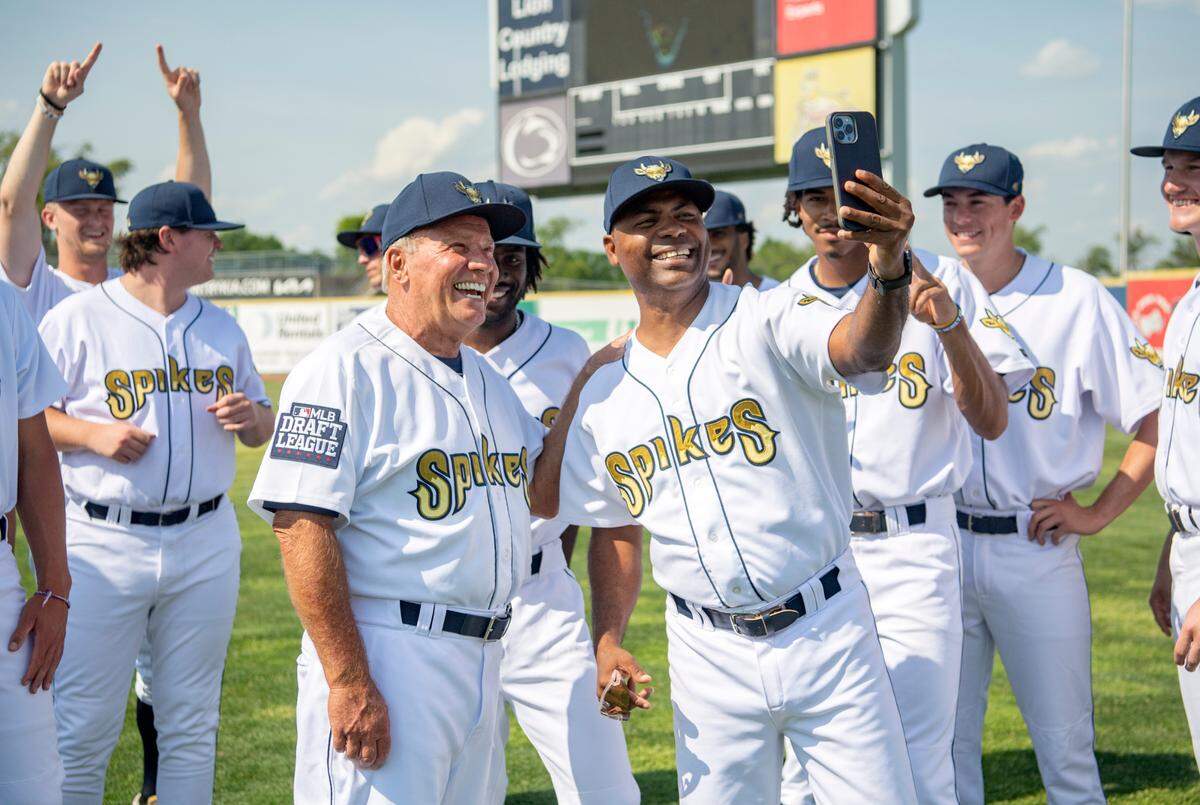
CDT: Being in State College, how does it feel to be here with the scenery in the background of the stadium, the mountains and Beaver Stadium?
DT: There’s two things here and they’re probably synonymous. There’s history and tradition here. That’s because of the people that have come way before us that have established the tradition and history of Penn State. The facilities that they have here are probably just as important as the quality of people that have come through here over the years.
Penn State has always been notorious for their athletic teams being very well-coached, very well-disciplined, very fundamentally sound, very representative of the community and the personality of the people living here. (It’s) blue-collar work ethic, education is very important. You may not know this, but I was a grad assistant here.
I was a grad assistant here 46 years ago in 1976. The facilities were nothing like this now. Beaver Stadium, I think, was maybe 50,000 and the baseball field (where it was located) is now an asphalt parking lot out there. So, I’m very humbled to be here.
And I know I talked to all of the players and they’ve watched when you come out to the backdrop and the facilities and it’s picturesque. We’re lucky to be here. I’ve told the guys, “Let’s respect it. Let’s uphold the tradition here. Let’s be appreciative of the people that are allowing us to be here.”
That’s the people at Penn State, that’s the people at the Spikes — (Spikes General Manager) Scott Walker and his staff. They’ve made it very comfortable for us to be here and we’ll make sure we do everything we can to make sure the guys (on the team) treat it as such.
CDT: Could you discuss your background of playing early, becoming a grad assistant and how you transitioned from that level to the MLB?
DT: Well you know, I grew up in a very small town in northern New York state. I was closer to Canada than anything. I grew up in very cold weather and I grew up 110 miles north of Syracuse on the St. Lawrence River. I went to school there — high school.
I went to State University of New York at Brockport, which is a teacher’s college. It’s in between Buffalo and Rochester. I played there, got my master’s degree there. I taught for a couple years in the school system in New York State. I was a grad assistant at Brockport. I coached there. I came here as a grad assistant and spent a year here.
From here, I went to Southern California and I was a public high school teacher and coach for three years in inner city LA. Our home field was Jackie Robinson Ballpark in Compton, Ca. I learned how to get along with different types of people. From there, I went on to a college and coached for five years in Los Angeles — I was a head coach for five years.
I scouted for a year with the Cubs. I went on to work for a year with the Cubs as a minor league manager. I spent 20 consecutive seasons as a minor league manager. I managed at every level. I managed in every one of the minor leagues with the exception of the California League and the Midwest League. I was in the Southern League for a long time — the Eastern League, the Texas League, the Pacific Coast League, the International League, Florida State League, the South Atlantic League.
I went to Mexico for winter ball and I went to Venezuela for winter ball. We went to Puerto Rico, I took all-star teams — I went to Korea, I went to Taiwan. I got to the big leagues (Orioles) when I was 55 years old as a coach. The next year, they named me their manager. I stayed and managed the Orioles through 2010, left and went to Atlanta. I was a coordinator for instruction with the Braves in 2011 and 2012.
A former player of mine — Bo Porter — became the manager of the Houston Astros. I went with him to Houston. I was the bench coach and third base coach in Houston in 2013 and 2014. I went back to Atlanta in a dual role. I was the director of player development and coordinator of instruction and I stayed there until 2019, when I retired. I went home in 2020.
I don’t play golf, I don’t fish, I’ve done baseball for 45 years. I consider myself a teacher, a manager and I love baseball fundamentals. Major League Baseball asked me to do what I did last year and I did it. They asked me to do this (manage the Spikes) this year and I did it. I think you’ll find out when you’re a little bit older where your purpose in life is. My purpose in life is to try and help young people. I didn’t get where I got on my own. Someone always helps you get to where you want to go. I’m just trying to help these guys get to where they want to go.
CDT: You’ve discussed a lot about teaching, and your background as a school teacher too transitions into you being able to teach as a coach as well. How does it feel to be able to impart that knowledge on everybody?
DT: What’s missing in the game is that there aren’t enough people now that take a lot of pride in teaching the fundamentals of the game. It’s become very individualized. It’s become very “me oriented.” And guys get rushed to the big leagues because they have tools, they have talent, but they never learned how to play. No one ever taught them the intricacies of the game or taught them the fundamentals or how you go about doing things.
It’s repetition. And you should learn those things. They’re basic. Anything in life is a foundation. It’s fundamentals. What I learned of being a teacher in inner-city Los Angeles is that young people are very intuitive. They sense and they know very quickly if you’re on their side or you’re in it for yourself. Young people today are so much more attuned with where you’re coming from.
I told these guys that the difference that changed for me is, 40 years ago, you’d tell someone what to do. You could tell them. The reception that you got is you just did it. You don’t do that anymore. You ask them – “Hey this is how I would like you to do it” or “Hey, could we do it this way?” And you put the ball in their court. I tell them, “If I’ve got to tell you what to do, you’re not very self-disciplined at all.
“You have to be self-disciplined. Your mom and dad aren’t going to be here. Your coach isn’t going to be here.” In college baseball, the catcher’s got an earpiece in and they’re telling him what pitch to throw. When you get to the big leagues, it ain’t going to happen. You’ve got to make those decisions on your own.
The good ones — they listen. ... These guys have all been very good. They listen. But they know the carrot. They all want to get to professional baseball, but the reality is that they all won’t get there. But what they learn from this game should help them in the real world in the long run. That’s the big picture — what are you going to do when you’re not playing anymore? What kind of person are you going to be?
This story was originally published June 5, 2022 at 6:00 AM.