
Afield: A major stream habitat project is underway in Centre County. Here’s what to know
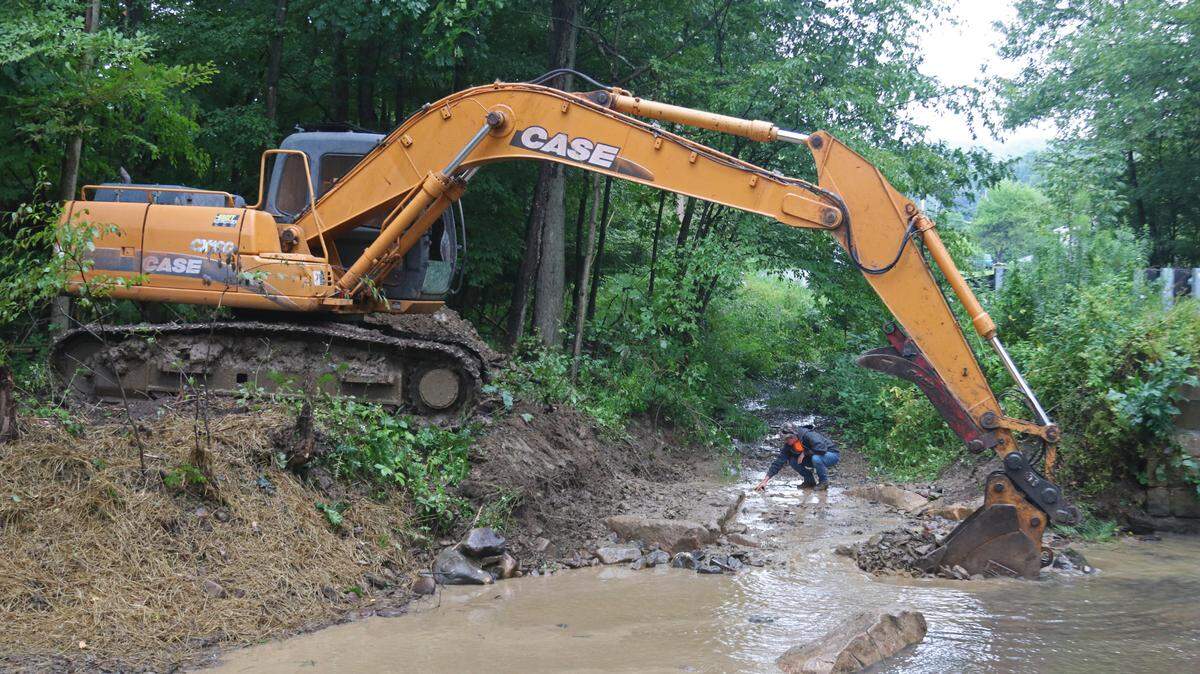
Heavy equipment in a favorite trout stream is usually bad news for fish and anglers alike. However, that is exactly what is taking place right now in Sparrow Run — a major tributary to the upper Bald Eagle Creek — and it is good news, not bad.
A large stream restoration project is underway in Taylor Township, Centre County. The project covers nearly a half-mile of Sparrow Run and includes at least 38 habitat-enhancing devices.
“The habitat structures will vastly improve the survival rate of native brook trout in the stream,” said Bob Vierck, president emeritus of the Spring Creek Chapter of Trout Unlimited. “Sparrow Run is a stream that experiences frequent flooding. The significant bank stabilization structures will greatly reduce sediment and nutrients headed downstream to Sayers Dam and ultimately the Chesapeake Bay.”
At the streams’ confluence near the village of Hannah, Sparrow Run more than doubles the flow of Bald Eagle Creek. The current habitat project addresses nearly 2,000 feet of former farmland that has major erosion originating from the stream having been relocated about 100 years ago. However, the history affecting Sparrow Run began long before that.
Hannah Furnace was built circa 1830 to produce pig iron. Iron ore was mined by hand from the top of the adjacent Bald Eagle Mountain and lowered to the valley floor with an inclined plane — the ruins of which still exist. Limestone was hauled by wagon to the furnace and woodcutters and colliers produced charcoal from hardwoods growing on adjacent hillsides. An average furnace would consume about 800 bushels of charcoal per day, which was also brought to the furnace in wagons.
During the time of operation, the furnace supported a thriving village and related industries, some of which dammed Sparrow Run to supply waterpower. This set the stage for part of the problems that the stream faces today.
U.S. Fish and Wildlife Service’s Partners for Fish and Wildlife designed the habitat project in 2018, and then Trout Unlimited, spearheaded by Vierck, applied for funding.
According to the project plan, nine mudsills will protect approximately 500 feet of stream bank and provide overhead cover for fish. Ten rock cross vanes will hold the stream gradient and move the flow to the center of the channel. Excellent fish habitat is often created immediately below cross vanes. Seven stone deflectors will protect about 480 feet of stream bank from erosion. Log vanes and random boulder clusters will provide trout habitat. However, the finished product will not exactly follow the plan.
“We designed this project three years ago, and because of flooding and the stream’s unstable banks, we have had to make adjustments to our original plan as we go,” said Adam Smith, a fish and wildlife biologist who heads the project for Partners for Fish and Wildlife. “The over three inches of rain that fell in one day during construction allowed us to see the type of high waters that we have to design and build for.”
The project began three weeks ago with hemlock logs, large flat-sided rocks and other materials being assembled at the site. Several mudsills, stone deflectors and rock cross vanes have already been completed. The seeding and mulching done at the first devices is already sprouting grasses and clover.
The $137,500 habitat project is largely funded by the Hamer Foundation, with $9,000 in additional funding from Trout Unlimited’s Embrace a Stream fund, $5,000 from the Spring Creek Chapter of TU, as well as in kind contributions from the U.S. Fish and Wildlife Service’s Partners for Fish and Wildlife. Landowners are providing gracious cooperation.
“The year that we received the Embrace a Stream grant, Sparrow Run was the highest ranked project nationally and the chapter was awarded a bamboo fly rod, which we used to raise another thousand dollars,” Vierck said.
Smith and his two to six-person habitat crew expect to be finished with the project sometime in September.
“For us at USFWS, our priority is always habitat restoration for wildlife,” Smith said. “At Sparrow Run, this will help brook trout and the migratory birds along the stream and in the buffers — great blue herons, wood ducks, warblers and American woodcock in the bottoms and thickets. We have recently been focusing on the benefits of stream restoration for wood turtles as well.
“The bottom line is that we love restoring streams and habitat for fish and wildlife,” Smith added. “We particularly enjoy restoring streams for landowners, but I usually find we are just as much restoring landowners to the streams, as well as restoring streams for everyone else that uses them.”