
With bird flu spreading, what’s the advice for backyard bird feeders?
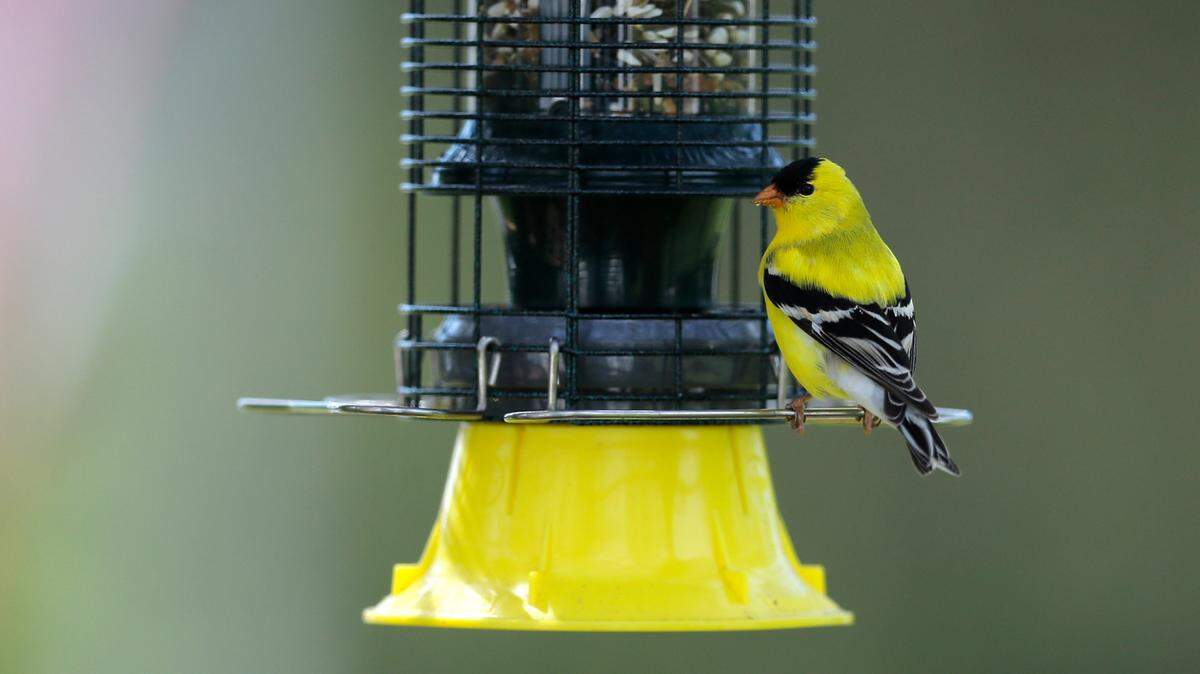
Unlike last summer, when the Pennsylvania Game Commission urged residents to empty their bird feeders and bird baths in response to a mysterious and deadly bird disease, the agency has not issued a similar call in response to the current wave of highly pathogenic avian influenza.
Also known as bird flu, HPAI H5N1 has affected more than 24 million wild, commercial and backyard birds in 28 states since mid-January, according to the USDA, which reported last week that the disease had been found in a commercial chicken flock in Lancaster County.
Infected birds, including chickens and turkeys, are often killed to prevent further spread of the virus. At an infected farm in Lancaster County, 1.4 million birds had to be euthanized, and it is now undergoing a lengthy testing regimen to ensure there is no further avian influenza in that environment, according to the Pennsylvania Department of Agriculture.
The Game Commission in late March reported the first detection of the disease in Pennsylvania, in a wild bald eagle found dead in East Marlborough Township, Chester County.
The agency at the time said monitoring efforts for the disease were continuing throughout the state, in partnership with the Pennsylvania Department of Agriculture, U.S. Department of Agriculture, Wildlife Futures Program at the University of Pennsylvania School of Veterinary Medicine and Pennsylvania Animal Diagnostic Laboratory System.
But, on Monday, commission Communications Director Travis Lau said the agency has not recommended that bird feeders and bird baths be emptied as a barrier to the raging bird flu.
“While we never encourage the public to feed wildlife, we aren’t recommending feeders be taken down,” Lau said.
“While feeders do lead to a congregation of wild birds, feeding isn’t considered a significant HPAI driver. The birds most affected don’t often visit feeders.
“One exception to this is if you also care for poultry. If so, you always want to prevent contact between wild birds and poultry not just for HPAI but for any number of diseases. In such cases, feeding wild birds may be putting your poultry at risk.”
Wild waterfowl and shorebirds are considered natural reservoirs for avian influenza viruses. While infected birds may shed the virus in their feces and saliva despite appearing healthy, HPAI can lead to sickness or death in wild poultry, raptors, avian scavengers and other species, including waterfowl.
Signs of infection in wild birds are often non-specific but might include neurologic dysfunction such as circling and difficulty flying.
Last year’s mystery bird disease, the cause of which was never determined, was found in birds more commonly found in backyards and at bird feeders and bird baths. In Pennsylvania it impacted 11 species: blue jay, European starling, common grackle, American robin, northern cardinal, house finch, house sparrow, eastern bluebird, red-bellied woodpecker, Carolina chickadee and Carolina wren.
While the Game Commission has not called for a moratorium on backyard bird feeding this time around, it has issued a caution to turkey hunters.
The commission last week noted that hunters “should be aware that multiple cases of highly pathogenic avian influenza virus have been detected in wild birds in Pennsylvania.
“HPAI is a disease that can infect domestic and wild birds. It can also infect humans, though the U.S. Centers for Disease Control and Prevention has declared that the current HPAI outbreak is primarily an animal health issue that poses low risk to the health of the general public. No human cases related to this avian influenza virus have been detected or reported in the United States.
“Still, hunters should take some commonsense steps to protect themselves.”
Those precautions, per the Game Commission, include:
Harvest only healthy-looking birds.
Wear gloves when handling any wild birds, and change gloves and disinfect hands between handling live birds.
Change clothing as needed, especially if visibly soiled or if any birds handled made contact with your clothing.
Change clothing, including footwear, and wash hands well before coming in contact with any pet birds or domestic poultry.
If you find a bird that looks unhealthy – perhaps stumbling, circling, exhibiting tremors, with a twisted neck or unable to fly – contact the Game Commission by phone at 610-926-3136 or by email at pgc-wildlifehealth@pa.gov.
If you have had contact with sick or dead domestic or wild birds and are not feeling well, contact your primary care physician or the Pennsylvania Department of Health at 877-724-3258, the Game Commission said.