
Afield: Pennsylvania’s bear population is down, fewer harvested this season
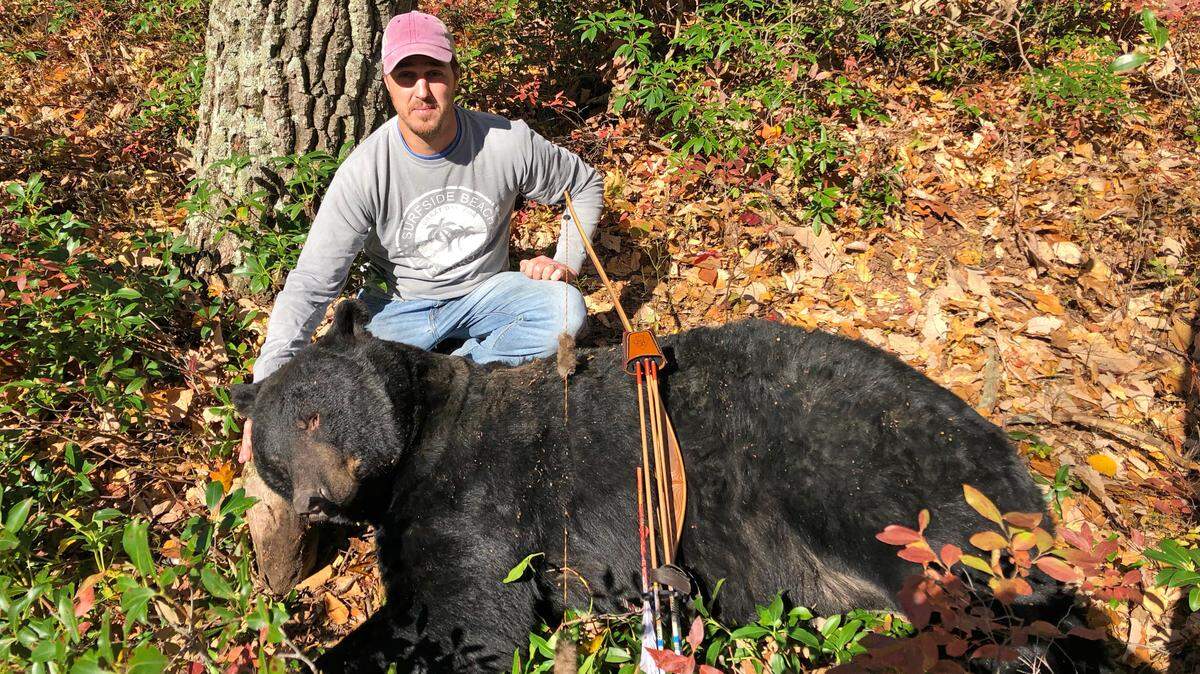
Pennsylvania’s black bear population peaked about four years ago, estimated at over 20,000 bears, and stayed that way until 2020, when it began dropping. This year, the Pennsylvania Game Commission projected fewer than 16,000 bears in the state.
I arrived at the new Centre County bear check station on the second day of the season in hopes of seeing hunter-shot bears and interviewing hunters. I was disappointed. Just after the station opened that Sunday morning, biologists there checked one Saturday-killed bear — and then no other bears all day. The Huntingdon check station tallied only 10 bears. Results were not much better on the opening day.
“We had a dismal showing for the opening day of rifle bear season, particularly given the decent weather — some tracking snow in most places, low wind and no icy roads,” southcentral biologist Justin Vreeland stated. “Yet, we checked only 28 bears all day — the second fewest since my records begin in 2003. I think poor hard mast conditions and lack of hunter effort are driving this.”
Vreeland stated that Mifflin County reported just three total bears harvested the opening weekend, Snyder County zero and Adams County one. Fortunately, hunters in the traditional northcentral and northeastern bear range fared better, but not by much.
Clinton County dropped from its usual number one or two slot down to ninth. Centre actually performed better than usual — producing 122 bears during this low harvest year, putting it in 5th place — ahead of its usual 8th to 12th place.
According to preliminary figures from the Pennsylvania Game Commission, only 1,048 bears were harvested during the four-day regular firearms season. This included 658 taken on the opening Saturday, 197 on Sunday and 193 during the final two days. This compares to 1,314 shot in 2021, 1,167 in 2020, and 1,611 in 2019.
The early seasons — muzzleloader and archery — saw a good harvest. However, the extended season harvest also declined. Although it had been predicted to be 800 to 1,000 bears, hunters tallied just 666.
Back when the state’s bear population was estimated to be 18,000, I found this quote from a news release: “The length and timing of hunting seasons is set such that populations with greater human-bear conflicts are reduced or stabilized, while areas with few conflicts are allowed to increase.” Subsequently, the statewide population did increase to 20,000.
Is the PGC now trying to lower the population significantly?
There have been a number of recent changes that one could interpret to be aimed at lowering the population. In 2019, the archery season doubled from one to two weeks. The first statewide 7-day muzzleloader bear season was also held that same year and over 1,300 bears were harvested, compared to 12 during the more geographically limited 2018 muzzleloader season. Mark Ternent was the PGC bear biologist then and I talked with him shortly after muzzleloader season ended that year. He seemed concerned with the high muzzleloader harvest.
Both of these season changes are significant for two reasons. One — the seasons are statewide, rather than targeting specific areas of higher population. And two — they both occur before any pregnant or female bears with cubs have denned. What does the agency’s Bear Program Specialist Emily Carrollo think?
Carrollo was a Zoom meeting guest for the Pennsylvania Outdoor Writers Association a few months ago. She shared that the percentage of female bears in the harvest had increased. When I asked if she was worried about the drop in the bear population and increased number of harvested female bears, Carrollo said that she was not concerned about the current bear population. She added that if the Commission wanted it to grow, they knew how to do that.
Pennsylvania’s estimated bear population is down more than 3,000 bears (about 16%) from its peak, and after this season, it might be down even more. My question, which I think is a fair one: What does the Pennsylvania Game Commission want the population to be? Carrollo has always been quick to reply to my questions and provide needed information. However, in early December, I asked her this question and have yet to receive an answer.
Bear hunters and most wildlife watchers love high bear populations, but bears do damage to agricultural crops, beehives, orchards and they raid bird feeders. Bears are also one of the major predators of white-tailed deer fawns.
Make no mistake, the restoration of black bear numbers in Pennsylvania has been a wildlife management success story. Pennsylvania was home to fewer than 5,000 bears during the 1970s, and they were mainly found in a few dozen counties. So, by comparison, a population of 15,700 spread out over 60 counties is good.
It is not my place to say what the bear population should be. I just think that the Commission should be able to honestly tell us their management goal and explain why.
In January, the commissioners will preliminarily approve the seasons and bag limits for the 2023-24 hunting seasons. What the commissioners approve will be a clear sign as to whether they want the bear population to continue its decline or rebound. It will be interesting to see.