
Afield: Winter raptor survey measures the population of Pennsylvania’s birds of prey
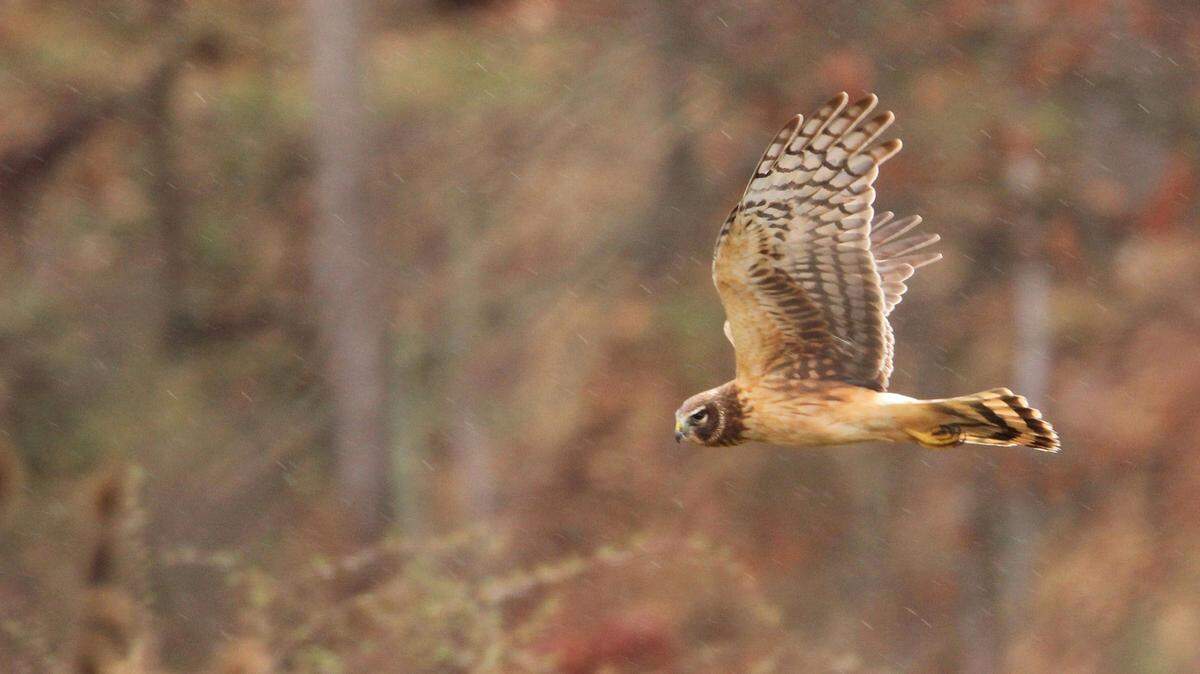
Hundreds of volunteers recently completed the 23rd annual Pennsylvania Winter Raptor Survey. According to organizer Greg Grove, of rural Huntingdon County, data is still trickling in from volunteers.
Grove, a retired biochemist, started Pennsylvania’s winter survey effort in 2001. He is an avid birder and the editor of Pennsylvania Birds, a publication of the Pennsylvania Society for Ornithology.
“I had been hawk watching for several years and I was looking for something for hawk watchers and birders to do during the mid-winter slow period,” Grove said. “I like meaningful data and I wanted what we are doing to have scientific value, but yet not be too complicated, so we could get volunteers and have fun doing it.”
Following Grove’s protocol, birders (at least two per vehicle is recommended) slowly drive a prescribed route looking for flying or perched raptors. Raptors include eagles, hawks, falcons, harriers and vultures. The birds are identified and recorded. That information, along with the total hours and distance traveled, is submitted to Grove. Surveys are conducted between Jan. 14 and Feb. 12. Each route is 10 to 100 miles long. Surveyors are instructed to select a good weather day and conduct the survey from mid-morning to mid-afternoon.
“That first year, we had fewer than 40 routes and about 200 hours of observation,” Grove stated. “We now have almost the entire state covered with 240 routes, and over 500 people involved, surveying for more than 900 team hours. In order to make accurate comparisons between years, all data is translated to birds seen per hour of observation.”
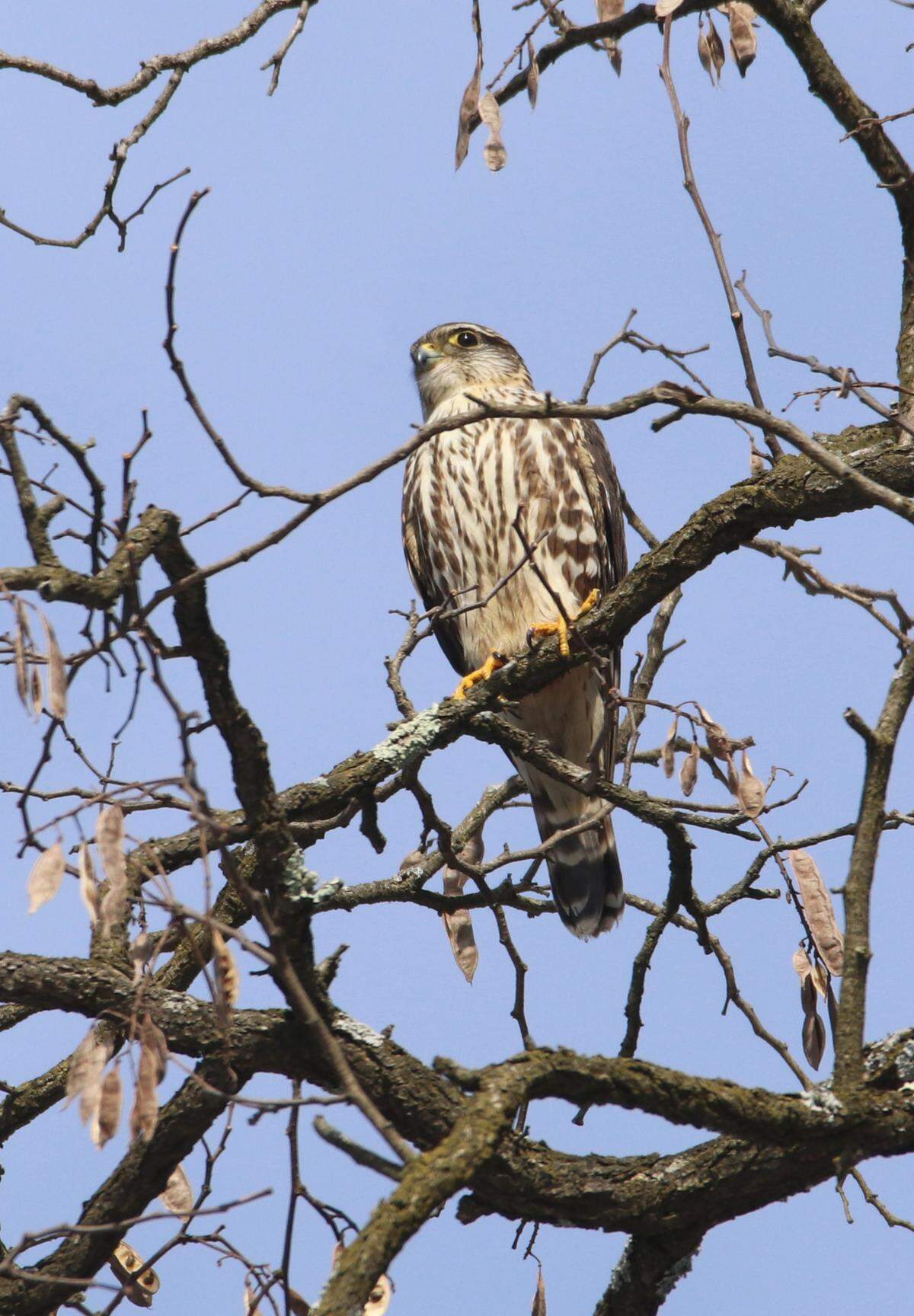
There are seven WRS routes in Centre County, but there are areas available for more. A few of the forested counties, such as Cameron, are not covered or lightly covered by surveyors. Areas covered, as well as past survey reports can be located under “Projects” on the Pennsylvania Society for Ornithology website.
As a testament to Grove’s user-friendly design, many surveyors, such as Carole Winslow and Frank Haas, have been helping since the early years.
Winslow, of Clarion County, enjoys it so much that she does three routes in her home county, and she has been doing them for 19 years.
“I have loved doing these routes as it lets me explore the county year to year and see the changes as the years have gone by,” Winslow said. “I live in strip mine country, much of it overgrown now and no longer as much truly open grassland. So that has impacted numbers of harriers that I find.
“Every year I look forward to the routes breaking up the dreariness of winter and taking me out to find the hidden treasure. One year it was a snowy owl, on another survey I saw a peregrine falcon,” Winslow noted.
Frank Haas, who lives in Lancaster County, has been involved in many citizen science efforts — including as an official hawk watcher at Hawk Mountain and numerous Christmas Bird Counts.
“I have helped with the Winter Raptor Survey since the beginning,” Haas said. “First with one route, then two, and I have been doing three routes for ten years.” He designed his own routes — all in Lancaster County. He originally conducted the surveys with his wife, who passed a few years ago, and now he goes with friends.
Another big citizen science supporter is Susquehanna County resident Evan Mann. He has been doing surveys for about eight years, first riding along with other route compilers, and then assuming compiling duties for the three routes in his county.
“Birders love seeking and seeing birds as a hobby and most realize that an added benefit is sharing our findings with science,” Mann stated. “Winter is a time of year with limited opportunities to see birds. The Winter Raptor Survey program gives birders suffering from the winter doldrums a reason to get out and find raptor species.”
Mann recently joined two birding friends in developing two additional routes for areas that were not covered by the others in Susquehanna County. They hope to have them approved and running them next season.
“Winter Raptor Surveys have really been enjoyable times to spend with my son, Carl,” said State College birder Kurt Engstrom, who has been participating for 11 years. “He does not share my passion for hunting and fishing, and this was something wildlife-related we could do together. We even made new routes in Elk and Clinton counties to fill in areas with no coverage.”
Carl has now moved to pursue a master’s degree in Wildlife Science at Ohio State University. Kurt and his wife continue to run their routes because they know the scientific value of the long-term data.
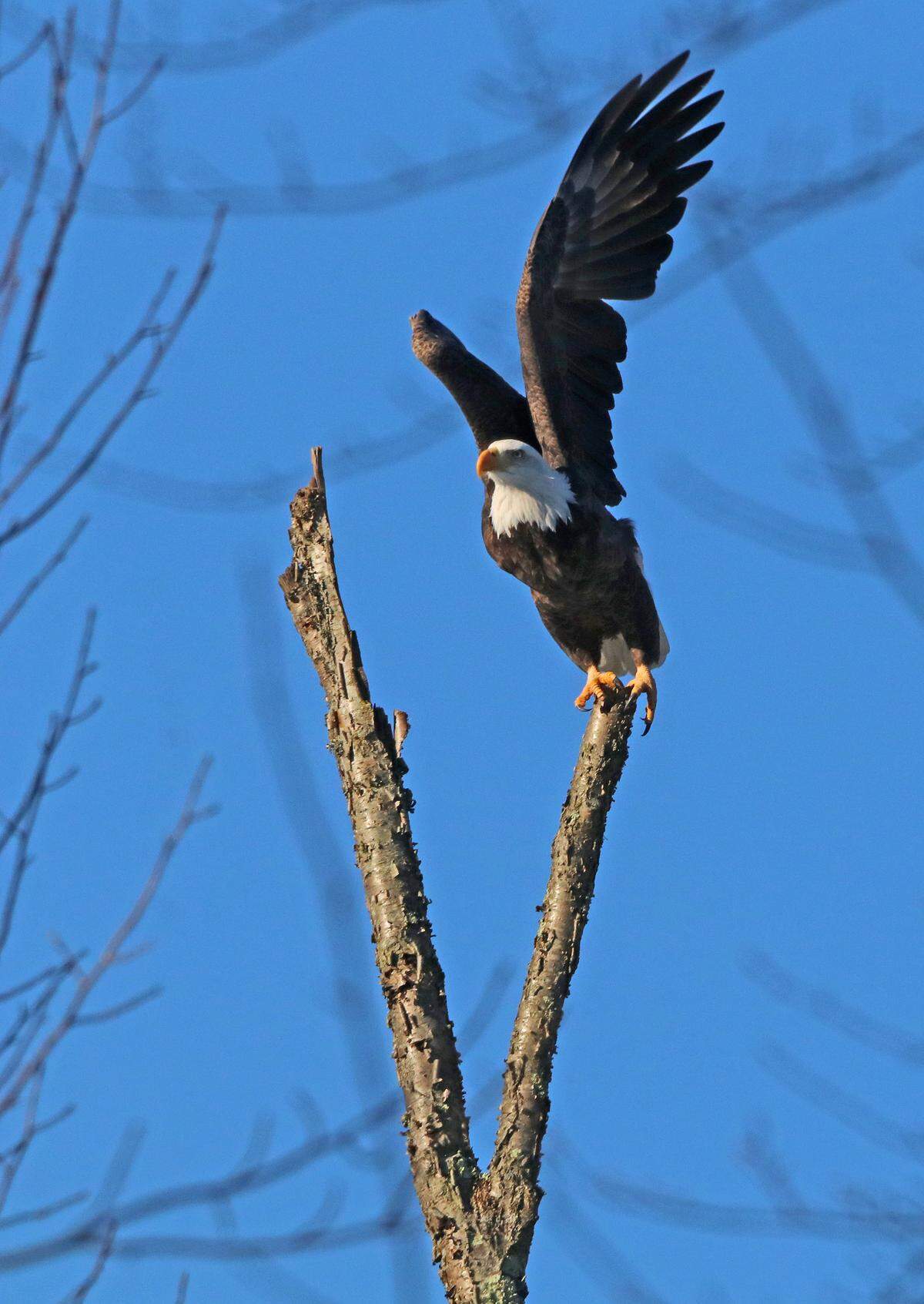
Grove noted, “During our over 20 years of doing the survey, we have documented the explosion of bald eagles, an increase in the number of wintering red-shouldered hawks and the expansion of black vultures north and west from the southeastern counties.”
Grove is getting ready for an even bigger citizen science project that will begin in the spring of 2023 — the third Atlas of Breeding Birds in Pennsylvania. Data for the first atlas was collected 1983-1989, and field work for the second atlas occurred 2004-2009. More than 2,000 dedicated birdwatchers completed surveys of birds for the second atlas, which resulted in a 586-page hard bound book. Watch for announcements during the coming year about how you could get involved.