
Afield: Major habitat project complete at Sayers Dam. See it now before it’s covered with water
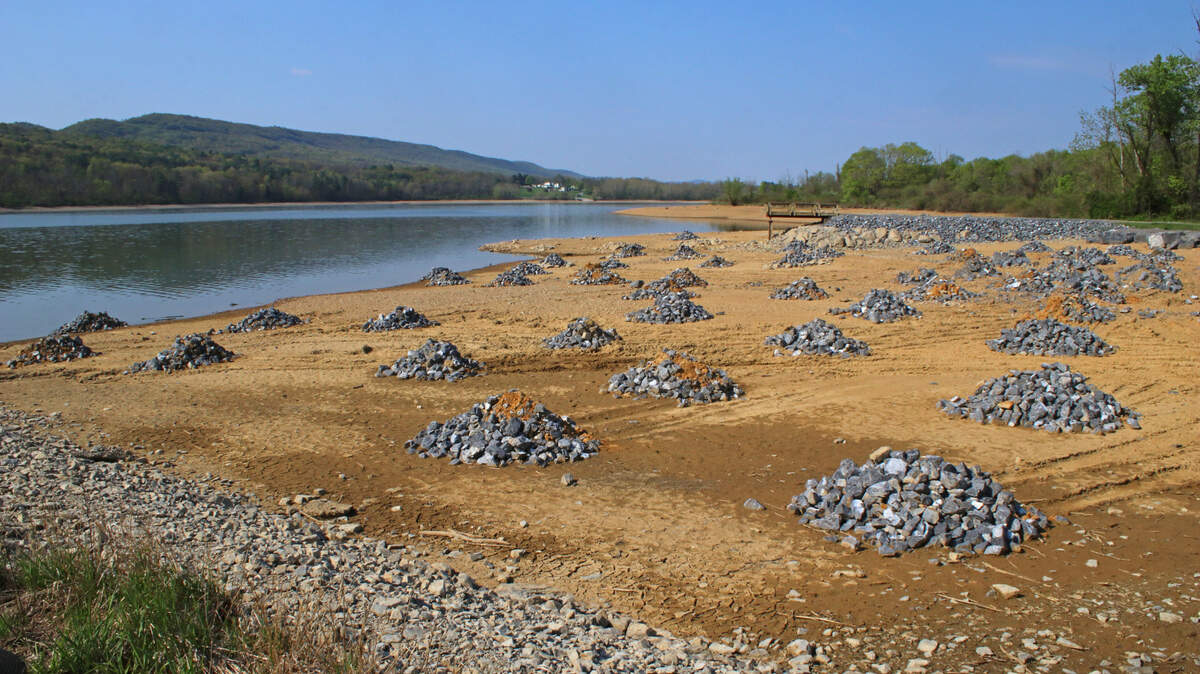
I was visiting Bald Eagle State Park recently and noticed all of the new fish habitat work. All parties involved should be congratulated. This looks like a big improvement to the lake.
Sayers Dam, at Bald Eagle State Park, is an Army Corps of Engineers’ flood control facility that is drawn down 20 feet every winter so that it can retain more water if a flood should hit the area due to snowmelt or heavy spring rains. The dam is being slowly refilled now and should be to summer level within a month.
The habitat projects are the result of a partnership between the Pennsylvania Fish and Boat Commission (PFBC), the Department of Conservation and Natural Resources (DCNR), the U.S. Army Corps of Engineers and the Northcentral Pennsylvania Conservancy.
“We had a meeting last fall of all partners to discuss shoreline erosion and fish habitat improvements,” Bald Eagle State Park Manager Bill Kocher said. “We identified five or six sites needing work.”
At the meeting, they discussed costs, timing and who might do the work. According to Kocher, there were so many unknowns that it seemed like nothing would get done in 2023.
“All of a sudden, everything came together,” Kocher said. “DCNR’s Resource Management Section in Harrisburg said that they had money to contribute for materials. A job was canceled for a Fish and Boat crew, which freed them up to do the habitat work.”
Mike Swartz, Lake Habitat Manager for the Commission, designed the placement of the habitat structures and is happy with the finished product. Work began the second week of February.
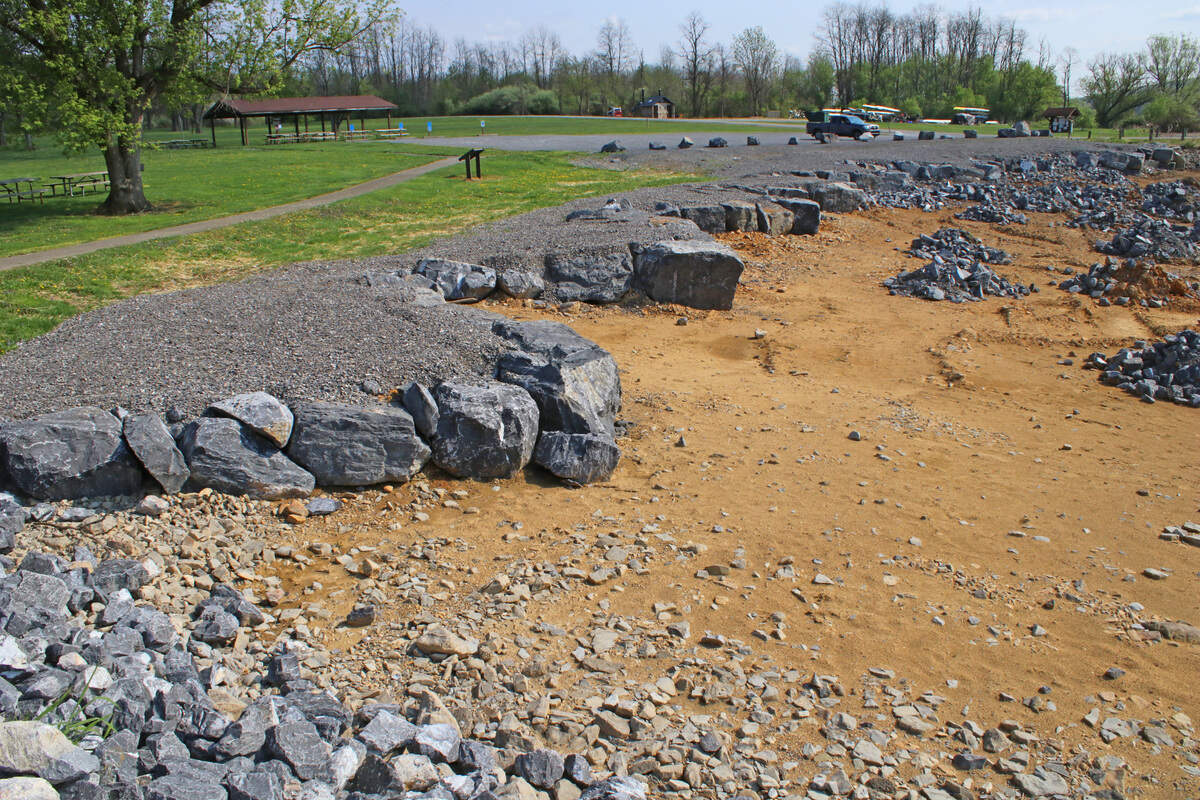
“At Lower Greens Run, we completed shoreline hardening to stop erosion and create better fish habitat,” he said. “This will also reduce nutrients and sediment entering the lake and improve fishing access.”
The shoreline hardening was accomplished by building seven stone framed deflectors, which are triangular structures with one point protruding out into the lake. They are constructed out of large limestone rocks and back filled with soil and smaller rock.
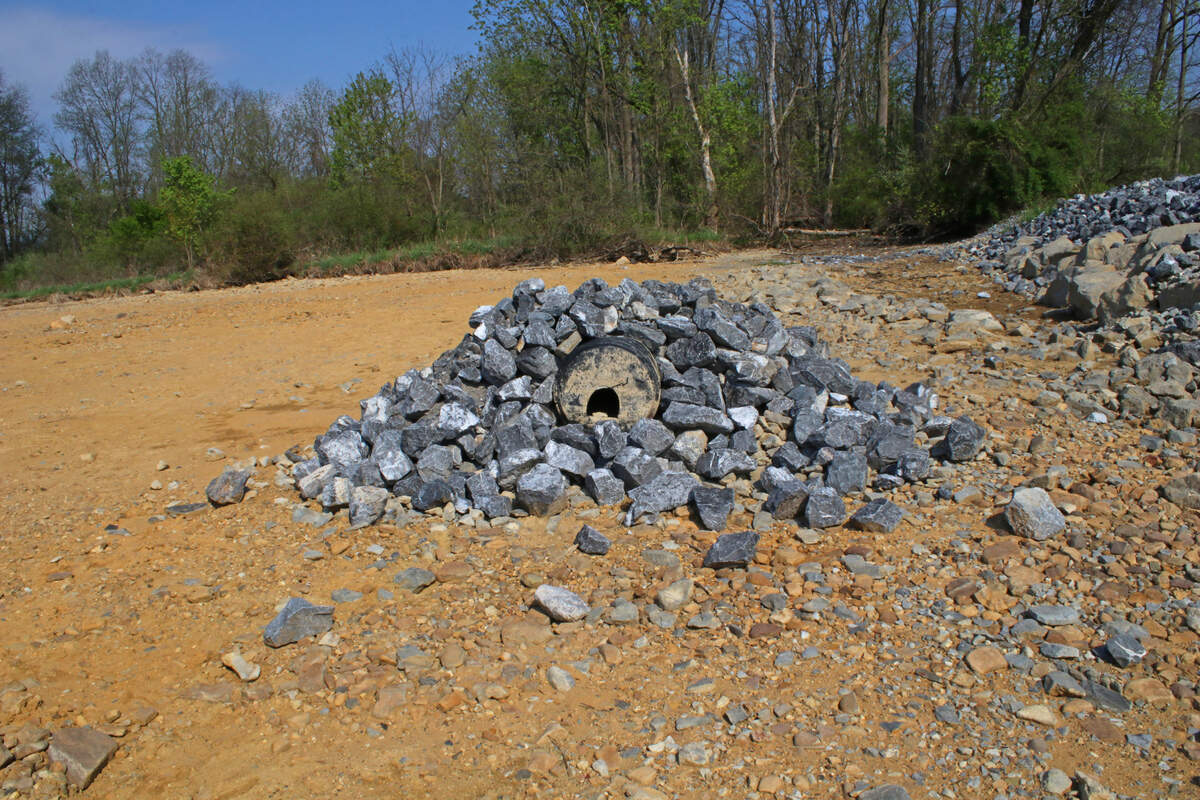
Also, at Lower Greens Run, 220 tons of limestone rock were used to build more than 35 mounds of rocks called rock rubble humps. The large mounds are spread along approximately 180 feet of shoreline on either side of the boat launch. Rock rubble humps create excellent, long-lasting fish habitat.
Similar habitat work occurred at the park’s Winter Launch on the west side of the lake. There, the PFBC crew completed 12 stone framed deflectors, protecting the shoreline, and brought in 220 tons of stone to construct 75 rock rubble humps in the lake along 360 linear feet of shoreline. There are more rock mounds at this site, but they are smaller than those constructed at Lower Greens Run. The total value of the work at both sites was about $110,000.
Local angler Clyde Mighells of Howard fishes the lake a couple days each week, usually from a small boat. He describes his fishing frequency as “not often enough.” Mighells is really excited about both projects, but particularly the work at the Winter Boat Launch.
“These projects are super. I am excited for the fish,” Mighells said. “The structures at the Winter Launch will attract crappies and perch and will allow bank anglers access from three sides. Lots of children fish here, so with the habitat structures near the shore, kids might lose a few hooks, but the fishing should be great.”
Helping with lake work is a new endeavor for the Williamsport based Northcentral Pennsylvania Conservancy.
“Part of the Conservancy’s mission is to preserve and enhance habitat. We have worked with the Fish and Boat Commission on nearly 200 stream projects — going back to 2007 — and we wanted to be a partner with this lake work,” Executive Director Renee’ Carey said. “In addition to improved habitat, there are recreational benefits to these projects — giving people a better opportunity to enjoy nature.”
More work is planned
According to Swartz, the Commission and DCNR also complete smaller-scale annual volunteer habitat improvement projects at the lake. On June 23, they will partner with the PA Bass Leadership Academy to build 15 turtle basking platforms. These platforms are created to help turtles protect themselves from predators. Basking allows turtles to thermoregulate, which aids in their digestion.
“The turtle basking platforms are also often used by mammals, birds, and provide simple overhead cover for fish species,” Swartz said.
On Sept. 24, the PFBC will host an event for National Fishing and Hunting Day, which will include various programs to promote fishing and boating opportunities. There will be a habitat portion of the program to complete 20 PA Brush Boxes.
“The boxes are weighted wooden structures that encapsulate brush. Volunteer crews will cut the invasive Russian olive found at the park and will place it in the structure. The boxes are then dropped in the lake from a pontoon boat,” Swartz said. “This complex structure provides excellent habitat for fish while also improving the upland habitat by removing invasive species.”
More large-scale habitat work from the partnership is also planned as funding becomes available. The Conservancy has submitted two grant applications that, if successful, will help to fund the next phases of the DCNR and PFBC work.
Jeff Meadows, Chief of West Section Susquehanna River Projects, is pleased with the recent work and plans on fixing the eroding banks near the breast of Sayers Dam.
“The Fish and Boat Commission will design the project. They are the aquatic ecosystem experts,” Meadows said. “We need to find the Corps funding and the project will likely be bid as a public contract.” No date has been set for this work.
“This work is a fisherman’s dream,” Mighells noted. “It makes the kind of good fishing that people will come back to — helping future generations enjoy the outdoors.”
If you want to see the improvements that were finished in February, head out to Bald Eagle State Park soon. Lake levels are rising from the low winter/spring levels and should be at summer pool level by Memorial Day weekend. All of the new habitat structures except the stone framed deflectors will be underwater by then.