Guides, experts share the best fly-fishing spots in and around Centre County
AI-generated summary reviewed by our newsroom.
- Spring Creek supports dense trout populations and offers year-round fly fishing.
- Penns Creek features cold water sections and varied terrain for expert anglers.
- Little Juniata River provides wild trout access, with public and private entry points.
If you’ve been in central Pennsylvania during the warmer months, it’s not uncommon to find a fisher wading in the water, whizzing their line around in the air, then plopping it into one of the many creeks found throughout the region.
For those not in the know: This angling method is called fly fishing, in which fishers attach a small, fake “fly” to their line and mimic the activity of aquatic bugs in hopes of reeling in a fish. With its many creeks, some of which attract anglers from across the country, Centre County and its surrounding region have built a strong community of fly fishers.
Put on your fishing bibs, grab your rods and pack your flies, because the CDT has compiled a list of the best fly-fishing spots for residents to enjoy.
Spring Creek
Welcoming fishers from across the country, Spring Creek is one of the most popular fishing streams in Pennsylvania — in part due to Joe Humphreys, a Centre County resident and fly-fishing pioneer.
The creek, which starts at the base of Tussey Mountain near Boalsburg and ends near Milesburg, hosts an estimated 3,000 trout per mile. This makes it one of the most densely populated streams in the country.
Within the roughly 20-mile stream, wild brown trout and some rainbow trout can be found. The creek’s stable temperature regulation makes it an ideal spot for year-round fishing.
“There are easy access points for someone that’s just learning how to fish,” said Mike Swartz, a worker at Fly Fisher’s Paradise in State College. Swartz has 30 years of fly-fishing experience.
Today, with its healthy variety of mayfly hatches, the stream boasts ecological abundance — but it wasn’t always that way. Around the late 1960s to early 1970s, chemical dumping into the creek “devastated” the local ecosystem, Swartz said. As a result, mayfly hatches were impacted and so were the fish that ate them.
Today, the stream has made a healthy rebound, but is a strict catch-and-release fishery.
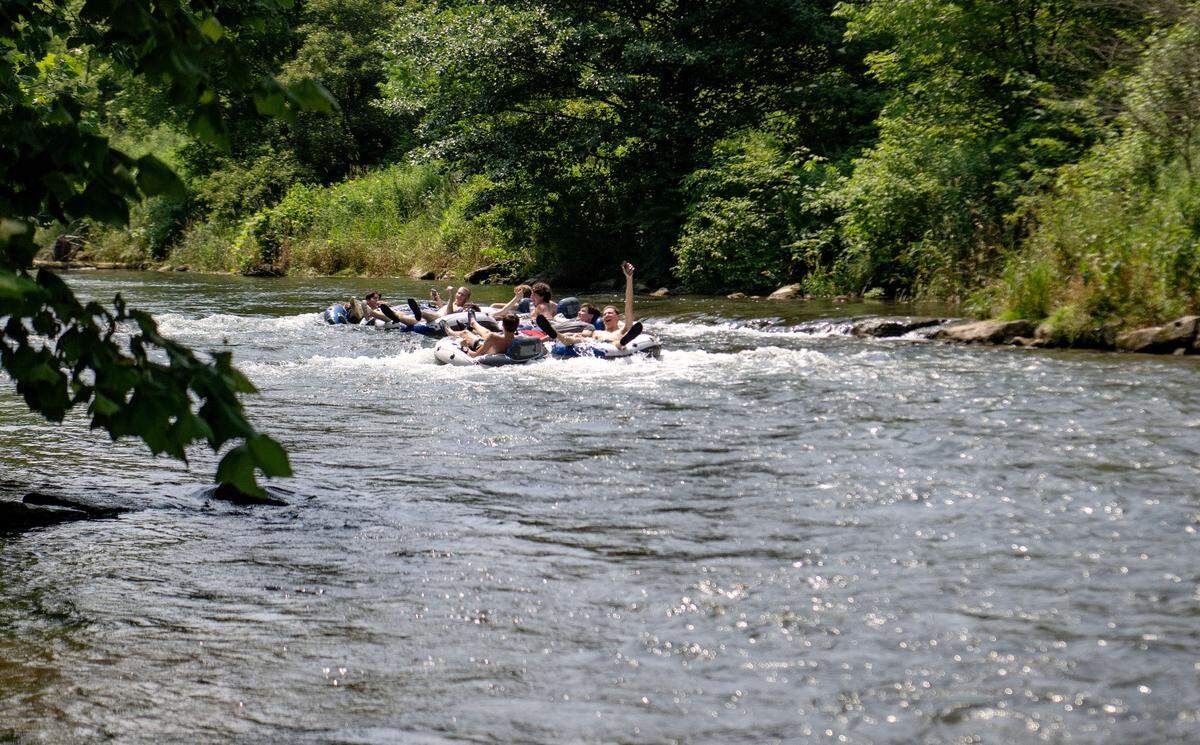
Fisherman’s Paradise
Fisherman’s Paradise, a section of Spring Creek in Bellefonte, speaks to the rich history of Centre County’s fly-fishing community. As the oldest fly-fishing-only water in the United States, according to the Flyfisher’s Paradise website, the location presents itself as an ideal fly-fishing spot along the creek.
“If you go out to Fisherman’s Paradise, it’s nothing to see license plates from 48 to 50 states,” said Swartz, speaking to the popularity of the Spring Creek reach. “I mean, they come from all over.”
The reach maintains the catch-and-release rule of the rest of Spring Creek, but it has an added “no wading” policy. This policy, according to the Spring Creek Watershed Atlas, makes Fisherman’s Paradise an ideal spot for fly fishers with physical disabilities.
Penns Creek
Another notable location, Penns Creek runs from Penns Cave through Coburn and ends in Selingsgrove. The 67-mile creek is the longest limestone stream in the Keystone state and is known for its sizable fish and abundant bugs.
The most popular section of the creek, which ranges from Penns Cave to Weikurt, is identified in two halves — Upper Penns and Lower Penns. Both locations offer different experiences for anglers.
Averaging 15-30 feet wide, Upper Penns, which runs from Penns Cave to Coburn, is a much more narrow section of the creek. Upper Penns is also the coldest section of the creek, making it ideal for the wild brown trout and state-supplied rainbow trout found in the stream.
Lower Penns, which runs from Coburn to Weikurt, is intersected by cold water tributaries like Elk Creek and Cherry Run, supporting wild trout populations. Though this 11-mile stretch is popular, special regulations are in place. The upper seven miles of Lower Penns is under trophy trout rules, with the lower 3.9-mile stretch being catch and release.
Averaging 75-100 feet wide, Lower Penns presents a more difficult terrain for anglers. Along with its slick, rocky bed, Lower Penns is “one of the hardest rivers to wade in the state,” according to innovativeangling.com. For this reason, studded wading shoes and a staff are recommended when fishing.
With a healthy abundance of flies — like green drakes, march brown and sulfur hatches — Penns Creek is referred to by some as Pennsylvania’s “bug factory.” But, due to the abundance of food, trout in Penns Creek can be “fickle,” which sometimes makes it difficult to snag a fish in the stream, according to flyfishersparadise.com.
Due to its size and length, Penns Creek has a low tolerance for hotter, drier weather — which could possibly kill caught trout. For this reason, it’s best to visit the creek during the spring and fall after it cools.
Little Juniata River
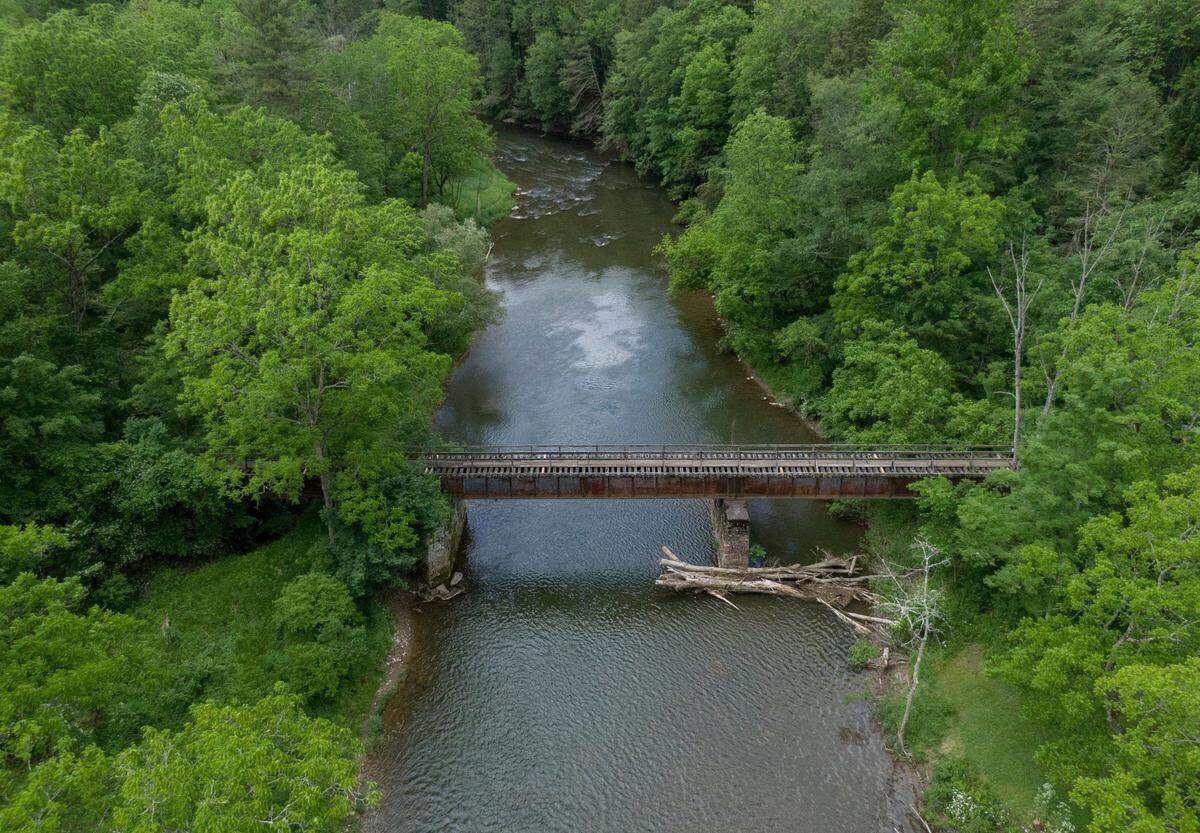
Little Juniata, or Little J as it’s called by locals, is a 35-mile tributary of the Juniata River. Flowing northeast from Altoona, taking a sharp turn in Tyrone and flowing down near Petersburg (forming a “J” shape), the limestone-fed river — which is just beyond Centre County but still attracts plenty of Centre County fishers — has a unique history of its own.
Similar to Spring Creek, Little Juniata was heavily polluted during the 1960s. But, due to its self-cleaning capabilities, along with clean water legislation, the limestone river has made a substantial recovery.
The fishery offers a variety of hatches and can be accessed from multiple points. The majority of Little J, after its bend in Tyrone, is regulated as All Tackle Catch and Release to protect the wild brown trout and the 30,000 stocked brown trout in the river, said the TCO Fly Shop website.
Along this same stretch of Little J, the most popular section of the river can be accessed: the tributary Spruce Creek and downstream near Barree. Most of Spruce Creek, a popular angler spot that flows into Little J, is privately owned. Former U.S President Jimmy Carter famously fished in this creek.
If anglers are looking to fish in this area but don’t want to pay for access, a short half-mile stretch owned by Penn State is open to the public.
Other fish found in the river include rainbow trout, brook trout and small mouth bass. David Zaff, a TCO Fly Shop employee with 10 years of fly-fishing experience, advised fishing with caution along Little J during the summer.
“Fishing Little J in the summer, we would think of it as deadly to the fish, it’s not a very good idea,” he said, referring to the low tolerance that trout have for warmer weather. “But you could use a different type of fly and catch bass. So that’s kind of fun.”
This story was originally published July 27, 2025 at 5:30 AM.