Mount Nittany Medical Center officials talk COVID-19 challenges, vaccines, future & more
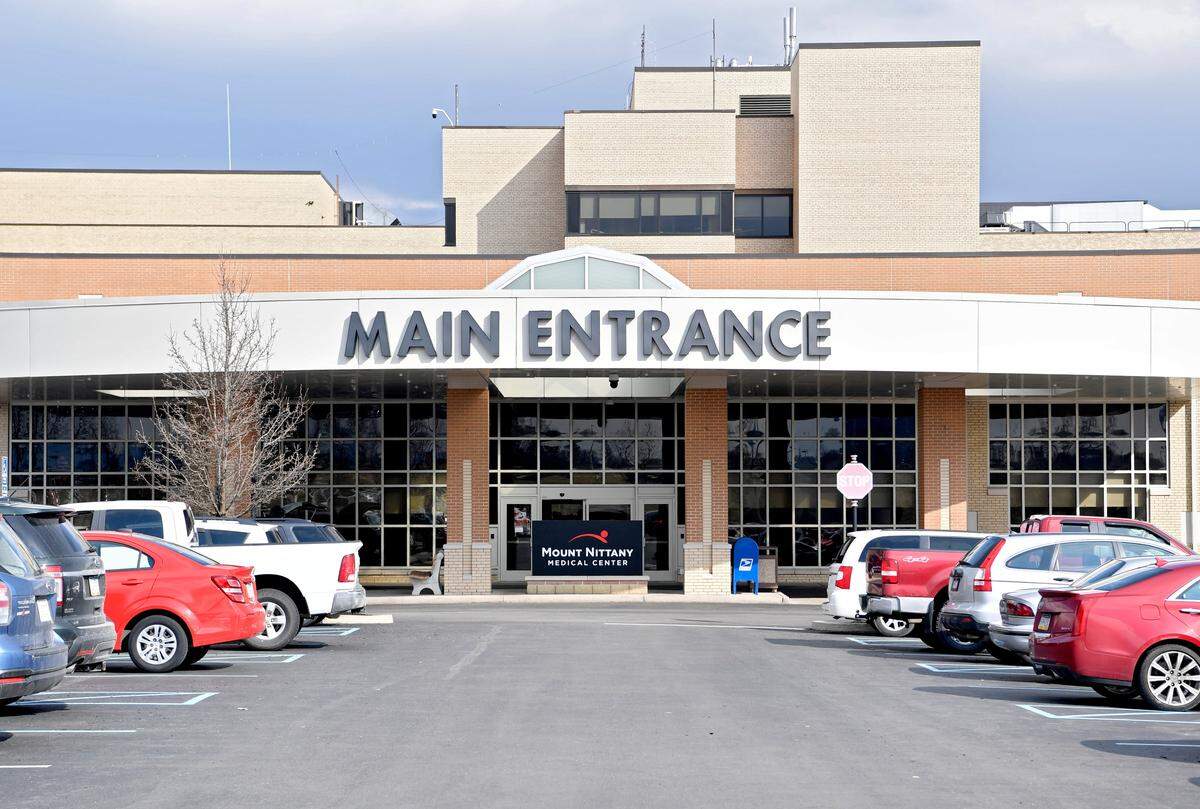
Mount Nittany Medical Center — Centre County’s lone hospital — remains a critical piece in the community’s fight against COVID-19. To date, it has treated more than 300 coronavirus patients all the while providing testing and lending its expertise to numerous county institutions such as Penn State.
It hasn’t been easy. And as the weather grows colder, as the infection rate increases, it’s only grown harder.
There were 16 COVID-19 hospitalizations in September; there were 143 in November. The county coroner reported 11 related deaths in the first 30 weeks in the pandemic and 60 deaths in the last eight weeks. Before November, Mount Nittany Health never saw more than 50 people test positive in a week — and, over the last three weeks, those numbers have stood at 204, 248 and 278.
Mount Nittany and Centre County are not unique in their skyrocketing numbers. Pennsylvania, and much of the country, finds itself in the same situation. Nurses, doctors and staff don’t find themselves in easy positions over at Mount Nittany — and, despite that, two officials recently found the time to join the Centre Daily Times for a 40-minute Zoom on Tuesday in the hopes of sharing the realities of the pandemic and answers about it with the community.
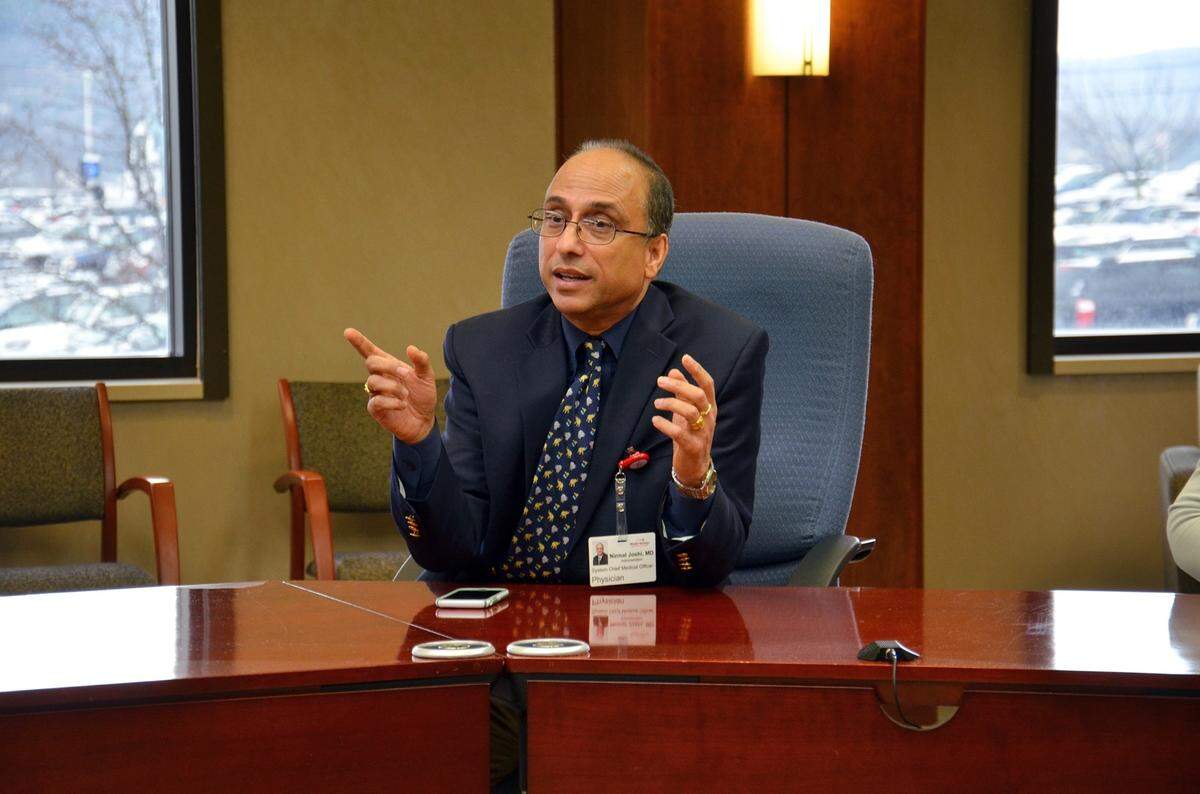
Dr. Nirmal Joshi, chief medical officer, and Dr. Tiffany Cabibbo, executive vice president of patient care services and chief nursing officer, took on questions about the current state of the hospital, challenges, vaccines, misconceptions and the future.
Here is what they said, edited for both clarity and length:
Centre Daily Times: Let’s start out with a short question but an important one for Centre County residents: Is the hospital OK right now, and what are you experiencing there?
Dr. Joshi: As you can see from the data, from the inpatient averages and the testing and all that, we’ve been experiencing a pretty rapid growth in COVID-19 cases. And that’s very similar to what we’re seeing in other institutions and in our community, in our region and also the entire state.
So, by any means, it’s a very challenging time, and every single day is a juggling act between staff and between managing the different types of patients that we see, whether it be in the medical realm, the surgical realm or COVID-19 patients. So it’s clearly a very difficult time for us. There is no question about that.
Dr. Cabibbo: I would agree with what Dr. Joshi said. I would say that we do manage those three populations every day, and I think that’s something important to know. ... You can’t shut your doors to the emergency room.
So we are always balancing to make sure we look through trends and that we can accommodate those things that we have no control over. What comes through our doors in those ways, we prepare to manage those — but that often comes with adjusting that elective surgery piece. We have a little more control or a little more levers with that to make adjustments. ... And we’ve been balancing fairly well. But I think, again, as the COVID numbers continue to rise, we’ll have to start making some adjustments in that space.
CDT: One of the biggest outside concerns with the hospital is simply its size. And while I understand you’ve previously pointed out the state’s hospital preparedness dashboard is not always accurate, you do have a finite number of ICU beds. And, currently, the state Department of Health says you have fewer than five available ICU beds. What challenges does that present — and what happens when you have no ICU beds left?
Dr. Cabibbo: So I think we have capacity of the organization to take rooms that we don’t typically use as ICU, and they can become ICU. So we do have flexible capacity with that. So we don’t consider “five” our floor, if that makes sense.
In our Surge and COVID Surge Planning, we have expansion capabilities for multiple areas. I would say we’ve been fortunate that the COVID population we’re seeing is not really needing that ICU or vented criteria. Of our patients, that is a very, very, very low population. (Editor’s Note: The DOH recently released additional data, showing only three of the county’s COVID patients are currently in the ICU.) So we might have other patients that are in the ICU that aren’t for COVID, but we do have areas that we can flex to an ICU level of care. That gives us some expansion capabilities if our ICU numbers tend to grow.
CDT: You shared data over the summer that suggested the length of local hospital stays was shortening as the country became more familiar with the virus. So, as your understanding has evolved, how much has treatment evolved with it?
Dr. Joshi: Yeah, I think the treatment has significantly changed how the disease is behaving now. ... The well-known fact now is that steroids work very well to prevent lower mortality, and that has become pretty much the standard of care for moderate to severe COVID.
I think that has significantly changed things for the better, meaning how people behave when they’re treated. And, secondly, appropriate treatment regimens — such as steroids and remdesivir — have also helped with the disease course, in some ways. So what has happened is that the number of people who are requiring critical care unit type of interventions is clearly, like I said in the beginning, small.
And those people who are in the hospital, they are in sort of two categories, in addition to those that are critically ill in the ICU One who are at one end of the age spectrum, and they do poorly — even if they had a non-COVID disease, they would likely do poorly — and families make appropriate choices for their care, to limit their care in some ways, and so on. That’s a family choice, obviously. And then you have a large number of people in the middle, who get treated and who get discharged home with a relatively short- to medium-type length of stay.
CDT: This is a two-part question. You initially had a 21-bed COVID wing and the ability to expand and, recently, you’ve been up past 40 simultaneous COVID-19 patients. So how do you balance those numbers? And secondly — even if it seems silly — could you directly address the rumor, at least to give some community members peace of mind, of COVID patients being put in the same hospital rooms as non-COVID patients?
Dr. Joshi: I’ll take the rumor, and then I’ll pass the numbers (laughs) — the other one — to Tiffany. That’s her area of expertise. So, very clearly, let me make it very, very clear: COVID patients are not placed in rooms with non-COVID patients at all. So I’ll just stop there and let Tiffany handle the rest.
Dr. Cabibbo: So I would say a couple things are operationalizing the COVID wing, and we’ve actually just turned on another wing late (Monday) to increase our negative air flow (which prevents airborne transmission). But we are fortunate that, at Mount Nittany, we — even at baseline — have quite a few negative air-flow rooms. So we do that, flexing enough to see where we can make other wings.
We also use CDC guidelines to determine when we can discontinue isolation and then be able to move those patients into a private room that does not need negative air flow. So that’s how we’ve been able to kind of balance the higher numbers as we operationalize another unit. So we just keep increasing our negative air-flow capacity but, again, it does have the trickle-down effect and it does impact those who are maybe seeking elective surgeries, or things like that, that we have to adjust.
If you make a wing, nothing else can go there except COVID patients. So whether the room sits empty or full, you can’t put a non-COVID patient in those wings. So we’re constantly balancing that COVID demand with that other demand, trying to keep getting that kind of balance the best we can.
CDT: Nurses have widely been hailed as heroes during this pandemic, putting themselves in harm’s way every day. What is the hospital doing specifically to support those nurses? And, by that, I mean, specifically, how do you try to avoid burnout and how often are those nurses tested for COVID-19?
Dr. Cabibbo: It’s really challenging, and it’s not just the nurses — it’s the respiratory therapists, it’s the dietitians, it’s the whole care team. I mean, everybody is rightfully wanting to protect themselves and it’s stressful.
We offer employee assistance programs, so we’ve been encouraging and reminding people of their mental health resources that they can access. We’re doing things just to keep them informed; we’ve increased — we do all staff Zooms twice a week. I think, sometimes, things are so fast-paced and and changing that not knowing or feeling you have the most accurate information can add to the stress. So we’re really creating some open forums to do those, but we all have to really help each other. It’s stressful, and caring for people — having the responsibility for somebody — is already a huge responsibility. And I know our health care team takes that very seriously.
But then, again, we’re in a different situation because you have, as individuals — and we are community members — you also have that stress outside of work: that fear of grocery stores, whether the kids can go to school, all that kind of stuff. And I just think we need to keep those lines of communication open, know that we are all in this together and continue to listen and see what things we can do to help them. And we are just keeping those channels open. But it’s challenging, especially now with the holidays. ...
CDT: And, specifically regarding testing the nurses, how are often are you able to do that — to prevent asymptomatic cases and things of the nature in the hospital?
Dr. Cabibbo: If the staff has symptoms or has a household exposure, they’d work through employee health and they’ll follow whatever recommendations or the process through that, which we follow the CDC guidelines for.
CDT: Front-line workers like nurses are set to be among the first to receive vaccines. Have you received any indication when your staff might begin to receive the vaccines, and when do you anticipate the general population of Centre County being able to get the vaccine? And would they be able to get it at Mount Nittany?
Dr. Joshi: So, the second part of the question we honestly do not know the answer to, meaning when the community is able to be vaccinated. What we do know is that the CDC, through the Pennsylvania Department of Health, has been in touch with us closely, as it has been with pretty much most hospitals. And, as you know, there are two vaccines that are on the verge of approval — one on the (Dec.) 10th and one on the 17th, at least that’s when the FDA hearings are. And we’d find out right after that.
If they get approved — and the expectations are that they will indeed get approved — the Department of Health, under directions from the CDC, has already been in touch with us to kind of give us a broad sense of guidance as to what the storage requirements are and how we logistically kind of plan things out with storage and distribution of the vaccines. ... They’ve also encouraged us to make a list of what I would broadly call front-line health care workers who have contact with patients.
That’s the first priority, and that’s the one that we know will get vaccines first based on national guidelines. So, if the FDA were to approve the vaccines on the set dates that the hearings are going to be, our hope is that the vaccines potentially could become available fairly quickly after that. ... In theory, that could occur as soon as later this month, subject obviously to the approval process. But everything else has been moving at a pretty good pace so, if there is a silver lining to this whole thing, I think it’s that, with the vaccines, we’re very hopeful.
CDT: When the vaccines are finally deployed, what does that mean for the community? And by that, I mean, I think some people might think that’s it. That we beat this. But that’s not the case, is it? With a vaccine, how does the world change — and how does it stay the same?
Dr. Joshi: So, on the good news side, the less disease burden you have in the community, the better it is. It’s a step in the right direction, curbing and eventually containing the pandemic ... and bringing it to a stop. That being said, with the massive numbers and how the pandemic has affected everyone across the world, odds are that to be able to reach the number of people that it takes to have a critical mass of people who are immunized to be able to have herd immunity — that’s going to take quite a while.
By that I mean, even if every single person agreed to be vaccinated — which initial indications are that’s not the case; current (nationwide) data shows about 45% or so are saying they would take the vaccine if offered. So, if the numbers are indeed that low, that itself will be a challenge. And then you have the logistics of having adequate vaccine numbers available to be able to be given to a massive population of individuals. So those are the logistical barriers to getting adequate numbers of people vaccinating.
But for a minute, if we assume that could happen over the course of six months or eight months or nine months, that still leaves a pretty extended period of time and for some time to come after that. So we’re beginning to talk ... at minimum, another year of living with the kind of restrictions that we’ve become used to in some ways and are actually sort of fatigued by. And so masks, social distancing — all the things that we know are preventive. It’s a while before it sort of magically begins to kind of go away from our lives. And who knows, at that point in time, what residual presence is still there and how we manage that.
CDT: I’d be remiss if I didn’t mention Penn State at least once during our discussion, especially since it’s previously asked for your input when it comes to hospitalizations and reopening. So let me pose a similar question to you now: How many COVID-19 patients would Mount Nittany need to see before it would advise against the university reopening in the spring?
Dr. Joshi: See, I think those two things, while seemingly connected, are not directly connected to that extent — because the number of patients is a function of a whole variety of things. If you asked me this question in May, as an example, I’d say 10-12 would seem overwhelming based on what we were seeing then. And here we are (Tuesday) with 42 patients in the hospital. That’s difficult, but we’re taking care of them. And I think taking pretty good care of them.
The simple point is a lot depends on the detail: what the patient type is, how sick they are, how many require ICU, how many require ventilation, and so on and so forth. So it’s very difficult to come up with a magic number that says, if it crossed this, by God, the university should close.
Something very interesting though ... is, for obvious reasons, we have associated the presence of the university with case numbers. Valid assumption; reasonable assumption. But, if you think about it, all of our neighboring communities that don’t have universities have seen the exact same — in fact, in some cases even worse — case loads, which are higher than us. So encouraging sensible behaviors in the community is always a good idea, but I have become a little skeptical of making direct associations.
All that being said, the university has been remarkably collaborative with us. There are multiple points of interaction.
CDT: For the last question, I’d like to open it up and ask you both: What is the biggest misunderstanding about COVID-19 in your experience, and what is the message you would like to get out of the Centre County community?
Dr. Joshi: I feel the biggest sort of, call it misconception or what have you, is two-fold. One is there is still a significant group of people who think this is somehow not real. It’s just not even there. It’s impacting some people, but it’s been exaggerated and made up. I don’t know what it would take to change that viewpoint. It’s not only frustrating, it’s tremendously disappointing when you look at it through the health care lens and delivery-of-health-care lens, it’s extremely disappointing.
That also causes numerous barriers of people not wearing masks, and so on, which in today’s environment is very sad and very disappointing, when large numbers of people can be put at risk because of that. Personally, I think that’s the biggest single misconception and the single biggest barrier in containing this pandemic.
Dr. Cabibbo: I would say I’m in total agreement with Dr. Joshi. I would say, just to sort of add to that, is those who maybe do believe (laughs) that it’s here, there is this thought process of only the elderly are getting hospitalized. ... And really, as we said earlier, two-thirds of our COVID patients are not linked to any post-acute (i.e. nursing home) or prison. They are general community members, and the majority of them — from the limits of what we can gather — are from household exposures, like a get-together type of thing.
They’re not necessarily these overly risky behaviors, but they are lax in social distancing and masking. That thought process is, “You look fine. No one looks sick.” And so we kind of get together where we know now with the data that, (experts are) saying that two days before you start showing symptoms you could be contagious. And so I think it’s not just the vulnerable populations that are getting impacted; there is no age discrimination from that standpoint. And a lot of it can be from that casual type of behavior that is actually leading to that exposure.