
As Centre County small businesses struggle amid shutdown, creative solutions emerge
While Centre County’s small business community has been hit hard by Gov. Tom Wolf’s order to halt physical operations of nonessential businesses amid spread of the novel coronavirus, the area’s business owners are looking at creative solutions while facing uncertainty.
Elk Creek Cafe in Millheim closed its doors to diners March 17 and has been trying to keep afloat selling gift cards and providing takeout food and beer services four days a week, owner Tim Bowser said.
“I’d just like people in the community to support all local business. We need them all. Yes, we need help, but everybody does, and everybody’s in a rough position,” he said. He added, “Buying takeout certainly helps. Staying safe so that this thing doesn’t spread so that we can get our doors open sooner rather than later. The longer we’re closed, the tougher it’s gonna be.”
While restaurants are still allowed to provide takeout, delivery and carryout per Wolf’s orders, other nonessential businesses are struggling to convert brick-and-mortar operations into online or phone-only enterprises on a moment’s notice.
‘Detrimental’ effects expected for months to come
Pam Bair, owner of A Basket Full in Boalsburg, which sells pottery, gift items, clothing and other goods, said she’s only running orders by phone or email but has seen a large drop-off in customers.
“I appreciate those people who have contacted us to purchase that they’re supporting local,” she said. “But I also understand that a lot of people are in the situation where they’re not working, they don’t have money coming in. And a lot of my products (are) not a necessity.”
Others worry that the shutdown could have deleterious effects on local downtown areas for months to come.
Staci Egan, who opened art shop and studio Smith in Front in Philipsburg in October with her husband, is worried that Philipsburg’s downtown revitalization could be reversed.
“It’s pretty traumatic because we had big hopes for Philipsburg,” she said. “They’re trying to go through this revitalization and trying to get new businesses into the community, and I think this is a few steps back now.”
In the meantime, Egan and her husband, a woodworker, are using the shop as solely a studio space and Egan is continuing to sell her jewelry, Contempo Jewelry, online.
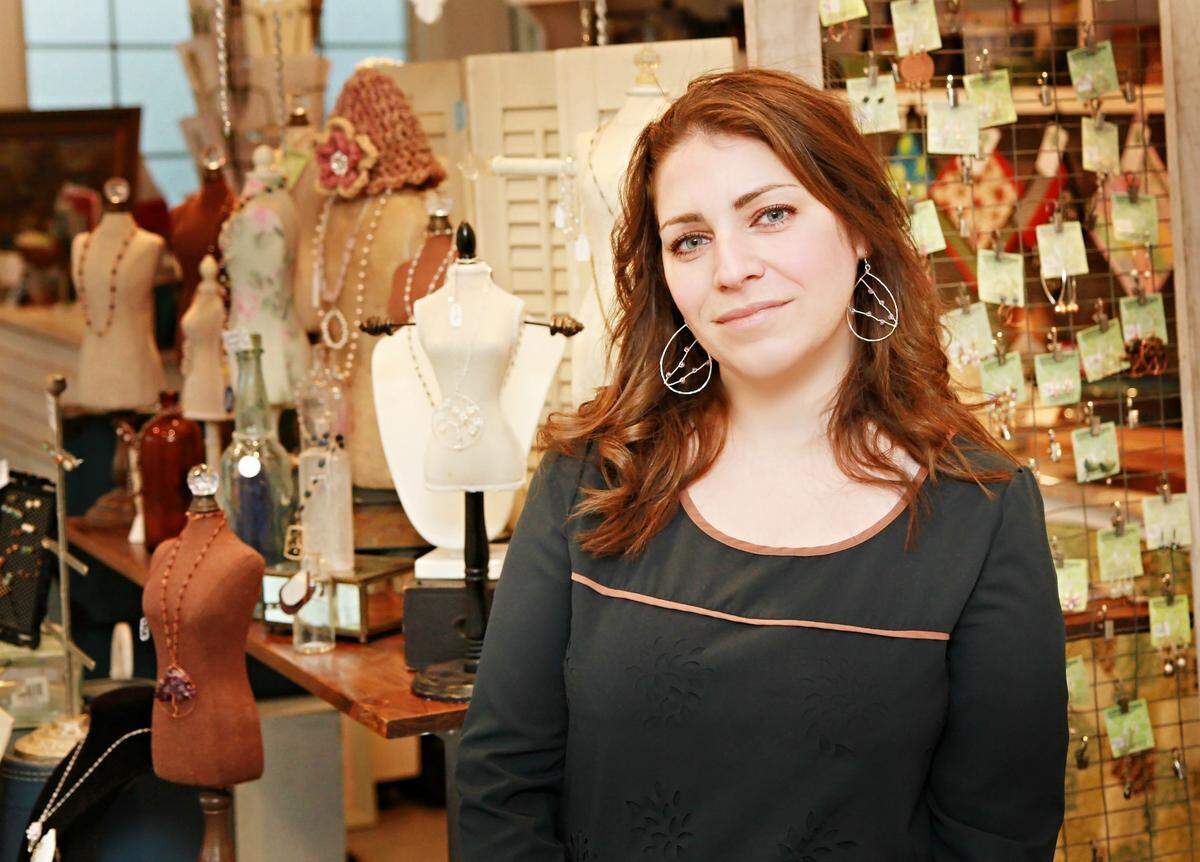
“Of course (the shutdown) hurts. Any business, especially any small business locally,” she said. “But I do understand we have a crisis and everyone’s health and well-being is most important. So I’m just hoping if we do our due diligence that it will be over sooner rather than later.”
Ellen Matis, board president of Downtown Bellefonte Inc., said the business community — particularly in tight-knit Bellefonte — met the governor’s announcement with shock, while trying to come up with creative ways to do business.
“I think ... the effects are going to be detrimental,” she said. “There’s no doubt about that. Business owners are going to struggle to figure out how to pay their employees, struggle to figure out how to pay their overhead.”
She added: “I hope that our business owners really see this as an opportunity to pivot the way that they do business a little bit. We really just have to make the best of the situation and hope that we get out of this.”
Will businesses survive the wait for support?
There are several support programs for small businesses affected by coronavirus, including the Small Business Administration Economic Disaster Injury loans, which provide up to $2 million in assistance to small businesses and some nonprofits.
The interest rate for SBA loans is 3.75% for small businesses and 2.75% for nonprofits and loans can be used to pay debts, payroll for employees, accounts payable and other bills businesses are unable to pay due to the impact of coronavirus. Only businesses without credit available elsewhere are eligible for the loans.
On Wednesday, Wolf announced that the Commonwealth Financing Authority approved the transfer of $40 million to the Pennsylvania Industrial Development Authority’s Small Business First Fund for a newly created COVID-19 relief program. The COVID-19 Working Capital Access Program will make $60 million available through PIDA for loans of up to $100,000 to for-profit businesses with up to 100 full-time employees.
Bowser said he had nearly 40 people on his payroll before the shutdown, and is now operating with a skeleton crew preparing takeout orders. Though he’s never applied for an emergency loan from the government, he said he’s awaiting approval of his SBA loan program application.
“There needs to be some source of funds to keep going so that we can be ready to open up when the thing is under control,” he said. “And pay people. Everybody’s applying for unemployment but that’s really a short-term stopgap solution.”
On Thursday, Bowser created a GoFundMe page, asking for community support during the three or more weeks he was told it could take for the SBA funds become available.
“We don’t have three weeks,” he wrote on the page. “In order to keep the lights on, pay our rent, keep our skeleton staff, and do right by our vendors, we need $27,000 in operations bridge capital to help us through the next month until the loan(s) are in the bank.”
As of Saturday morning, nearly 84 people had contributed to the Keep the Elk Creek Dream Alive page, raising more than $11,000.
President Donald Trump on Friday signed a $2 trillion coronavirus relief bill, allocating $350 billion to help small businesses keep workers employed amid the pandemic and economic downturn. Details including the list of lenders offering loans under the program is expected to be released soon.
Getting creative and staying positive despite uncertainty
Without physical locations to anchor them, State College area photographer Sara Blose and personal stylist Bethany Underwood were used to conducting some business online — but with bans on gatherings over 50 people through mid-May and people everywhere practicing social distancing, they’ve seen their businesses suffer.
Underwood, who sells Stella and Dot products and works as a personal stylist in Bellefonte, estimates she’s lost about 90% of her income due to the shutdown and cancellation of pop-up events that keep her business going.
“It’s hard because ... when you have a business that’s built upon customer connections and relationships and you can’t physically be connecting ... your business just stops,” she said.
To keep busy and maintain her customer base, Underwood is hosting Facebook Live events, conducting Zoom and Facebook video chat meetings and offering one-on-one virtual consulting.
Underwood recently hosted a Facebook Live event where she and her daughter each did their own makeup and compared their looks. With less ability to sell products, she said, she’s more “putting more focus on people than product right now.”

Amid the stress and uncertainty the virus is causing, there are bright spots in the community.
“This community has been amazing in ways I couldn’t have imagined,” Blose said. “I have had couples and families offer to buy gift certificates, order prints or albums from past shoots and even make unnecessary payments on weddings that are scheduled far in the future. I am so grateful for how people are seeing these opportunities to help small businesses stay afloat and taking them.”
Matis sees the spread of COVID-19 and its effects on small businesses as a wake-up call.
“People are really going to see how much they take small town business for granted at the end of this,” she said. “I think it’s easy to shop at the big box stores but as soon as you drive through your community and see what a ghost town it becomes without its small business, I think that’s going to make a big impact on our community.
“And I hope that sparks more support for local businesses in the future.”
.jpg)