
These 11 streets near Penn State weren’t named at random. Here’s who they’re named after
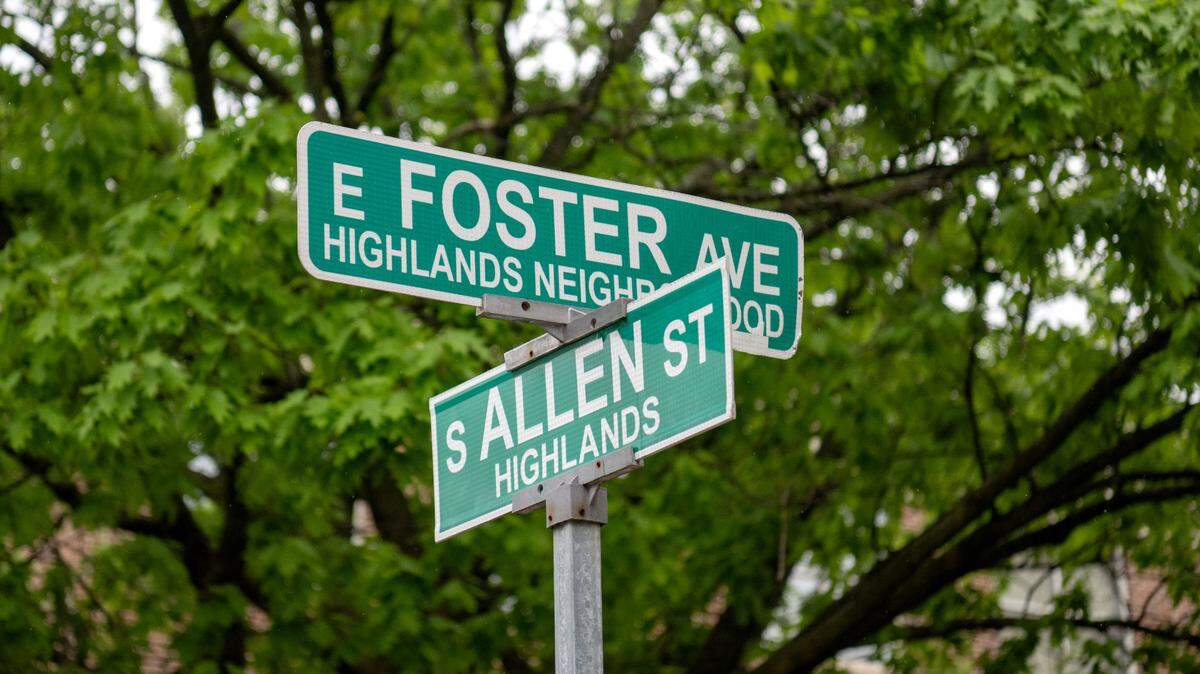
Whether you’re an upperclassman at Penn State or a longtime Centre County resident, you likely know your way around State College. But how well do you know the history behind the names of local streets?
Many significant figures and former public officials have their names permanently enshrined throughout State College and the surrounding areas. Plenty come as street names you read every day, while some others had their names attached to landmark buildings in Centre County or on Penn State’s University Park campus.
If you hope to learn a bit more about the names and stories behind some street names in State College and beyond, here’s what you need to know.
Allen Street
Home today to some of downtown State College’s most beloved bars, restaurants and longtime businesses, Allen Street honors William Henry Allen, who briefly served as Penn State’s second university president from 1864 through 1866.
According to the Penn State University Libraries, Allen was instrumental in reorganizing the curriculum and helping the newly formed college manage its financial issues, including $50,000 in debt at the time of his arrival.
Atherton Street
While Atherton Street is infamous for its ongoing construction and traffic, the road that runs from Boalsburg through Port Matilda recognizes George W. Atherton, who remains the longest-serving president in Penn State’s history following his 24-year tenure starting in 1882.
According to the Centre County Historical Society, Atherton is often credited with transforming the failing college into a stable, modern school that would eventually become Penn State. The American Civil War veteran and longtime academic died while still serving the university in 1906 and is buried in a publicly accessible grave beside Schwab Auditorium on the university’s campus.
Atherton Hall, which is now the home of Penn State’s Schreyer Honors College, also bears the late president’s last name. However, it is named in honor of his wife, Frances Washburn Atherton. The hall first opened as a women’s dormitory in 1938.
Beaver Avenue
This famous one-way street in downtown State College bears the name of James A. Beaver, the former Pennsylvania governor (1887-91) and Penn State’s interim president for roughly two years following Atherton’s death in 1906. Beaver’s name is also honored through Penn State’s football stadium and Beaver Hall, located within the Pollock residence halls complex.
Beaver, also an American Civil War veteran, served as a longtime university trustee and practiced law in Bellefonte alongside Hugh N. McAllister, whose name is also enshrined in State College. According to the Centre County Historical Society, Beaver’s gubernatorial tenure significantly improved Pennsylvania’s infrastructure, educational systems and conservation efforts.
Benner Pike
This Centre County road is named for Philip Benner, an early business leader in the county who established Rock Ironworks, which was one of the first iron forges in the country, according to the Centre County Historical Society. He is also the namesake of Benner Township.
Benner acquired land in Centre County in the 1790s and built an iron forge along Spring Creek. He also helped construct several of Bellefonte’s oldest homes and played a major role in building roads between Bellefonte and Lewistown. Today, much of Benner’s former land is occupied by the State Correction Institution at Rockview, according to the county historical society.
Calder Way
Former Penn State President James Calder is the namesake for this street, which cuts through most of downtown State College. He led the university from 1871 through 1880 and produced a number of achievements, including increased enrollment, a new university name (The Pennsylvania State College, which would remain intact until the 1950s) and improvements across campus grounds, including a renovation of Old Main.
Fraser Street
This downtown State College street bears the name of John Fraser, an American Civil War veteran and scholar who briefly served as Penn State’s president from 1866 to 1868. An early iteration of the street was named “Frazier” (as referenced by the State College Area School District’s former Frazier Street Building), but the street today is recognized as “Fraser.”
Garner Street
Over near the Highlands neighborhood of State College, this street is named after brothers Samuel and Daniel Garner, who owned large parts of what is now the Highlands. According to the neighborhood’s website, the Garners’ presence and land ownership are “irrefutable” thanks to maps dating back to the 1870s.
Hamilton Avenue
This State College avenue is named for John Hamilton, a former landowner best known for his work as a professor and longtime treasurer for the school that would later become Penn State. He served as a trustee and helped manage the college’s finances for nearly four decades before retiring in 1911.
Heister Street
This State College street connects College and Beaver avenues and earns its name from Gabriel Hiester, a former trustee of the college that would become Penn State. A noted agriculture and horticulture leader, he graduated from the school in 1866 and began serving it as a trustee by the late 1870s.
Spellings of this street vary from place to place, though official maps from the State College borough refer to it as “Heister.”
McAllister Street
Hugh N. McAllister serves as the namesake of McAllister Street in downtown State College. He is best known as a founding member of what would become Penn State’s Board of Trustees and as the architect of the original Old Main building on the school’s campus. McAllister also practiced law alongside James A. Beaver starting in the late 1850s.
Today, McAllister’s name is also honored through Penn State’s McAllister Building, which houses the university’s mathematics department and the University Park post office.
Pugh Street
This State College street recognizes Evan Pugh, whose leadership as the first president of the Farmers’ High School of Pennsylvania would help lead to the Penn State we know today. His tenure at the school began in 1859 when he was just 31 years old, according to the Centre County Historical Society.
Under Pugh’s watch, the school sought to deliver a more scientific agricultural education, the county’s historical society says. One of Pugh’s landmark achievements came through securing passage of the 1862 Morrill Land-Grant College Act, which secured long-term benefits for Penn State and other schools across the country.
Today, Penn State recognizes Pugh through its Evan Pugh professorships, one of the university’s highest faculty honors. Pugh was buried at Bellefonte’s Union Cemetery following his death in 1864.
This story was originally published May 29, 2024 at 7:30 AM.
%202.JPG)