Historic Centre County landmark undergoing once-in-a-generation renovation
AI-generated summary reviewed by our newsroom.
- Centre Furnace stack enters $35K restoration to preserve 18th-century origins.
- Smith Masonry leads three-week project using cleaning, sealing and repointing work.
- Furnace’s legacy ties to Penn State formation and region's early industrial boom.
One of Centre County’s most iconic landmarks is getting its first facelift in more than 60 years.
The remnants of the Centre Furnace stack, a historic iron furnace that was built in 1791, still stands near the intersection of Porter Road and East College Avenue in College Township. It’s currently undergoing a $35,000 “once-in-a-generation” renovation that will preserve it for decades to come, once the project is finished within the next week or two.
Without the structure in the 18th century, local historians and benefactors said Wednesday, it’s possible neither Centre County nor Penn State would exist.
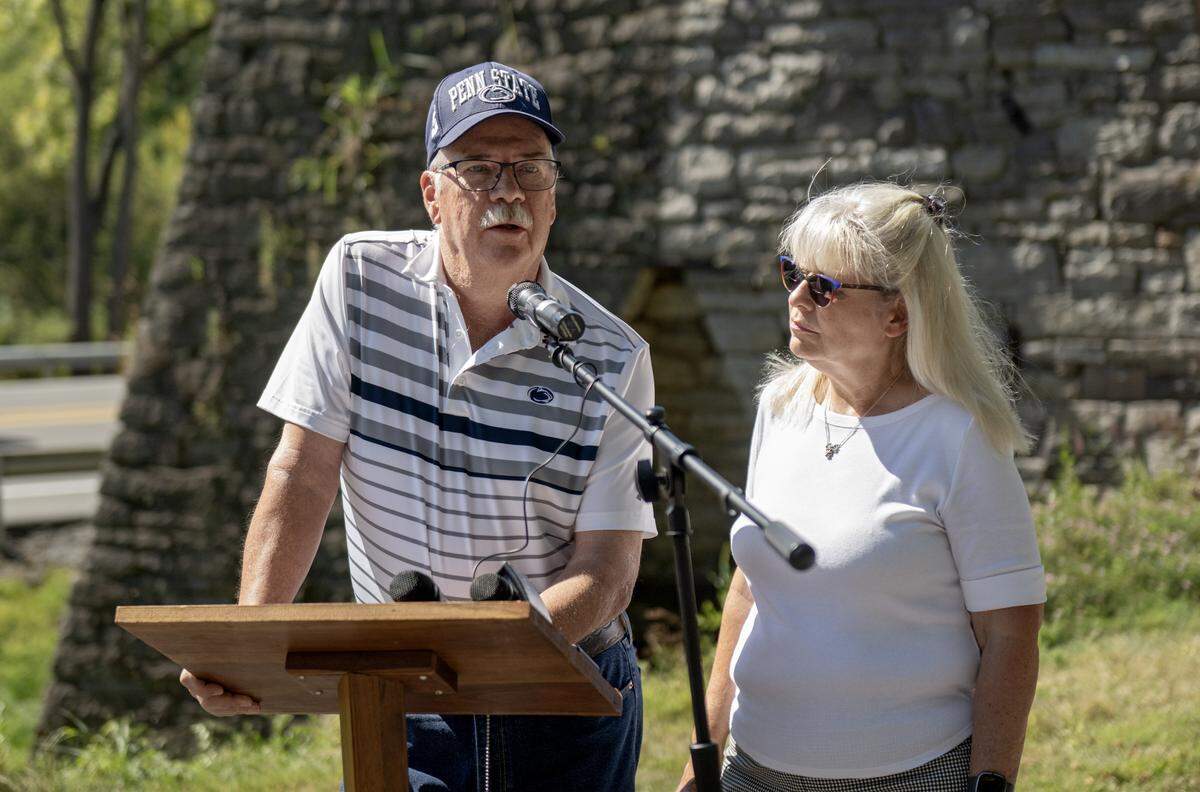
“We got a lot of rich history, and we don’t want to forget that rich history — here in Centre County especially. This is part of that,” said Robert Van Druff, who offered remarks after his and his wife’s donation made the restoration possible. “We don’t want to see things like this disappear and out of people’s mind and forgotten. And that’s why we want to support this and bring it back.”
The furnace stack was constructed nine years before County County was established in 1800, and the furnace producing crude iron — better known as pig iron — led to a boom in the immediate area. Population swelled. Roads and canals were built. And the furnace’s future owners, in 1855, even donated 200 acres to establish what’s today known as Penn State.
To keep alive that Centre County landmark, which one speaker referred to Wednesday as the county’s “ancient greeter” between State College and Penn State, the Centre County Historical Society needed to turn to professionals. In 1963, the last time the furnace stack was renovated, inmates trained in masonry from Rockview state prison repaired the crumbling structure. And that wasn’t an option in 2025.
Instead, the historical society researched best practices and hired Smith Masonry, Inc., of Hollidaysburg, for what should be about a three-week project. (Work started about a week ago.) The mason has already pressure-washed half the structure, which had darkened from engine exhaust from the passing vehicles.
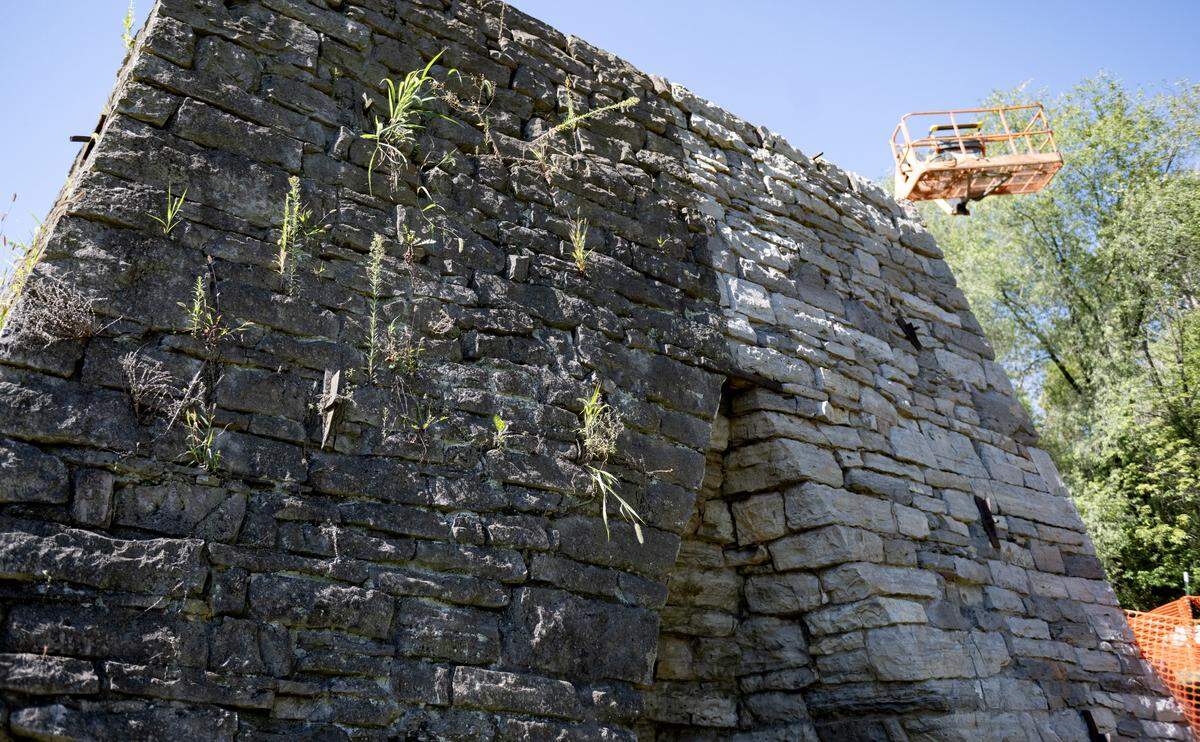
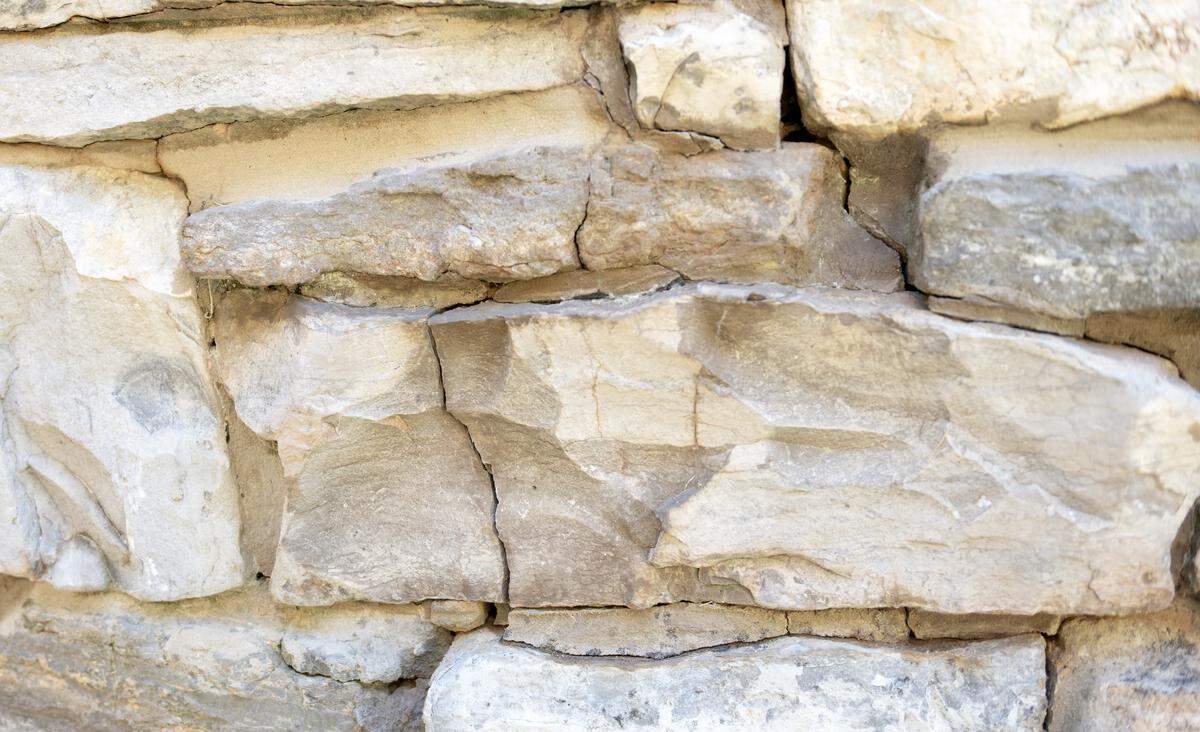
Weeds were taking root in the cracked mortar, and at least half have already been removed. When that part’s finished, the mason will further clean the limestone with a special D/2 biological solution that is used to clean gravestones and eliminate mold, mildew and lichen. Mortar will be replaced where necessary, and the top of the structure will undergo a special sealing to prevent water damage.
Mary Sorensen, executive director of the Centre County Historical Society, believed the furnace stack likely wouldn’t need another major restoration for at least 50 years.
“While the stack today is far from crumbling like it was in the ‘60s, the need for restoration and repairs was obvious, and increasingly on our minds,” she said.
The historical society held an informal press conference Wednesday afternoon near the furnace stack to announce and explain the changes. Centre County Commissioner Mark Higgins offered brief remarks, and a representative from the office of state Sen. Cris Dush, R-Brookville, was also on-hand.
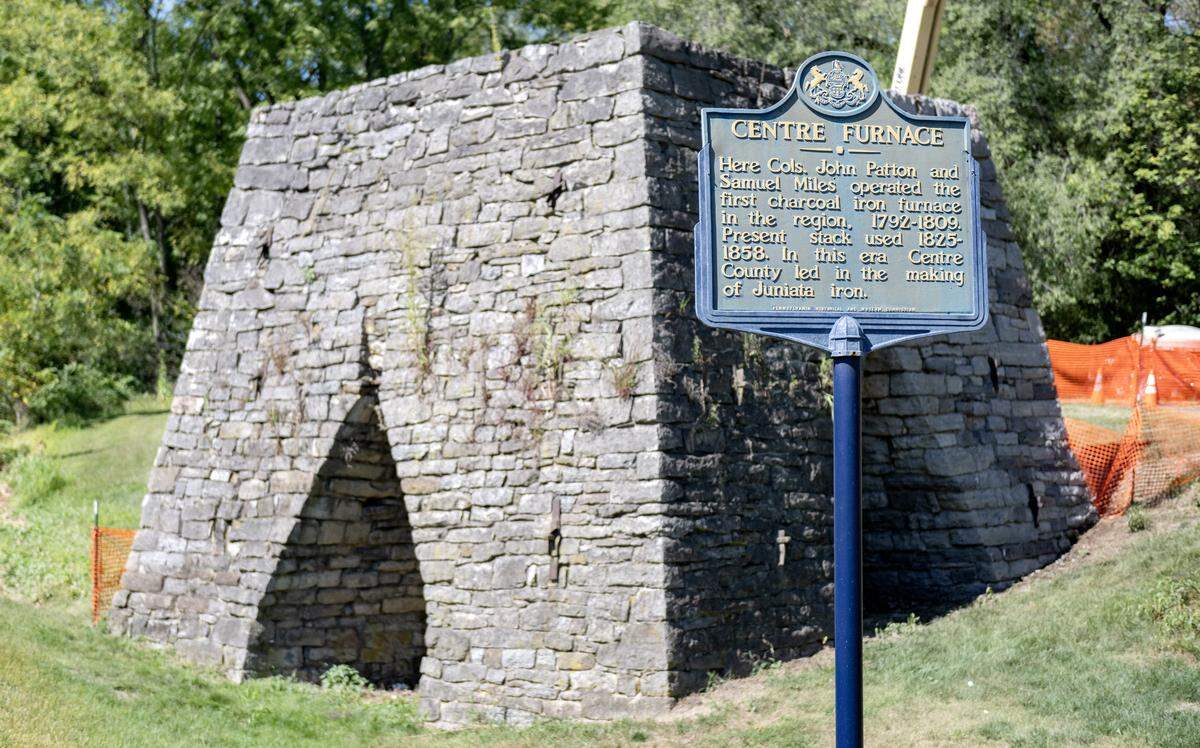
The restoration was part of what’s been a busy few years for the historical society. It has overseen a major restoration to both the Centre Furnace Mansion, where the ironmaster once lived, and the Boogersburg School, which was a historic one-room schoolhouse built in 1877. The historical society has also hosted visitors for its summer planting of a Liberty Tree, and it also received a historical marker a year ago to commemorate the “birthplace of Penn State” on the Centre Furnace property.
Centre Furnace was founded in the late 18th century by two Revolutionary War veterans in Col. John Patton and Gen. Samuel Miles. They purchased more than 16,000 acres to establish the birthplace of the county’s first major industry and, by 1810, three Pennsylvania counties — Blair, Centre and Huntingtdon — combined to produce more than half of the nation’s pig iron.
The furnace faltered after the deaths of Patton and Miles. But Gen. James Irvin took over in 1826 and partner Moses Thompson joined him in 1842, and the pair largely fared well until the 1857 financial crisis. Irvin even offered 200 acres in 1855 toward the establishment of a “farm school,” which evolved into Penn State.
This story was originally published September 3, 2025 at 4:44 PM.