
‘Not without a lot of regret.’ EMS agency in rural Centre County plans to close service
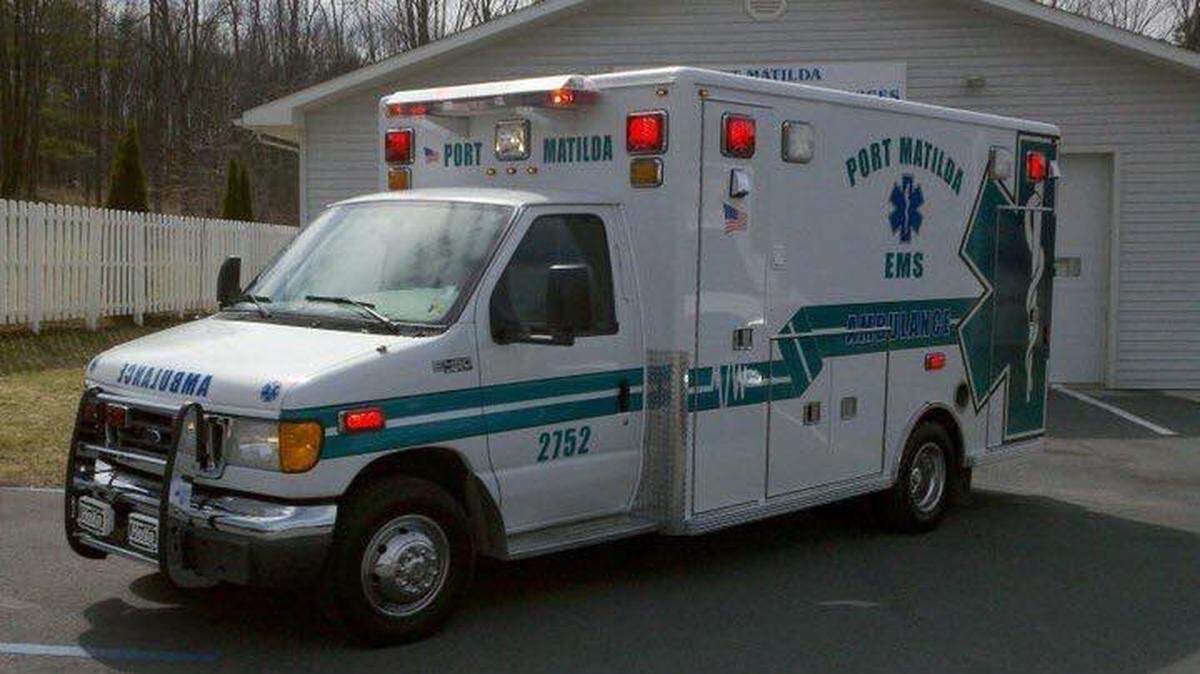
An emergency medical service in rural Centre County announced Monday its plan to close within three months, adding to a growing list of EMS providers forced to close because of declines in personnel.
Port Matilda EMS — which covers the borough and at least parts of Halfmoon, Huston, Worth, Taylor and Ferguson townships — expects to be down to two part-time employees and one volunteer by the end of the year.
“That’s not enough to provide an adequate level of service to our community,” the nonprofit wrote in a Facebook post.
A shortage of trained EMS personnel and an inability to provide competitive wages and benefits also contributed to the decision. It was not immediately clear which EMS agency would be tapped to serve those six municipalities.
The company did not immediately respond to a request for comment Monday evening. It has operated since 1951.
In the Facebook post, the agency thanked those who purchased annual memberships and supported its fundraisers over the years, saying it has “truly been an honor to support this community.”
“This decision was not made easily and not without a lot of regret,” the agency wrote.
Bellefonte EMS Executive Director Scott Rhoat commented on the post that he was “very sorry to hear of this decision.” Every worker and volunteer — past and present, Rhoat said — should be “proud of the years of dedicated service given to the organization and community.”
Rhoat said he was not immediately available for further comment Monday.
“Your organization is not the first and certainly will not be the last EMS agency to close due to inadequate financial support,” Rhoat wrote. “Your struggle to make ends meet can only stretch so far, the failure is not yours.”
Port Matilda EMS expressed concern about a “critical situation” as early as at least November 2019, when the company said it only had enough money to cover one more payroll cycle.
The agency was buoyed when nearly 800 memberships were purchased, but that proved to be temporary. In a Facebook post earlier this month, the nonprofit once again wrote it was in a “critical state.”
“THIS IS LIFE OR DEATH,” the company wrote Nov. 11.
The challenges are not exclusive to Port Matilda EMS. Agencies are closing more frequently than ever before, Pennsylvania Fire and Emergency Services Institute Executive Director Jerry Ozog said.
Most EMS agencies outside of big cities in Pennsylvania are supported almost entirely by reimbursements from Medicaid, Medicare, private insurers, donations or memberships. The problem, Ozog said, is those reimbursements only cover a fraction of the actual costs.
“In some places, they’re losing money every time they go on a call,” the former longtime paramedic said.
Recruitment and retention are two of the most long-standing issues for EMS agencies. More than 4,000 EMS certifications were not renewed last year, the director of the state Health Department’s Bureau of Emergency Medical Services wrote in a report.
The state’s population, especially in rural areas, has been declining and aging for a decade. Many EMS agencies in rural areas have members in their 60s and 70s.
“This is dangerous work. It requires you to attend training classes; it requires you to take certification exams,” Ozog said. “It is difficult to find people that want to do that anymore.”
The salaries for paramedics and emergency medical technicians isn’t strong either. The median pay for the two professions, according to an agency of the Labor Department, is about $37,000.
The Bureau of Labor Statistics did not differentiate between the two jobs. Paramedics have much more training than EMTs.
“Many EMTs and paramedics are working two or three different full-time jobs to make a living wage,” Ozog said.
The state’s existing system for EMS agencies, Ozog said, is “very fragile.” He estimated most are being run by just a handful of people.
There are no easy answers for how to solve the issue. New legislation could help, but regions and counties will need to get involved as well, Ozog said.
“If communities want a local ambulance service, they need to come together and build a community coalition to keep things moving and try different things. The demographics are against us and the costs are going to continue to rise and the current workforce is going to continue to get older,” Ozog said. “Things are possible, but it’s going to have to be more of a regional solution or a countywide solution to deal with these things.”
This story was originally published November 21, 2022 at 10:50 PM.