The buzzing is back. What to know about 17-year cicadas in Centre County
AI-generated summary reviewed by our newsroom.
- Brood XIV cicadas emerged across Centre County after 17 years underground.
- Millions of cicadas boost predator populations and nestling survival rates.
- Urban development limits cicada emergence by disrupting underground nymphs.
The 17-year periodical cicadas have returned to Centre County, whether you hate them, love them — or find them tasty.
The large, harmless flying insects were last seen above ground in 2008 — during the Great Recession, when many millennials were in high school or college. Known as Brood XIV, they are the only brood of periodical cicadas that inhabit Centre County. They will make their loud, buzzing racket for the month of June, then will return to the ground in early July, not to be seen again until 2042 — five years after today’s kindergartners graduate.
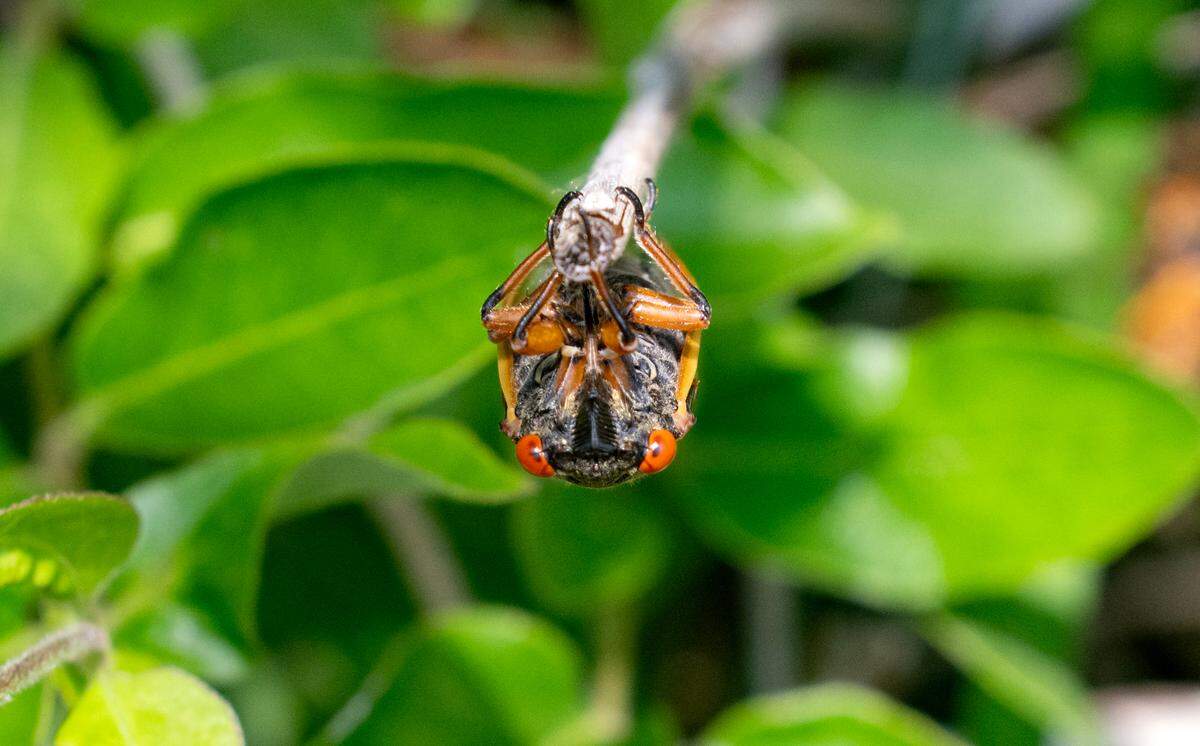
By tracking the seasonal flow of sap and nutrients while feeding on tree roots, cicada nymphs track the precise year to emerge, whether it is 17 years in Brood XIV’s case, or 13 years for some others, according to Penn State entomology researcher Michael Skvarla. Once the soil temperature reaches 65 degrees Fahrenheit in the correct year, cicada nymphs emerge by the millions from the ground. They climb and cling to tree limbs, where they shed their exoskeleton and hang, using gravity to help form their wings.
Then, they travel to the canopy, where males vibrate a pair of special structures on the sides of their abdomen called tymbals. After mating, females use a sharp, needle-like organ to cut slits in tree branches or twigs, where they deposit hundreds of eggs, then die. After a few weeks, tiny nymphs drop to the ground, burrow into the soil and begin to feed on tree roots.
Cicadas have positive impact on food chain
Emerging by the millions all within a span of a few weeks is what makes them so successful, Skvarla said.
“Part of their survival strategy is predator avoidance,” Skvarla said. “Predators gobble them up as much as they can, but there are only so many predators in the landscape.”
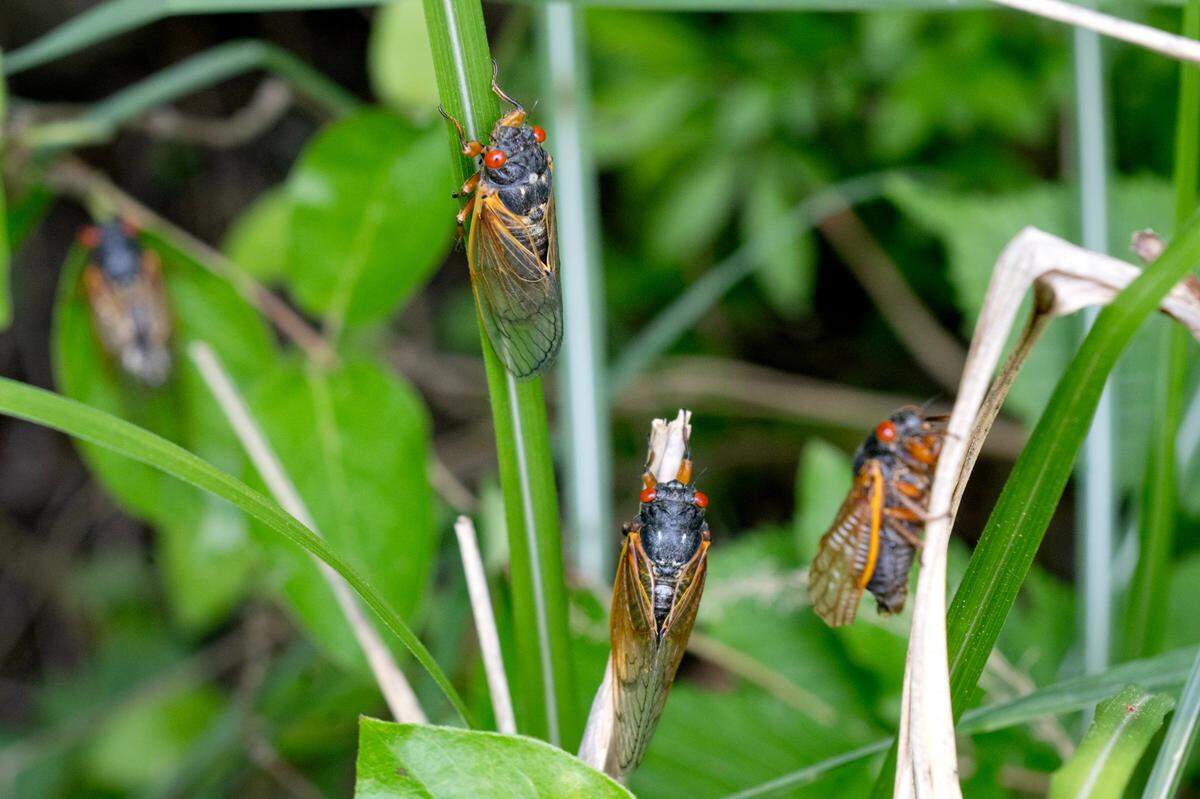
The abundance of cicadas over just a few weeks positively impacts the food chain for generations: birds, turkeys, squirrels, chipmunks and snakes all eat their fill of the fatty and protein-laden insects. Since the food source is so plentiful, it leads to more animals and birds surviving in a “cicada year,” according to Skvarla.
“Anything that is raising young right now does really well due to the abundance of food,” Skvarla said. “In cicada years, all bird nestlings might survive, when normally only a couple of nestlings might make it.”
Dogs and cats might also be interested in eating the cicadas, and though they are nutritious and edible, pets’ digestive systems might not be used to the extra calories, Skvarla said.
Where are cicadas emerging in Centre County?
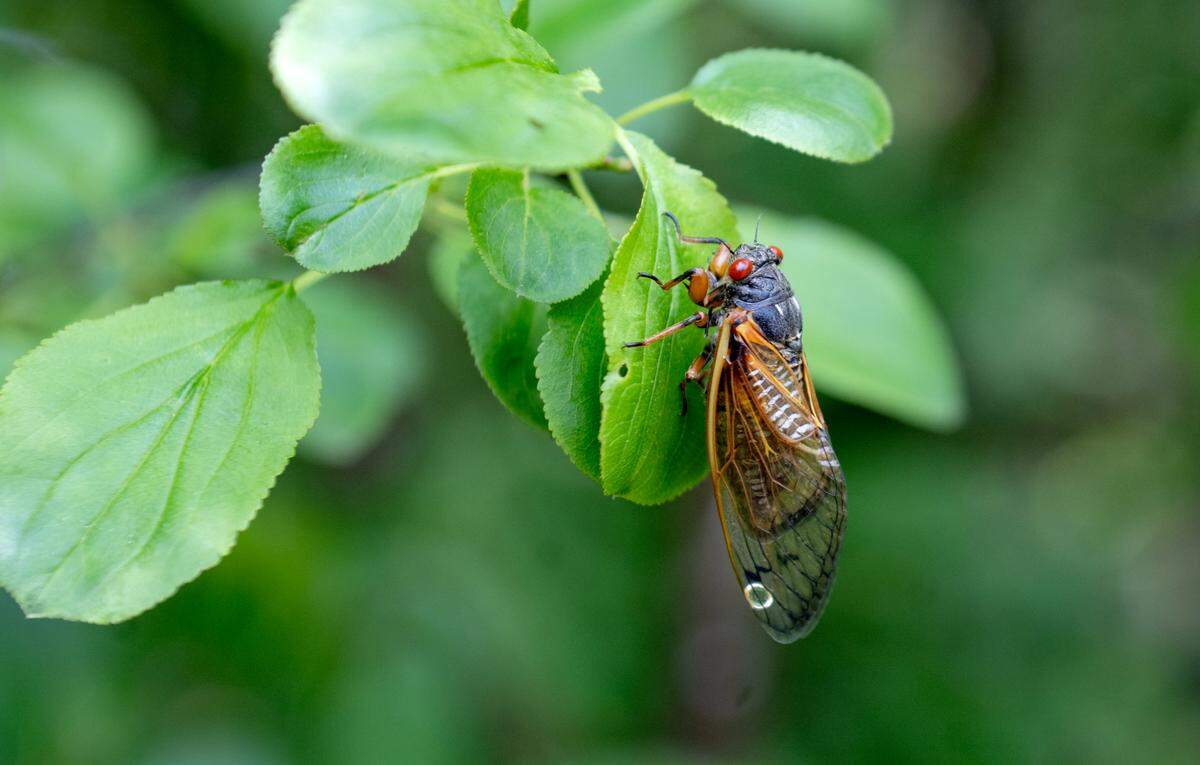
According to audio recording surveys conducted by University of Connecticut researchers in 2008, Brood XIV can be expected to mostly emerge in Bellefonte, Toftrees and Northern Huntington County, with smaller groups likely to be seen in State College.
On iNaturalist — a smartphone app where residents identify and track animals and insects — users have reported over 5,000 observations of periodical cicadas across the East Coast, including some in Bellefonte, State College, Tyrone, Altoona and Lock Haven, as well as areas further East and Southeast.
Places that have experienced construction and development over the past 17 years, like State College, may not see the emergence of as many cicadas as in 2008, because of nymphs’ long lifespan in the ground. Nymphs burrow two-to-four feet below the ground and typically stay within the same area until they emerge 17 years later.
“Cicadas cannot run from a bulldozer,” Skvarla said. “They do tend to be patchy. They are more likely to be seen in areas where there hasn’t been disturbance by construction, like in older residential areas around older trees.”
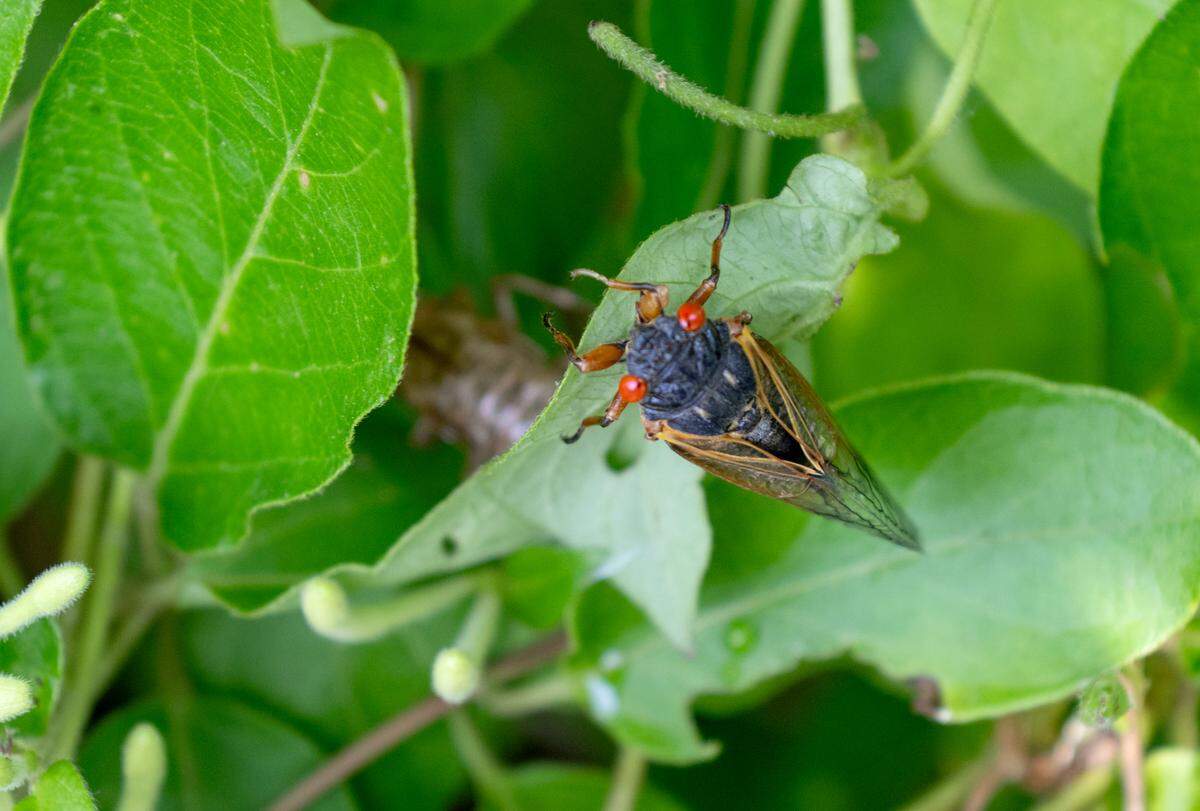
Andrea Skirpan, co-owner of Belle Mercantile and resident of Curtin Street in Bellefonte, bought her house in 2004 and remembers the onslaught of cicadas that emerged a few years later.
“I remember it was just so loud that we didn’t want to be outside, the sound was so deafening, and it was annoying with them flying around,” Skirpan said. “I don’t know if it will be quite as bad this time around, but I know we didn’t want to sit on the patio as much, so we stayed inside for a week or two.”
Skirpan’s dog at the time, a lab named Mocha, loved to eat the cicadas, and as the insects left the ground to travel up the tree trunks, Skirpan would even grab a few to give to her dog once she could no longer reach them. This year, her lab-mix dog and cats are enjoying them.
“I was worried our dog would get sick, but none of our animals have overeaten or gotten sick,” Skirpan said. “I’ve been feeding my dog a little less since she’s been eating so many of them, and I’m curious how many calories they are.”
Residents with heavy cicada populations in their yards might have some tree damage from the cicadas once females lay their eggs.
“We had some limbs fall off of trees and had a young red maple that did not recover from cicada damage, so we had to cut it down,” Skirpan said.
Visitors to the Bellefonte Children’s Fair, which will take place on Saturday, June 7 from 10 a.m. to 3 p.m. at the intersection of Curtin and Armor streets, will be right in the center of heavy cicada emergence in Bellefonte. The fair is hosted by the Bellefonte Area Rotary Club and proceeds benefit the Bellefonte Borough playgrounds.
Rotary organizer Kathleen Edwards said that since most of the Rotary members joined after 2008, there is not much memory of the cicadas during the Children’s Fair in 2008.
“This year’s fair will have much of the same as previous years — bounce house, kid’s games, food trucks and some animals,” Edwards said. “Hopefully all will go on as usual!”