
This historic Bellefonte site was saved from demolition. What happens next?
AI-generated summary reviewed by our newsroom.
- Bellefonte’s borough council denied a request to demolish a historic farmhouse.
- Bellefonte’s school district viewed the structure as a costly liability.
- Advocates hope to preserve the farmhouse and use it as an educational center.
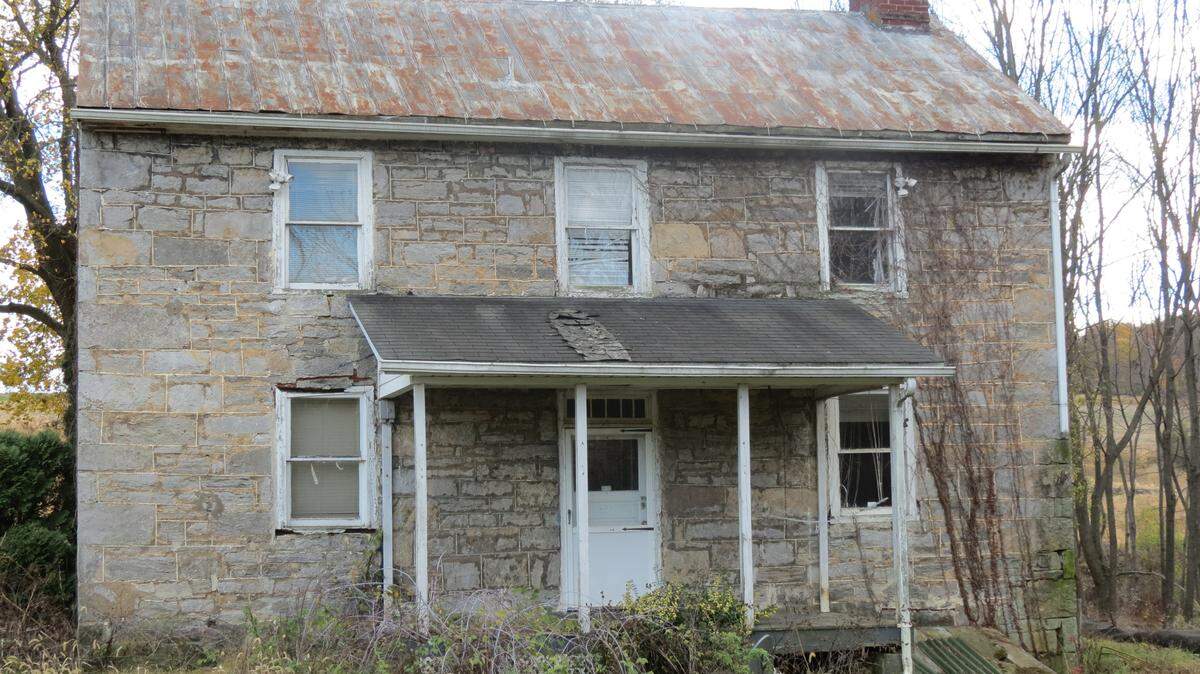
Although a historic Bellefonte site will not be demolished, its future remains unclear.
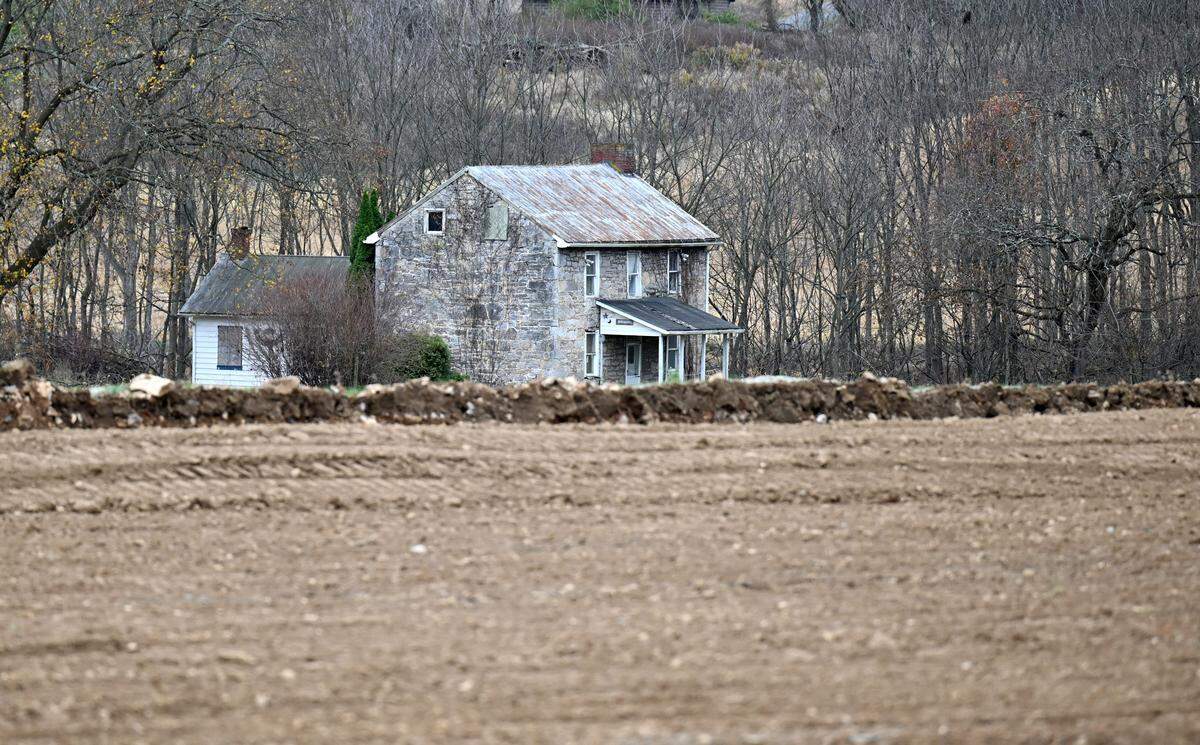
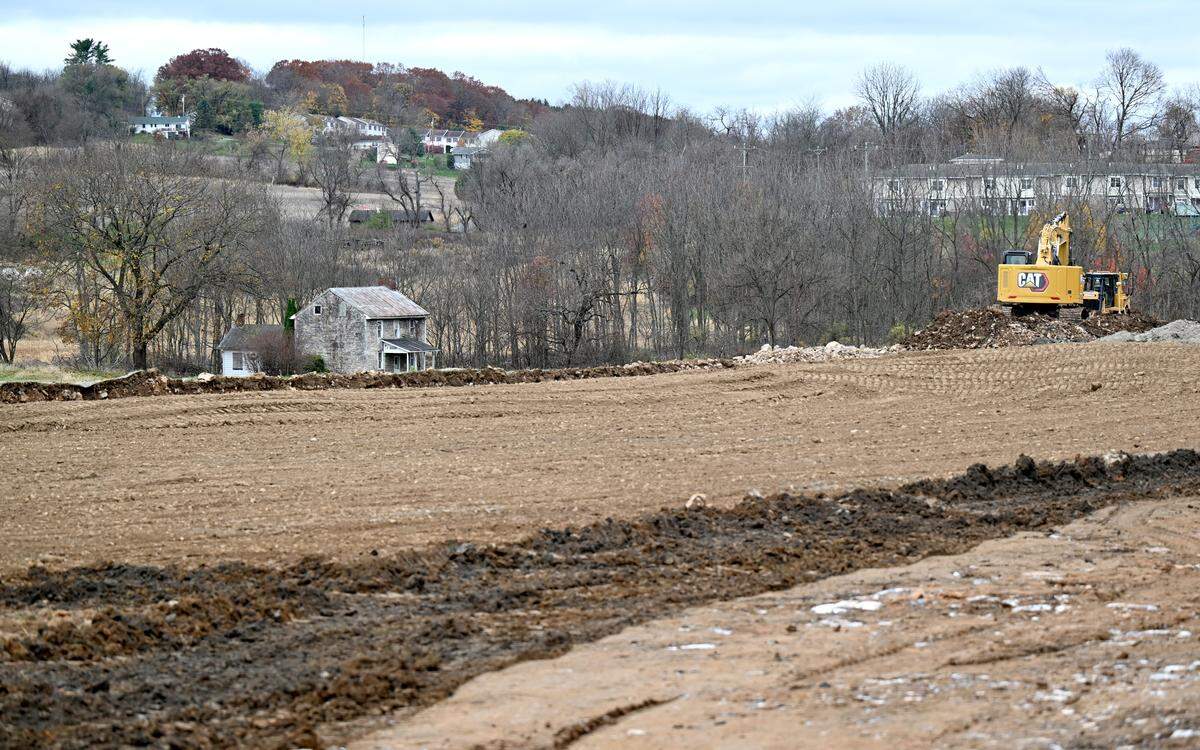
With an 8-to-1 vote, Bellefonte’s borough council denied a motion to approve a demolition permit for a vacant farmhouse at 1002 Airport Road after advocates voiced support for its preservation and argued it may be one of the oldest structures in the area. The Bellefonte Area School District sought to demolish the home, which sits on the edge of the campus for the under-construction new Bellefonte Elementary School, and views the site as an ongoing liability.
Joseph Griffin, president of the Bellefonte Historical and Cultural Association, helped rally support for preserving the home, known locally as the Beaver Farmhouse. He says advocates must now continue working to study the farmhouse’s past and preserve it for future generations.
“It’s nice to see the support, but all we really did tonight was frustrate the school district,” Griffin told the Centre Daily Times. “What I’d like to do is bring in some knowledgeable experts. We have to have a strategy for preserving that building. You can’t just make the district preserve it. There are all these different possibilities of putting control of the building in sympathetic hands.”
Only council member Kent Bernier voted in favor of allowing the demolition to move forward. The council failed to approve an amendment that would have granted a one-year stay of demolition and instead simply denied the school district’s request for a demolition permit, leaving the farmhouse’s future without a clear timetable.
At Monday’s meeting, council members largely agreed the farmhouse held historic significance for Bellefonte. Council member Joanne Tosti-Vasey noted the council did not receive a single piece of correspondence in favor of demolishing the farmhouse, outside of Bellefonte district officials.
Tosti-Vasey argued the farmhouse importantly represents the history of common workers who helped Bellefonte thrive generations ago.
“These types of historical properties tell the stories of our oft-overlooked laborers, creating a fuller picture of our past,” she said. “By preserving the laborers’ home, we are helping to foster a sense of identity for all citizens in our community, not just the wealthy few, and helping pass our history down to future generations.”
School district casts doubt on property’s future
Roy Rakszawski, Bellefonte’s superintendent, characterized the Beaver Farmhouse as an ever-growing liability for the school district and said demolition was its only viable option. He said the district must responsibly manage taxpayer dollars by investing in its educational program as opposed to preserving historic sites.
“The farmhouse is not part of our educational program,” Rakszawski said at Monday’s council meeting. “We have a long list of deferred maintenance projects in buildings currently used that are prioritized in our facilities plan. Our funds must be dedicated to these active facilities. We cannot afford to renovate a farmhouse we don’t need. The district is not, and cannot be, in the business of historical preservation.”
According to the superintendent, the Beaver Farmhouse costs Bellefonte’s district roughly $2,100 each year in insurance premiums alone. Due to the property’s current conditions, the district also faces potential fines from borough code officials ranging from $300 to $1,000 per day, Rakszawski said. The structure presently has no power, water or sewer lines.
The Beaver Farmhouse must merely be weather-tight — not approved for occupancy — to avoid future fines, according to Walter Schneider, director of the Centre Region Code Administration. He said he directly oversaw the writing of violation notices to the school district, which largely concerned broken windows, open entrances and spaces that could allow animals to enter.
“If the building exists, our charge, by you, is to make those buildings weather-tight and make sure they do not deteriorate beyond their current condition,” Schneider told council members.
Rakszawski said the district does not believe it is feasible to donate the farmhouse or its surrounding land. The property sits in the basin of an outlet for all runoff water from Bellefonte’s new football stadium and additional runoff water from the district’s high school and new elementary school.
If the demolition permit was approved, the superintendent said Bellefonte’s district would have sought to work with community members to preserve and repurpose materials from the farmhouse, likely through the construction of a memorial wall, walking path or “another feature with a plaque” commemorating the home and its history.
How could the building be saved and reused?
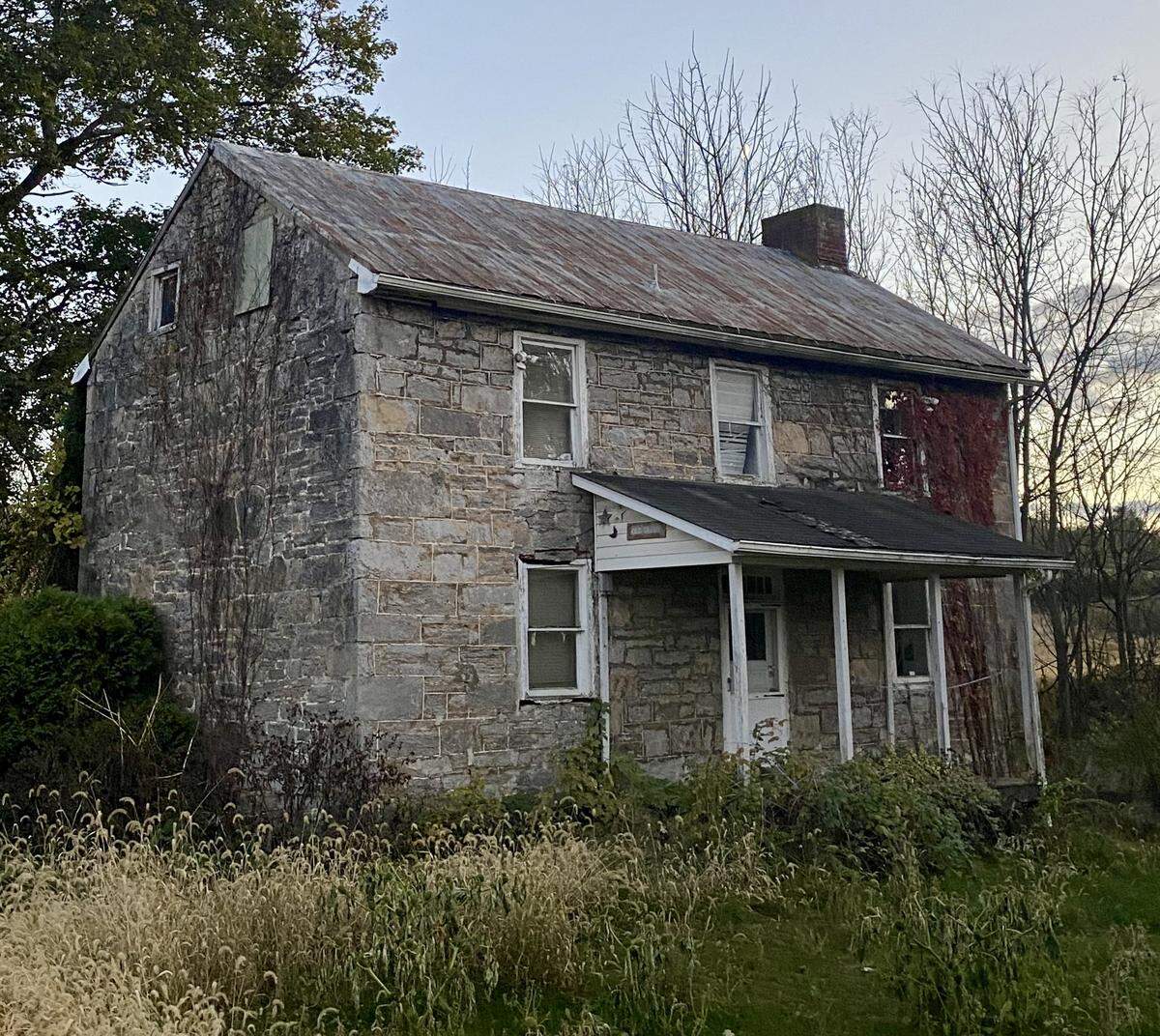
Advocates who supported the property’s preservation have said Bellefonte Building Supply has offered to winterize the Beaver Farmhouse at no cost. Weather-proofing the home would mark a key step toward planning the property’s future and preventing further fines incurred by Bellefonte’s school district.
Griffin, the BHCA president, said he hopes to work with experts to properly study the home and assess its age and significance. Local maps indicate the property was standing by at least the early 1860s, but some believe it could be even older.
Mindy Crawford, the executive director of the Preservation Pennsylvania nonprofit, told Griffin the farmhouse may date back to the late 18th century. The structure resembles 18th-century architecture, and it was not uncommon for more rural areas to construct buildings and homes in styles that would already be considered out of date in larger cities.
“The documentary evidence suggests it’s mid-19th century, and the physical evidence suggests it’s later 18th century,” Griffin said last week. “I don’t know which is correct. It’s probably somewhere between 1770 and 1860. We’ve got a bracket of about a hundred years, and if it’s on the earlier part of that, it could be, in fact, one of the earlier buildings in Bellefonte.”
Griffin spoke Monday with Frank Grumbine, a historic preservation specialist for the Pennsylvania Historical and Museum Commission who helps review development plans for central Pennsylvania. Grumbine said the Beaver Farmhouse was not included within “the limits of disturbance” on the plans for the new Bellefonte Elementary School — a finding that likely would have opened the door to legal action and other challenges if the district moved forward with the site’s demolition without filing revised plans for review.
Any plans to convert the farmhouse into an educational space would eventually need to be formalized and approved while meeting district standards.
Some proponents of saving the farmhouse hope to convert the property into a hands-on learning center for Bellefonte students. Chief among them is Myken Poorman, an agricultural sciences teacher at Bellefonte Area High School.
For nearly a decade, she has floated plans to maintain the farmhouse’s historic integrity while transforming it into “a model of green design and sustainability.” Poorman previously paired her students with fifth-year Penn State architecture students to form ideas for the project and said restoration efforts could be an educational opportunity for Central Pennsylvania Institute of Science and Technology students specializing in construction trades, masonry and emerging energy and infrastructure.
Bellefonte’s agriculture programs and some other classes have used the property’s land for years since the district purchased it roughly 20 years ago, largely to grow produce for school cafeterias and other local sources in roughly 2,500 square feet of garden beds. Upgrades to the farmhouse could help it become a more comprehensive learning space that could offer educational opportunities for a wide range of disciplines and school subjects.
Poorman said she continued community support can help transform the farmhouse from a district-described liability to a key resource for Bellefonte students.
“I think the decision to not demolish the farmhouse goes to show that the Bellefonte community loves their town and appreciates the history here, and I am so proud to be a part of that,” Poorman wrote in an email to the Centre Daily Times. “I do have dreams for the house to be restored sustainably using adaptive restoration practices. It has so much potential. This farmhouse is the best historical representation of agriculture and could be an incredible educational tool and historical asset for the Bellefonte Area School District.”
Rakszawski, the superintendent, previously said ideas to restore the farmhouse as an educational space were likely impractical. Work to bring the property up to the district’s educational standards would be costly and consuming, as it would need to meet board policies, district education specs and Americans with Disabilities Act standards.
Funding for such a project would present an additional challenge, though a groundswell of community support has preservation efforts off on the right foot.
Poorman said U.S. Rep Glenn “GT” Thompson, R-Howard, has pledged to commit $5,000 in 2025 and another $5,000 in 2026 to back the farmhouse’s future, while the BHCA received at least three separate $1,000 pledges. The Bellefonte teacher also said the district gave her permission to explore non-matching grant opportunities to help fund those efforts.
Financial commitments from the community already put the project well ahead of the $12,008 Bellefonte’s district would have spent demolishing the property if its permit was approved.
Sadie Belsky, a Bellefonte graduate and fifth-year Penn State architecture student, has strongly supported restoration efforts and studied under Poorman in high school. While abroad in Denmark, she studied adaptive re-use — a building philosophy that preserves historic structures while modifying them for modern use — and believes that approach could pay off for the district.
“Bellefonte has a chance to be an innovator, show that the rural community can lead in sustainability and education and historic preservation,” Belsky said. “This farmhouse can become a model that other districts visit to learn from, putting Bellefonte on the map as a community that values both heritage and the future.”
%202.JPG)