
‘Groundbreaking’ solar project on abandoned mine land in Centre County takes next step
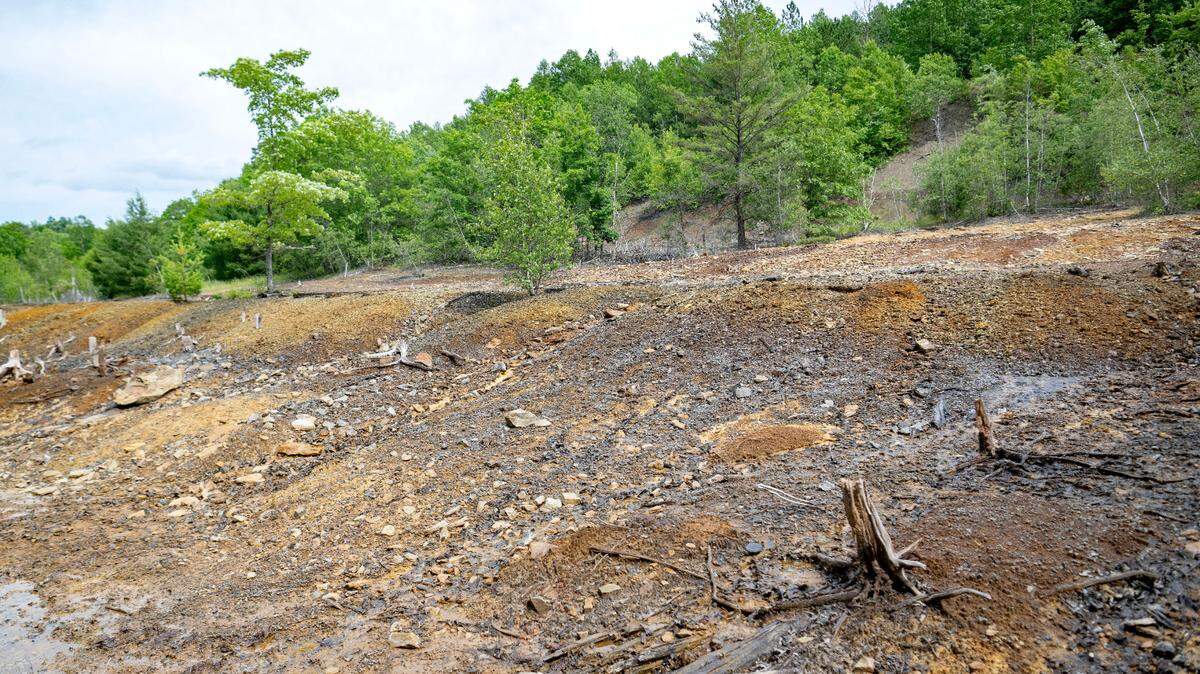
The Rush Township supervisors approved a conditional use permit this week for a solar project that would repurpose nearly 2,000 acres of abandoned strip coal mining land.
Contingent on the approval of future development plans, the 265-megawatt Black Moshannon Solar project would be developed by Ampliform and built on seven parcels of abandoned strip mine land along Black Moshannon and Coaldale roads. The supervisors approved the permit by a vote of 2-1 Tuesday.
Green energy advocate group PennEnvironment lauded the move Wednesday, writing in a press release that the array would generate enough energy to power 200,000 homes annually. It would also bring in $2 million in tax revenue to the Philipsburg-Osceola Area School District and $700,000 in direct tax payments to Centre County, the release states.
“The bipartisan group of Rush Township Supervisors who got this proposal over the finish line should pat themselves on the back for this groundbreaking project,” PennEnvironment Executive Director David Masur wrote in the release. “We are hopeful that other local government officials across Pennsylvania will follow Rush Township’s lead and implement similar, much-needed solar projects all across the Keystone State.”
The idea for the solar project was brought to the supervisors in January 2023, and since then, has been subject to criticism from many area residents. Concerns have primarily involved the size of the buffer zone surrounding the solar array and what the developer plans to do about the site’s toxic acid mine drainage.
Before the concerns could be addressed, the township had to create a new commercial energy production zoning district for the array, Supervisor Pat Romano told the CDT on Thursday. That allowed the township to set guidelines in place for the array’s future development.
The new zone was also created, in part, to help the township avoid a tricky developmental scenario.
“If we didn’t create that new zone, technically Ampliform could exploit a [exclusionary zoning law], pick any plot of land they fancied and build a solar array of whatever size they wanted there,” said Romano, who joined fellow supervisor Jason Vaux in voting to approve the permit.
Supervisor Dave Jackson voted against, and declined to offer comment on his vote when contacted Thursday by the CDT.
While Romano said that many residents asked the supervisors to deny the project and its permit outright, that would’ve landed the township in some legal hot water.
“We couldn’t have rejected it even if we wanted to,” Romano said. “These [Ampliform] guys have done everything necessary of them to the letter of the township’s ordinances, and if we voted down that permit, they could sue the living daylights out of us for denying it without a valid cause — and I don’t think that’s a case many townships have won, or would win.”
The supervisors attempted to address resident concerns through the creation of conditions to attach to the conditional use permit.
There are 25 total conditions, including ones mandating a minimum of a 400-foot buffer zone around the array, a 100-foot landscape screen between the project and adjacent properties, a decommissioning plan for when the solar panels reach their maximum life expectancy and more.
Ampliform has also made a commitment to leaving the abandoned mine land better than they found it by taking part in some future cleanup measures.
These measures include introducing pollinators and pollinator-friendly ground cover beneath the solar arrays, conducting water quality and soil studies throughout development and taking steps to enhance the soil by using lime to neutralize mining contamination and encourage vegetation to grow on the site.
According to Romano, Ampliform is also planning on grading the surface of the strip mines — which he said look like “lunar topography” — to mitigate toxic acid mine drainage runoff.
“That land out there is nothing but rough gullies and ravines, and when we have hard rains, water fills those gullies and ravines, finds its way down into the ground under the mines and turns into that toxic drainage when it interacts with certain components leftover from the old mine,” Romano said.
“That drainage has been polluting the Moshannon Creek for years, but now Ampliform wants to come in, level out all of those gullies and ravines, install a clay barrier to prevent the water from sinking into the ground and plant grass over top of the barrier, and Jason [Vaux] and I think that’s going to be one of this project’s largest impacts.”
Additionally, Ampliform will implement a “Giving Back” program, which is designed to directly support Centre County through $10,000 contributions to nonprofits that are “making a significant impact in the lives of the residents” that live near the array.
Nonprofits can apply for a contribution by visiting the Black Moshannon Solar project’s “Giving Back” website and filling out the information requested.
Ampliform’s Senior Development Manager Vince Gibbs shared last June that the project is expected to reach completion in late 2026 or early 2027, although an updated timeline has not been shared.
Romano expects Ampliform to submit an official land development plan to the township’s planning commission in the coming months, where it will be refined before presentation to the supervisors.