From Southeast Asia to Centre County, two fellows take action on climate change
For the past month or so, the Centre Region Council of Governments has been hosting two young professionals from Southeast Asia who have been learning about environment and sustainability issues.
Chiew Ee Kwong, from Kuala Lumpur, Malaysia, and Anh Thu Phan (Tess), from Hue, Vietnam, arrived in State College in mid-June and were here until July 17. They’re part of the Young Southeast Asian Leaders Initiative professional fellows program, through the International City/County Management Association. The U.S. Department of State funds the program and gives young leaders from Southeast Asia the opportunity to work with American counterparts in nonprofit organizations, and state and local government offices across the United States.
The Centre Region’s Climate Action and Adaptation Plan was a big focus for COG and the two fellows, Pam Adams, sustainability planner at the COG’s Centre Regional Planning Agency, said. COG wanted them to experience the community in the actions that they’re taking related to the plan. Kwong is a dispute resolution lawyer and Phan is a lecturer on environmental law. Their focus areas are energy law and policy.
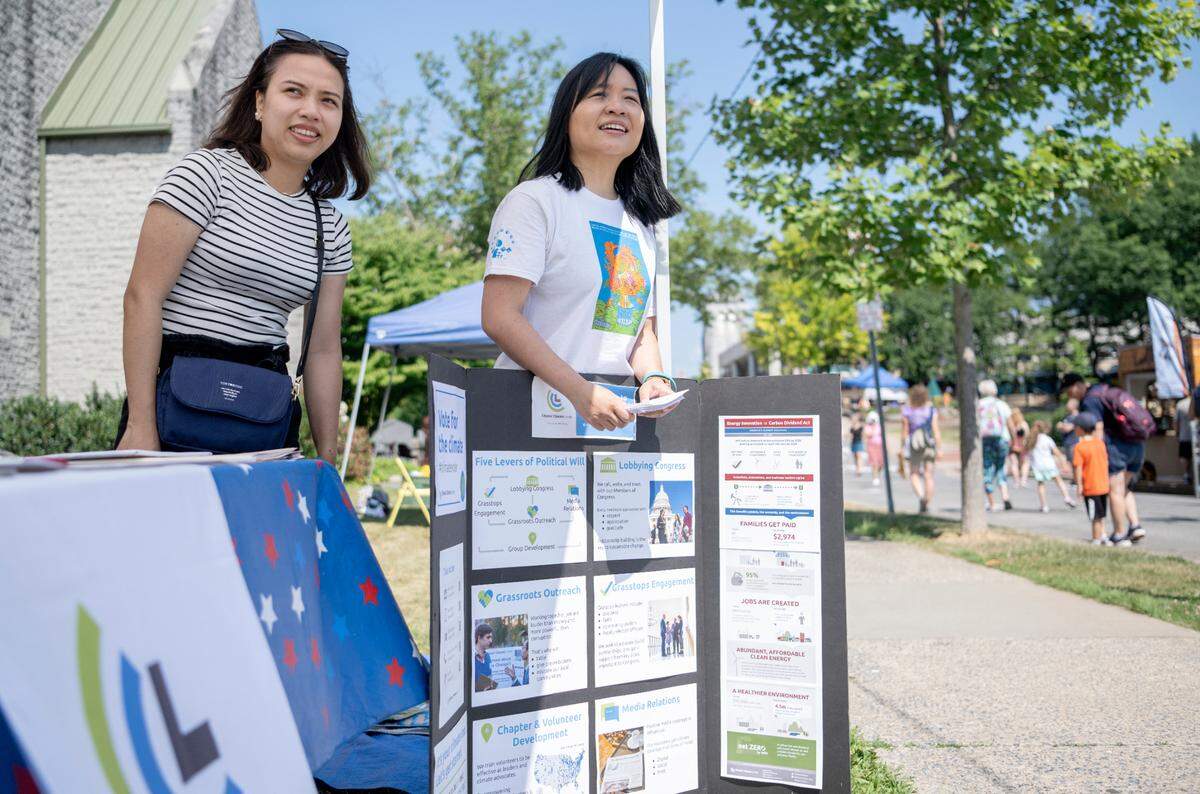
Kwong and Phan had several networking experiences, as they not only met with local government leaders, but they were also connected with Penn State, the refuse and recycling authority and the Citizens’ Climate Lobby.
“It wasn’t just local government, but we tried to share what is happening in our community because it’s going to take all of us together to work on these actions,” Adams said.
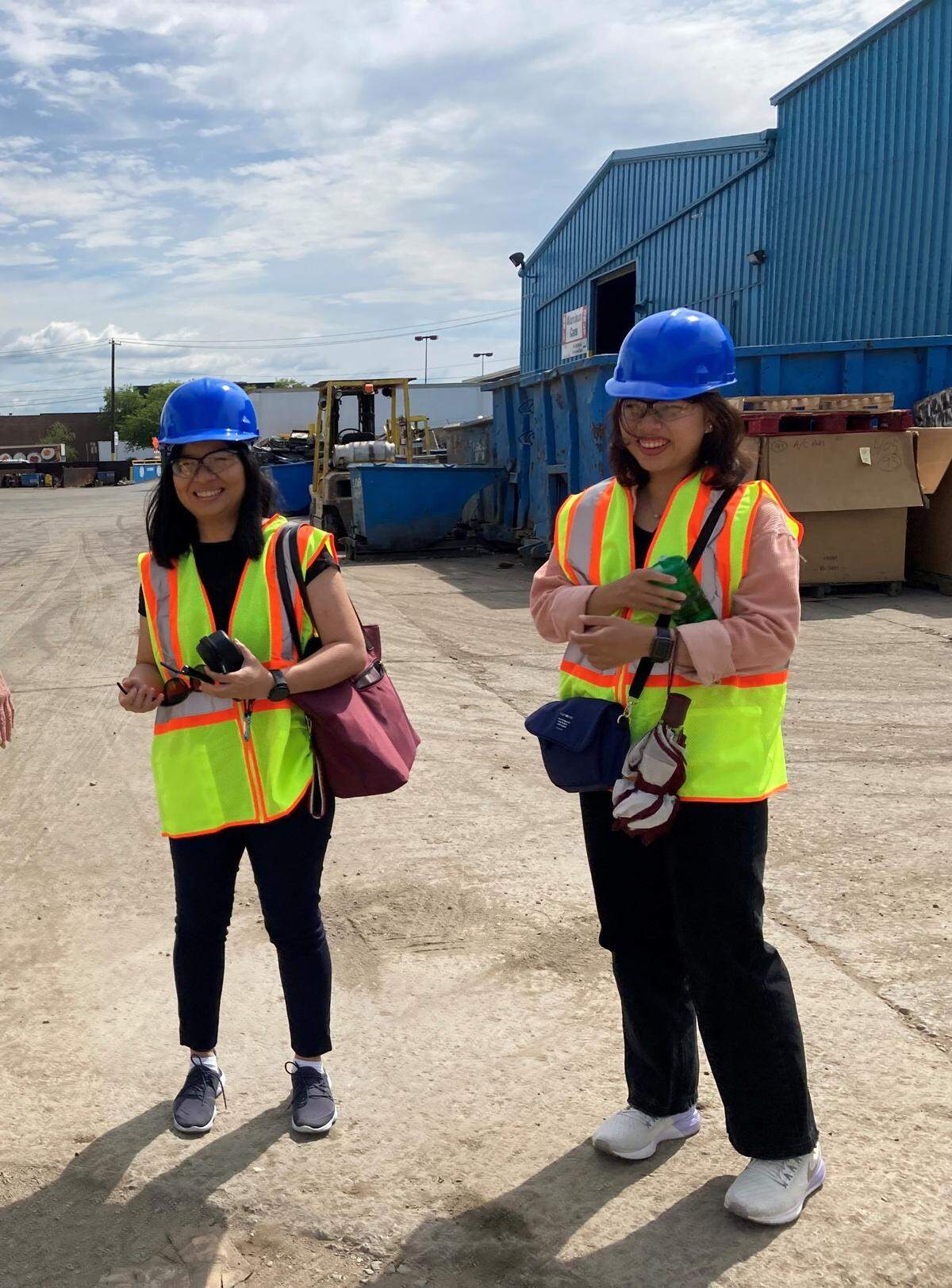
Shelly Mato, COG’s Refuse and Recycling Program administrator, works in sustainability of solid waste and working on actions embedded in the Climate Action and Adaptation Plan as it relates to solid waste. She showed the fellows how the whole waste management economy works. They visited a landfill in Williamsport, the recycling center and where the metals are taken. In Vietnam, there are no landfills, so that was eye-opening for Phan. Kwong found it interesting how the recycling center worked with the local government and said that recycling here is much easier than in Malaysia. Recycling is encouraged there, she said, but it can be difficult to find the facility or bins to do so.
“It’s quite good how here you not only encourage people to recycle, but also educate them,” Kwong said.
As part of the fellowship, Kwong and Phan, and the other 23 fellows placed around the United States, submitted a proposal of what they’d like to do as a next step. Of the fellows, 25% of the projects are selected to take place.
Phan said there is a lot of research and attention focused on the impact of climate change on forestry and agriculture in Hue, but not a lot on the urbanized areas. After learning about the Climate Action and Adaptation Plan here, she hopes to use it as a model to apply to her community.
“Then I want to draw the attention from the governmental officer, as well as other research scholars in my city, about how to do more research on climate impact on urbanized areas in my city,” she said. “If we win the project, I asked Pam (Adams) to come to my city and then we will have a kind of seminar working session with my university.”
Kwong said there’s a Penn State Law course that teaches mediation of environmental and public conflicts. She said there are two public universities in Malaysia that have expressed interest in introducing a postgraduate program in climate change law. She’d like to design a course modeled after the mediation of environmental and public conflicts course so that it is adapted to the local conditions.
“What’s interesting is that they use mediation … to resolve environmental disputes, to stimulate discussion about environmental issues, whereas I think in Malaysia, the primary method of resolving environmental disputes is usually litigation, so you just go to court. That’s not always the most effective way of resolving issues and problems,” Kwong said.
Takeaways from the program
The first step in doing something is always the hardest, Phan said, but it’s still worth doing.
“I think even in State College it’s not really easy to involve the whole community in the action plan. In Vietnam, probably, it will feel very difficult. They will put it away for a long time and they don’t really want to take the first step,” Phan said. “But here I think that the COG did quite well to take the first step with the Climate Action Plan. And I think they also have quite a lot of challenges in implementation of the plan here, but they still do the first step. So I really want to take him back to my communities to tell them just how to take the first step and then we can plan for what’s next.”
Kwong said she learned the importance of getting different stakeholders together to work on climate action and adaptation, which includes the local governments, the private sector and the local community. There are local governments in Malaysia that have climate change action plans, but it’s driven only by the local government, she said.
“Stakeholders (aren’t) really involved in devising the plan. So when you do that, there might be a disconnect with what you think is good for the community and what the community actually needs,” Kwong said.
COG Executive Director Eric Norenberg said people in local government everywhere often get busy and forget to look beyond their own community, department or agency. This program reminded him that there are other ideas out there and that there is a lot to learn beyond the borders of the county and even Pennsylvania.
“I think this will be a long lasting connection that will hopefully benefit not only the Centre Region, but of each of their organizations and their countries. And beyond the goals and focus on sustainability, I think it has also helped build relationships that will create a greater understanding about our countries,” Norenberg said.
Mato said this experience has allowed them to look at their own programs differently, too.
“Sometimes I feel like the actions we take are so small in the huge picture of what needs to be done. Even our Climate Action Adaptation Plan, which is incredibly goal driven and has wonderful goals in it, I still feel like ‘Oh my gosh, this is such a small, little piece of it.’ But then you talk to someone else about it and you understand that every one of those little pieces adds up and you sometimes forget that,” Mato said.
The COG would like to participate in the program again the future.
State College was a ‘change of pace’
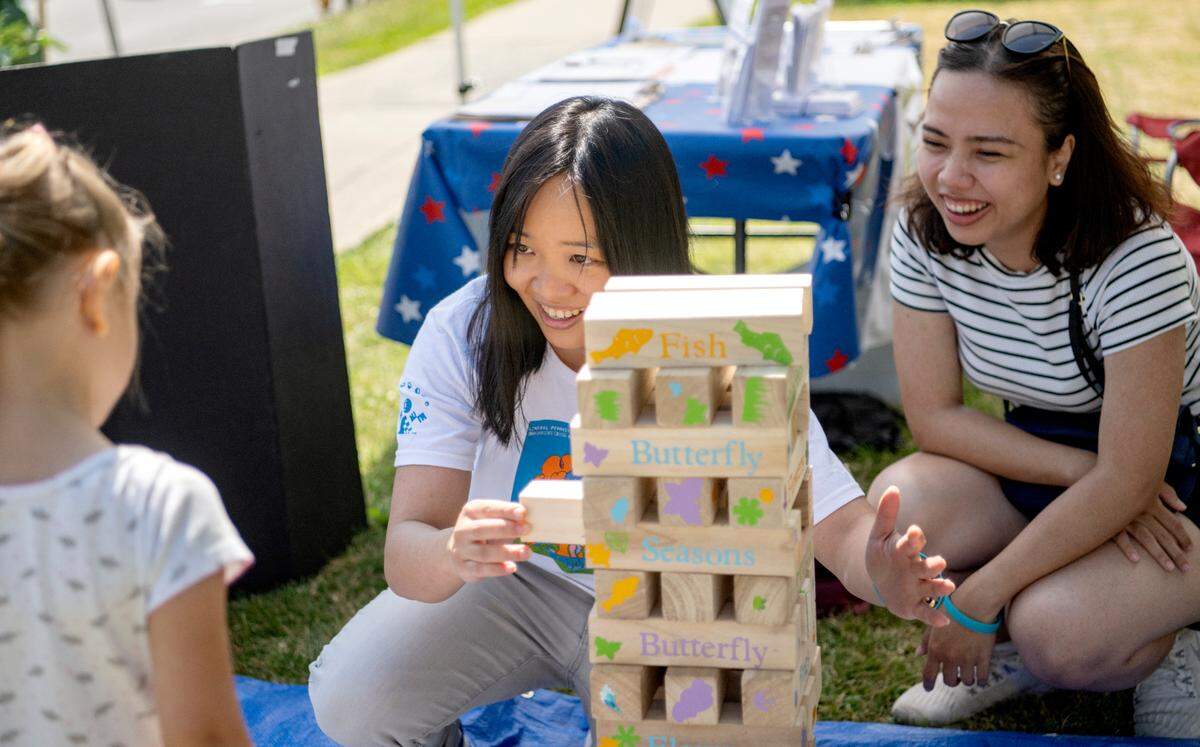
Their time in State College wasn’t all work. Kwong and Phan attended a rotary meeting, had tea with State College Mayor Ezra Nanes, ate lunch at a neighborhood picnic and hung out with Norenberg’s dog. They went to WingFest, watched the fireworks on the Fourth of July, visited Belleville and learned about the Amish, toured the Boal Mansion and more.
Kwong is from a larger city, so State College was a nice “change of pace” for her.
“What’s quite interesting is that although State College is not a very huge town, but I like how they have a lot of cultural activities. More than what I would experience in a small town in Malaysia, for example, a lot of cultural arts activities. So that’s been quite fun,” she said.
Phan originally planned to visit larger cities like Philadelphia or Pittsburgh while she was in Pennsylvania, but decided that she’d rather spend her time here because of how peaceful it is. Everyone was very welcoming and friendly here, she said.