Faced with public opposition to Nittany Mall casino, is there anything College Township can do?
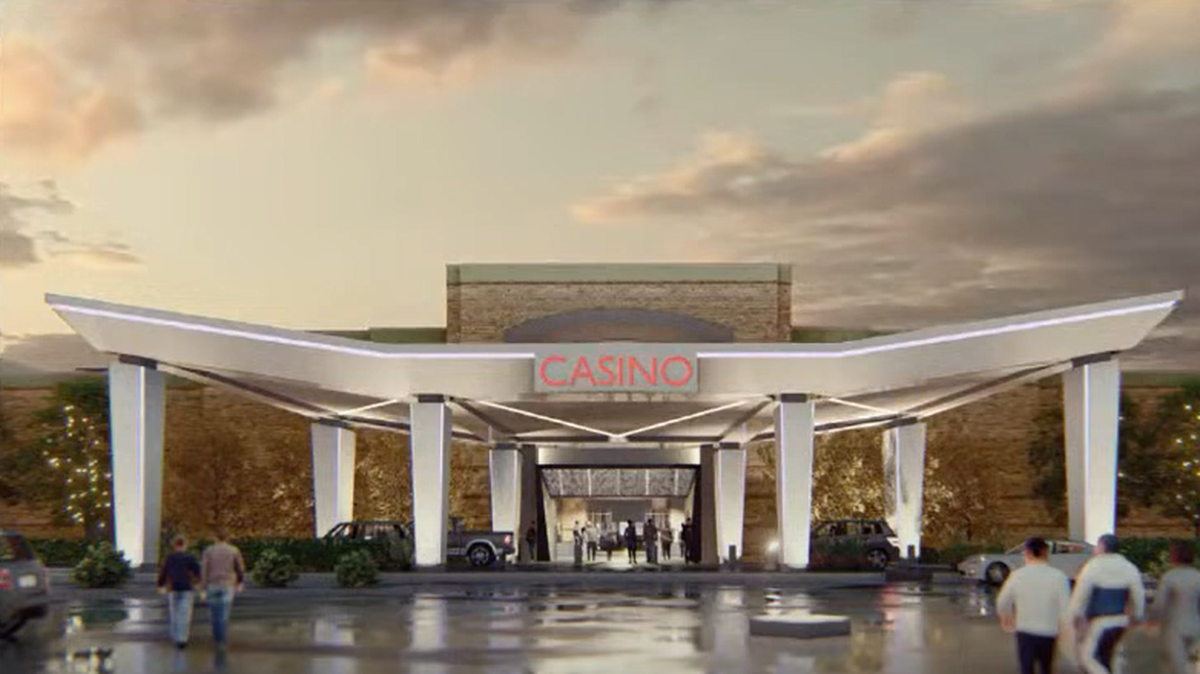
Though no official action was taken during a lengthy College Township Council meeting Thursday night, the board discussed the proposed mini-casino at the Nittany Mall and what, if anything, they could do to intervene.
Over the past two years the council has received countless letters from people regarding the casino. That trend continued Thursday, as they had more than 200 letters about the casino, most of which raised concerns about the negative impacts.
Supporters have touted economic benefits and the potential revitalization of the Nittany Mall.
Thursday’s agenda included a review of a timeline and FAQ in regards to the casino that will be posted on the township’s website. Mike Bloom, assistant township manager, said throughout the correspondence received, there have been two consistent questions. One, if the council still has the ability to opt-out of being a host municipality for a casino, and two, if the council has the latitude to deny or rescind their approval on the land development plan.
According to the township’s solicitor, the township’s right to opt-out expired 60 days after the effective date of Act 63 of 2019, which was in August 2019, Bloom said.
“Specific to the land development the solicitor noted that to date, the applicant and developer has been acting in reliance upon the townships decisions that you have taken — that being the decision related to the opt-in, opt-out as well as the conditional approval of the development — as such, the developer has continued to allocate considerable resources toward the proposed casino project, which supports their position,” Bloom said.
Some letters have asked the council to write to the Pennsylvania Gaming Control Board conveying that there is large community opposition and request the casino’s license be denied, Council member Paul Takac said. He asked if the board could check with their solicitor if there would be any potential legal or financial ramifications if the township were to send such a letter.
Conducting an independent impact study at the township’s expense has also been suggested. Takac asked if there was any precedent to do that and if it’s possible.
Adam Brumbaugh, township manager, said the staff has previously done in-house independent studies, namely when the first student housing project was constructed in College Township. They interviewed other properties where the developer had been located and solicited feedback from those municipal police departments, and made a report.
But Brumbaugh said he wasn’t sure if a study on the casino would provide the council with any new information.
“Can it be done? Absolutely. It could be done. I don’t know that there would be a lot of additional information or value necessarily only insofar as that the impact study that was prepared as part of the licensee requirements, interviewed the same individuals locally that we would be going back and interviewing or asking for their analysis of the information at hand.”
Takac thought the impacts that have been alluded to in letters are different impacts than the ones that were part of the other impact study, which included UAJA, College Township Water Authority and Centre LifeLink. That study estimated “some impact on EMS,” though Centre LifeLink EMS Chief Kent Knable said he did not anticipate “further capacity challenges.”
Brumbaugh said they could get legal insight on the matter fairly quickly. However, there would need to be some cherry picking done to determine what the study would encompass.
“Otherwise this is potentially a weeks and weekslong effort. And I don’t know … that there are enough weeks and weeks before us in order to satisfactorily delve in, in terms of the type of study that otherwise might be done,” he said.
Why didn’t council opt-out?
In 2017, Governor Tom Wolf signed into law House Bill 271, which authorized gambling expansion opportunities through the state, such as creating up to 10 Category 4 slot machine licenses.
Municipalities were able to prohibit, or opt out of, a casino locating within its borders by sending a resolution to the Pennsylvania Gaming Control Board by Dec. 31, 2017. Several Centre County municipalities, including Boggs, Harris, Howard, Ferguson and Patton townships and State College borough, took action to prohibit a casino. College Township did not.
Council member Eric Bernier said at the time, the council acknowledged that area of the township that was built to support dense retail commercial development.
“The context of our decision to opt out was very different. The other municipalities had a lot more at risk if they had not opted out as opposed to College which already had any potential casino operation restricted to a very small area in the township where, at least on the surface, it looked like, you know, the infrastructure could support it and it … could contribute to the economic revitalization of the are,” Bernier said.
Council President Rich Francke said the Pennsylvania Municipal Planning Code requires that every use has a home. Previous councils determined that the mall would be the best place for that, if it’s going to be in the township.
Council member Carla Stilson said College Township is located at the edge of the Centre Region and neither Benner, Spring nor Potter Townships opted out either. So it could have been built just down the road anyway. She said she’s not for the casino, but also didn’t think a casino in the mall is the worst case scenario.
“I fully intend to hold the Gaming Commission to the fire if we even sense that the casinos not correctly enforcing its liquor laws or appropriate management,” she said.
What’s next & how we got here
The CDT previously reported that the earliest the state can approve the project is likely November. According to a scheduling order filed in July, certain parties that want to intervene and oppose the casino license are tentatively slated to be heard Oct. 19 by the Pennsylvania Gaming Control Board, meaning the PGCB cannot rule on whether to approve the license before its Nov. 16 meeting.
The filing came more than a year after construction was initially expected to start on the $120 million mini-casino, which will feature up to 750 slot machines and 30 table games with plans to include sports betting.
Centre County’s proposed casino first took shape in September 2020 when Penn State alum Ira Lubert bid $10 million to win a mini-casino license, also known as a Category 4 license, which allows for the operation of a casino about one-quarter to one-half the size of a typical Pennsylvania casino. In January 2021, Bally’s Corporation announced it partnered with Lubert to construct a $120 million mini-casino, which could feature up to 750 slot machines and 30 table games with plans to include sports betting.