What is the future for high-rises in downtown State College? Council set for critical vote
State College Borough Council is poised to make a decision Monday night that could set the future tone for downtown’s changing landscape — and, at least in the short term, deter more high-rise student apartment complexes.
Council members previously debated whether the merits of such high-rises, such as reducing the sprawl of Penn State student housing, outweighed the negatives. But last Monday, after listening to a presentation that highlighted the growing issue of vacant storefronts at the high-rises, most appeared to agree their development should at least be paused until the borough can better address that problem.
Borough council is set to vote on the matter at 7 p.m. Monday in a hybrid meeting that will simultaneously be held both online and inside the Municipal Building. Council can choose one of three options: Pass a proposed zoning text amendment, which would discourage — and likely prevent — future high-rises from being planned downtown. Vote down the zoning text amendment, so nothing changes. Or do neither and send the proposed amendment back to the planning commission.
It’s a complicated issue, one that’s led to hours of debate and explanation. But the problems and challenges have come into better focus over the last few weeks, and council members expressed confidence that they’re now prepared to make a decision.
What is council’s biggest concern?
More than half of the commercial space in the downtown’s high-rises — at least 200,000 square feet, which is 10% larger than a Walmart Supercenter — remains vacant.
But the problem runs even deeper than that.
Nearly all of that vacant space is in “grey shell” condition, which means that it is completely unfinished. There are bare stud walls, unfinished floors and no plumbing or electrical. Even the borough isn’t entirely sure why the high-rises left the property in such condition — maybe tax benefits? — but it is now prohibitively expensive for new businesses to transform those empty storefronts into finished spaces.
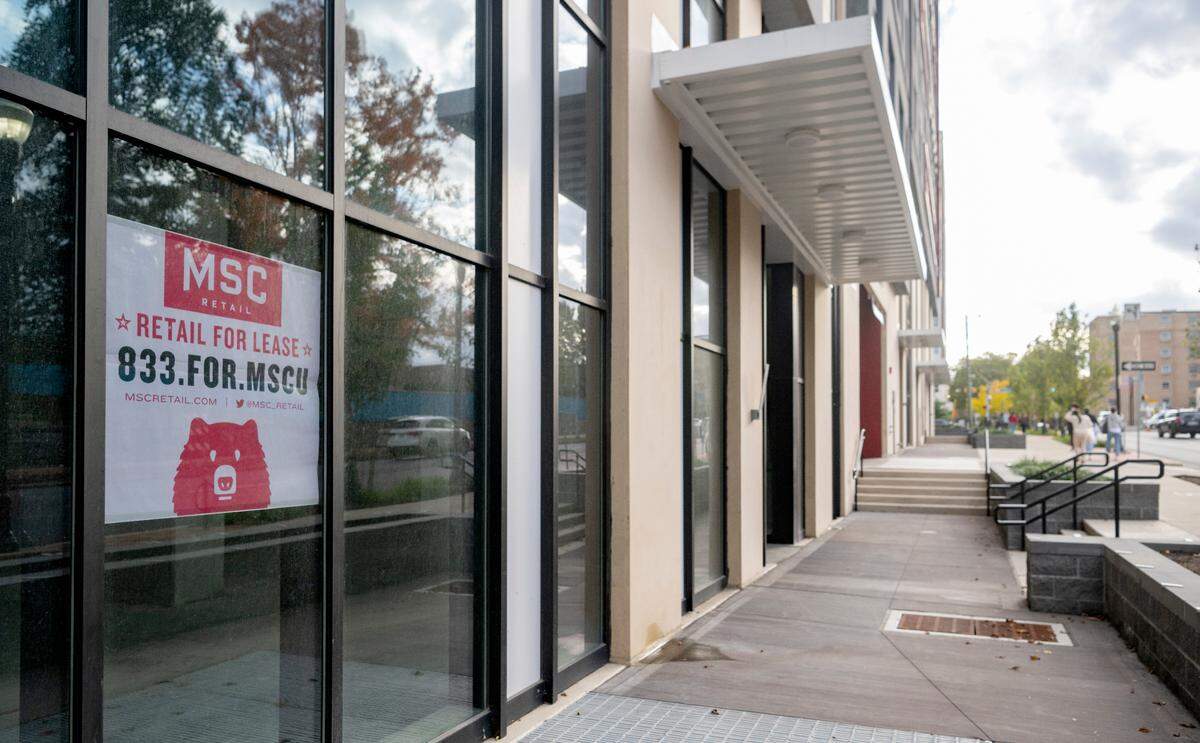
Borough planning director Ed LeClear estimated that it would conservatively cost a combined $30 million to fix up those 200,000 square feet, and that doesn’t even include the expense of leasing. For restaurants that need to install kitchens, costs would be even higher.
So why did developers build those commercial spaces to begin with? Well, based on zoning that became less-restrictive in 2013, those high-rises were required to have at least two floors of commercial space if they wanted to have a 12-story building.
“They wouldn’t have built the commercial space if the zoning didn’t require it,” LeClear said. “And we know that because, if you look at the Days Inn project, I literally begged on my knees to try to get commercial space. The whole planning staff said, ‘How can we get commercial space in that space?’ Because we all wanted Mad Mex to stay, right?
“And the answer was, ‘The numbers don’t work. Thanks but no thanks. We’re just going to build entirely residential, and there’s nothing you can do in the zoning ordinance to stop us.’”
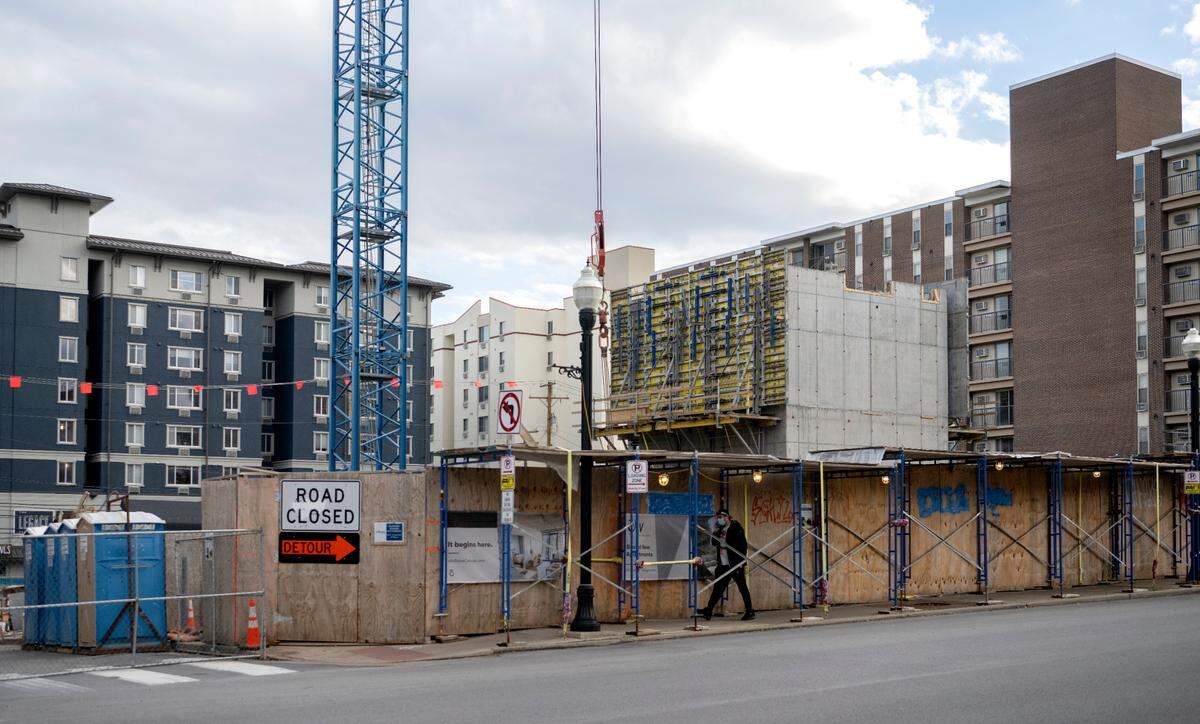
The issue of high-rises first took shape in 2005, when borough council established a “Signature Development Overlay,” an area that takes up much of downtown and allowed for high-rises laden with commercial space like Fraser Centre. Those commercial-space requirements were loosened in 2013, which led to high-rises such as The Metropolitan and The Standard. And, in 2017, council decided to add restrictions on the west end of town, discouraging future high-rises there and basically limiting them to the east end. That led to The Maxxen, the current construction of oLiv State College and future plans for The Mark.
An amendment to the zoning Monday would make current regulations more closely resemble those in 2005.
What would Monday’s vote do — and not do?
Realistically, there are only two or three remaining areas downtown where a student high-rise could be built — all in the six blocks east of McAllister Alley. Developers would need to buy and combine parcels from multiple owners and, if successful, businesses such as McClanahan’s and Sharkies, Americana House apartments and Primanti Bros, would be at risk of being displaced.
Passing Monday’s zoning text amendment would deter high-rises from being built in those areas, by removing incentives that allow high-rises with less commercial space and more student apartments. In other words, if passed, a high-rise like Fraser Centre could still technically be built with its condos, apartments and 40% commercial space — but it’s highly unlikely a developer would be interested in that, given the public subsidies needed to construct it.
Said another way, passing the amendment would almost certainly prevent future downtown high-rises — if, or until, borough council decides to revisit the zoning.
“What I suggest is that we pass this ordinance, which puts a hold on 12-story total student housing in the downtown,” Councilman Peter Marshall said last week, “and go to the planning commission and ask them to look at other combinations” that wouldn’t lead to empty storefronts.
But, no matter what happens Monday, the latest announced high-rise will still move forward.
Because Georgia-based Landmark Properties already submitted plans in August for a 12-story high-rise known as The Mark, the borough cannot legally prevent it from being constructed. It is planned for the corner of East College Avenue and Sowers Street, where McDonald’s is located. (McDonald’s is expected to be in the new high-rise, too.)
Any action council takes will also have no impact on the current high-rise construction at East College Avenue and Hetzel Street, for similar reasons.
How can vacant businesses be filled?
There’s no easy answer.
Borough staff and the borough’s redevelopment authority have been “actively engaged” in finding potential solutions, LeClear said. And the borough has also turned to both local nonprofit Downtown State College Improvement District and the Chamber of Business & Industry of Centre County for advice.
Options to better attract businesses are expected to be made public next year.
“We have a lot of space that is going to be a heavy lift to get occupied,” LeClear acknowledged.
Added Council member Janet Engeman: “I think it’s very bleak to walk down a street in State College and see nothing but empty windows. We really need to do something that will encourage businesses.”
Passing Monday’s amendment doesn’t necessarily mean the borough will never again permit a high-rise. In fact, some council members appeared split in September when discussing the high-rise issue in greater detail. Although many local residents are opposed, calling them eyesores, some council members and members of the public pointed out that the high-rises may have kept other rents down. Others pointed to less sprawl, being more environmentally friendly due to fewer cars and commutes, having a larger tax base, etc.
But no matter where council members stood on the issue, it seemed they found common ground when acknowledging that the vacant storefronts were a pressing concern. And until a solution is found, or zoning undergoes a broader revision, it might be best to pause high-rise development.
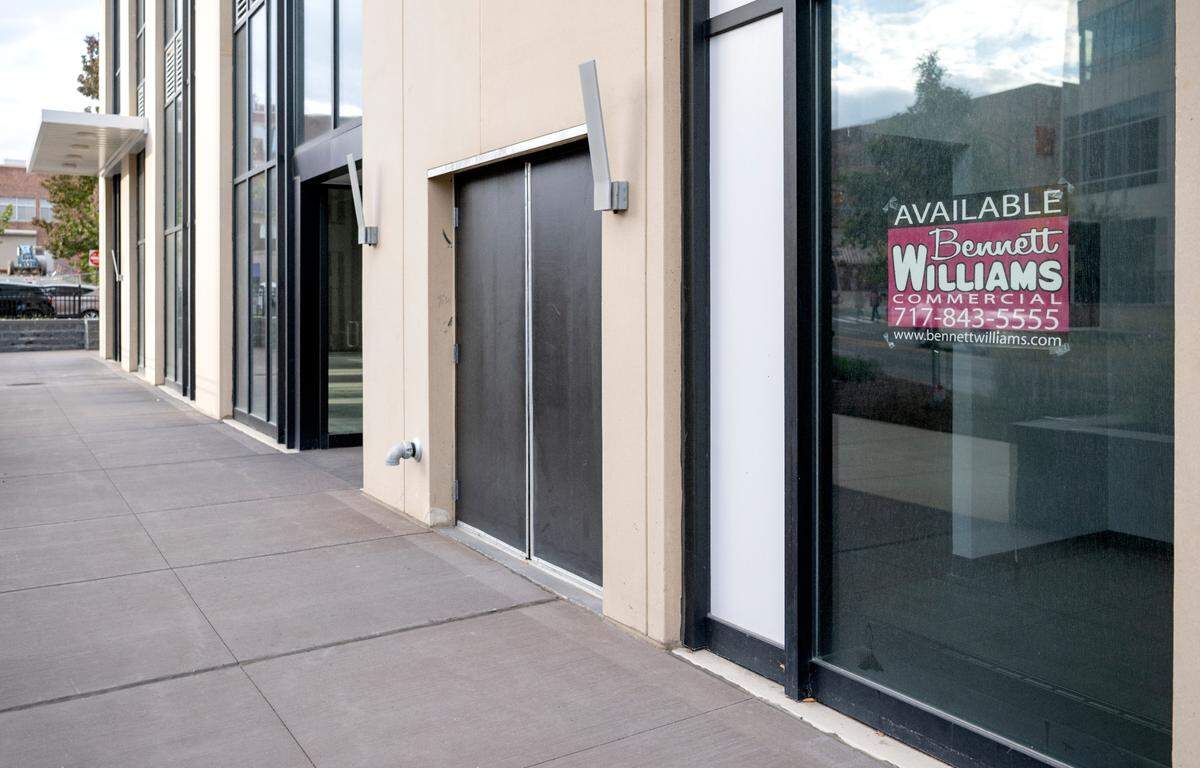
“The issue for me, actually, that makes me want to approve this change is all this vacant space that we have that we really haven’t figured out how to deal with yet,” Council President Jesse Barlow said. “I think, until we have a grip on how we’re going to fill all this vacant space that we have downtown, I think it would be a problem because downtowns are supposed to be places people come to to do business or buy something or meet somebody or whatever they’re going to do.
“They’re not supposed to just be places that people live; those are residential areas. And if this part of downtown is essentially becoming a residential area, that means it’s basically no longer a part of our downtown. It’s something else over time.”