State College Borough Council defers considering Responsible Contractor Ordinance until 2024
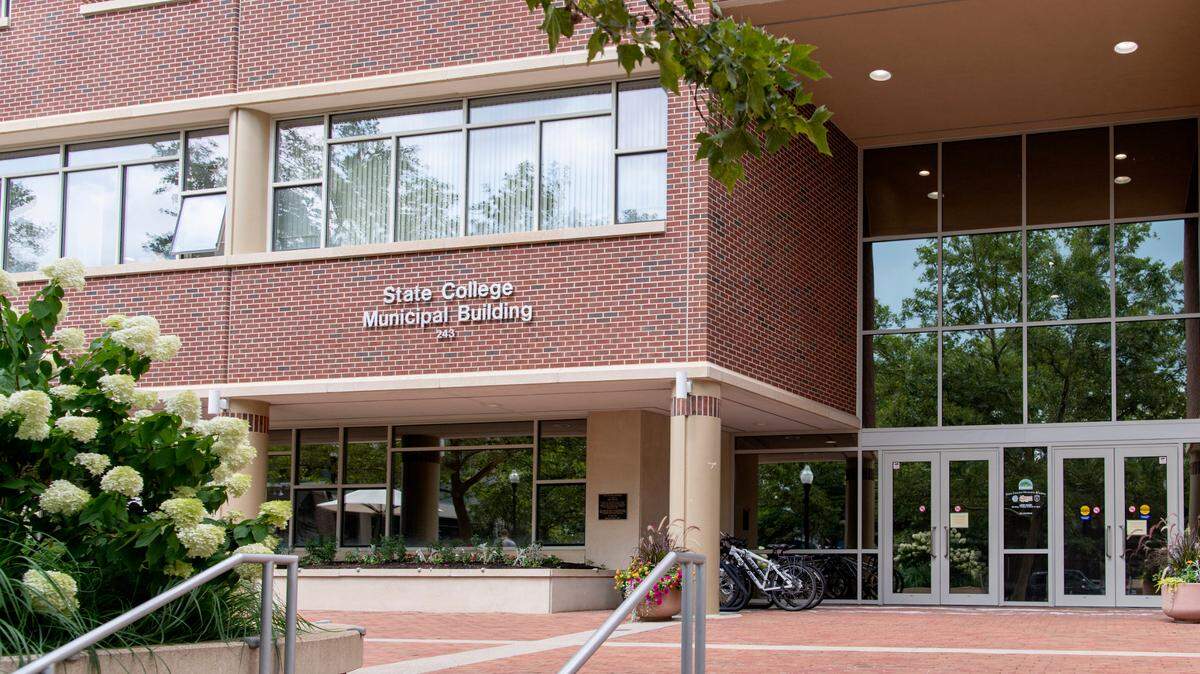
Dec. 13, 2023 update The State College Borough Council deferred voting on the ordinance until 2024 during its work session Dec. 11.
Following in the Centre County government’s footsteps, the State College Borough Council will consider adopting a Responsible Contractor Ordinance later this month — one that would allow the borough to award construction contracts based on factors other than cost.
The council briefly discussed amending the borough’s purchasing code to add responsible contractor requirements during their meeting Monday but will discuss it in more depth during Monday’s scheduled meeting. They’ll vote on it at the Dec. 18 meeting.
State law and the borough’s purchasing code requires contracts to be awarded to the lowest responsible bidder. The Responsible Contractor Ordinance amendment would provide additional guidance on what “responsible” means in terms of borough contracts that require competitive bidding. That means the borough could take other factors into account, such as whether potential contractors — who are performing work valued at $75,000 or more on any public facility or public works project — have the necessary experience, equipment, technical skills, qualifications, and organizational, financial and personnel resources.
Responsible contractor ordinances (RCO) have been adopted by a number of other municipalities and counties across the Commonwealth, but State College would be the first municipality in Centre County to have one, if adopted. The Centre County board of commissioners passed its own RCO in June after months of controversy and debate.
In addition to factors such as experience and equipment, the proposed ordinance also requires any firms bidding on the contracts to have a satisfactory public performance record and record of law compliance, integrity and business ethics, according to the draft included in the Dec. 4 meeting agenda.
A “contractor responsibility certification” will be required when firms are seeking contracts with the borough on such projects. The construction manager or lead contractor will complete a form to certify facts regarding its past performance and work history, as well as current qualifications.
The ordinance was brought to the borough from Seven Mountains Labor Council, Borough Manager Tom Fountaine said, with at least one change between the proposal and what was presented to the council.
“The major modification in this ordinance that has been made from the proposal is the elimination of some requirements that were directed at regulation and business operations, which is prohibited by the Home Rule statute, under which State College is organized,” Fountaine said. “It dictated certain specific requirements for apprenticeship programs and things of that nature that after reviewing and consulting with legal counsel, it was determined that those would be in violation of the authority of the Home Rule statute.”
Council member Peter Marshall said parts of the ordinance were too vague or broad, like a section that states the borough can require any additional information “it deems necessary to evaluate a firm’s status as a responsible contractor.”
“In other words, if someone didn’t give us some information that we wanted, that would be a basis for not giving them a contract,” Marshall said. “I think some of this is pretty broad, and I think there’s a good chance that you’ll get less bids from contractors. Now, maybe this has been used in other places and that’s not true. I don’t know, I have no experience with it, but it just seems broad and vague in some of the areas, not all of them.”
While the borough’s proposal would only apply to work valued at or over $75,000 on any public facility or public works project, the county’s ordinance applies to work over $250,000. Fountaine said he didn’t know how the $75,000 figure was selected. The document was based on a model that was presented to Mayor Ezra Nanes and Council President Jesse Barlow by the Seven Mountain Labor Council, he said, but it could be changed.
Supporters of such ordinances often say it supports workforce development and promotes worker safety. For example, the ordinance would require employers to certify that all the employees on the job have had their initial 10 hours of Occupational Safety and Health Administration safety training. Nanes touched on the worker safety aspect during the meeting.
“It’ll be important to really take a look at it and make sure that we understand it and it fits with our goals,” Nanes said. “Of course we want to protect and support labor in this community, it’s important that our workers are protected and supported. That’s ultimately the intention.”
Local union leaders and elected officials from around Centre County have called for strengthened worker protections, as in recent years at least five deaths have occurred in Centre County that have been investigated by OSHA. In most of the cases, OSHA issued citations, finding the employer partially responsible for the workplace deaths.
This story was originally published December 7, 2023 at 12:40 PM.