State College council fears ‘big beautiful bill’ will hurt residents, Penn State students
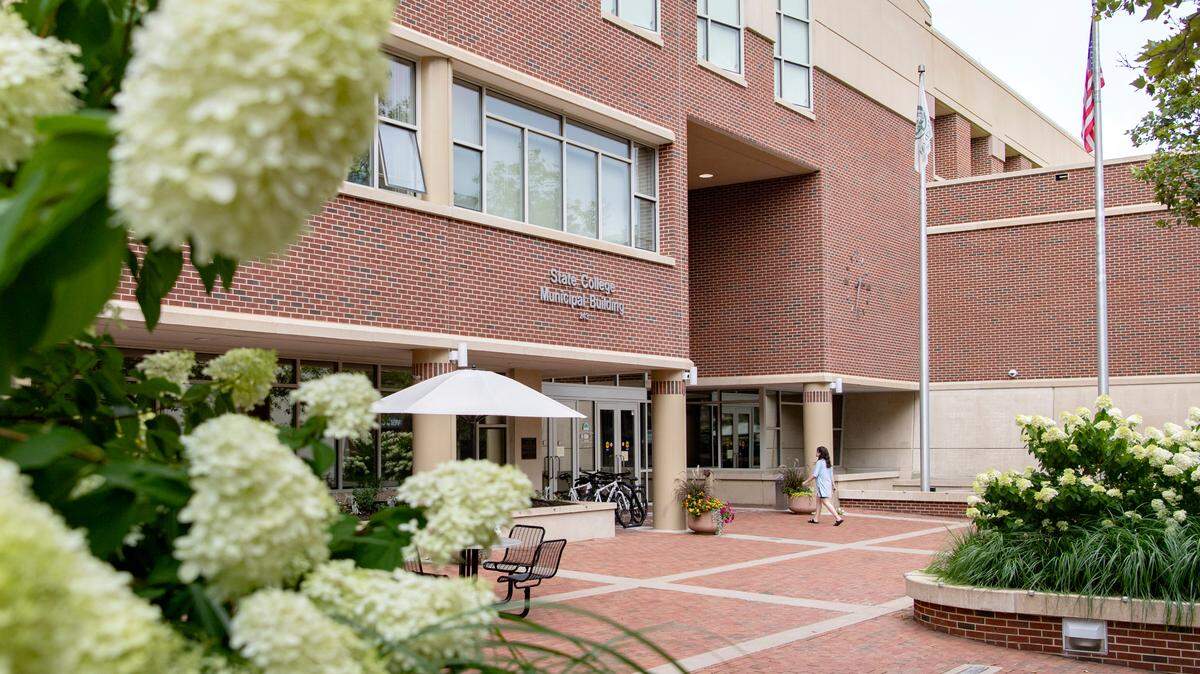
State College borough council members earlier this week talked about how the “One Big Beautiful Bill” would impact the borough and its residents “undoubtedly, quite profoundly” — and took issue with remarks made by Centre County’s U.S. representative.
Evan Myers, council president, spoke for nearly eight minutes Monday night on how the One Big Beautiful Bill — a spending and tax bill signed into law by President Donald Trump that fulfills some of his campaign promises — would negatively impact State College residents.
Myers said more than 15,000 people in Pennsylvania’s 15th Congressional District, represented by Glenn “GT” Thompson, R-Howard, which includes all of Centre County, could lose Medicaid through the bill, which includes a roughly $1 trillion reduction in medicaid funding over the next ten years. He also cautioned the reduction in the Medicaid provider tax could hurt local hospitals.
“This change may lead to decreased federal matching funds, potentially threatening the financial stability of rural hospitals and clinics. In Centre County, health care providers like Mount Nittany Health have expressed concerns about the potential for reduced services and increased financial strain due to these cuts,” Myers said.
Among other points, he also mentioned the cuts to programs like Supplemental Nutrition Assistance Program, or SNAP, which provides food benefits to low-income families to supplement their grocery budget. Myers said 7,000 residents in PA-15 could lose access to SNAP benefits over the next decade.
Those changes will increase food insecurity in Centre County, he said.
“The cuts in SNAP benefits directly affect local economies. SNAP dollars spent at local grocery stores and farmers markets provide a significant economic boost,” Myers said. “Every $1 in SNAP funding and benefits generates approximately one and a half dollars in local economic activity. Reducing SNAP benefits could therefore negatively impact small and mid-size farmers in Centre County who depend on these programs to sell their products.”
The bill will also massively increase Immigration and Customs Enforcement’s budget, an aspect of the law that council member Gopal Balachandran said is “breathtaking” and will transform the county in ways that will “significantly degrade civil rights, particularly the freedom of speech.”
He pointed to how ICE has already impacted the international student community at Penn State and said rumors of ICE raids have given students a great deal of fear and anxiety.
The university was one of at least 240 colleges and universities across the country that saw legal statuses revoked for some of their international students and recent graduates. At least 22 Penn State students had their visas revoked before the end of the spring semester; the students had not been convicted of crimes and were in diversion programs, mostly due to retail theft. (The federal government later said legal status would be restored).
By giving ICE the unprecedented funding, Balachandran said he can only imagine how much of an impact that will have on the students and community, as he fears there will be greater surveillance and greater numbers of non-violent individuals “scooped up,” and more people will be deported who should not be.
“It’s going to almost certainly result in racial profiling and significant degradations in privacy rights,” he said.
The bill also rolls back some of the progress made toward slowing climate change, council member Matt Herndon said. State College and Centre County have already seen a number of strong, destructive storms this year, which he said pale in comparison to the extreme flooding in Kerr County, Texas last week. Flooding like that will happen more often in a warmer world, he said.
While the local State College government does not have the power to stop climate change on its own or to change federal laws, Herndon said there are still a number of things they can and should do, like continuing to electrify municipal buildings and vehicles and install renewable generation to power everything it owns.
But the biggest thing they can do, he said, is to finish the zoning rewrite and legalize denser, more affordable and sustainable housing in the borough.
“I’ve been warning about the housing crisis here for years, and this bill’s cuts to safety net programs like Medicaid and food assistance will make it worse,” Herndon said. “Many can go without health care for a while, but eventually something happens, and without coverage, the cost of an emergency room visit can drive many people into bankruptcy and even homelessness. The most fundamental step to fight homelessness is to have more homes. Updating our zoning is a necessary first step toward this, and this bill makes doing so even more important.”
‘Felt like a betrayal’
In May, State College and Centre County were listed by the federal government as being among the more than 500 “sanctuary jurisdictions” accused of defying federal immigration law, a move local officials questioned and pushed back against.
Although the list was posted on the Department of Homeland Security’s website and taken down just days later, it was unclear why either places were included on the list. Borough leadership clarified in January 2017 that it was not a sanctuary city, noting a previous council resolution simply made value statements about immigration. The county government never passed anything related to “sanctuary jurisdictions.”
In a June news interview, Thompson encouraged the borough to “go back and read through their minutes,” and said some of the things they’ve done are outside of the scope of what a borough council should do, and that he would leave it to the borough to figure out why they were included on the list.
State College Mayor Ezra Nanes said he was troubled by Thompson’s comments and felt betrayed. Thompson’s vote in favor of the bill — which he said was a “victory for rural America” — was also a betrayal, Nanes said.
“I was really troubled by the comments from the congressman who represents us in Washington — representative is the title — and especially around that sanctuary city thing, for lack of a better term, it just felt like a betrayal to be thrown under the bus that way,” Nanes said. “This bill is a further betrayal of our trust because of what it is and how it’s been spoken about and misrepresented. I highly doubt that most people in this community are going to see any tangible financial benefit.”
Myers said the bill is an “abomination” and will cost taxpayers money as they “struggle to fill the void” created by Thompson and Pennsylvania Republican Senator Dave McCormick, who also voted for the bill.
“We will be less energy efficient, less educated, less able to deal with our children’s future. These issues are within the scope of our jobs as State College Council, as we work to help our residents navigate and afford this mess while we pursue affordable housing, energy sustainability and a healthier, more inclusive and diverse community,” Myers said.
He continued: “I would suggest that Congressman Thompson is the one who should go back and review the Congressional Record and the provisions of this bill and do his job for the people of State College and Centre County, and not special interests like big agricultural, big pharma and billionaire tech oligarchs.”