‘Exciting opportunity.’ State College council members share views on zoning update
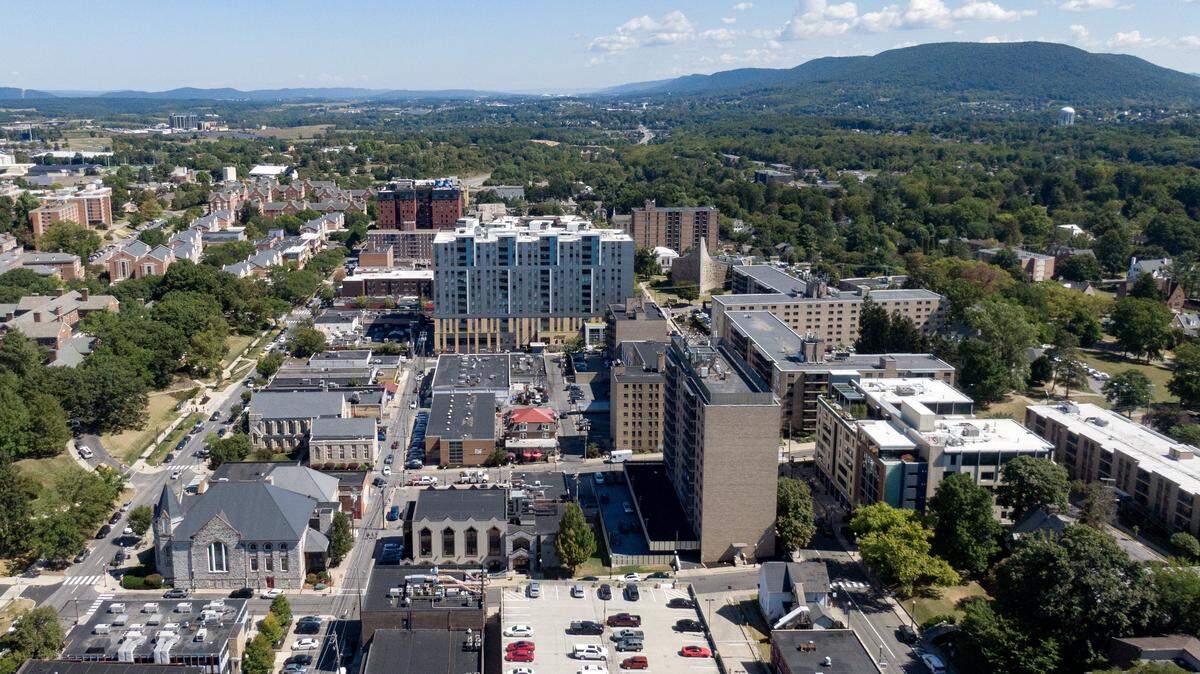
The State College borough council is expected next week to give their final recommendations to a team of consultants to incorporate into a new zoning ordinance that’s been in the works for years.
The council has met many times this fall to review and update its more than 60-year-old zoning ordinance. They’ll meet at 7 p.m. Oct. 22 in the council chambers at the borough’s municipal building to give the consulting team their final decisions on a plethora of items like minimum lot sizes, maximum building heights, student housing, zoning districts and much more.
Ed LeClear, planning director, gave an updated timeline for the review and final adoption, which is slated for this spring. Next week’s objective will be to address any outstanding topics. They’ll have a list of everything the council has done straw polls on or given direction on, so council members can pull out items they want to discuss again.
The public can attend Wednesday’s meeting in person or via Zoom with a link that will be available at the top of the council’s agenda. CNET will not have a livestream of the meeting but will have a recording of it available later. The public will also have opportunities to comment on the update after Wednesday’s meeting.
LeClear said throughout the entire rezoning process, the objectives behind it have stayed the same: creating more housing opportunities, supporting a commercial district and neighborhood business districts, and updating parking requirements to encourage multimodal participation.
What do State College’s mayor, council members think?
Ahead of the council’s final review of the updated draft, the Centre Daily Times sent a survey to each State College borough council member plus the mayor, who does not have a vote on the ordinance, to answer three questions about the zoning update. Below are their answers; council members Evan Myers, Gopal Balachandran, John Hayes and Kevin Kassab did not respond.
Q: What are you most excited to see come out of the updated zoning ordinance?
Mayor Ezra Nanes: I am excited to see the Borough of State College continue to grow and prosper, along with the pride that people feel at being a part of this community. With the adoption of a successful zoning rewrite, we ought to see growth and redevelopment of older properties that aligns with community goals and an increase in the revenue base that funds our municipality. If we are able to increase the availability of housing for all economic levels, while preserving the character of our neighborhoods, if we are able to ensure that our downtown is thriving, that its character and vitality is preserved and enhanced, that we have growth in places that makes good sense, and if we are able to have the right amount of parking and increased investment in multi model transportation, then we ought to see an improvement in the quality of life for the residents and visitors of State College.
Council member Matt Herndon: “I’m very excited to see us allow more housing in the borough. New neighbors are not some burden to be shouldered, but an opportunity for new friends, co-workers, and experiences. We’re all in this together, and many hands make light work. I look forward to how new housing can make State College a more inclusive, affordable, sustainable, and bikeable place.”
Council member Josh Portney: It’s no secret that State College is growing — not just with students, but with an ever-growing healthcare job market, emerging tourism and hospitality jobs, and many other new opportunities. I have been fighting for ways to facilitate that growth in a responsible way since I was appointed to the Planning Commission, and now the updated draft of the zoning ordinance is paving the way for that. By legalizing more “missing middle” small-scale development and adding sensible restrictions on other development, this draft of the zoning ordinance accomplishes many things.
Council member Nalini Krishnankutty: This comprehensive re-write of our zoning code, which was adopted in 1959, and has been amended more than 200 times is long overdue — so I am most excited about the fact that we are doing this! It is an exciting opportunity to create a new zoning code that meets today’s standards and realities, including addressing the need for more affordable and accessible housing for all our residents, making our community more sustainable, while navigating the reality of being a university town. And I hope that we will all engage with this draft ordinance, so that together we can get it as close to right as humanly possible!
Q: Do you have any concerns about the zoning update?
Nanes: Anytime you undertake a major zoning rewrite, you have to acknowledge that even with the most careful planning, data analysis, and the best intentions, things that you don’t anticipate can happen. I think we have a great draft zoning code, that has been developed with extensive community input and involvement, by our incredible staff, and my biggest concern would simply be that we get some redevelopment that causes an impact that we don’t want. That is an unavoidable risk. That’s why I’ve tried to be very thoughtful and clear in my communications and careful about the choices that we make.
Herndon: My main concern is that events beyond our control, like the economy or federal tariffs, may prevent new housing from being built here even after we update our zoning to allow it. Zoning is still the critical first step that we need to complete to allow the possibility of new housing here, and we must get it done.
Portney: Council has a very difficult job in balancing competing interests to address challenges. In permitting development, there are always negative side effects. I am concerned about disrupting the charm of the historic homes and sites throughout the Borough. It will remain my priority to protect these community assets.
Krishnankutty: I would like to see an analysis on the potential impact on our infrastructure due to the proposed changes in zoning, including on sewer and water. At present, council does not have any estimates yet of even our current capacity in any of our zoning districts. Secondly, as this comprehensive zoning rewrite has the capacity to alter our town so dramatically, I would like to ensure our residents have time to absorb this material, and respond to this. Staff has done a tremendous job of transparency, by providing all the materials and providing many engagement opportunities online. But it is often the same individuals engaging with the ordinance – who show up in council meetings and send feedback via email or on the website – there are close to 60 comment documents from residents posted online, and I am very thankful for this. However, many residents are still unaware of the zoning changes being contemplated, and what the impacts could be. We need to creatively increase engagement beyond the website and council meetings. I have been holding monthly office hours since May, and many of those who have been showing up provided input on zoning, and perhaps we could do more of these. Resident engagement can also help us focus further on transition areas in neighborhoods like the West End, and make sure we factor resident input based on lived experiences and minimize unintended consequences.
Q: What is the most important thing for the community to know about the zoning rewrite?
Nanes: The State College Borough zoning rewrite must balance the interests and goals of all the members of our community, and to accomplish this, it must contain within it real and sincere compromises. Every person who expresses a view about the zoning rewrite has a right to their perspective and a right to advocate for it. Even when we disagree, and disagreements are inevitable in this process, if we make an effort to understand where each person is coming from, and expect that in some cases, we will have differences, then we can trust that what we end up with will be in the best interests of the community as a whole. The code will be adopted in the new year, And there is still time to make yourself heard during upcoming public hearings.
Herndon: The most important thing for people to know about the zoning rewrite is that it is the single strongest action Borough Council can take to address our housing affordability crisis. Prices and rents are a function of supply and demand, and by limiting new housing here, we have driven them up. Allowing two or more families to live on land that previously only allowed one can both increase value for current owners (because they can not do more with their land) and decrease costs for new neighbors (because the higher value can be split more ways). New housing can also increase the total tax taxable property value of the Borough, lowering the pressure for tax increases in the future, even for residents who don’t change their homes at all.
Portney: Last week, Council reviewed real estate tax revenues from buildings constructed in recent years. The numbers showed that if it were not for those buildings (and the real estate tax revenue that they provided), the taxpayers would have to pay 3.86 more mills to account for the rise in employee and operational costs. Put another way, those buildings saved the taxpayers from an additional 3.86 mill in tax hikes to keep up with spending, as those new buildings provided more than $100 million to the total assessed value of the Borough’s taxable property pool. That figure does not only reflect the big buildings though — when density rises, so does assessed value for those more-dense lots. So, by allowing development on a small-scale with the missing middle and other uses, the Borough will see a rise in tax revenue, which will cover the costs associated with the growth. We simply cannot stop the growth, so we must plan for it in a sustainable and responsible way — and this is it.
Krishnankutty: I would like all residents to use the opportunity to engage with this ordinance now, as Council continues discussion and gets ready to vote on the draft ordinance. Council members and staff welcome emails and feedback from residents, and are committed to reading them. We live in a community where residents care, and have a lot of experience and expertise, and I believe now is the time to engage so we can build a collective future where housing is more affordable and plentiful for all residents, while preserving all the unique features of our community that are valuable to us. Residents sharing their suggestions now can ensure that we create an ordinance that accurately reflects our community’s vision and goals.
Zoning update timeline
- Oct. 22: Council will finalize direction to staff for the consultant team’s revisions to the initial zoning draft
- November: The Planning Commission will review and give recommendations on the draft Subdivision and Land Development Ordinance (SALDO)
- Dec. 1: The council will review the revised zoning draft from the consultants, the SALDO recommendations from the Planning Commission and some technical recommendations from borough staff
- Dec. 2-11: The consultants will finalize the zoning and SALDO draft to submit to the county
- Dec. 12: Revised drafts will be set to the Centre County Planning and Centre Regional Planning Agency for the required 45-day review period
- Feb. 2: The final draft will be presented to the council. They’ll approve advertising for a public hearing
- March 2: The public hearing for the new zoning ordinance and zoning map
- March 24: Council will adopt the new ordinance and map during a special meeting
The schedule may change, especially if the council decides to make more revisions after the county planning’s and CRPA’s review because it will trigger a second 45-day review period for those agencies. If that happens, the final adoption date would be pushed until May or June.