Housing, parking, more: What’s in State College’s updated zoning ordinance?
AI-generated summary reviewed by our newsroom.
- Zoning overhaul reduces districts, eases mixed-use options across borough.
- New ordinance draft halves parking minimums in the State College borough.
- Ordinance provides more opportunities for housing with ADUs, triplexes and smaller lot minimums.
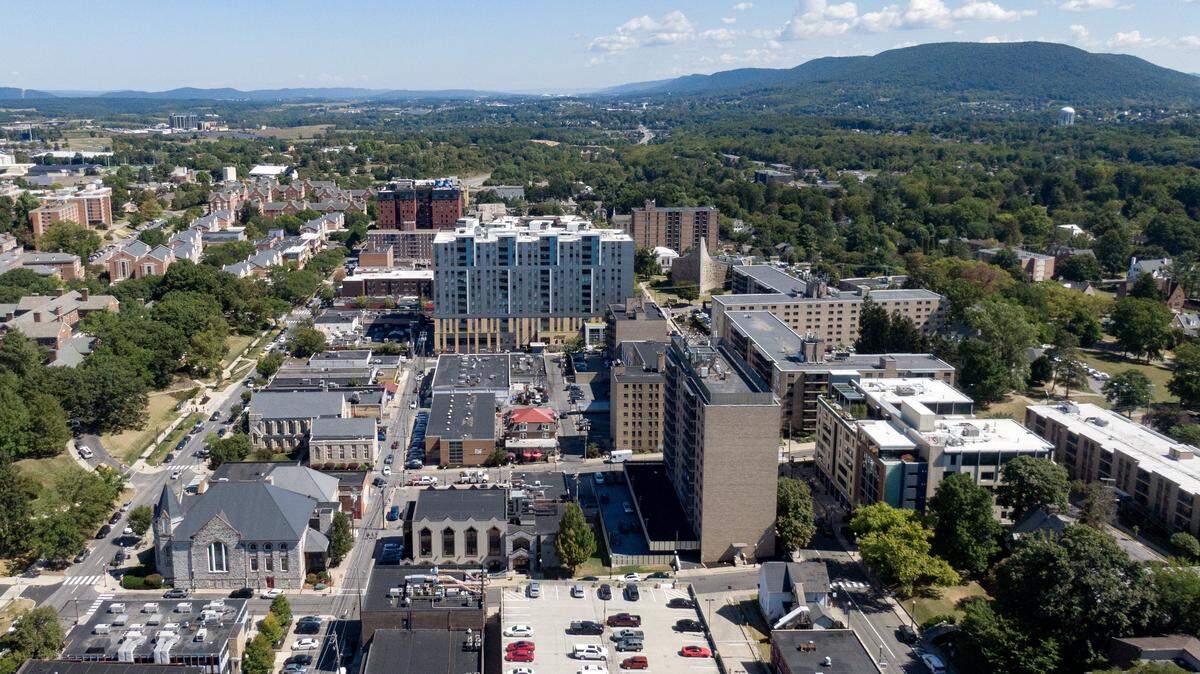
The State College borough council will soon see a significantly updated zoning ordinance draft years in the making that aims to create more housing opportunities while still preserving the character of State College.
The borough’s planning commission and the zoning revision advisory committee have been meeting regularly and giving recommendations on what should be included in the new zoning ordinance all summer. Borough staff is expected to present the ordinance and the planning commission recommendations to the Borough Council at 7 p.m. Sept. 8.
In broad terms, zoning codes govern what can and cannot get built within a municipality and how land owners can use and manage their properties — high-rises, student housing, businesses and much more. State College’s current zoning ordinance, passed in 1959 and amended 225 times, contains 20 different districts and classifications that each present different parameters and restrictions for development.
Along with adding more housing opportunities, an overall goal of the update is to cut down the number of zoning districts and the number of overlays, Ed LeClear, State College’s planning and community development director, said.
There’s also been a focus on allowing more types of uses that are within structures.
“Instead of it being just completely residential and then sort of a commercial downtown district and along South Atherton, this ordinance does open up to have things more like, some more neighborhood commercial offices, personal uses, folks who want to do barber shop or nail salon out of their house. A little more opportunities to do that,” LeClear said.
It also greatly reduced the parking minimum requirements, something the borough council wanted to see be part of the ordinance. LeClear said they’ve cut the parking requirements in half, for not only downtown but all zoning districts in the borough.
“If you look nationally, right now, there’s been a movement to reduce the amount of parking that’s required, really let the market do it. So you know, if there’s parking needed, usually — I’m not going to say always, but usually the market will identify, ‘oh, I need this much parking,’ and they’ll make that happen,” he said. “...I think in general, council was looking at our 1976 parking requirements and said, ‘you know, that was a different world.’”
Below is a Q&A with LeClear about the zoning update and process. Answers have been edited for length and clarity.
Centre Daily Times: What are the biggest changes in zoning for the downtown districts compared to the current ordinance?
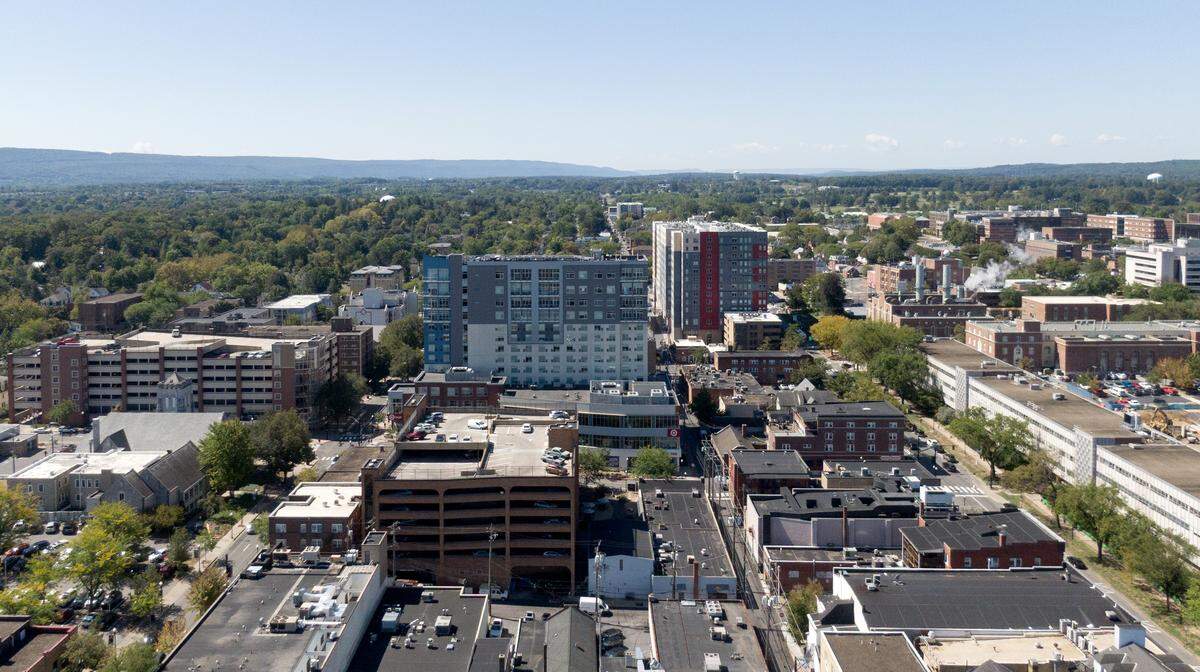
Ed LeClear: I think the first thing is that there are now three sub-districts of the downtown, and the intent was to mirror more of the Downtown Master Plan that was done in 2013, where it really identified the eastern part of downtown as, frankly, very collegiate focused. When you look at our intensity of rental permits, and if you view it as a heat map, that’s the hottest area in terms of the most rental permits, etc. So it’s always been a recognition that that’s a heavily student focused part of downtown, and just being realistic about that and zoning and encouraging the most height and density there. So that (Collegiate) District will be a maximum of 11 stories. There’s some incentives to get there, as far as things like energy efficiency or LEED design, also making sure the parking is put underground, and also requiring that first floor of commercial space.
One of the changes is our previous code required two floors of commercial space, and we’ve really been challenged with getting that second floor filled. So this is kind of recognizing that the office market in post-COVID United States or internationally, is weak. So getting away from forcing that in the zoning.
The second sub district is ... what’s called the Downtown Allen and College corridor, and that’s going to stay at a low density, the maximum four stories. I think really the intent from Planning Commission, and from the conversations we’ve had with council to date, is to really maintain that as is, and encourage some redevelopment, but really nothing that would be out of scale with what’s there today.
...So that third district, the Downtown Central District (everything that rings the Allen and College district), would be a maximum of nine stories, with some additional incentives, not just for energy efficiency, but also some incentives for different types of residential units. So trying to get to smaller bedroom units, like one or two bedrooms, as opposed to the four or five bedroom units that we’ve seen, especially the last 10 years with what’s been built.
That Downtown Central District — at least coming out of the planning commission meeting — that’s been extended essentially along the university border, so if you will, sort of between Clay Lane and the university border. So not all the way down to West College but everything that’s kind of up against campus. And that would be nine stories as well.
… Also looking at a West End District, which basically is just all the parcels that front on West College, that was originally discussed to be six stories but the planning commission voted to drop that to three. I don’t know how that conversation will go with council when it’s in front of them, but right now, it’s somewhere between three and six as far as the discussion.
CDT: You briefly mentioned this, but are there any new limits or incentives regarding building height or historic preservation in the downtown zones or even outside of downtown?
LeClear: Unfortunately it’s difficult to do historic preservation in zoning, so that’s governed by the Local Historic District Act, which is a state authority. But as far as the main incentives have really been green design, energy efficient design. Also in the West End, there is an incentive for a deed restriction. Essentially floors of residential multi-family units that would be deed restricted for student housing. So basically, it’s trying to create housing opportunities for longer term residents who are not students to have some housing close to campus. After a lot of debate, I think Planning Commission kind of took that incentive out of the downtown districts, but they left it in the West End district.
I get a lot of questions about whether there’s a market for that, whether people will want to live on a floor in a student housing development, and I don’t have a good answer. I don’t know whether there is or not, but this will at least create the space in the market to do that and see if there are some people who want to live there. We currently have two floors in The Rise that are deed restricted to prohibit undergraduate housing. So we know that in those two floors, they’re full, and roughly half are graduate students and roughly half are young professionals, many of which are working in hospitality downtown.
CDT: Will the updated zoning ordinance allow for more density downtown?
LeClear: The ordinance that’s currently in place right now has had some changes in the last few years from council to decrease the amount of student residential density. So what’s been built over the last five, six years could not be built again today under the current ordinance. This might sound like splitting hairs, but it is more density from what is currently in today’s zoning ordinance. But as far as what I think people see on the ground, with what’s been built since 2016-17, it’s going to be similar or less than that as far as height. One of the objectives from council was to make sure any new buildings were at or less than what’s currently zoned. So these will all be shorter than that.
One of the differences though, that I think is important: the current zoning requires 30,000 square foot minimum lots. So, pretty big footprint, pretty big building. And what it’s led to is, for instance, The Standard. It’s a pretty massive building and part of it was that it was driven by the old zoning. The new zoning takes that away and basically says, if you have a smaller footprint and you want to build a nine story building, but say you’ve only got a 10,000 square foot lot, we’re not going to force you to assemble other parcels and get a bigger lot. It’s what you call small patch development. I think you’ll see some smaller footprints, but still somewhere between seven and 11 stories, depending on where you’re at.
CDT: The borough council has asked for housing to be a focus with the zoning update. How does the rewrite address that?
LeClear: I think the first thing is just trying to get more housing opportunities. There’s been a focus on trying to make it easier to build single family homes, and also duplexes and what we call triplexes or quads, which are three or four unit properties or structures. The code does a number of things to make that easier.
The first thing is that it gets rid of minimum lot size. Right now, in most of our lower density residential districts, you need at least 10,000 square feet for a lot to build a single family home. The new ordinance would eliminate that requirement.
And so what it does is it, first of all, it makes a lot of our existing residential lots conforming to zoning. That means that they’re a legal lot. The reason that matters is that if you’re not a conforming lot to the zoning, it’s much more difficult to add on. ... So we end up with a lot of Zoning Hearing Board cases with people who are looking to put up simple additions, and they can’t because their lot is too small. So one of the objectives of the ordinance was to try to make a lot of our non-conforming lots now conforming with the zoning.
The other thing that was changed to make that happen is, right now the minimum lot width is 75 feet in R2, this would drop it to 40. So that’s going to make it possible to, for instance, take two 70 foot lots, and now you could create three lots.
Now, I keep trying to tell people, don’t imagine that you’re going to have two existing houses, and they’re going to slot a third house in the middle. It’s unlikely, just because of the layout of the houses, there’s just not enough room between them, but it may lead to one of those houses being torn down and then two more being built.
The other thing that the ordinance does is it permits triplexes and quads on 10,000 square foot lots or bigger. So all those lots that were conforming to a single family home now would be conforming to a three or four unit structure. It’s not going to add a whole lot of units but it’s enough to hopefully move the needle.
The other thing that’s in there is the legalization of a second residential structure on the lot, what’s commonly known as an Accessory Dwelling Unit. This would legalize ADUs up to 800 square feet, one additional detached ADU on the parcel. (There is a restriction that states whoever’s name is on the deed would need to be living either in the main principal structure or in the ADU, and a restriction that prohibits short-term rentals and student occupancy. Triplexes and quads would also have deed restrictions to probit short-term rentals and student occupancy).
So now you could have a situation where before you might have had two single family homes, you could be looking at a situation now where you’ve got a single family home with an ADU in the backyard and then a triplex or quad next door. So, you went from two residential units to six, possibly.
I also just caution everyone when we looked at other cities and communities that have made these kinds of zoning changes to try to re-legalize a lot of housing that used to be built before the war, it doesn’t all happen at once. So Portland, for instance, has had about a 6% redevelopment rate. So if you imagine, say a neighborhood of 24 houses or a couple blocks of 24 houses, think about it as maybe one of those gets redeveloped a year. I’ve been trying to caution folks, don’t think immediately you’re going to have everybody with an ADU and four houses that have been turned into triplexes.
The other thing that is re-legalized, because we have a couple of these developments in the borough, is what’s called a cottage courtyard. So if you imagine sort of eight units around a central courtyard, we have a couple of those, or a multi-family courtyard development, like the corner of Fraser and Foster as an example, where you’ve got some central open space and then you’ve got a ring of units around it. Those specific types are not legalized in R2 but for all the other residential districts, it may be legal. So, just trying to find some ways to increase opportunities.
CDT: How did public input shape the new ordinance? Were there any especially contentious issues or was there a lot of feedback in one area that helped the process along?
LeClear: I think the areas that are the sort of transition from Downtown to R2 or lower destiny neighborhoods. That’s been very contentious and it’s been really challenging to try to figure out how to get the recipe right, because there’s competing public objectives. And one hand, you’re looking for, how do you get more housing opportunities? How do you increase multi-family development? But then we’ve got R2 right up on the back of downtown, so you’ve got very close proximity. And so trying to figure out, like, how tall is too tall? How dense is too dense? That’s been a real debate, and I’m not sure we have it right yet. It’s been an ongoing conversation.
Obviously, the residential changes in the lower density districts, some folks are really passionate about advocating for them. Some believe that they’ll dramatically change the character of their neighborhood and they’re really nervous about it. And I think both opinions have a lot of validity to the concern because it’s change. On the other hand, we’ve been in a housing crisis for really decades now, and I think there’s a recognition that we need to try to do some things to increase the amount of housing we have.
I think there’s also just a lot of unknown. And anytime you don’t know what’s going to get built, people are understandably nervous about that. I live in a neighborhood too. I have student housing right around the corner, and also have long term residents on the other side of me. So, I see a lot of differences.
To give feedback on the updated ordinance, email zonestatecollege@statecollegepa.us. The ordinance draft can be viewed online at statecollegepa.us/225/New-Zoning-Ordinance.
This story was originally published September 4, 2025 at 3:06 PM.