
Judge denies Subu Vedam’s request to be released on bond from ICE custody
AI-generated summary reviewed by our newsroom.
- Judge says she lacks jurisdiction to grant bond and denies Vedam release.
- Judge cites drug convictions from the 1980s.
- Vedam’s deportation order was vacated earlier, awaits new hearing.
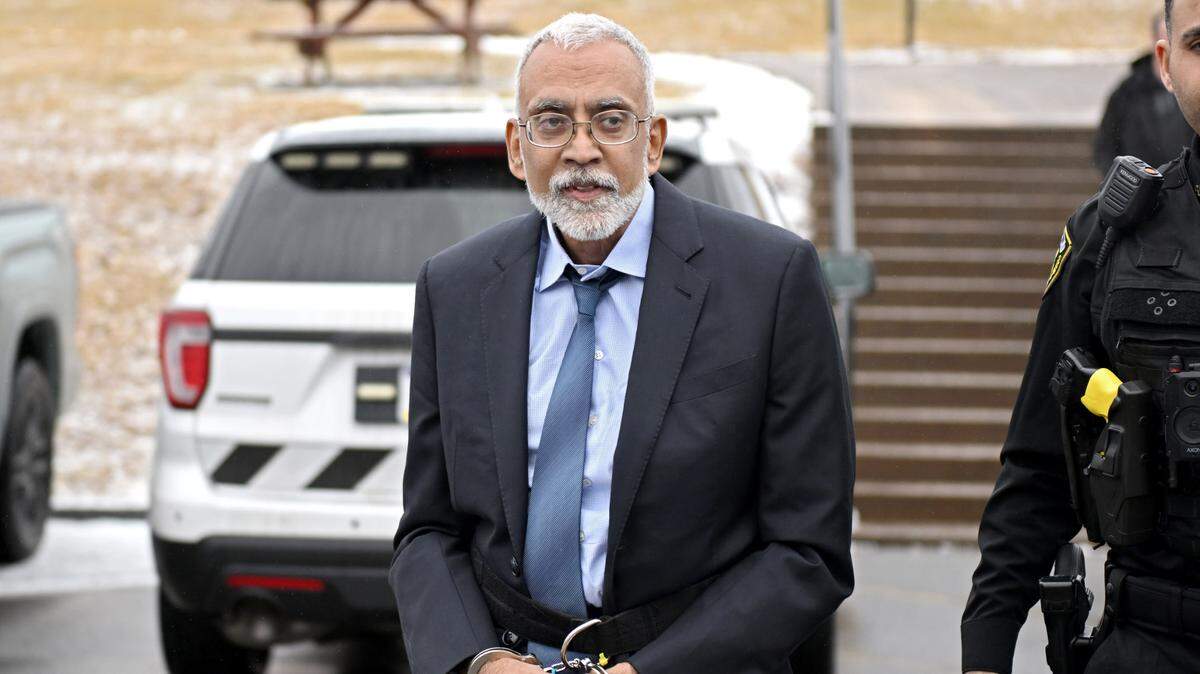
A judge on Tuesday dashed the hopes of Subramanyam “Subu” Vedam to be released on bond from an immigration detention facility, a blow for him and his family as he fights his deportation.
Immigration Judge Tamar Wilson determined Tuesday she did not have jurisdiction to consider Vedam’s request to be released from the Moshannon Valley Processing Center just outside Philipsburg.
She also found Vedam, 64, of State College, could not establish that he’s not a danger to the community. He spent more than four decades in prison on a now-overturned murder conviction and pleaded no contest to drug charges in 1984 for selling LSD in State College.
He was 20 years old and had already been convicted of first-degree murder in the killing of Thomas Kinser when he pleaded no contest to the drug charges, the convictions that Wilson said make him subject to mandatory detention.
“The conviction alone is very serious, counsel, and he’s been convicted of an aggravated felony. He’s been imprisoned, so I don’t have a period of time to show that your client is not a danger to the community,” Wilson said as she addressed Vedam’s immigration attorney. “The fact that he’s been a ‘model prisoner’ does not suggest that out in the general public he’s going to be safe.
“I cannot allow somebody who’s been convicted of an aggravated felony out on bond. I’m not going to do that.”
The hearing was conducted remotely via livestream from a New Jersey courtroom, two weeks after the Justice Department’s Board of Immigration Appeals vacated Vedam’s deportation order and described his history as an “exception situation.”
Wearing what appeared to be a black or navy jumpsuit, Vedam sat stone-faced and took notes throughout. More than 70 people joined the stream in support.
Attorney Ava Benach intimated during the hearing that she plans to appeal the decision by a March 19 deadline. Vedam’s family had hoped to reunite with him Tuesday in what would have been his first time out of government custody since the 1980s.
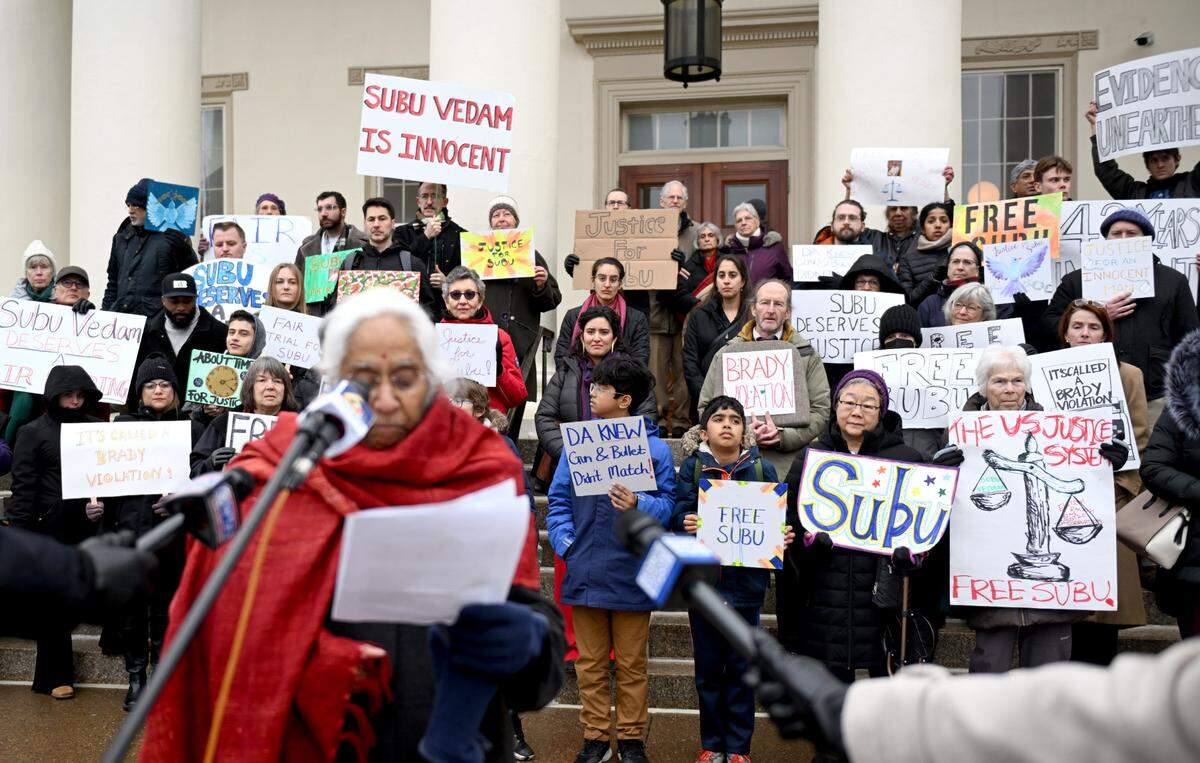
Saraswathi Vedam, Subu’s older sister, said in a statement that the family is “disappointed that the judge denied Subu’s request for release from ICE lock-up after he has already served 43 years in a maximum-security prison for a crime he didn’t commit.”
“The recent Board of Appeals ruling in Subu’s case nullified the deportation order pending against him, which means the government has not proven valid grounds to remove him from the country,” she said. “Under these circumstances, and coupled with the fact that Subu compiled an exemplary record of good conduct during more than four decades of wrongful imprisonment, we had hoped the court would agree that Subu did not need to remain in ICE detention while waiting for an immigration hearing.”
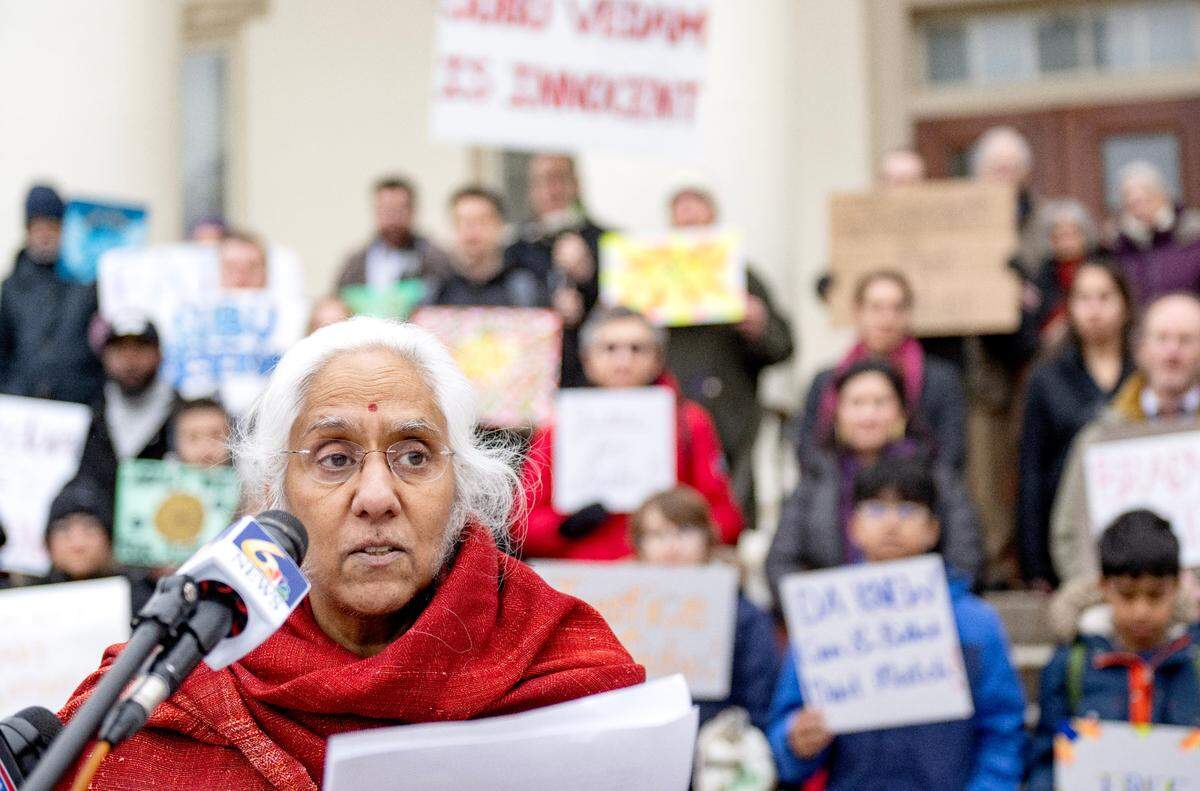
State College Mayor Ezra Nanes, who attended the hearing virtually, said the judge’s decision is “devastating for many, many people in the community.” In a phone call with the Centre Daily Times shortly after the hearing, Nanes also questioned how it benefits society to keep Vedam detained.
“If forty-plus years of imprisonment for a crime that he did not commit is not enough time to pay any debt to society — to be rehabilitated, to be redeemed in the eyes of society and to prove his safety and his worthiness and his commitment to being a valuable member of the community — then what is?” Nanes said. “What is prison or imprisonment or detention even for in this case? This is where I’m really struggling with what we heard today.”
Centre County DA’s office says Vedam not a safety threat
In pushing for Vedam’s release, the judge said Benach put forward a creative argument in challenging a provision that requires the detention of those who are facing deportation because they committed certain crimes such as Vedam’s drug conviction.
Benach also pointed to the time Vedam spent wrongfully incarcerated, his nearly spotless record at Huntingdon state prison and that he has lived in the U.S. since he was an infant. She cast his delivery of LSD as “small town work” as opposed to large-scale drug trafficking.
Had he been released on bond, Benach said Vedam would have lived with his niece in Sacramento, California.
“This man suffered a grave constitutional violation that had him serve 40 years in prison for a crime he did not commit,” Benach said. “He has every reason in the world to appear for court.”
Centre County First Assistant District Attorney Joshua Andrews told the CDT he was prepared to testify Tuesday that prosecutors do not believe Vedam poses a risk to society.
After reviewing the criminal file, prison records and more, Andrews said prosecutors believe Vedam was a “model inmate who had spent a great amount of time and energy focusing on improving himself, educating himself, rehabilitating himself and assisting others in their efforts to do that.”
“At the end of the day, we don’t believe him to be a risk to public safety at this point,” Andrews said.
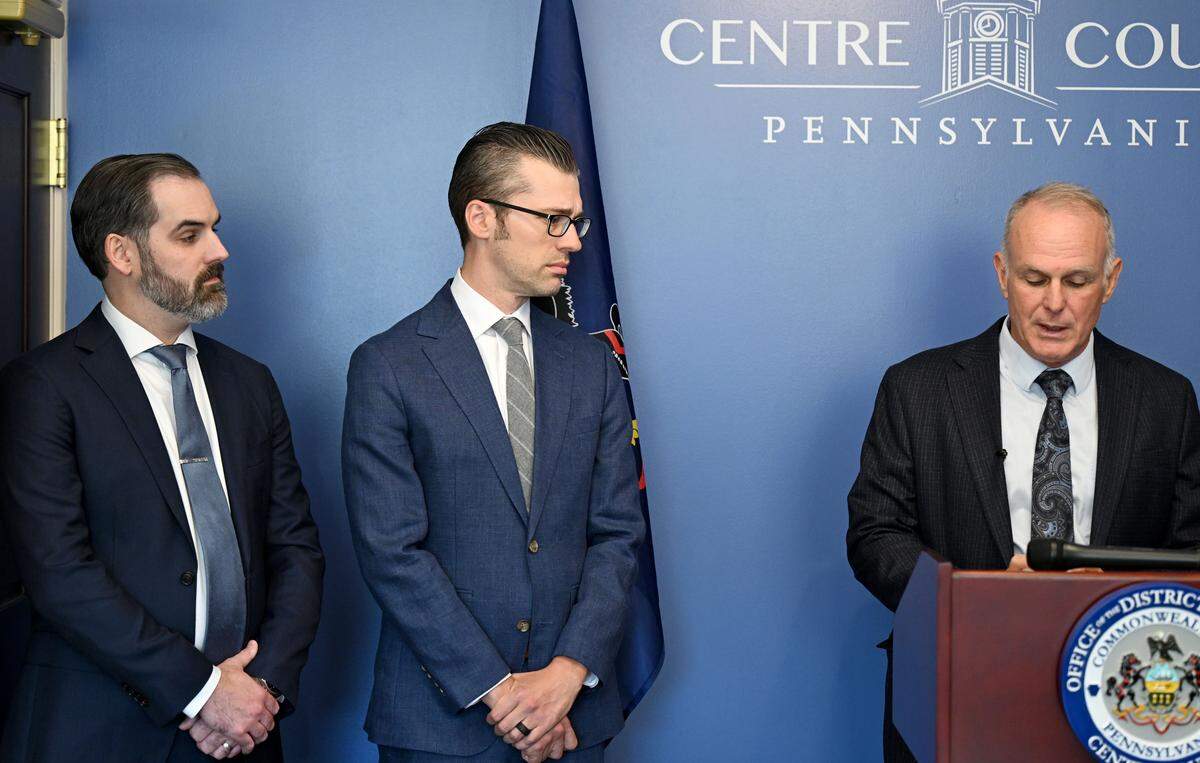
Adam DeBernardis, an attorney for the Department of Homeland Security, opposed Vedam’s release on bond. He said Vedam would have already been deported if he had not been serving a life sentence for his murder conviction.
“Even if you do find there is jurisdiction, we would still say he is a risk and a danger to society,” DeBernardis said.
A murder conviction that unraveled
Vedam was serving a life sentence without the possibility of parole after jurors twice convicted him of first-degree murder in the fatal 1980 shooting of Kinser, a 19-year-old Boalsburg man whose remains were found in a sinkhole about nine months after he went missing.
But the circumstantial case collapsed last year after Vedam’s attorneys uncovered ballistics evidence that could have proved his innocence. Centre County President Judge Jonathan Grine vacated the conviction in August, finding that it could have “severed the link” between Vedam and the killing.
Two months later, Centre County District Attorney Bernie Cantorna said his office would abandon the case. ICE then took Vedam into custody before he was freed from prison.
A ruling handed down this month by the Board of Immigration Appeals vacated Vedam’s deportation order and restored his permanent U.S. residency as he awaits a new hearing.
Vedam came to the U.S. legally from India as an infant and was raised in State College, where his late father taught at Penn State. His family was among the first from India to make their home in Happy Valley and was a pillar of the community, especially among immigrants.
“Subu is nothing if not resilient, and we’re resolved to emulate the example he sets for us by focusing on the next step in his fight for freedom,” Saraswathi Vedam said. “We continue to believe his immigration case is strong and look forward to the day we can be together again.”
This story was originally published February 17, 2026 at 10:34 AM.