
Subu Vedam to be released from prison after Centre County DA drops murder charge
AI-generated summary reviewed by our newsroom.
- Centre County dropped the first-degree murder charge against Subu Vedam after 40 years.
- Judge Grine overturned Vedam’s 1988 conviction, citing withheld forensic evidence.
- DA Bernie Cantorna declined to retry the case.
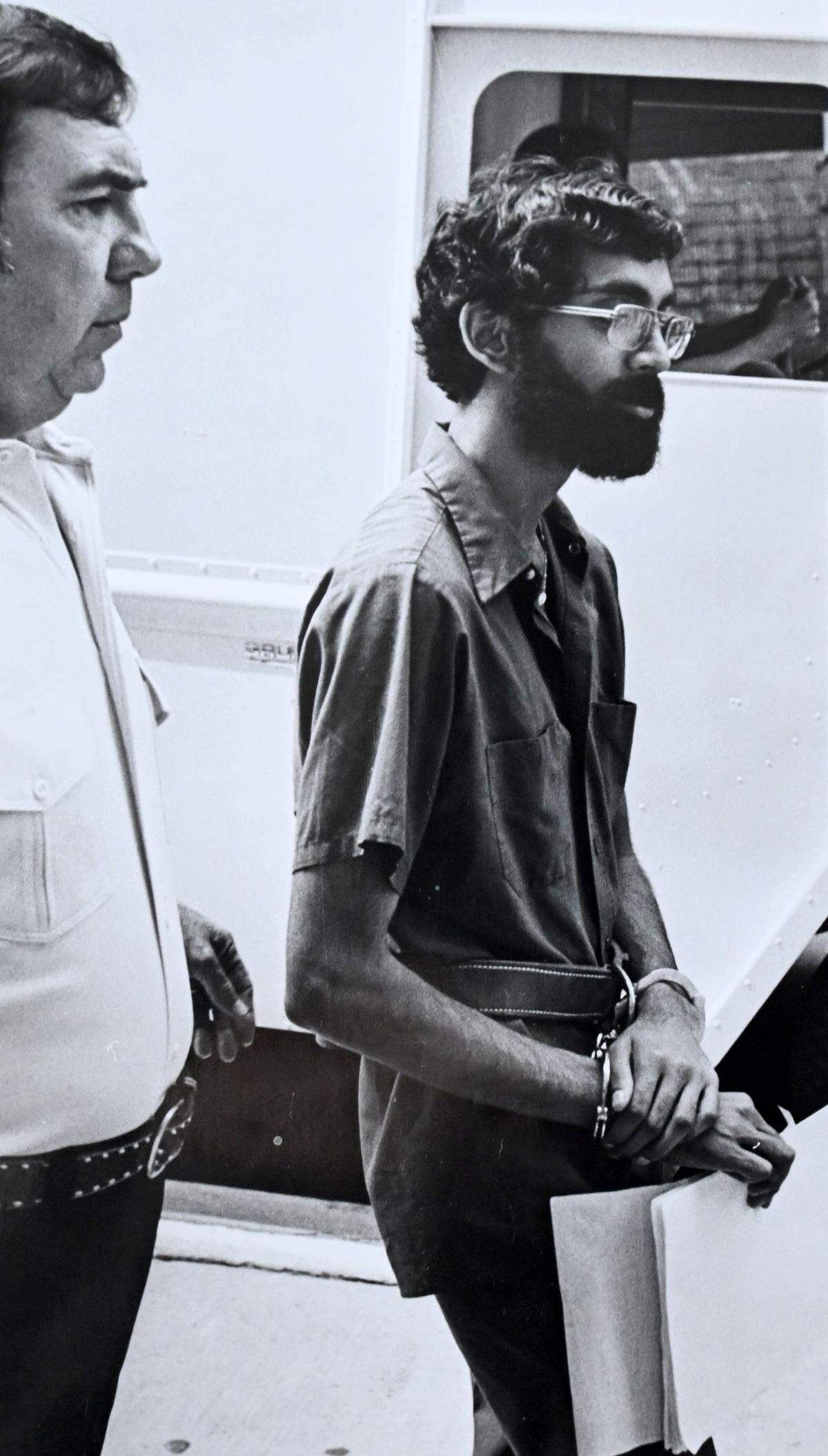
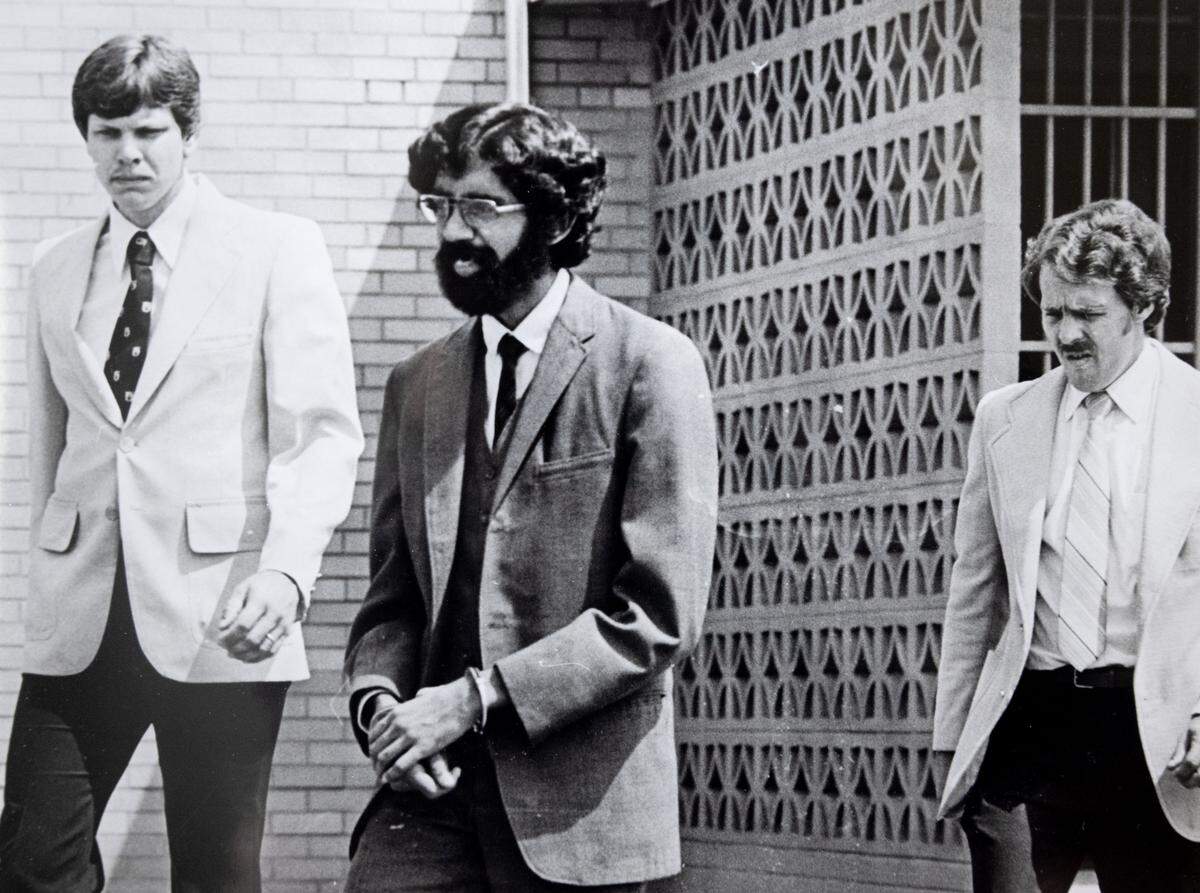
Centre County prosecutors dropped a first-degree murder charge Thursday against a State College man who spent more than 40 years in prison for a fatal shooting he’s always said he did not commit.
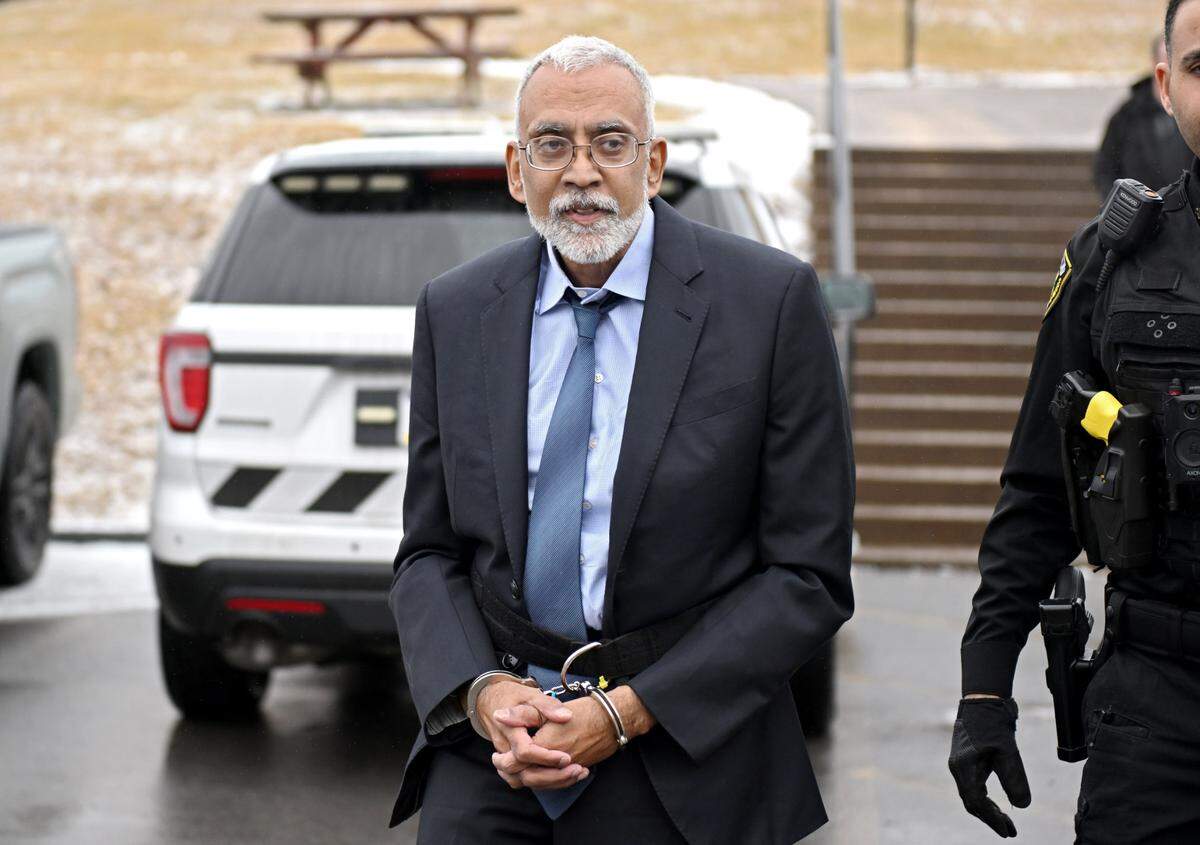
Subramanyam “Subu” Vedam, 64, will soon be released from Huntingdon state prison after spending about two-thirds of his life behind bars for the 1980 killing of Thomas Kinser. It appears he’ll become the longest-serving exoneree in Pennsylvania history.
The timeline for Vedam’s release was not immediately clear. A judge signed an order about 1 p.m. Thursday granting his release.
Vedam’s conviction on circumstantial evidence was overturned in August by Centre County President Judge Jonathan Grine, who found previous county prosecutors violated Vedam’s due process rights and deprived him of a fair trial in 1988.
Centre County District Attorney Bernie Cantorna could have chosen to retry Vedam, but it would have been difficult given key witnesses are dead, memories have faded and some physical evidence is no longer available.
He also said Vedam served a “sufficient sentence” — 43 years in prison — for a killing he was accused of committing as a teenager. Vedam and Kinser were each 19 years old at the time.
“It is not a decision made lightly,” Cantorna said in a statement. “Nevertheless, given everything that has happened thus far, I believe it is the just decision to make.”
Cantorna said he spoke with Kinser’s sibling before he announced his decision. He said it was clear that dropping the case brought forward “pain and injury and harm that has laid dormant for a very long time.”

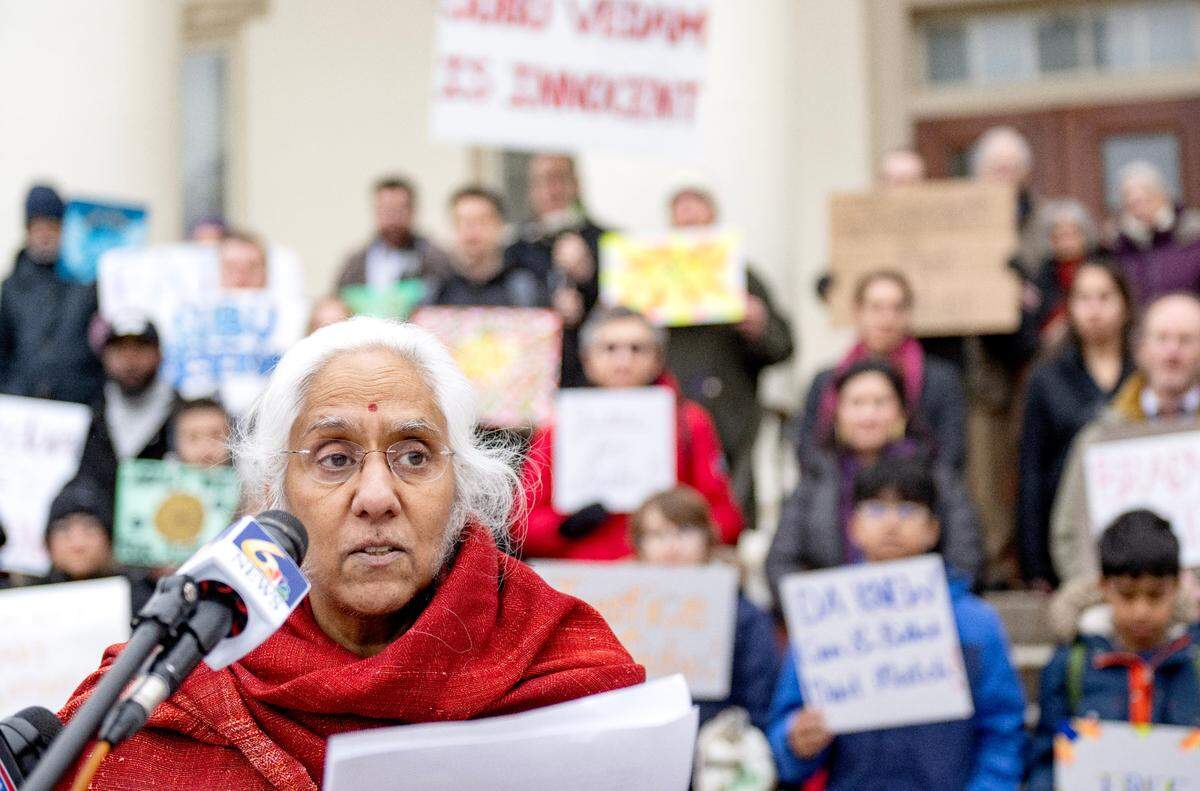
In a statement, Saraswathi Vedam expressed gratitude for Cantorna’s “momentous decision” to drop the prosecution of her brother. She said Subu served more than four decades with courage, purpose and grace.
“Our family has spent more than four decades living with the anguish over all that we lost when Subu — our cherished son, brother, and uncle — was wrongfully vilified and banished to prison for a crime he didn’t commit,” she said. “While nothing can restore or fill the void of all of those years we were apart, and the significant milestones we couldn’t celebrate together, today’s decision by D.A. Cantorna proves that an unwavering commitment to truth and fairness can propel us through our bleakest moments.”
She also said their hearts go out to Kinser’s family.
“We hope the justice system now focuses on pursuing the people who actually perpetrated his murder to finally give that family the true justice and closure they were denied by Subu’s wrongful conviction,” she said. “Only then will justice entirely be served in his case.”
What happened in the Subu Vedam case?
Vedam had been convicted in the fatal shooting of Kinser, a Boalsburg man and Colorado native whose remains were found in a sinkhole about nine months after he went missing. Vedam is the last known person to have seen Kinser alive.
At his 1988 trial, prosecutors alleged Vedam killed Kinser with a .25-caliber pistol he purchased shortly before Kinser’s disappearance. No weapon has ever been recovered, but a .25-caliber bullet and shell casing was found in Kinser’s remains.
Cantorna said he still believes the recovered bullet was the one that killed Kinser, citing “extensive forensic evidence” that he described as “compelling.” He further defended State College police, saying his decision “does not reflect the quality” of the department’s investigation.
“It was then and is now a compelling circumstantial case based on forensic evidence and a thorough investigation,” Cantorna said.
State College police Chief John Gardner similarly backed his department’s decades-old investigation, describing it as a “complete investigation that pointed to Mr. Vedam.” He said he is in “complete agreement” with Cantorna’s decision.
“I, too, agree 44 years is a long time,” Gardner said. “That might be easy for me to say because I’m not a family member or things like that, but I just know the difficulties of trying to retry this case right now would be almost insurmountable.”

Vedam’s conviction and life sentence without the possibility of parole withstood appellate review for decades. His best opportunity to gain his freedom came when Cantorna’s office voluntarily allowed his lawyers to review their files.
Among the reams of documents, Vedam’s lawyers said they found an undisclosed handwritten note detailing a specific measurement of the wound in Kinser’s skull. It is believed to have been written by former District Attorney Ray Gricar.
They’ve argued the FBI report would have been critical to Vedam’s defense and that it showed the wound was too small to have been caused by a .25-caliber bullet. They instead have claimed Kinser was killed by a .22-caliber bullet.
Grine found that no amount of due diligence would have enabled Vedam to obtain the measurements until it was turned over decades later. Had that evidence been available at time, Grine said it could have “severed the link” between Vedam and the alleged crime and that there would have been a “reasonable probability that the jury’s judgment would have been affected.”
“The Commonwealth cannot meet its burden of demonstrating beyond a reasonable doubt that this error did not contribute to the verdict, and consequently, (Vedam’s) conviction cannot stand,” Grine wrote.
Avoiding ‘cruel and pointless’ appeal
Cantorna did not appeal Grine’s ruling by Monday’s deadline. In exchange, Vedam agreed to not pursue one of his claims in any criminal or civil proceeding moving forward. His other argument — known as a Brady claim, one that requires the prosecution to disclose any exculpatory evidence — still remains.
Lead defense lawyer Gopal Balachandran signed the agreement last week, while Vedam signed it Sunday. Balachandran said an appeal would have been “needlessly cruel and pointless.”
“It would have extended Subu’s incarceration because there is no way for him to be released pending appeal, with the likely result that the Superior Court would have upheld Judge Grine’s decision,” Balachandran said. “In addition, there is a long line of cases in Pennsylvania that bar retrial when the prosecutor engages in the type of misconduct Gricar engaged in.
“Well before retrial, we would have filed a powerful motion to dismiss. As a result, I believe it made perfect sense for the DA’s office to dismiss on both moral and legal grounds.”
By all accounts, Vedam has been a model inmate. He designed and led a prison literacy training program, raised money for Big Brothers Big Sisters, tutored and mentored hundreds of inmates and earned three degrees himself.
He is also the first person in the prison’s history to earn a master’s degree.
“There’s no doubt if there were concerns about public safety this would not have occurred,” Cantorna said.
Saraswathi Vedam said her brother “refused to let this travesty defeat or define him.”
“Instead, he funneled his energy into a life of service,” she said. “As Subu has demonstrated throughout his life, he has the kindness, insight, intelligence, and integrity to make a treasured contribution to the world, beyond his legacy as a person who withstood injustice with nobility.”
She also thanked the “heroic and tenacious” efforts of Subu’s lawyers, as well as family, friends and dozens of community advocates who packed the Centre County Courthouse during prior hearings.
After more than four decades, he’s on the doorstep of freedom.
“We can’t wait to embrace Subu,” his sister said. “And welcome him home as a free man.”
This story was originally published October 2, 2025 at 12:19 PM.