
State College board overseeing police struggles with engagement as 5-year anniversary nears
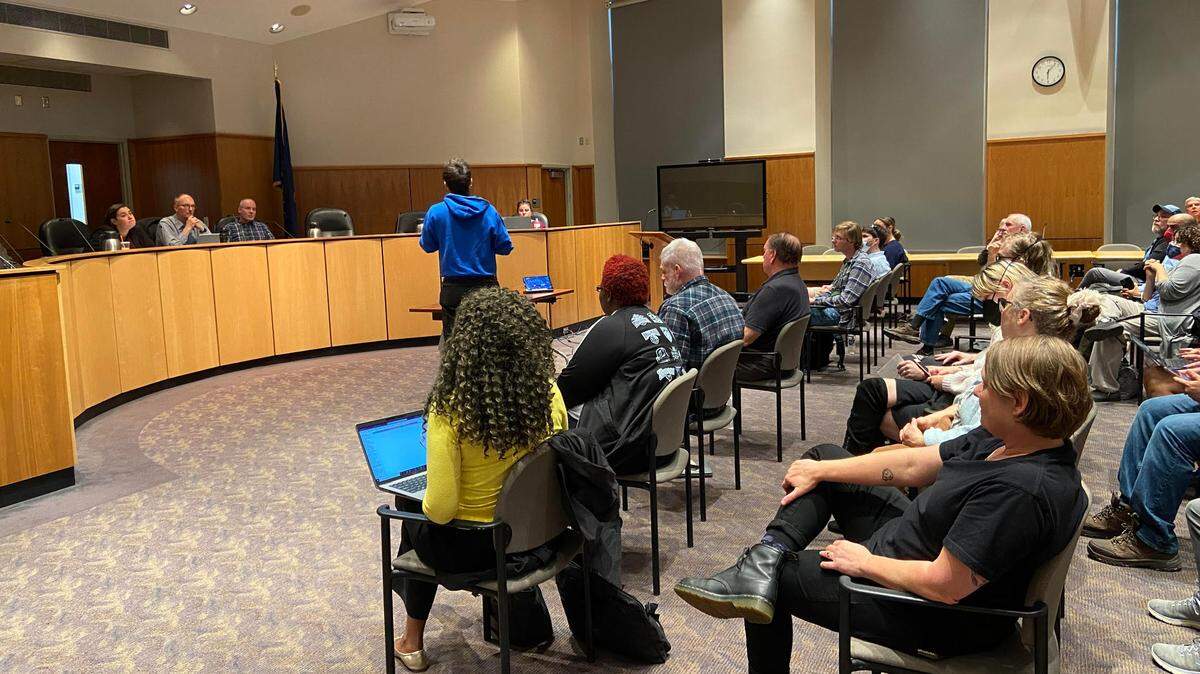
State College’s Community Oversight Board will mark its fifth anniversary later this year, but officials and community members say more engagement is needed in order for it to be the accountability tool it was envisioned to be.
The Community Oversight Board, known as COB, was formed after a State College police officer shot and killed Osaze Osagie, a 29-year-old Black man who was experiencing a mental health crisis, in 2019. Osagie’s death led to widespread calls for change in the community, with the COB one of several recommendations developed.
After more than a year in the works, the COB held its first meeting in December 2021. The civilian board oversees the police, and approved a Community Oversight Board Complaint Form in November 2022.
The COB’s mission, according to its website, is “to help ensure that everyone who lives in, works in, or visits State College may experience excellent equitable treatment in their interactions with the police.”
The board has had just 14 complaints since it launched, and current board chair Ron Madrid said that most people have used the program to file complaints that had “nothing to do with the State College police department.” Some COB initiatives, including the implementation of a public dashboard and annual reporting to a town hall, were never implemented, said Leslie Laing, who was also involved in the COB’s formation and called the current board “disappointing.”
State College Mayor Ezra Nanes said that while the COB was designed to increase accountability with State College police, there has been a lack of “engagement” with the civilian complaint process.
“We have a highly trained, very professional, very dedicated police force,” Nanes said. “The police force was closely involved in the setup of the Community Oversight Board, and was supported by (former police) Chief (John) Gardner.”
Of the three complaints the COB’s Civilian Complaint Process committee received last year, one was a complaint about an area business, one was about parking enforcement in the borough and the other was a billing complaint about an area service provider, according to the 2025 annual report.
“This indicates that there were no issues with the SCPD or there was a lack of knowledge of the COB and/or the CCP,” the report states. “Continued outreach is needed to ensure that our community is aware of the CCP and to know where to turn should they have questions after an interaction with the SCPD. The CCP Committee remains eager to spread the word going forward.”
State College Borough Council member Nalini Krishnankutty was an early member of the COB, having also been involved in the creation of other COB boards in Pittsburgh and Philadelphia. She was appointed in the fall of 2020 after being asked by fellow board members to apply.
“We were an independent body that was serving our community, and overseeing the police,” Krishnankutty said. “So to set that structure up was really crucial, and I actually took help from people who were in this space, who guided me, because we had nothing like this before.”
When the board was initiated, they created the civilian complaint process where residents could file a complaint if they experienced a form of misconduct from State College police. The members of the COB are appointed by State College Borough Council. The board was designed to have nine members, but there were only six consistent members in 2025, according to the annual report.
During Monday’s State College Borough Council meeting, changes to the COB were approved that include making it a seven-person board.
“I think we have put in play a system that’s a great starting point ... as long as we have citizens engaged, so we need citizens applying for the position,” Krishnankutty said.
Outside of the complaint form, Madrid highlighted recommendations the COB made to the police department for improving data collection processes “to enable the future ability to conduct rigorous and systematic analyses of potential disparities in policing practices,” according to the COB’s website. The police department contracted with the Center for Policing Equity at the COB’s request for the analysis.
The COB also hosted a forum in November 2022 in response to concerns over police response at a protest on Penn State’s campus. The board has also completed an annual report since 2022.
The ad-hoc COB does not receive a budget from the borough, and is supported by volunteers. Any funds need to be submitted to the borough and approved by the Borough Council. Madrid, who has been involved in the COB since its start, said that community engagement is a factor that the COB is committed to expanding. He said they will be involving themselves in more community events.
They already attend events such as those hosted the State College Area School District, Borough Neighborhood Associations and also attend events upon request, Madrid said.
Laing was involved in recommendations after Osagie’s death and worked with the State College NAACP and 3/20 Coalition, which were “instrumental in establishing the Mental Health Task Force, improving the Crisis Intervention Training, the Community Oversight Board and a standing position for a new director for diversity, equity and inclusion for the State College Borough, diversity training for their staff, along with standing agenda space on the local townships,” she wrote in an email.
“We were not successful in getting them to restrict the use of guns when serving mental health warrants,” she wrote. “We are still seeking accountability and more transparency.”
She said she’d like to see the COB integrate some of the original ideas proposed, like the public dashboard and town halls, but said it is “doubtful the current composition of folks share the original intent.”
“Getting folks seated was tough and keeping the appropriate representation is even harder,” Laing said.
Jan Ulbrecht, the current co-chair of the COB, said that he welcomes change and improvement to committee. He said the board is open to incorporating initial proposals, such as a public dashboard or annual town hall meetings, as well as expanding on their own plans.
“Outreach is a huge problem for us,” Ulbrecht said. “This is something we are working on this year, and we are approaching every single homeowners association and every single neighborhood association in the three townships.”
COB member Zachary Van Horn, who joined a year ago, said he’s determined to expand community outreach and bring change to the COB by attending more community events and improving an online presence.
“With the national headlines on law enforcement, the relationship between the community and the State College Police Department I feel needs some sort of in-between voice,” Van Horn said. “We need to make sure people know and understand we are here.”
For more information about the COB, visit www.statecollegepa.us/745/Community-Oversight-Board.
This story was originally published May 6, 2026 at 5:57 AM.