What kind of COVID-19 impact did colleges have on local communities? Here’s what a CDC study says
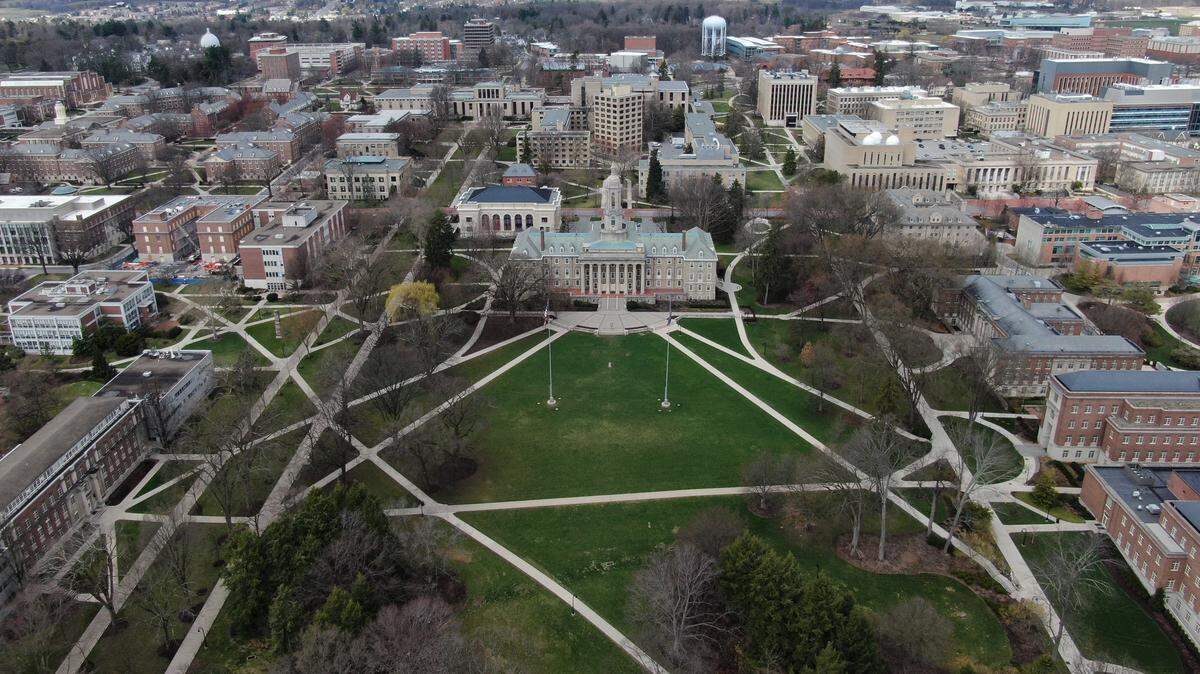
A recent study by the Centers for Disease Control and Prevention has confirmed what many in Centre County have already suspected: Reopening colleges in the fall significantly increased COVID-19 infection rates in their surrounding communities.
According to the study, which was published last week, counties containing colleges with at least 20,000 students experienced a 56% increase in the average number of COVID-19 cases, between 21 days before in-person instruction began and 21 days after it ended. By comparison, counties with such colleges that instead opted for remote-only instruction saw a 17.9% decrease.
The co-authors of the study were quick to note there were several limitations to the numbers, acknowledging some calculations could be inflated for small counties with large universities. They also noted they could not discern “whether cases in university counties were college- or university-related (i.e., through contact in classrooms, dormitories, cafeterias, or off-campus activities) or related to community transmission.”
But, in Centre County last fall, the increase was significant and swift.
On Aug. 3, 21 days before classes began, Centre County had 358 total cases of the new coronavirus. By Sept. 14, 21 days after class started, that total had increased to 1,237 cases.
The state Department of Health does not differentiate between students and non-students in its reporting and, because not every Penn State student who tested positive may have opted for university testing, it’s difficult to measure the exact impact students had on the greater community. But Dr. David Rubin, lead investigator of one COVID-19 forecasting model, repeatedly told the Centre Daily Times that the data suggested COVID-19 outbreaks at Penn State had spread to the greater community — and even to the surrounding counties.
Not everyone has fully agreed, however. The university intimated that any such community spread was minimal, while Dr. Nirmal Joshi, chief medical officer at Mount Nittany Health, said in early December that equating increased COVID-19 numbers with the university was a “reasonable assumption.” But, he pointed out, some neighboring communities without universities also experienced even greater increases than Centre County.
Still, when it comes to the larger picture of colleges’ overall impact, the CDC study was clear.
“COVID-19 incidence, hotspot occurrence, COVID-19-related testing, and test positivity increased in university counties with in-person instruction,” the study concluded, before adding, “Efforts to prevent and mitigate COVID-19 transmission are critical for U.S. colleges and universities.”
The CDC pointed to congregate living — where common areas are shared, such as dorms — as being linked to transmission. And it recommended testing students when they return to campus and throughout the semester.
Penn State has increased its testing capacity for the spring, with plans to test all students pre-arrival and, again, within two weeks of the their arrival. It also plans to expand its surveillance testing once in-person instruction resumes Feb. 15.
University spokesperson Wyatt DuBois did not directly address the Centre Daily Times’ question on whether the university takes responsibility for community spread for bringing back students. But he noted the university allowed students the option of completing coursework remotely and said employees who could work remotely have been able to do so since last March.
“University leadership worked closely with local government and health care officials, creating a community task force, coordinating closely on local health ordinances, and implementing a joint social media marketing campaign to encourage safe behaviors on and off campus,” DuBois said Friday in a written statement.
He also pointed to the Data4Action study of State College area residents conducted by Penn State faculty. That study found a small (under 4%) increase in exposure among community participants despite 30% of students having antibody levels indicating their likely exposure, DuBois wrote in a statement. The investigators are in the process of further analyzing the study, which findings do not apply to the county as a whole because volunteers came primarily from State College and townships surrounding University Park.
Centre County had 491 total COVID-19 cases on Sept. 1; 2,755 cases on Oct. 1; 4,272 on Nov. 1 and 6,398 on Dec. 1.
According to the latest data, from the state DOH and Penn State’s COVID-19 dashboard, the university has reported 5,125 COVID-19 cases while the county — which includes Penn State — has reported 10,041.
Dr. Susan Coffin, an attending physician for the Division of Infectious Diseases at Children’s Hospital of Philadelphia, told the CDT on Friday that she hadn’t yet read the CDC’s full study. But she didn’t find its conclusion surprising.
“The potential for mixing between members of the university community and members of the non-university community is so high,” she said. “There aren’t bright boundaries between the college walls and and the surrounding areas — and so I think it’s a numbers game.”
She added, with the right mitigation strategies, “It is possible to both operate a higher-learning site and keep a community safe. It just takes a lot of work.”
Penn State’s in-person classes for the spring resume Feb. 15. Remote classes start Tuesday.
Editor’s note: This story was updated on Jan. 18 with information on the Data4Action study.
This story was originally published January 16, 2021 at 8:23 AM.