Why Penn State’s Black Caucus is holding a march Friday — and why members want you to come
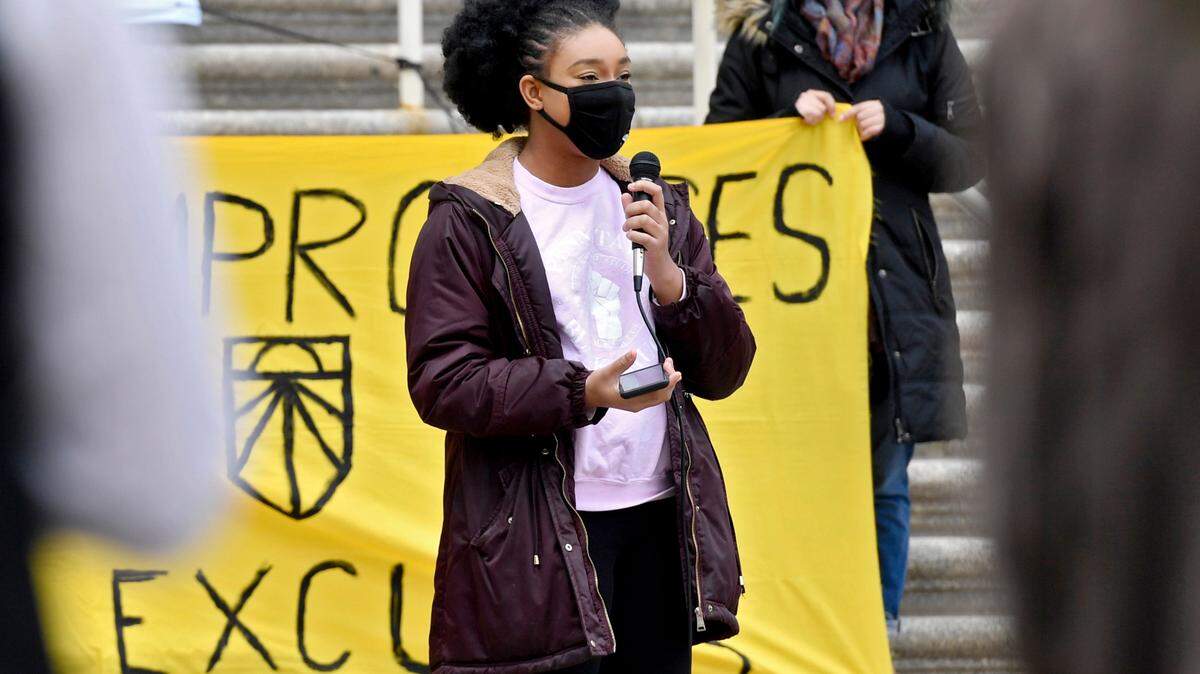
Nyla Holland, the president of Penn State’s Black Caucus, has been waiting for Friday’s march for a long time.
Not only does the 4 p.m. march from Beaver Stadium to Old Main serve as the Black Caucus’ final in-person event of the semester, but it also helps mark the 20th anniversary of “The Village” — a watershed moment in Penn State history. In 2001, two years after 68 Black students received hate mail and the same year the Black Caucus president received a death threat, hundreds of students took over the HUB-Robeson Center for 10 days, coming together as a “village,” to pressure the university into taking action against the campus’ racial climate.
Holland, a graduating senior, has been aware for the last four years that the anniversary falls on one of her last weeks on campus. And after an emotional year, one where she was called the n-word during a Zoom bombing, she looks forward to the community coming together one last time before the semester ends.
“When people come together and use their voices and use their resources, change can be made,” Holland said. “So we really want to emphasize that, and that’s what we’ll be focusing on during the rally.”
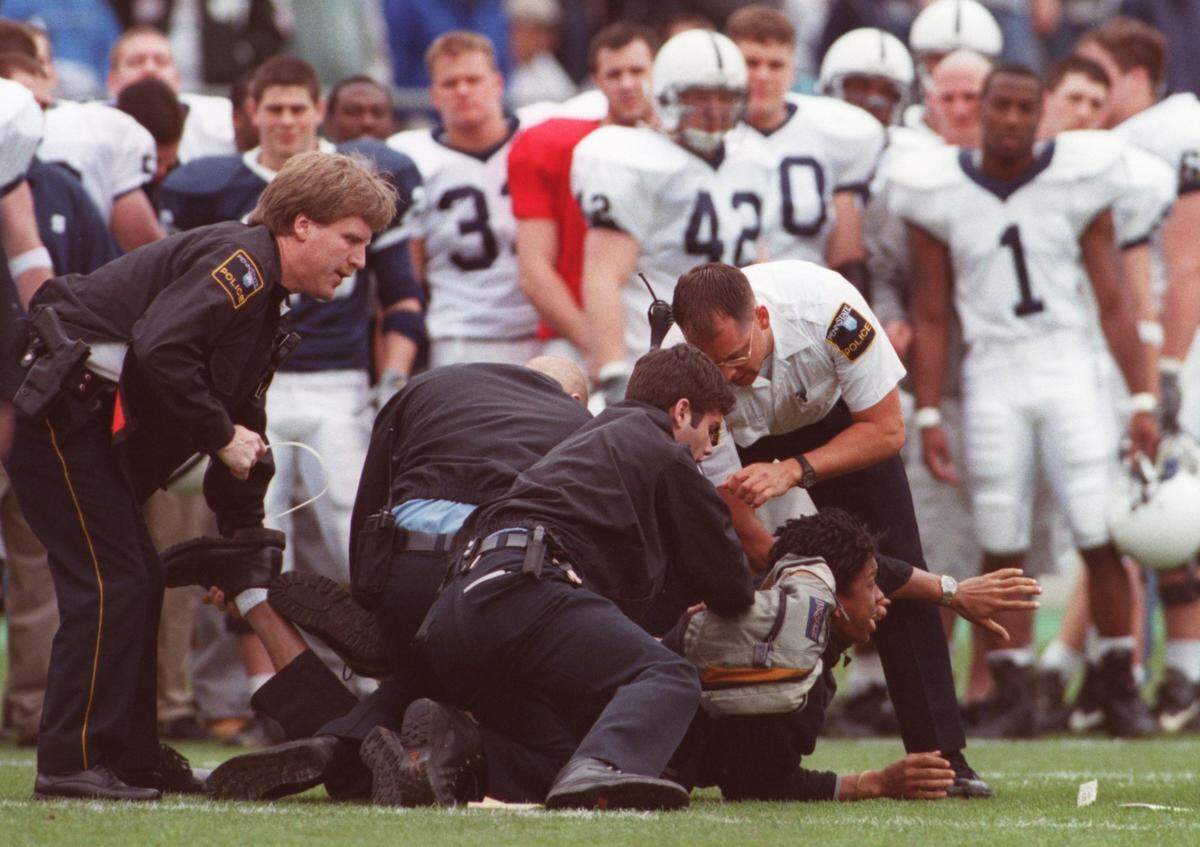
The event will start at Beaver Stadium as a nod to the 2001 protest there, when 26 people were arrested after locking arms on the 50-yard line and praying at the start of the annual Blue-White Game. The act was made to draw attention to Black students’ concerns, as the Caucus president had received a death threat only days before.
That set the stage for a rally that numbered in the thousands four days later in front of Old Main — the final stop of Friday’s march — when then-President Graham Spanier attempted to speak over the PA system but was drowned out by protesters. “We don’t need a motivational speech; we need action!” one protester yelled.
Students and community members then flooded the HUB on the same day as that rally, spending 10 straight days there until the university gave in to some of their demands — such as the creation of the Africana Research Center, which was established in 2002.
Holland hopes to educate attendees about the history and significance of “The Village” while also addressing the Black Caucus’ current concerns, both locally and nationally. There’ll be speakers, music, chants and singing, she said.
“We want everyone who attends to learn something, be inspired to do more things and figure out what role they can play in creating change for social justice,” Holland added.
One thing Holland plans to address Friday is what was — and wasn’t — accomplished during 2001’s historic events that were documented by national outlets like CNN and The New York Times. Holland said the Black Caucus is still fighting for a mandatory course on race, one of the concessions university officials agreed to 20 years ago. Another 2001 demand was to increase diversity among faculty, a continuing concern that was recently echoed from a 108-page report written by Black faculty.
Holland emphasized that Friday’s march wasn’t just open to Penn State students either. After all, she said, “The Village” included local community members, clergy members and more.
She hopes there’ll be a similar mix again Friday when the rally serves as the final event of the Black Caucus’ “Power to the People” Week. Other events this week included an alumni panel Monday, a self-care event Tuesday, a scavenger hunt Wednesday and a sit-in Thursday.
Holland isn’t sure what the turnout might look like Friday. She’s received a lot of support from social media, as has the Black Caucus, but she said she’ll be there whether there’s six or 600 people.
“It would mean the world,” she said about a large turnout. “It would be a testament that change can still happen, that people are still watching. People still care. And I think it would really inspire our organization to fight more battles, fight bigger battles, because we have a larger community behind us.”
This story was originally published April 29, 2021 at 2:54 PM.